Wedding Venues in PuneThe rules matter more than the photographs

Two venues can look identical and behave nothing alike. We shortlist halls, lawns and hotels by what they permit, what they bill separately, and how easily a full guest list can actually get there.

  • Venue shortlist
  • Site visits
  • House rules check
  • Parking and arrival
  • Real capacity
  • Booking terms
Wedding Venues in Pune
2013planning events in Pune since

Wedding venues in punePermission, capacity, arrival, then looks

Picking a place in the city is mostly a question of what you are permitted to do inside it. Pictures tell you almost nothing. Two halls on one road can differ over outside cooking, open flame, music hours, how long you get to build, and whether anybody can park.

So the shortlist is built on permissions and arrival before appearance. Seated numbers instead of the standing figure printed in a brochure. Build hours in writing. Whatever gets billed separately once you say yes. What the road outside does on a Saturday evening, and where cars go when it cannot hold them.

We book and run weddings right across the city: the older karyalaya belt, the newer hall clusters in the eastern suburbs towards Kharadi, hotel ballrooms, and open plots on the fringes. What you receive is a shortlist with every rule written beside the option it belongs to, so you compare facts rather than photographs.

  • 500+ events since 2013, in venues of every size
  • Shortlists built from house rules, not brochures
  • Seated capacity tested against your actual list
  • Parking and the arrival road checked before you visit
  • Build hours and extra charges confirmed in writing
Wedding venues in pune

How venue help worksSix checks before you pay an advance

Each one is a question that changes the answer, and each one is asked before you spend a Saturday visiting.

  1. 01

    Venue shortlist

    Options filtered by guest number, date availability, the shape of your budget and where most invitees live.

  2. 02

    House rules check

    Outside cooking, open flame, music hours, décor limits and every separately billed item, asked before a visit is arranged.

  3. 03

    Real capacity

    Seated numbers once the stage, buffet, walkway and dance floor are deducted, not the figure inside the brochure.

  4. 04

    Parking and arrival

    Where cars go, how the road behaves at your hour, and where elders can step out close to the door.

  5. 05

    Build window

    How many hours you genuinely get, what occupies the room before you, and whether night access is possible.

  6. 06

    Booking terms

    Advance, cancellation, overtime, deposit and clearing conditions, read through together before anything gets signed.

Venue types in the citySix shapes, six sets of rules

01

Mangal karyalaya

Purpose-built wedding halls with kitchens, rooms and a familiar routine, usually easiest for a traditional ceremony.

02

Banquet hall

Indoor, air-conditioned and predictable, and the commonest choice for an evening function in the city.

03

Hotel ballroom

Rooms for outstation family and kitchens on site, with firm house rules over nearly everything else.

04

Garden and lawn venue

Open ground inside the city, where everything a building normally supplies has to be brought in.

05

Farmhouse and open plot

Freedom and space on the fringes, with travel time and guest drop-offs to think through carefully.

06

Clubhouse and society hall

Handy and affordable, with member rules, resident complaints and early cut-off times attached.

07

Community and temple hall

Strong tradition at low cost, usually with fixed timings, thin parking and limited décor permission.

08

Two-venue weddings

Ceremony in one place, evening in another, which doubles travel and demands a transport plan.

How our event planning worksFrom first call to final bow.

  1. 01 Day 1

    The call

    Tell us the date, the guest count, the budget and the feeling you want in the room. We ask the questions most people forget.

    You getFirst ideas and a budget range

  2. 02 Week 1

    Concept & moodboard

    Theme, décor, stage layout and a minute-by-minute run of show, drawn up and revised until it feels like yours.

    You getMoodboard, layout and an itemised quote

  3. 03 Weeks 2–4

    Venue, vendors & permissions

    Venue shortlists, caterers, artists, anchors and the paperwork — police, music licences and venue approvals — handled by us.

    You getLocked vendors, one point of contact

  4. 04 Event eve

    Build & rehearsal

    Décor goes up, truss and LED walls are rigged, sound is checked and the anchor rehearses every cue with our show caller.

    You getA walk-through before guests arrive

  5. 05 Show day

    Showtime & wrap

    Our crew runs the floor, the stage and the guests. When it is over, we clear the venue and send you the photos.

    You getA calm host — you — and the memories

Judge a venue by what it permits, not by how it photographs. Nearly every regret traces back to a rule nobody thought to ask about: a kitchen you are obliged to use, a cut-off that cannot move, or a build window too short for the design you approved.

Guest list, date, side of town

Three things narrow the field before a single visit. Your guest number, because seated capacity is the one filter nobody can argue with. Your date, because auspicious evenings between November and February are taken early while a midweek date opens up options a Saturday never will. And the part of the city your invitees live in, because a lovely place an hour from most of the list will sit half empty until late. Sketch a rough map of where people are travelling from, put the function where that map is thickest, and attendance and parking improve together.

The rules are the real difference

Ask every venue the same questions in the same order and write the answers down. The distinctions that decide your wedding are dull ones, and they are the ones nobody volunteers.

Venue typeWho is allowed to cookFlame and effectsHours you really get
Mangal karyalayaTheir kitchen or an approved list; outside cooks sometimes allowed for a feeHavan and diyas expected and permittedGenerous, often from the previous day
Banquet hallCatering by the house is usually compulsorySacred fire frequently refused indoors, so get it in writingA few hours, with another function possibly ahead of yours
Hotel ballroomTheir kitchen only, against a minimum spendFlame restricted; fog and sparklers set off detectorsShort and strictly policed, rarely overnight
Garden or lawn venueOutside caterers welcome, with the kitchen brought inOpen fire generally fine, though summer raises the riskLong, but the weather sets the real schedule
Farmhouse or open plotEverything arrives with you, water and gas includedFew restrictions, which makes safety your responsibilityAs long as you like, if the previous day is booked
Clubhouse or society hallResident rules and approved vendor lists, with no night deliveriesOpen flame almost never allowed indoorsTight, behind a hard cut-off set by residents

Capacity on paper against capacity in the room

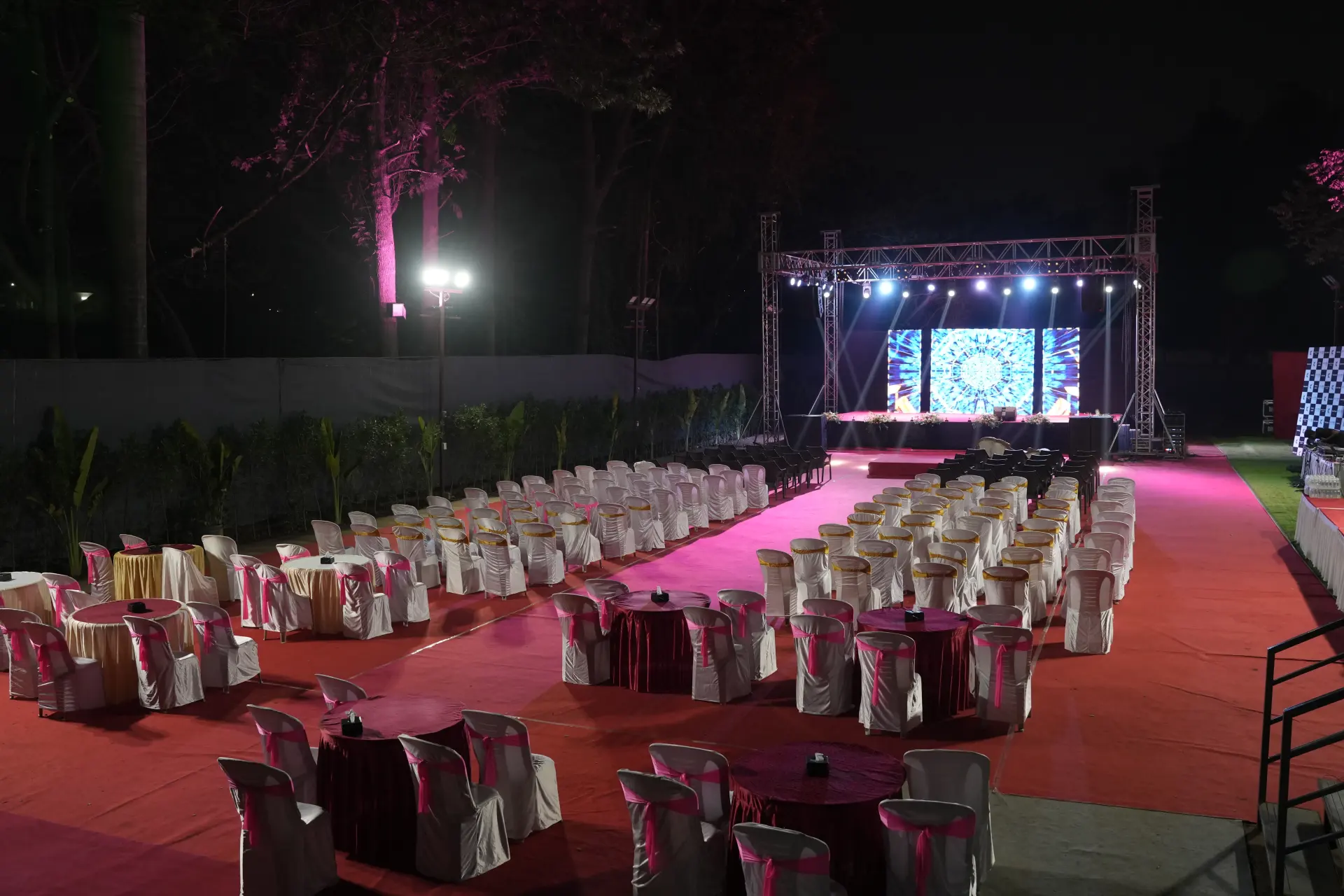
The number a venue quotes describes people standing in an empty box. Take away the stage, the buffet, the dance floor, the walkway and the lounge, and far fewer chairs remain. Replace the quoted figure with three questions: how many chairs get laid out for a wedding of this kind, how many dining tables fit with service space around them, and where exactly does food stand. Better still, visit while somebody else's function is running, if the venue permits that. Fifteen minutes watching a real crowd in that room teaches you more than an afternoon walking it empty.

Arrival, parking and the last stretch of road

Guests judge a wedding by its first minutes and its last, and both happen outside the building. Count parking honestly, remembering that a wedding crowd turns up inside a short window rather than trickling in. Ask whether valet is included or extra, whether the neighbouring plot can be used, and how the road behaves at that hour on that weekday. Look at where a car can pause so an elderly guest can step out, how far that point is from the doorway, and whether steps lie between. Where overflow parking sits some distance off, a shuttle is not indulgence; it decides whether people arrive cheerful or irritated.

Read the paperwork before the advance

Contracts hide their surprises in the extras. Watch for electricity or generator charges billed on usage, a fee for bringing your own decorator, a damage deposit, overtime after the cut-off, and cleaning. Ask what happens if your numbers grow, what happens if the date moves, and how much notice a cancellation needs. Get the build window and the clearing deadline typed into the booking, because both are usually agreed verbally and both are what arguments at midnight are about. Properties outside the city where guests also stay overnight are listed on the wedding venues near Pune page; this page covers booking within city limits. For open ground read lawn wedding planning, and for the evening itself, reception décor.


Wedding venues in pune — FAQsQuestions people ask us.

Can't find yours? Call or WhatsApp — a planner answers.

Which is the best wedding venue in Pune for our date?

Judge permissions and arrival first, appearance second. Confirm seated capacity, who may cook, whether a sacred fire is allowed, when music must stop, and how many build hours come with the booking. Then look at parking and the road at your function's hour. A venue that answers all that plainly is usually well run.

How far ahead should a wedding venue be booked?

Six to nine months for an auspicious evening between November and February, and roughly three months outside that stretch. Dates do not release gradually; the popular ones disappear in a rush once the calendar is out. Holding a place early also fixes your guest number, since the room sizes everything after it.

Is a hall or an open lawn better for a wedding?

A hall buys predictability and a lawn buys space. Indoors nothing waits on weather, power already works and building is quick. Outdoors you gain room and evening light, and you carry in flooring, cover, power and light. Decide by the month of your date and by how much you are prepared to carry in.

What should I ask during a venue visit?

Ask about seated capacity for a wedding, cooking rules, flame and effects, the music cut-off, build hours, everything billed separately, car numbers and the clearing deadline. Ask to see the room laid out rather than bare. Note every answer down, because verbal permissions tend to change once the advance is paid.

What makes one wedding venue cost more than another?

Location and season push hardest, followed by whether catering is compulsory and what minimum spend applies. Air conditioning, floor area, how many hours you hold the place, generator usage, valet, and any levy for bringing your own decorator stack on afterwards. Ask for every chargeable item in one written list before comparing.

Do we need a separate venue for every function?

Not usually, and running two functions in one place saves both money and travel. Many karyalayas and several hotels will turn a room around between a daytime ceremony and an evening function, as long as the changeover hours sit inside the booking. Split venues only when guest lists or styles genuinely differ.

How much parking does a wedding actually need?

More than any venue will admit, because wedding guests arrive within a short window instead of spreading across the evening. Count cars rather than people, ask whether valet and the adjoining plot are included, and see the road at the same hour on the same weekday. Arrange a shuttle when overflow sits far away.

Rules first, photographs second

Tell us your guest count, the date and where most invitees live, and a shortlist arrives with every house rule written beside the option.

Talk to a planner