Theme split by class
The chosen idea broken into one slice per class, so teachers get a brief instead of a name and a blank page.
+91 84858 38274 · +91 84858 38219
Shop 7, Ekta Nagri, Near Dwarka Apartment, Anand Nagar, Pune 411051
Twenty annual day theme names, sorted by the age of the children performing. Each one says what it looks like on stage, what it takes to build and how hard the costumes will be on parents.


Most theme lists are written for adults. A school annual day is performed by children between three and seventeen, and a name that thrills a senior drama club leaves a nursery class with nothing to do. So this gallery is grouped by age band, with a set of whole-school ideas that deliberately split into slices, one per class.
Each theme here says three things: what it looks like once it is built, what the stage and lighting have to do for it, and how much work the costume lands on parents. That last one matters more than any design detail. A theme that needs forty stitched outfits in December is a theme that generates forty phone calls to the class teacher.
If you want the written version with theme names for offices and colleges too, our annual day theme ideas guide covers those. This page is the picture-led one, and it sits next to the practical side of running the show. We have been planning and running school programmes since 2013.
Start with the band your biggest acts sit in, then check whether the idea still works for the youngest class on the list.
Senior school, Classes 9 to 12 Black Box
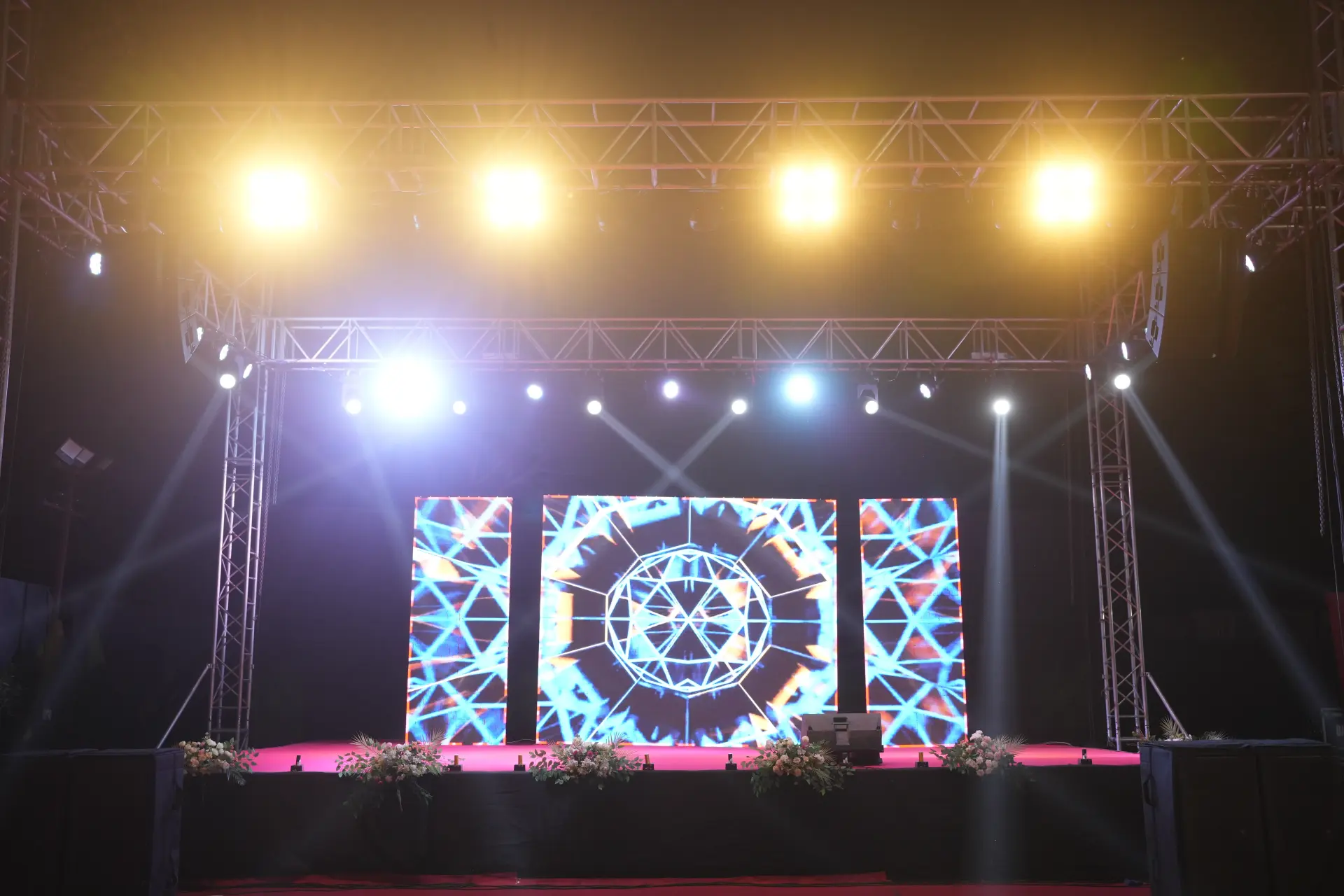
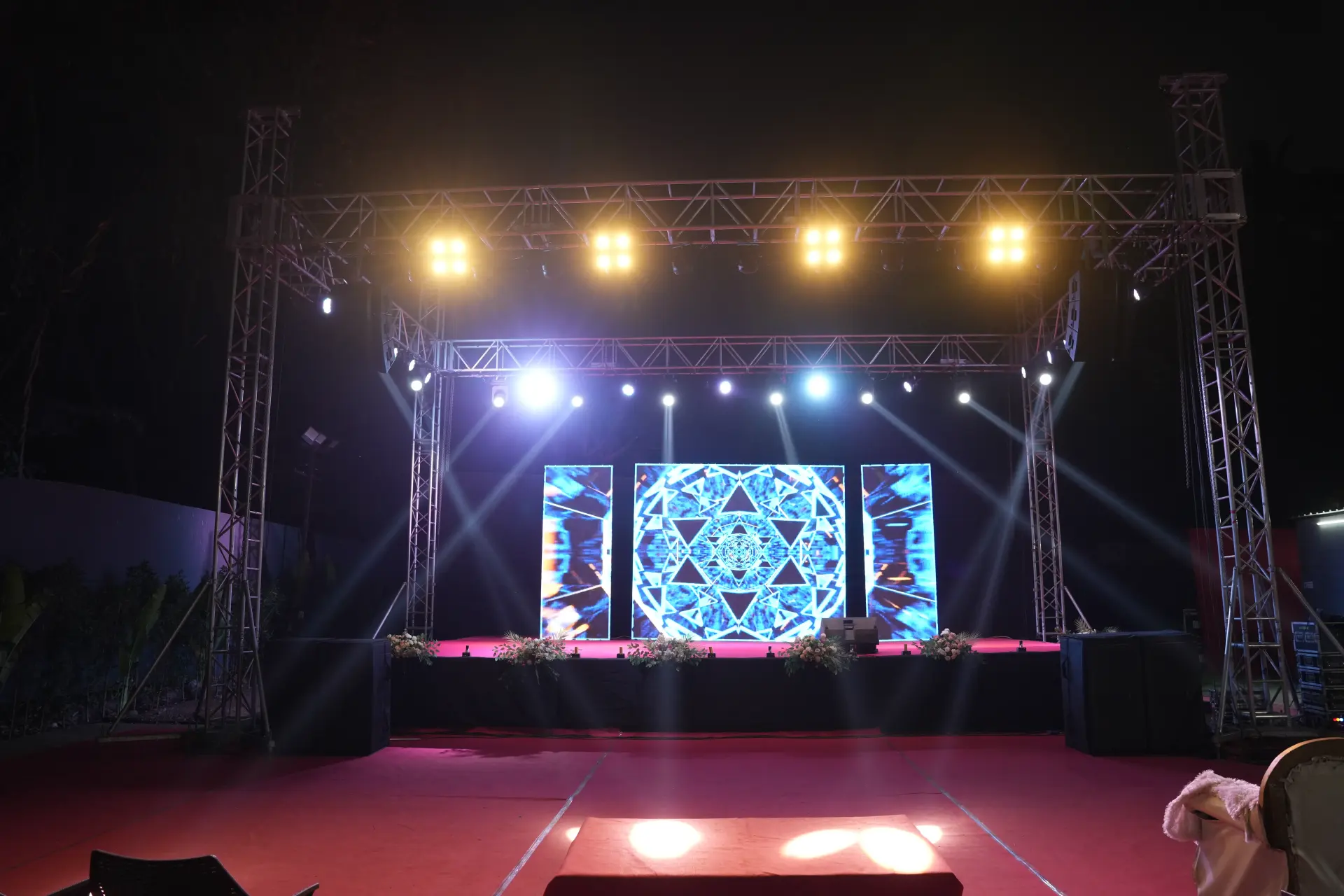
Strip the stage bare and let light do everything: the cheapest set on this list and the hardest one to rehearse. Profile lights, a light plot, dark floor, clean cues
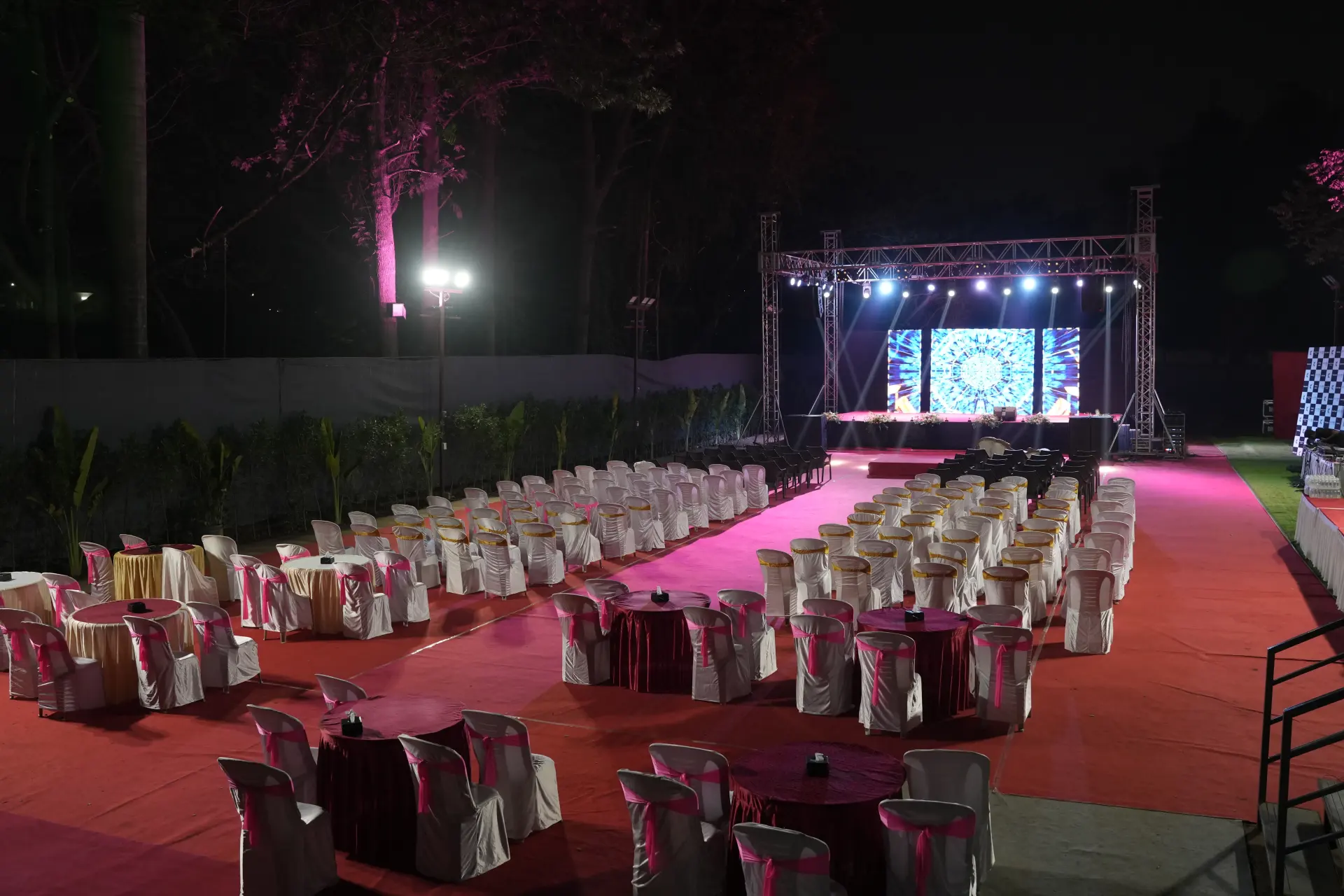
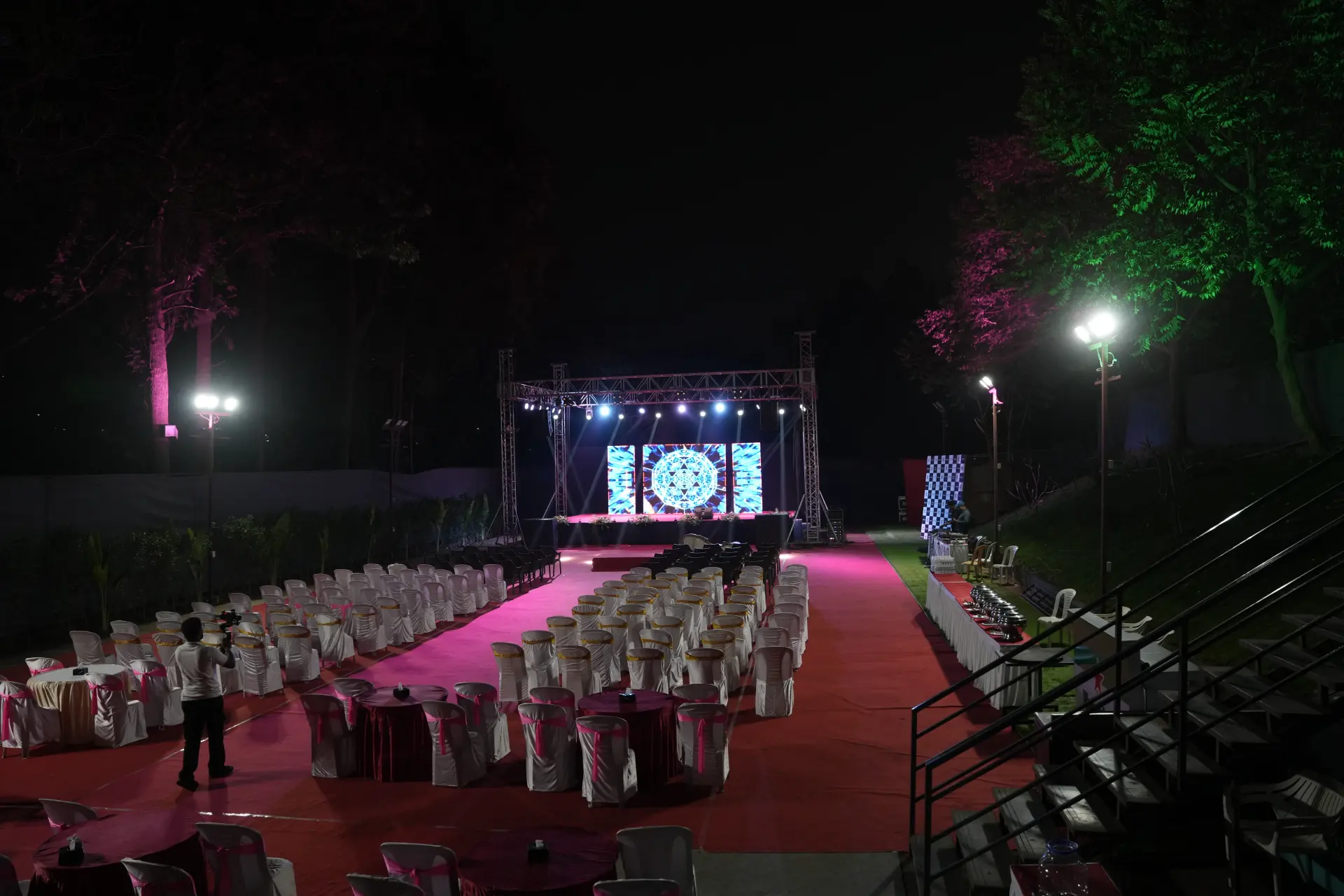
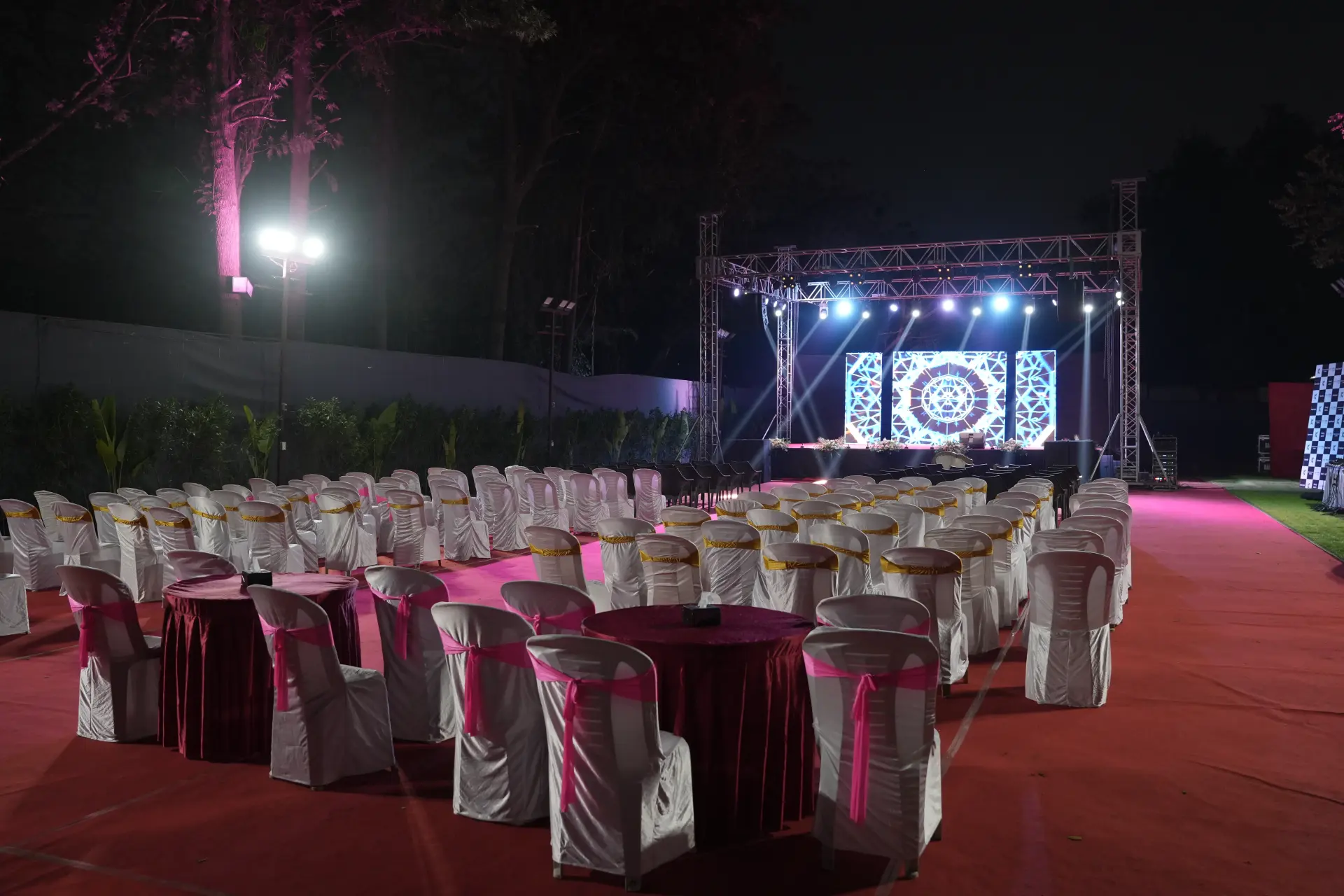
Every photo here is from an event our team planned and ran.
Once the school picks a theme, these are the pieces we design, set up and run around it.
The chosen idea broken into one slice per class, so teachers get a brief instead of a name and a blank page.
A backdrop sized to your largest group act, with flats, drapes and props built to survive forty children in formation.
A sheet per class with colours, what to buy, what to borrow and what we will make, priced honestly before you announce it.
A lighting plot that changes per act and screen visuals cut to the theme, including act titles and class names.
Invitation, welcome board, programme card, stage banner and award names carrying the theme in one palette and typeface.
Marked stage for rehearsal, a technical run with lights and tracks in order, and crew on site until the last prize.
A school annual day theme has one job the corporate version does not: it has to hand every single class something to perform. That is the test. Say the name out loud, then walk down your class list and see whether each teacher would know what to do with it. If three classes come up blank, the theme is not broad enough, however good it sounds on an invitation.
Pick the theme after the act list is roughly settled, not before. You need to know how many classes are performing, which are the huge group acts and which are the small ones, because a theme with only four natural segments cannot carry twelve acts. The whole-school ideas on this page are built to split: an hour each, a postcard each, a weave each, a stage of growth each. That structure is what stops the evening feeling like twelve unrelated dances with a shared banner.
Check the theme against the youngest class, not the oldest. Seniors can make anything work, and often improve it. A senior KG group needs something they can hold, wear from home, or copy in three movements. Then check the message. Schools are usually asked to justify the theme to parents and management, so a name that carries a value quietly, such as growth, craft or community, will get approved faster than one chosen only because it looks good on stage.
| Age band | What the theme must give them | Costume rule | Realistic act length |
|---|---|---|---|
| Pre-primary | Something to hold, or clothes from home | Nothing stitched | About two minutes |
| Classes 1 to 4 | A character with a name they can remember | One hired or borrowed piece | Two to three minutes |
| Classes 5 to 8 | A story to act, not only steps to dance | Props the class makes in craft periods | Three to four minutes |
| Classes 9 to 12 | Room to design their own segment | Their own call, with a colour brief | Four to six minutes |
The two real costs are build time and costumes, and they land on different people. Build time depends on when the venue opens to you. A school ground you control can take a set built over two days. A hired auditorium that opens on the morning of the show can only take a backdrop, lights and props that go up in hours, so themes leaning on carved flats and hanging pieces are out before you start. Ask for the access window in writing, then choose.
Costumes usually come out of parents' pockets, which makes it the most sensitive line in the whole event. Announce the costume brief with the theme, in the same circular, with colours and a clear note on what the school is providing. Themes such as Pyjama Parade and Wheels exist on this list precisely because they cost families almost nothing. If you are set on something dressier, keep it to the senior classes, where children can assemble it themselves.
A theme shows up in five places, and the backdrop is only the first. Build the backdrop to be read from the last row, which means large shapes and strong contrast, not fine detail that vanishes past the tenth seat. Keep the screen clear of decorative graphics so it can carry act titles, class names and the annual report video. Lighting is where a school theme is won cheaply; a colour change between acts tells parents a new segment has started better than any announcement. Then carry the palette into the invitation, the programme card, the stage banner, the award names and the photo corner near the entry, because repetition is what makes a theme look planned. Stage, truss, screens and lighting are covered on our event production page.
Four things, ideally in one email: the act list with class sizes and durations, the venue with its access window, the date, and two or three themes from this page with a line on why each appeals. Add anything fixed, such as a school colour, a milestone year or a chief guest already confirmed. Tell us honestly what last year went wrong, because that is usually the most useful sentence in the brief. The mechanics of running the evening, from stage sizing to backstage flow, sit on our school annual day management page, company annual days are on annual day event management, and gatherings and fests on college event management.

The full evening with class-wise performances, narration, a chief guest and prize distribution on a ground or hired stage.
A shorter show on a low stage, where the theme has to survive two-minute acts and no stitched costumes.
A longer, livelier cultural evening with inter-house acts and student anchors, which suits the segment-based themes best.
A milestone programme where the theme usually borrows from the school's own history and the screen carries archive photos.
March past, house colours and a medal podium, so the theme lives in banners, house names and the guest stand.
Four houses, one idea, four interpretations, with judging criteria written so the theme is actually scored.
A warm, short programme where the theme mainly shapes the photo corner, the stage walk and the memento design.
Bigger crowds and student-run segments, where a broad theme has to hold dance, drama, music and a fashion round.
Can't find yours? Call or WhatsApp — a planner answers.
Good school themes are ones every class can perform, such as Twenty-Four Hours, Postcards from Everywhere, Threads of India or Seeds. Each splits cleanly into one slice per class, so a nursery group and a Class 12 group both get a role. Check any name against your act list before falling in love with it.
Unique themes usually come from a structure rather than a subject. Newsroom Live puts student anchors at a desk and removes the gap between acts. Masks and Mime drops dialogue entirely. Black Box uses only light and bodies. Nukkad moves street theatre onto the floor in front of the stage, close to the audience.
Pick two or three words that suggest a picture, not a value. Excellence gives a designer nothing; Platform Number One gives them a station board, a whistle and a coach flat. Say the name aloud, check it fits on a banner and an invitation, and make sure every class teacher knows what to do with it.
Themes that need no stitched costume and give children something to hold. Pyjama Parade uses nightsuits from home. Wheels gives them painted vehicle boards. Little Bakers puts an apron and a chef hat on them, and carrying a prop actually steadies small children on stage. Keep each act to about two minutes.
Cost is driven by the size of the stage and backdrop, how much of the set is built rather than draped, the lighting and screen the theme needs, the hours the venue gives you to build, and how many rehearsal days are involved. Send us the act list, the venue and the date for an itemised quote.
Two to three months before the show. Costumes, music, choreography, the backdrop build and the printed invitation all wait on it, and class teachers need rehearsal weeks once the brief is out. Changing the theme inside the last month usually means paying twice for decor and re-rehearsing several acts.
No, and it is worth choosing with that in mind. Several themes here are built to cost families almost nothing, using clothes from home or props the school provides. Announce the costume brief in the same circular as the theme, with colours and a clear note on what the school supplies, so nobody buys twice.
Yes, if the theme splits into parts rather than describing a single scene. An idea such as Twenty-Four Hours or Postcards from Everywhere gives each class its own hour or its own place, with a shared set and a shared palette. A theme built around one story usually runs out of roles by the sixth act.
Pune · PCMC
Schools · Colleges · Companies
Pune · PCMCSend your act list and we will suggest three
Tell us the classes performing, the venue and the date, and we will shortlist themes your stage and your access window can actually hold.