

Mandap and ceremony decor
A mandap drawn to the venue, with the ritual items placed first and sightlines checked from three sides before anything is built.
Mandap, haldi, mehendi, entry and whole-wedding palettes, written the way a decorator thinks about them. Each look says what it is built from, which venue carries it and where it tends to disappoint.
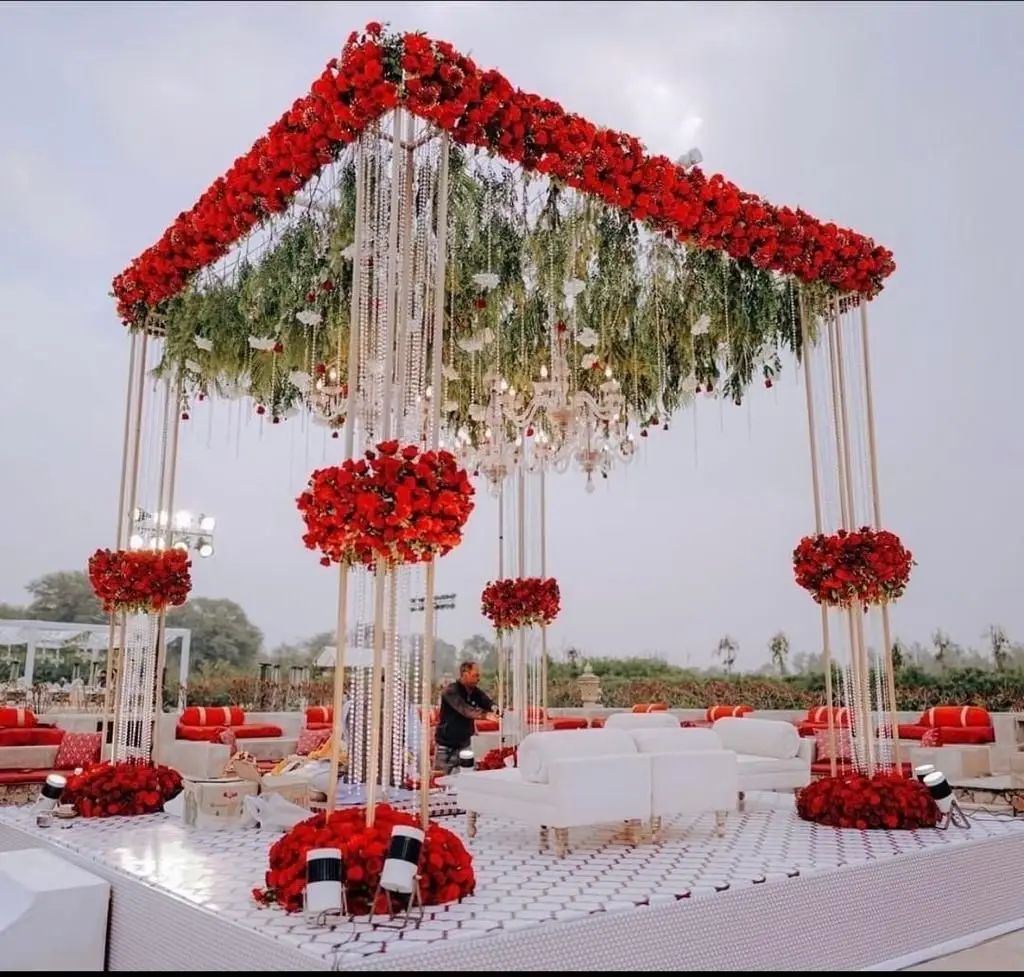
Every wedding decor theme comes down to three questions: what it is built from, how long it takes to put up, and what the venue will allow. A picture answers none of those, which is why families fall for an image and then hear a price that makes no sense to them. Each card here answers all three in a line.
The looks are grouped by function rather than by style, because a wedding is not one event. The mandap has to respect the ritual and stay visible from three sides. The haldi has to survive turmeric on the floor. The mehendi needs shade, fans and room for artists. The entry gets seen by every guest and usually gets the least attention.
Night stages for sangeet and reception are a separate craft, since lighting does most of the work there. Those sit on our sangeet and reception stage themes page. We have been setting up wedding functions since 2013, in Pune and across 30+ cities.
Read the build line before the picture, because most disappointment comes from a look the venue never had time to carry.
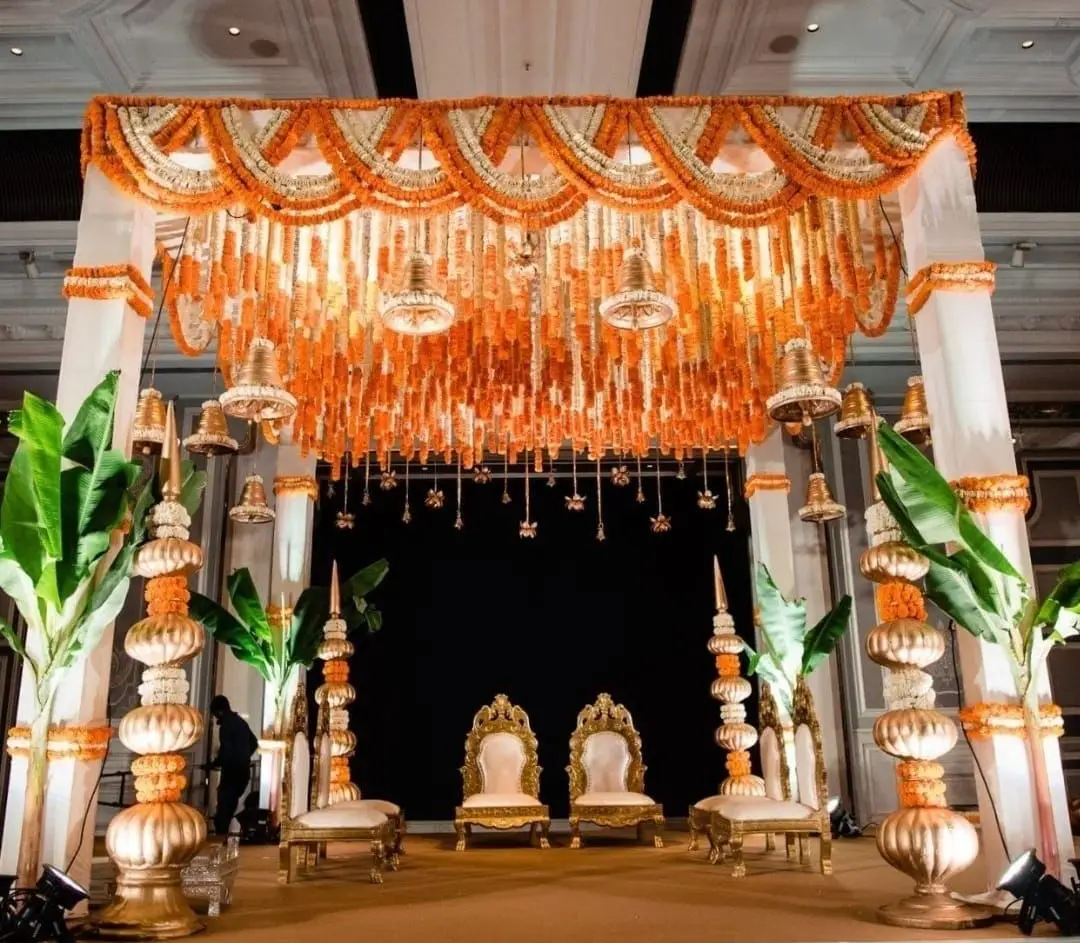 Mandap and ceremony Marigold Traditional
Genda and mango leaves on a wooden frame, the one look that reads correctly in temple light, in morning sun and on a phone camera. Timber frame, marigold by weight, mango leaves, morning build
Mandap and ceremony Hanging Floral Canopy
Flowers suspended above the couple rather than around them, so the photographs look upward and the pheras stay visible from every side. Rigging or four-post truss, floral strings, height clearance
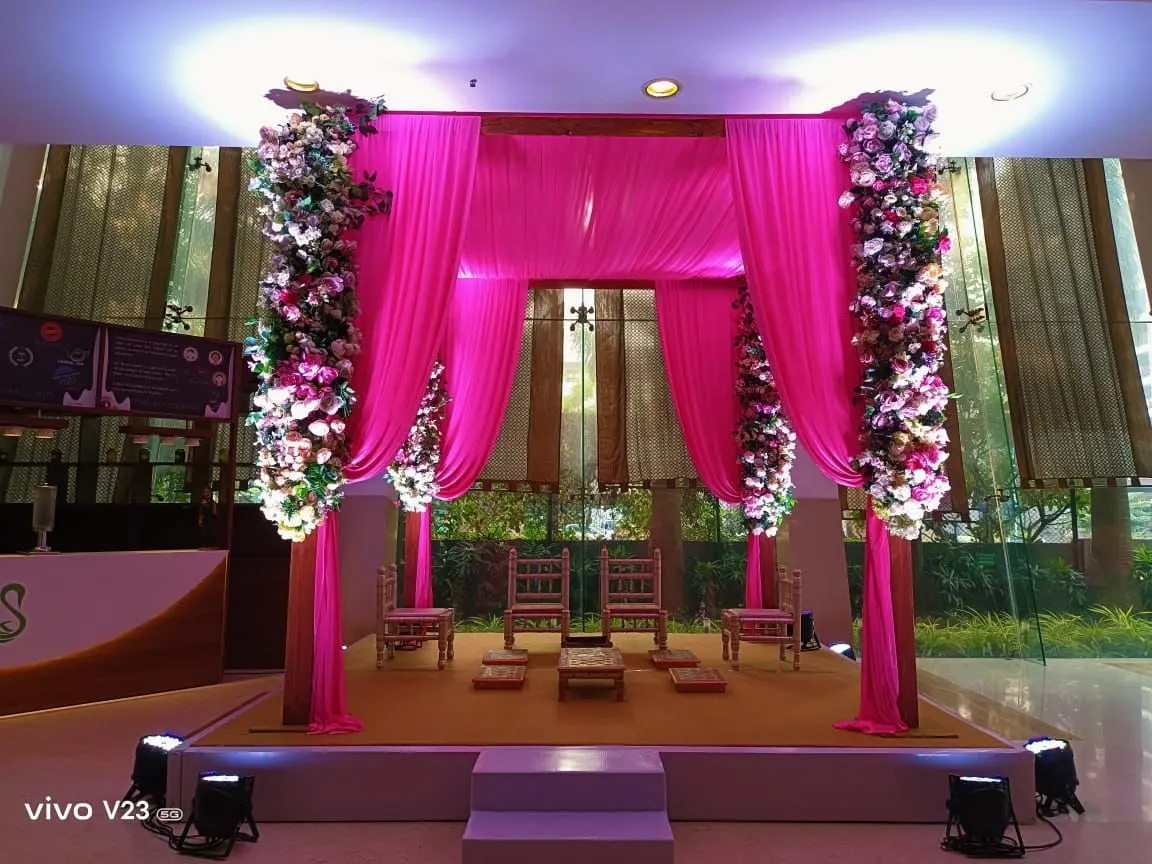
Mandap and ceremony Pastel Drape Mandap
Soft pink and ivory fabric gathered into four columns, which fills a large mandap for far less than buying flowers by the quintal. Drape metres, four columns, light hidden inside the fabric
Mandap and ceremony Marigold Traditional
Genda and mango leaves on a wooden frame, the one look that reads correctly in temple light, in morning sun and on a phone camera. Timber frame, marigold by weight, mango leaves, morning build
Mandap and ceremony Hanging Floral Canopy
Flowers suspended above the couple rather than around them, so the photographs look upward and the pheras stay visible from every side. Rigging or four-post truss, floral strings, height clearance
Mandap and ceremony Pastel Drape Mandap
Soft pink and ivory fabric gathered into four columns, which fills a large mandap for far less than buying flowers by the quintal. Drape metres, four columns, light hidden inside the fabric
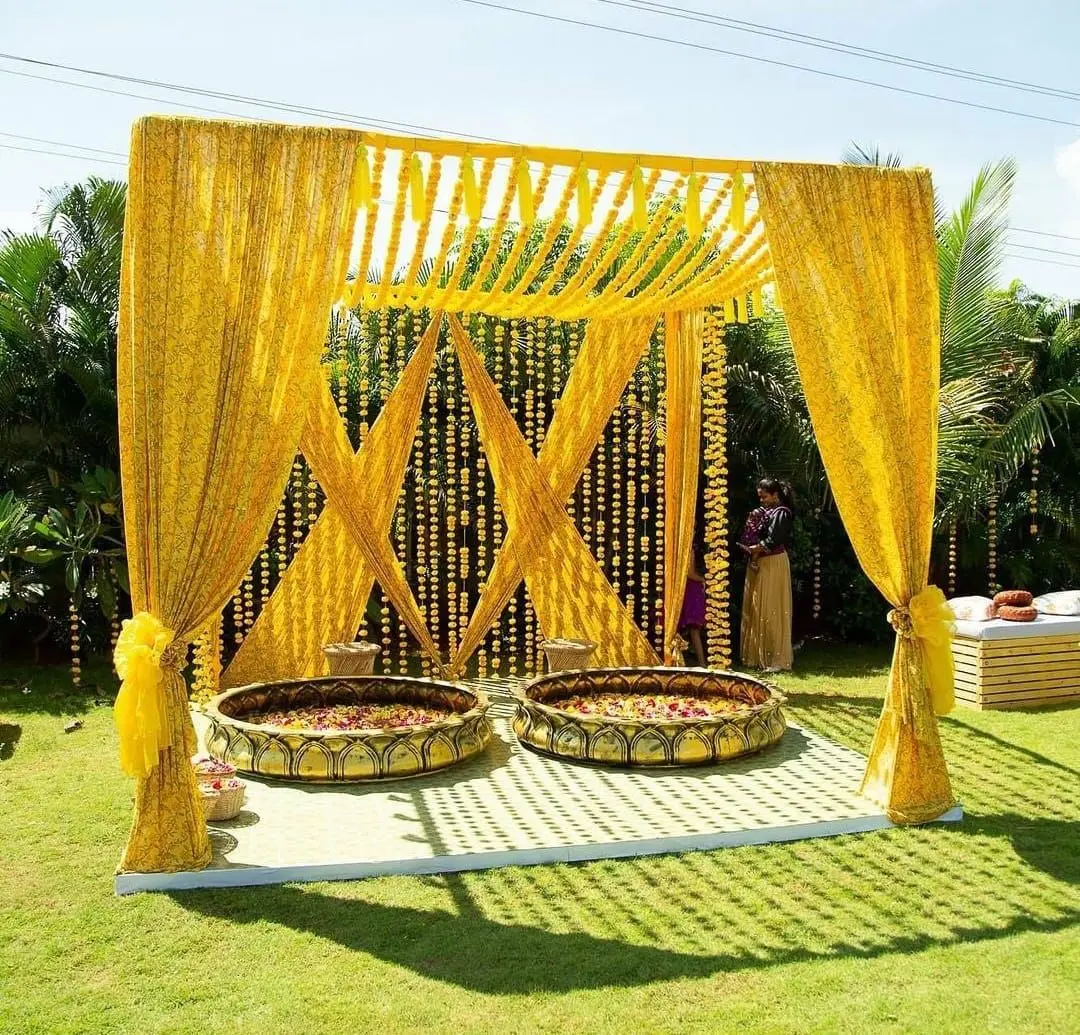 Haldi and mehendi Yellow Drape Haldi
Yellow fabric, marigold strings and low seating on a terrace, where the floor cover matters more than the backdrop because turmeric stains everything. Yellow drapes, floor cover, low seating, morning shade
Haldi and mehendi Yellow Drape Haldi
Yellow fabric, marigold strings and low seating on a terrace, where the floor cover matters more than the backdrop because turmeric stains everything. Yellow drapes, floor cover, low seating, morning shade
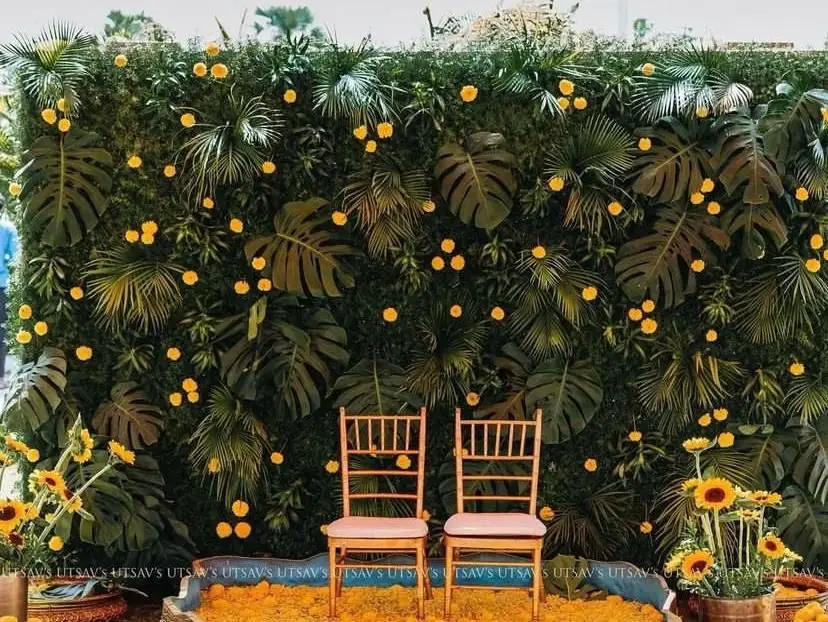 Haldi and mehendi Green Wall Photo Corner
A leaf wall dressed with oranges and two chairs gives a whole function one place where every guest takes the same good picture. Leaf wall panels, two chairs, fruit props, even light
Haldi and mehendi Green Wall Photo Corner
A leaf wall dressed with oranges and two chairs gives a whole function one place where every guest takes the same good picture. Leaf wall panels, two chairs, fruit props, even light
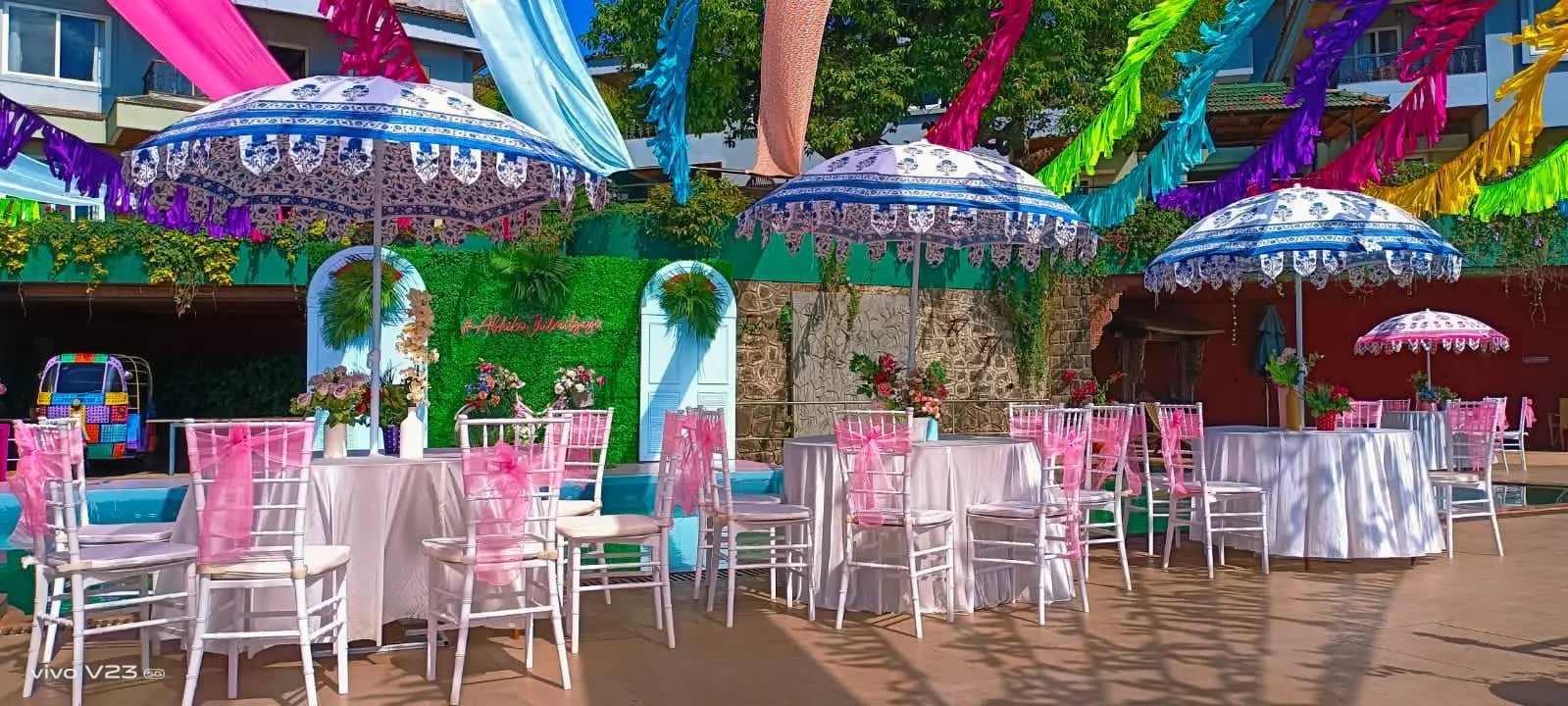 Haldi and mehendi Umbrella Mehendi
Colourful umbrellas overhead do two jobs at once, shade through the afternoon and a ceiling in every photograph, which little else manages. Umbrellas, overhead rigging, low seating, fans, daytime shade
Haldi and mehendi Umbrella Mehendi
Colourful umbrellas overhead do two jobs at once, shade through the afternoon and a ceiling in every photograph, which little else manages. Umbrellas, overhead rigging, low seating, fans, daytime shade
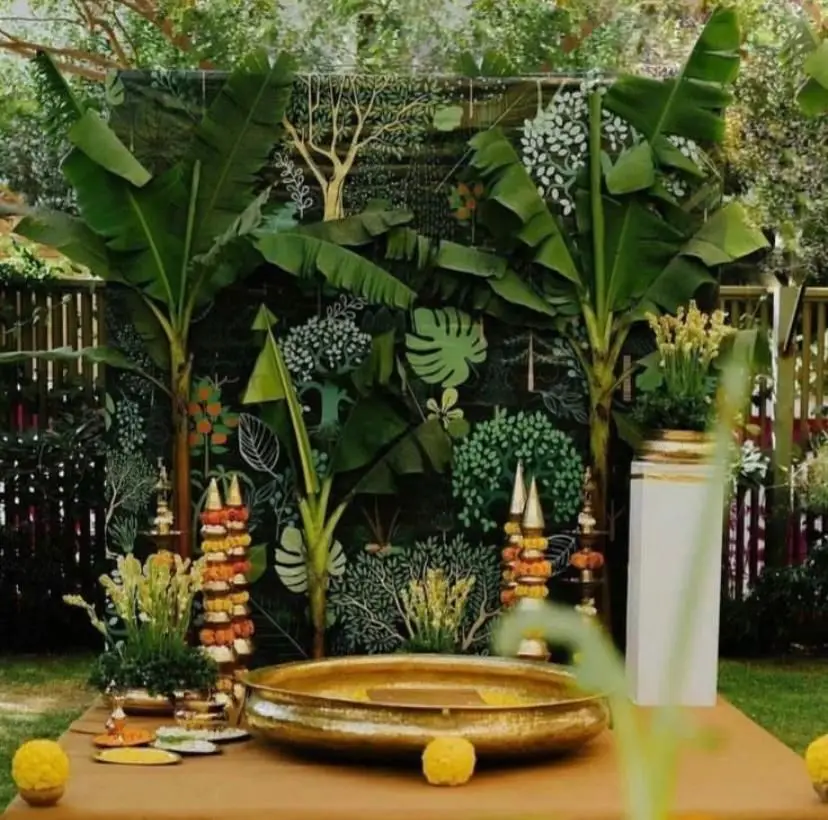 Entry, aisle and photo corners Urli and Brass Corners
Brass urlis with floating flowers and diyas placed where people queue, so the waiting areas stop looking like waiting areas. Brass urlis, water, floating flowers, low plinths, downlight
Entry, aisle and photo corners Urli and Brass Corners
Brass urlis with floating flowers and diyas placed where people queue, so the waiting areas stop looking like waiting areas. Brass urlis, water, floating flowers, low plinths, downlight
Every photo here is from an event our team planned and ran.
Once a look is settled, these are the pieces we design, build and run across your functions.
A mandap drawn to the venue, with the ritual items placed first and sightlines checked from three sides before anything is built.
Reception and sangeet stages with the backdrop, seating and photo framing designed together rather than bought separately.
Welcome arch, aisle treatment, lounge corners and the waiting areas guests spend more time in than anyone plans for.
Flower type and volume matched to the season and the function timing, with drape and structure doing the work flowers should not.
Uplights, warm washes and pin spots on the mandap and cake table, planned so the photographer is not fighting your decor.
Build in the access window the venue gives, a crew through the function, and everything cleared the way the venue requires.
Pune · PCMC
Pune · PCMC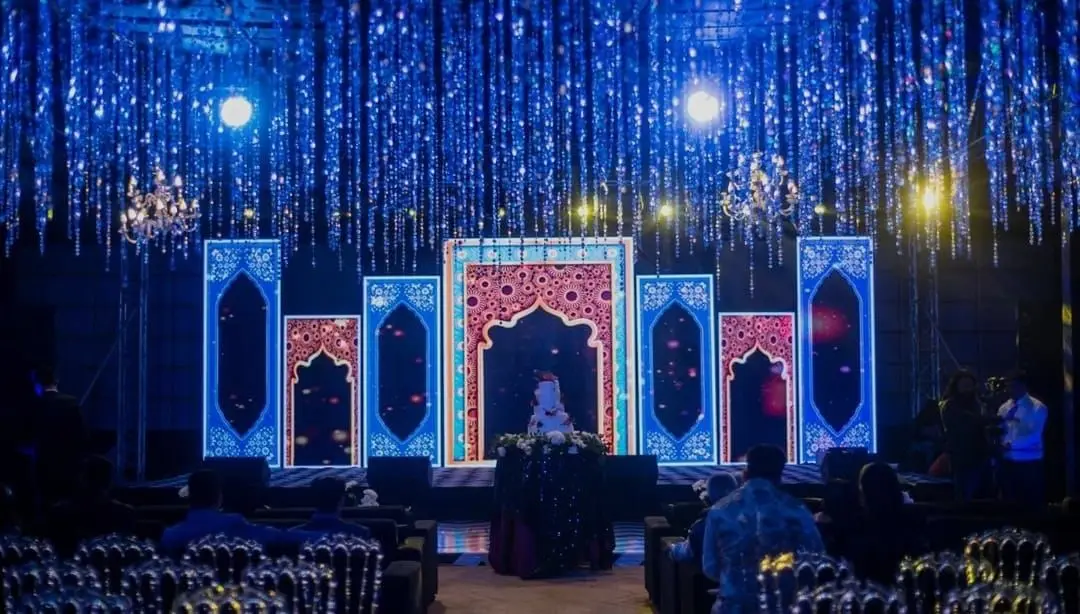 Pune · PCMC