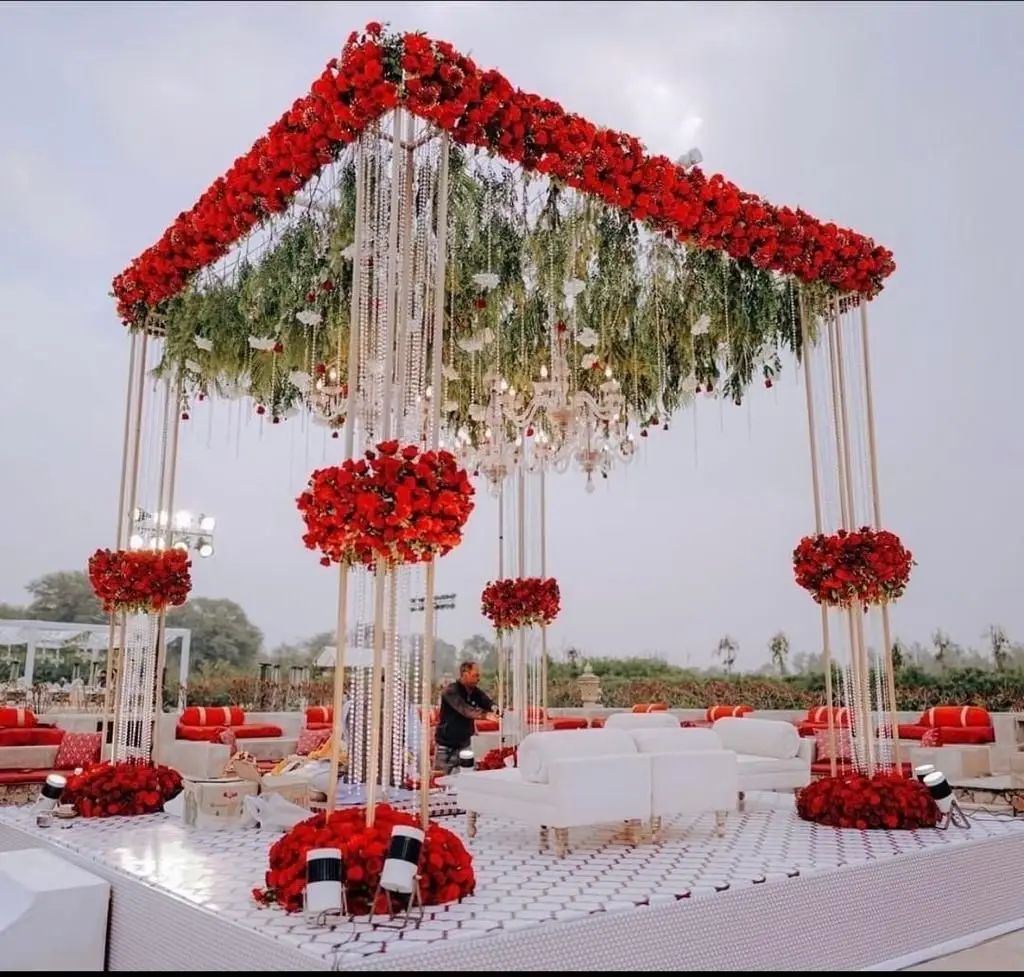

Stage design and build
A stage drawn to the room with riser height, backdrop size, seating position and the queue route planned together.
+91 84858 38274 · +91 84858 38219
Shop 7, Ekta Nagri, Near Dwarka Apartment, Anand Nagar, Pune 411051

Twenty stage and room looks for sangeet, cocktail and reception nights. Each says what carries it, what it needs in truss, lighting and power, and how it behaves once a full dance floor is in front of it.
A sangeet or reception stage is not a bigger version of a daytime setup. It runs after dark, so light is the material, not the flowers. It has a dance floor in front of it and a DJ behind it, so everything has to be rigged rather than propped. And it is filmed all evening, which means it has to look right on camera, not only to the eye.
That changes what a theme means. On a night stage, the theme is a combination of structure, a lighting plot and content, operated by someone at a desk through the evening. The same drape backdrop can look flat or rich depending entirely on where the light sits. The same flower wall photographs completely differently with a warm pin spot against a cold ceiling light.
These twenty looks are grouped by what carries them. Read the build line before the picture. Daytime and ceremony looks sit on our wedding decoration themes page. We have been building and running wedding stages since 2013.
Screen, fabric, flowers, light or a moment: pick the thing that does the work, and the rest of the design follows.
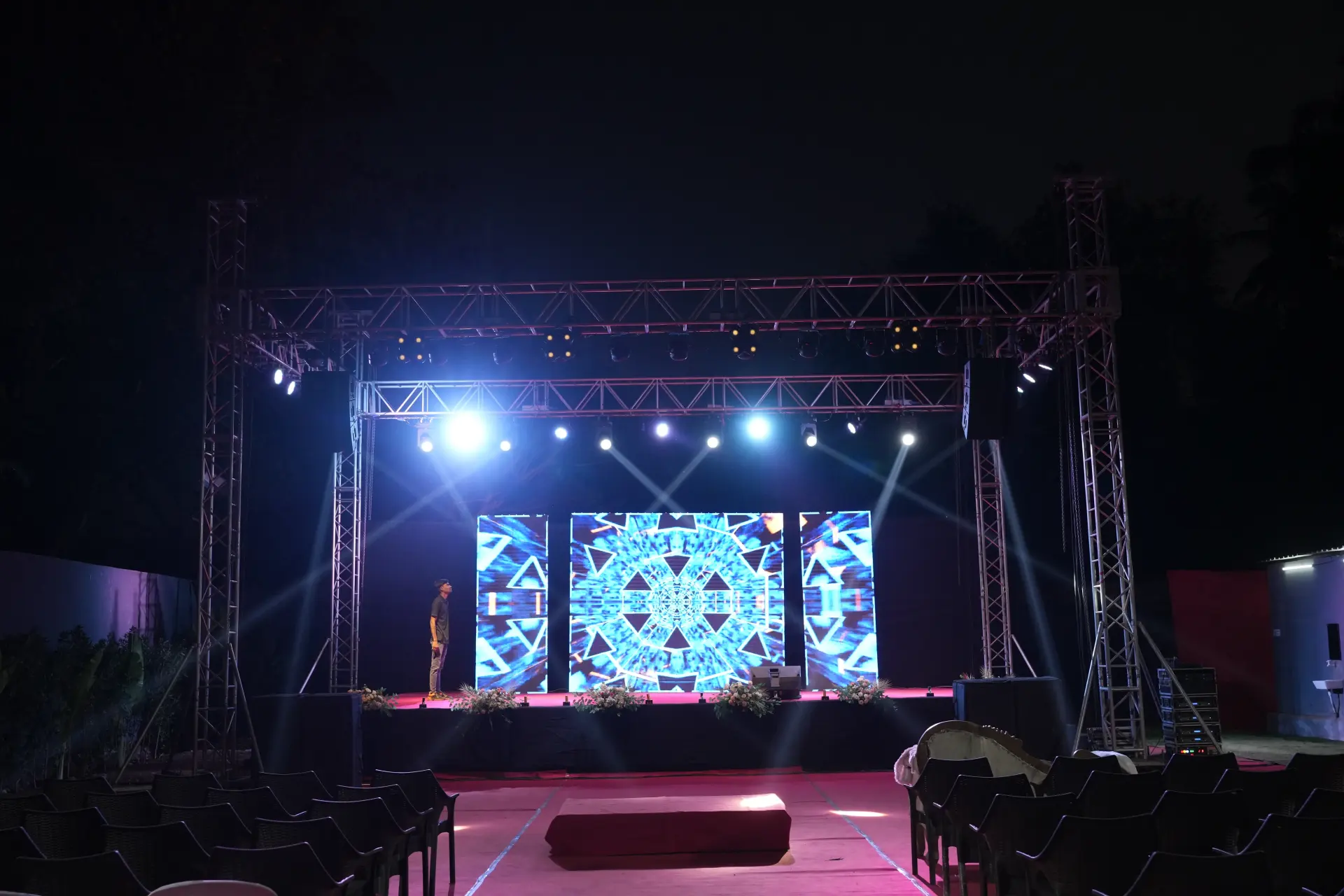
LED and screen-led stages Full LED Wall
A single wall of screen behind the couple lets the backdrop change with every song, and it is the only look that survives a late design change. LED panels, processor, content at the right pixel ratio
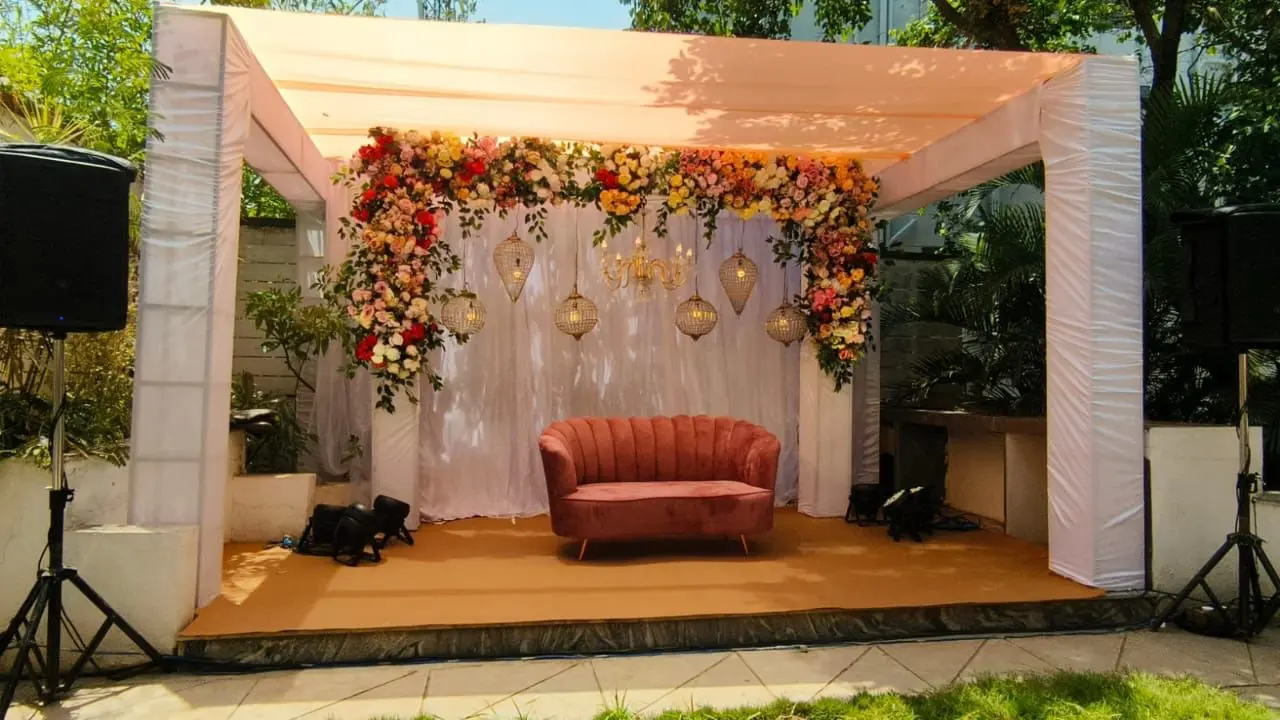
Floral stages Floral Sofa Stage
Flowers built around a single sofa keep the couple in frame all evening, with the reception queue moving past on one side. Sofa, floral back panel, riser, queue barrier, pin spot
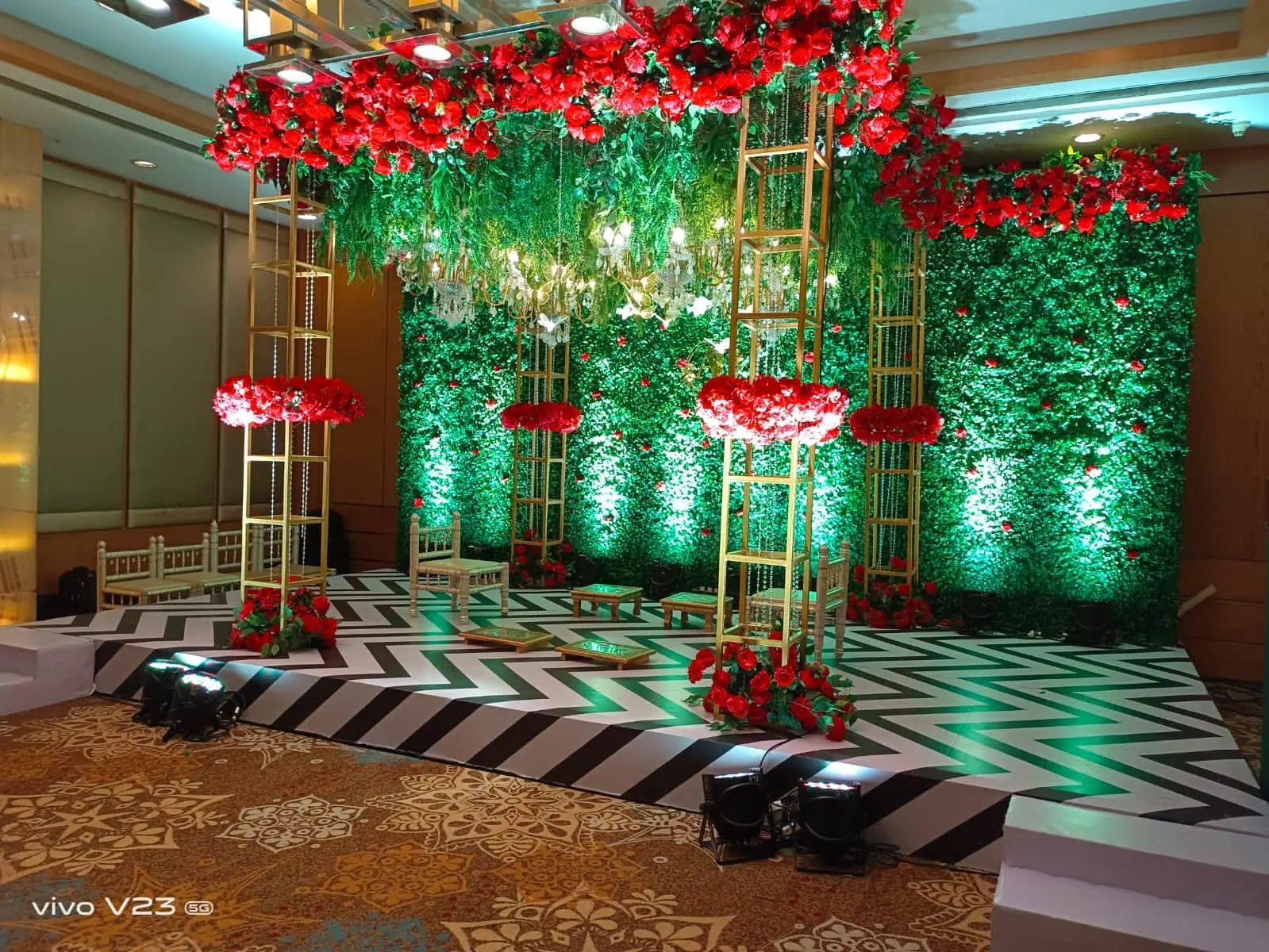
Floral stages Green Wall Reception
A wall of foliage lit from below is the one floral look that still looks fresh at the end of a long reception in a warm hall. Foliage panels, uplights, a rigid frame, misting before
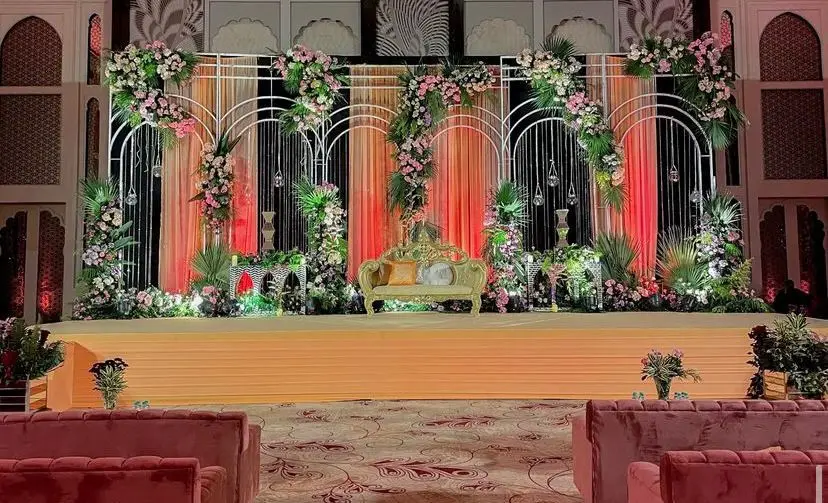
Floral stages Cascading Florals
Flowers falling from the top of the frame to the stage floor fill height without a built structure hiding behind them. Tall frame, flower strings, ladders, a same-day build
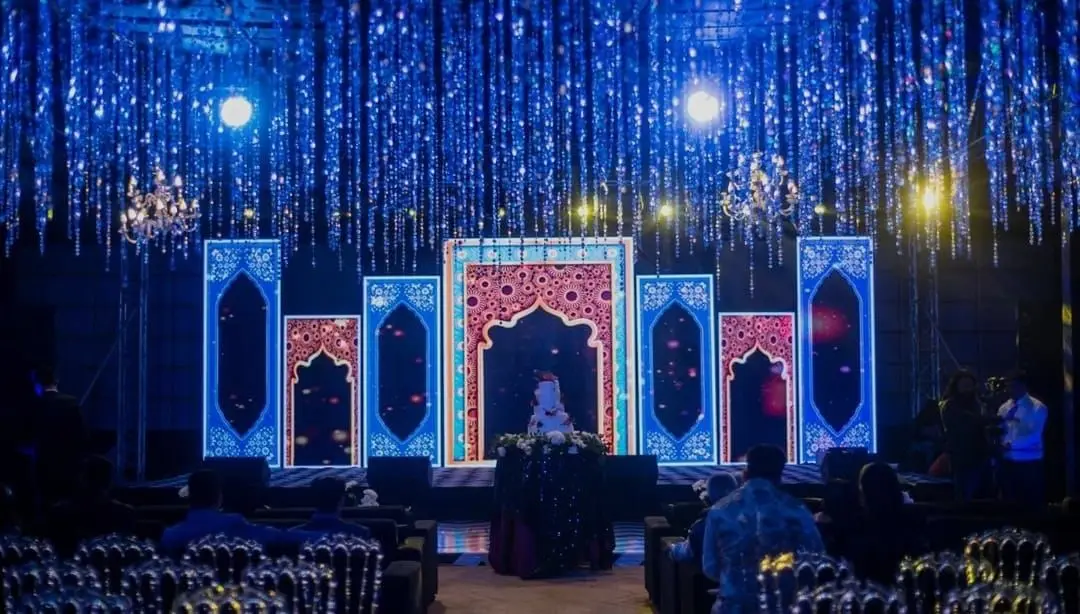
Room washes and dance floors Blue Hour
The whole room washed deep blue with gold accents hides a dated banquet interior faster than any amount of drape. Uplights around the room, gold accents, dimmer control
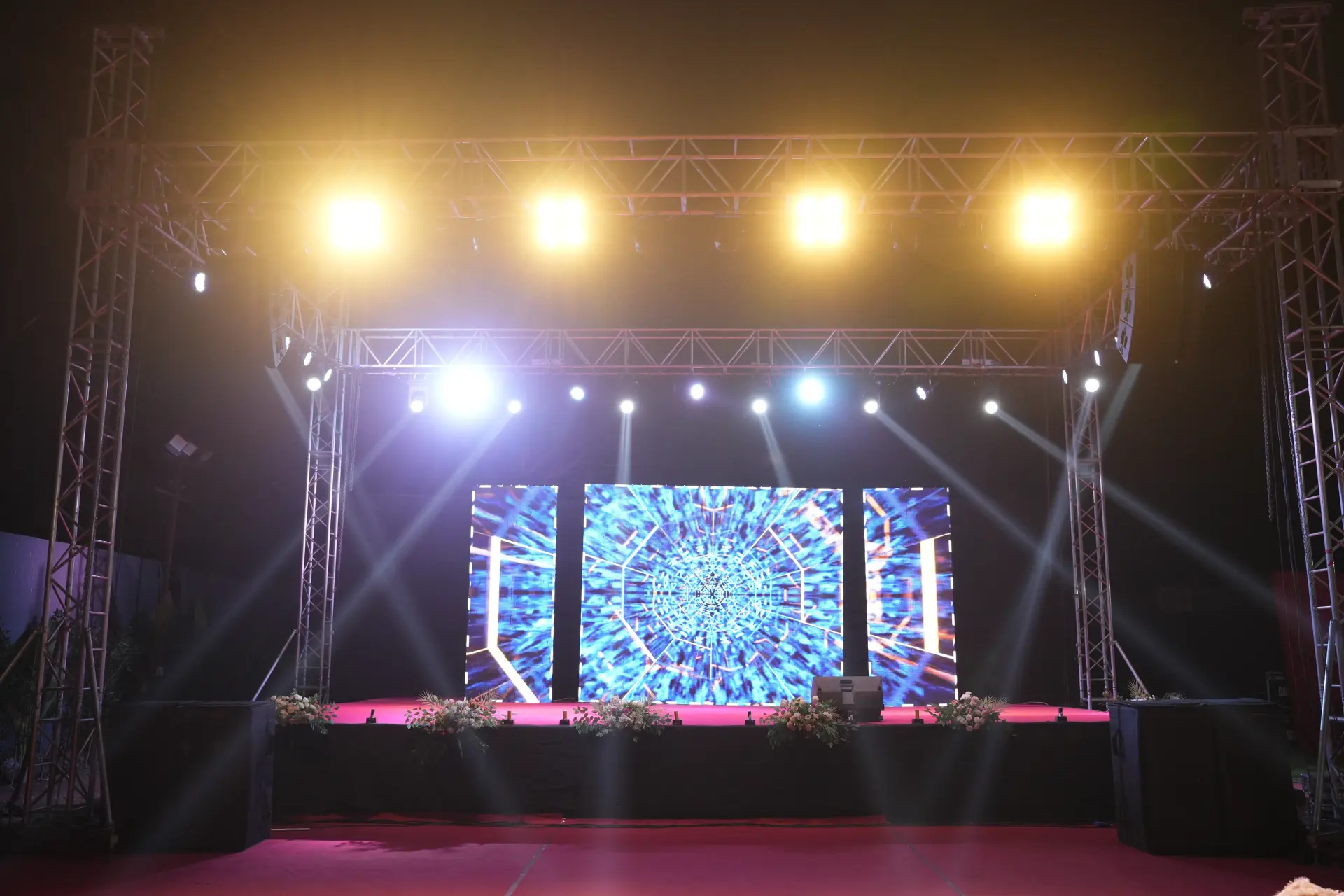
Room washes and dance floors Truss Cube
Four sides of truss over the dance floor carry light on every side, so dancers are lit from all angles instead of one. Truss, towers or motors, fixtures, clearance, power
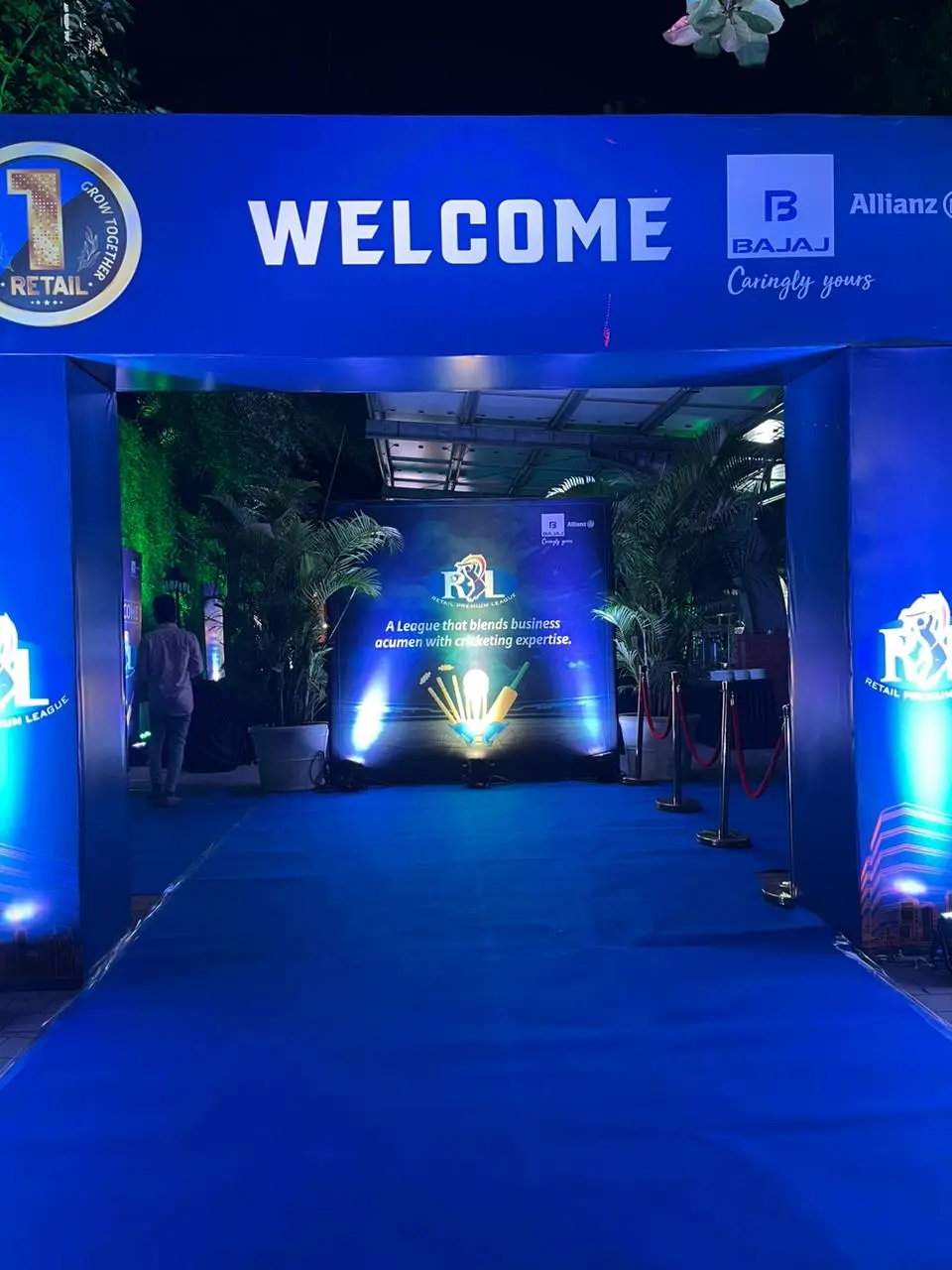
Entry and reveal moments LED Tunnel Entry
A lit tunnel guests walk through before the hall sets the palette in their heads before they ever see the stage. Tunnel frame, LED strips, a colour chase, power run
Every photo here is from an event our team planned and ran.
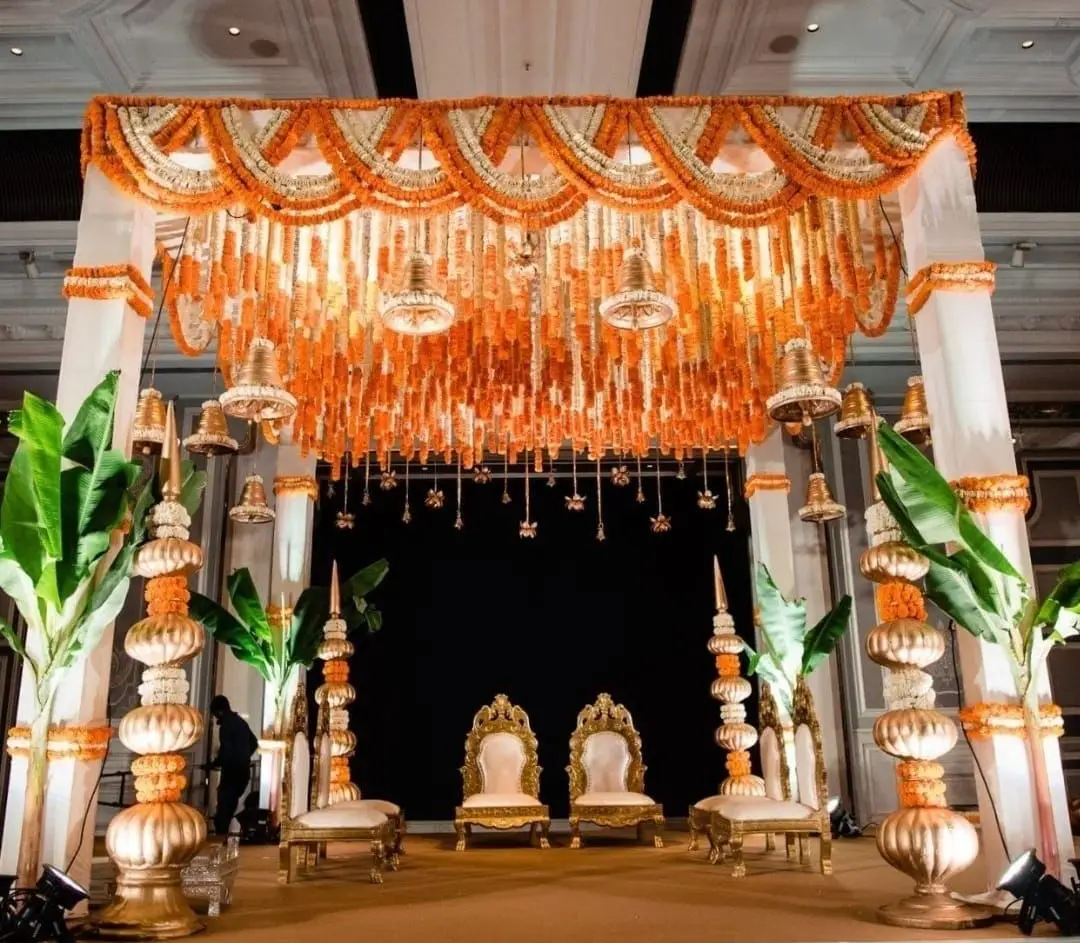
A night stage needs someone operating it all evening, not only someone building it in the afternoon.
A stage drawn to the room with riser height, backdrop size, seating position and the queue route planned together.
Ground support or hung truss with load checked against the venue, plus clearance for fixtures, screen and hanging decor.
Room wash, stage key light, pin spots and dance floor fixtures, programmed in cues and run live through the night.
Panels sized to the frame, a processor, and content built at the right ratio so nothing stretches or drops frames.
Speakers placed for the room rather than the corner, monitors for performers, radio mics for anchors and a DJ position that works.
A run-through for entries and performances, cue sheets for the crew, and the stage cleared after the night ends.
Night stages are chosen in the opposite order to daytime decor. Start with what the evening has to do, then decide what carries the look, then design the backdrop last. A sangeet with eight family performances needs a wide stage, monitors and wing space. A reception with a long photo queue needs a narrow, well-lit frame and a route past it. Those are different builds, and no backdrop fixes the wrong one.
Three things decide your options. Ceiling height and rigging points decide whether truss can be hung or has to stand on towers, and ground support eats floor space you were planning to seat people on. Power decides how much light and screen you can actually run, and many older halls need a generator before any of this is real. The running order decides the shape: performances need depth and wings, a seated reception needs width and a clean queue line.
Then think about camera. Almost everything at a sangeet ends up on video, and video is unforgiving about light. A backdrop lit only from the front goes flat. A couple lit only by the LED wall behind them goes dark. Ask for a key light on the seating position and a separate wash for the room, and check the two together at the venue rather than trusting a rendering.
| What carries the look | What it really needs | Best for | Where it fails |
|---|---|---|---|
| LED screen | Power, a processor, content made to ratio | Sangeet with performances | Content arriving on the day, untested |
| Drape and fabric | Hanging bars, light between layers, steaming | Banquet halls | Front light only, which flattens it |
| Fresh flowers | Same-day build, cool air, a rigid frame | Receptions and photo queues | Long warm evenings and early builds |
| Room lighting | Uplights, a control desk, an operator | Dated or plain venues | Nobody left at the desk after dinner |
| A reveal moment | Rehearsal, cue timing, crew on both sides | Entries and first dances | Fired late, with the couple already visible |
Cost lives in rigging, screen area, fixture count and hours. Rigging is the first jump, because anything hung needs load checks, crew and access time. Screen is priced by area, so a wall that is one panel taller costs a full row more. Fixtures are counted individually, and the difference between a stage that looks ordinary and one that looks designed is usually six or eight more of them, not more decor. Hours matter because most venues hand you the same day, and a truss build plus a lighting focus plus a content test does not fit into an afternoon alongside a floral backdrop.
Operation is the line most people cut and then regret. A programmed lighting plot with nobody running it gives you one look for the whole night, through the entry, the performances, the dinner and the dance floor, which are four different moods. Budget for a person at the desk.
Work outward from the seating position. Fix where the couple sits, then the backdrop that frames them, then the key light, then the room wash, then the dance floor. The entry comes next, because it sets the palette before anyone sees the stage, and a tunnel or a lit walkway costs less than adding height to a backdrop. Print carries the same two colours and one accent into the welcome board, table names and the menu, which is what makes the evening read as one design. Trusses, LED, generators and crew are covered on our event production page, and the daytime and ceremony looks on wedding decoration themes.
Send the venue with photographs of the empty hall, the ceiling and the power point; the date and the access hours; the guest count and whether the floor is for dancing or dining; the running order with how many performances there are; and two or three looks from this page. Say who is filming, since the video team's needs should be settled before the lighting plot, not after. Mention the venue's sound cut-off, because the whole evening is planned backwards from it. Functions, vendors and timings together sit on our wedding planner page.
Family performances, a dance floor and a running order, so the stage has to serve both acts and a party.
A long photo queue past a seated couple, which makes framing, key light and queue flow the whole design brief.
Standing crowd, bar counters and music, where room wash and dance floor lighting matter more than the backdrop.
A smaller stage seen from close range, so finish, clean cabling and a single good photo angle carry it.
A daytime function running into the night, needing a look that survives the changeover from sunlight to stage light.
The first night of a multi-day wedding, usually outdoors, where a light-led setup does more than a built backdrop.
Open-air builds at a property near Lonavala or further out, needing generator power, wind weighting and a rain plan.
The hour after the reception, with a different palette, a tighter dance floor and a sound cut-off to plan around.
Can't find yours? Call or WhatsApp — a planner answers.
The strong ones are built around a single carrier. A full LED wall changes with every song. A layered drape stage gives depth with light between the fabric. A truss cube lights the dance floor from four sides. A blue room wash rescues a dated hall. Pick the carrier first and design the backdrop after.
Choose LED for a sangeet with performances, because the backdrop can change per act and late edits are easy. Choose flowers for a reception, where the couple sits still for hours and guests see the stage from a few feet away. Many weddings use both, with LED for the sangeet night and florals for the reception.
Cost is driven by rigging, screen area, the number of light fixtures, the size of the stage and riser, and the hours the venue gives you. Anything hung needs load checks and crew. Screen is priced by area, so one extra panel row adds real money. Send the venue, date and running order for an itemised quote.
More than most families expect, because the stage, the dance floor and the DJ all compete for the same area. Performances need depth and wing space to enter from. Ground-support truss takes floor you were planning to seat people on. Mark the stage, dance floor and dining out on the venue plan before approving any design.
Four separate things: a key light on the couple's seating, a wash on the room, fixtures over the dance floor, and something for the entry. Video is unforgiving, so a backdrop lit only from the front will read flat and a couple lit only by the screen behind them will go dark. Budget for an operator at the desk.
A drape or floral stage usually goes up the same day. Anything with truss, LED and a lighting focus wants a full day, and a rigged ceiling or kinetic element wants the night before. The limit is almost always the venue's access window rather than crew, so get the hours confirmed in writing before the design is approved.
Yes, if the change is planned as a job with its own crew and hours. The usual approach keeps the structure and truss, then swaps the backdrop, the seating and the lighting colour between the two nights. That is much cheaper than two builds. What it needs is a clear changeover window and a venue that allows overnight access.
They decide the running order. Work backwards from the cut-off and put performances and the loud part of the DJ set first, then move dinner and the photo queue later. Open-air and resort venues are usually stricter than banquet halls. Confirm the timing with the venue in writing, since the family's plan and the venue's licence often differ.
Haldi · Mehendi · Sangeet · Pheras · Reception
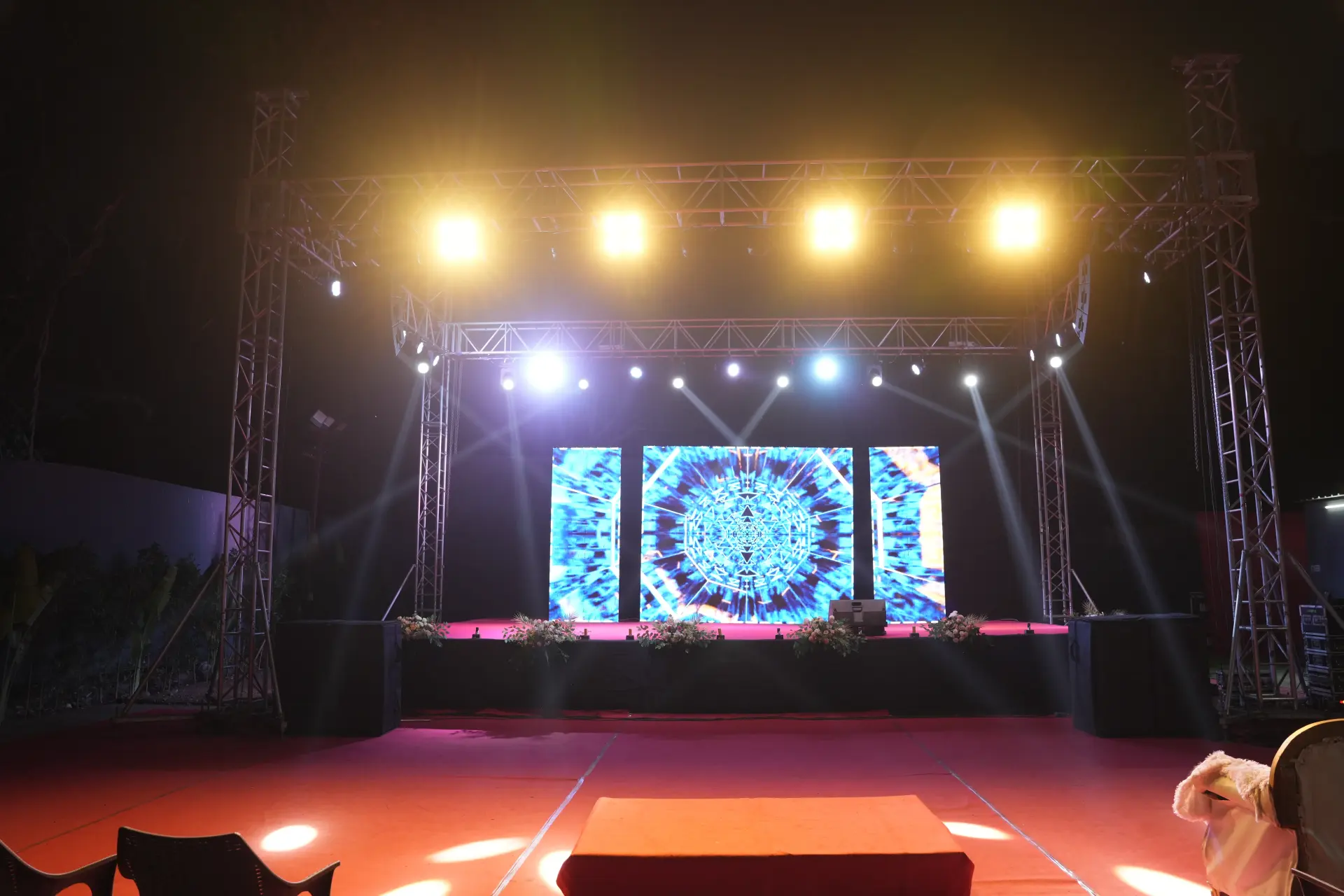
LED walls · Truss · Sound · Lights
Pune · PCMCSend the venue plan and the running order
Tell us how many performances there are and how long the venue gives you, and we will design a stage the room and the clock can carry.