Sangeet Night Planner in PuneEveryone performs, nobody waits

A sangeet is a show put on by people who have never stood on a stage. We build the line-up, hold the rehearsals, take charge of the tracks and keep the evening moving between acts.

  • Running order
  • Rehearsal slots
  • Dance floor
  • Music and cues
  • Show lighting
  • Anchor and mics

Sangeet night planner in puneThe gaps between acts decide the night

A sangeet is the only wedding function that is genuinely a show. Some of it is choreography; most of it is handover. Someone leaves the floor, someone else arrives, a track has to start on the right beat, a mic has to reach an uncle who did not expect to speak.

Those handovers are where these evenings come apart. A group stands waiting because their song is still on somebody's phone. The floor stays crowded so the next set cannot begin. Food opens halfway and half the audience walks away. None of that is a talent problem. It is a paperwork problem, and paperwork can be solved weeks earlier.

So the whole night runs off a single sheet that everyone holds: act order, track order, mic plan, light cues and the two moments when food and dessert open. We do this in banquet halls, hotel lawns and resort properties in and around the city, including the older hall belt through Kothrud, with practice time written into the schedule instead of hoped for.

  • Planning and running events since 2013, 500+ of them
  • One sheet everybody works from: acts, tracks, cues
  • Practice slots booked at the venue in advance
  • Every track collected, trimmed and labelled early
  • Food timed to a cue, never to a clock
Sangeet night planner in pune

What a sangeet night needsSix things that keep a show moving

Every item below exists to protect the same thing: the minute between one act and the next.

Running order

An act sequence built around who is ready, who needs changing time, and where the energy has to lift again.

Rehearsal slots

Booked practice time on the real floor, with the sound operator present, so entries and levels are settled early.

Music and cue handling

Tracks collected, trimmed, labelled and loaded in sequence, so nothing gets played off a phone halfway through.

Anchor and microphones

A host who links acts, keeps families moving and reads names correctly, with mics handed over cleanly between speakers.

Show lighting

Colour washes, moving heads and a follow spot, cued from the same sheet instead of chased live.

Floor and seating

A dance floor sized for your largest group, with chairs angled so families watch the act, not each other's backs.

Kinds of sangeetEvery family does it differently

  • Banquet hall sangeetOne room for the show and the meal, where furniture has to move between the two.
  • Lawn and poolside sangeetOpen floor, weather cover and a power plan, with levels set by the neighbourhood cut-off hour.
  • Mehendi into sangeetAn afternoon of henna flowing into an evening of acts, sharing one setup and one crew.
  • Cocktail sangeetA standing crowd, counters and a shorter programme, with the floor left open all evening.
  • Choreographed family showRehearsed sets from both sides, needing real practice slots and a strict changing-room schedule.
  • Open-mic eveningShort unrehearsed turns and impromptu speeches, which need a firm anchor and a very disciplined clock.
  • Resort sangeetAn out-of-town property where guests also stay, so the music can carry on later.
  • Home and terrace sangeetCompact sound, simple lighting and everything packed down before the residential cut-off time.

How our event planning worksFrom first call to final bow.

  1. 01 Day 1

    The call

    Tell us the date, the guest count, the budget and the feeling you want in the room. We ask the questions most people forget.

    You getFirst ideas and a budget range

  2. 02 Week 1

    Concept & moodboard

    Theme, décor, stage layout and a minute-by-minute run of show, drawn up and revised until it feels like yours.

    You getMoodboard, layout and an itemised quote

  3. 03 Weeks 2–4

    Venue, vendors & permissions

    Venue shortlists, caterers, artists, anchors and the paperwork — police, music licences and venue approvals — handled by us.

    You getLocked vendors, one point of contact

  4. 04 Event eve

    Build & rehearsal

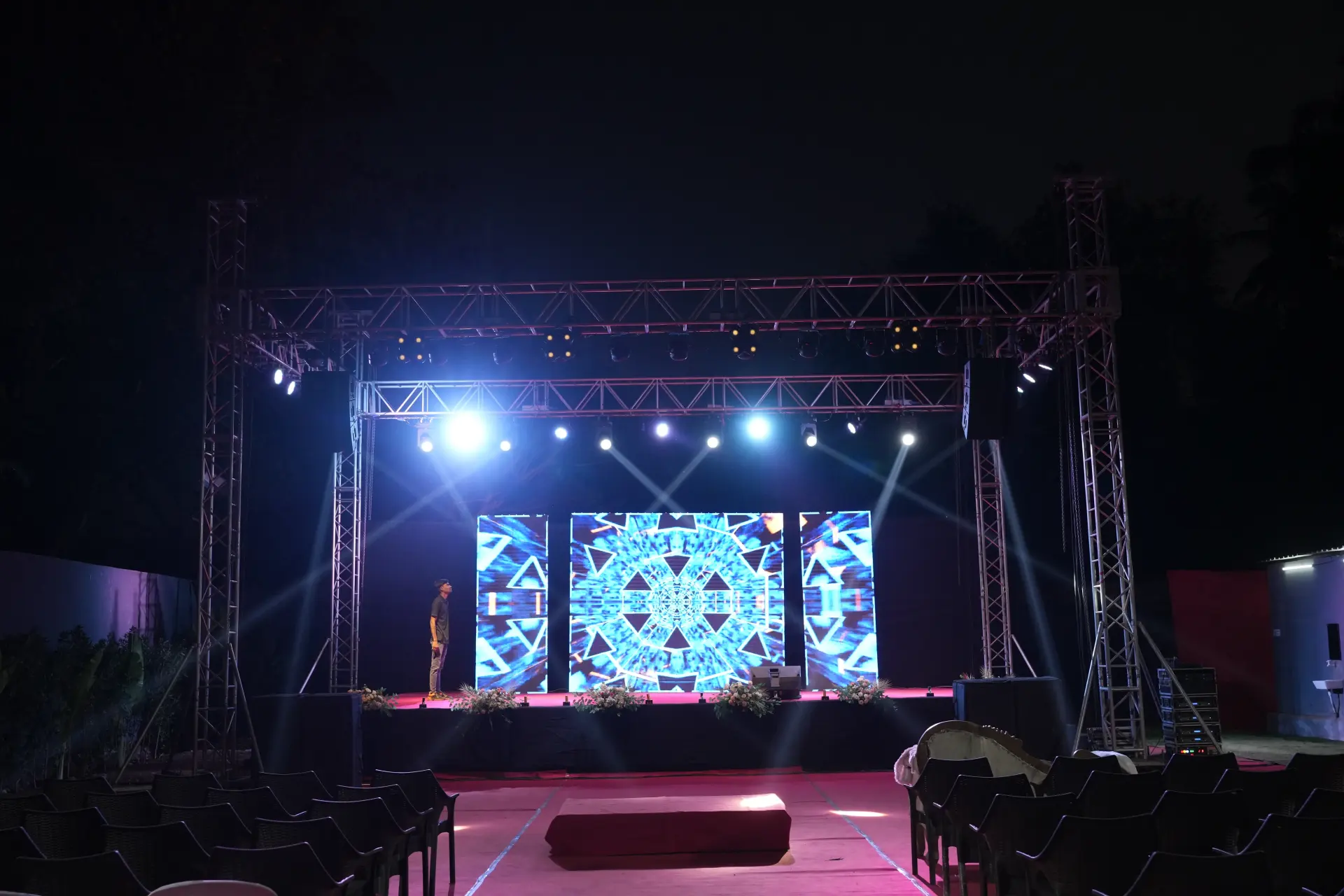
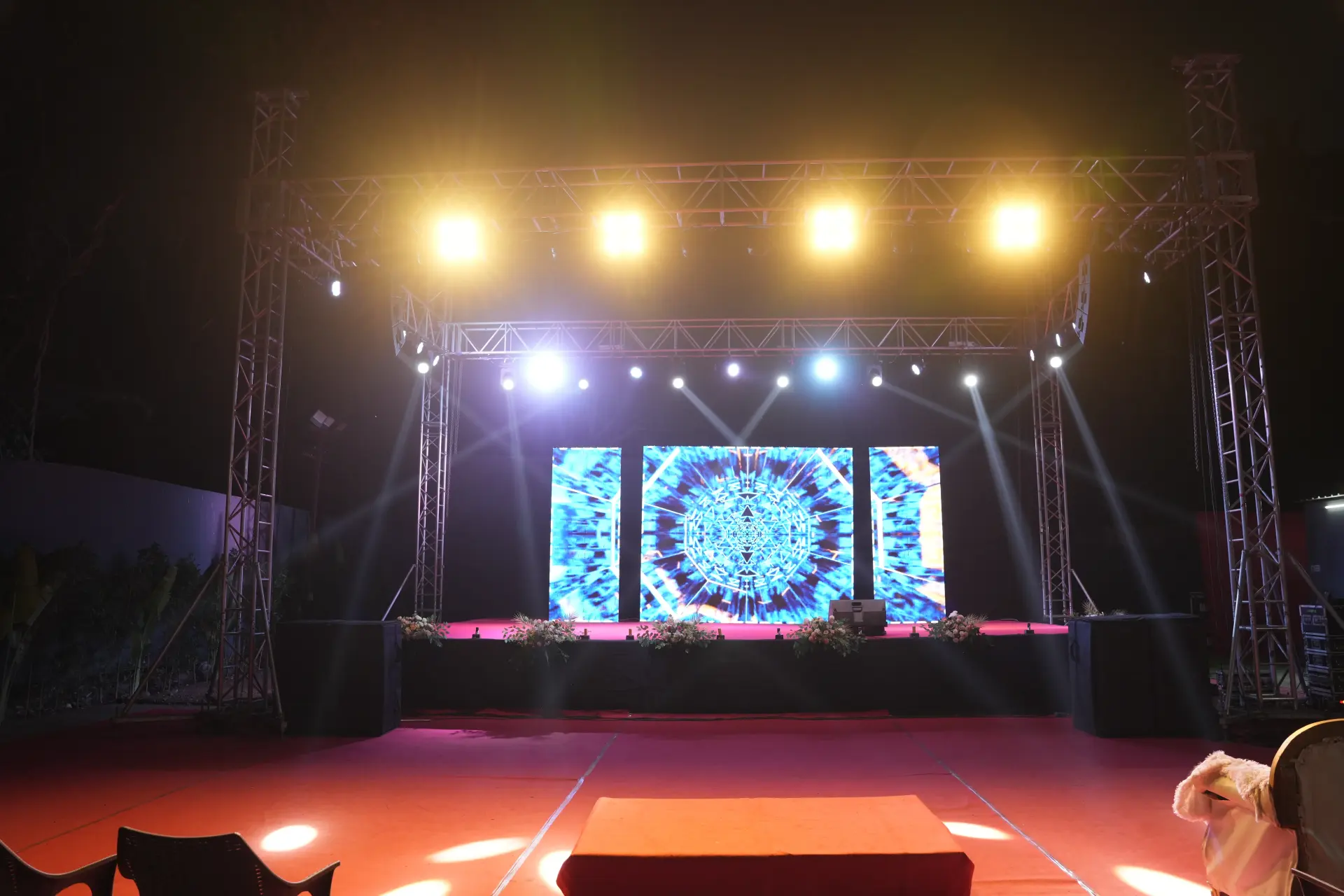
    Décor goes up, truss and LED walls are rigged, sound is checked and the anchor rehearses every cue with our show caller.

    You getA walk-through before guests arrive

  5. 05 Show day

    Showtime & wrap

    Our crew runs the floor, the stage and the guests. When it is over, we clear the venue and send you the photos.

    You getA calm host — you — and the memories

Treat a sangeet as a show whose audience keeps standing up to perform. Dancing is the easy part. What decides whether an evening flies or sags is everything that happens between the acts.

Write the line-up before anything else

The act sequence comes before décor and before menus, because everything else takes its shape from it. A workable order alternates energy and effort. An easy opener warms the room. Children go early, while they are awake and before food. The heavily rehearsed group lands when attention peaks. Parents sit somewhere in the middle, where an audience is soft and generous. The couple come near the end, and one combined number closes. Leave a marked gap after any act involving a costume change, and never put two sets from the same household together, because the same people are in both and somebody will still be pinning a dupatta when the music starts.

Who needs what, settled in advance

Performing groups are not interchangeable, and each wants something different from you. Fix these while there is still time, rather than in the corridor outside the changing room.

Who is performingPractice they genuinely needHow the track reaches the deskFloor and changing needs
Small childrenOne walk-through on the real floor, on the day itselfSent early, with an adult standing by the desk during the actFront half of the floor, and a parent waiting at the edge
Cousins and friendsTwo sessions, the later one with sound runningOne labelled file per act, handed over a day aheadWhole floor, plus a room to change in close by
Parents and older relativesA single run for entry, exit and where to standChosen and cut a week ahead, with no edits on the nightCentre floor, a short act, chairs within reach
The couple's duetA private slot with doors shut and the follow spot testedHeld by one person only and played from the deskEmpty floor and a lighting cue agreed beforehand
Combined finaleOne full-cast walk-through, however shortPlaylist locked, with no requests taken once it beginsEntire floor, every group standing ready at the sides
Booked performersTheir own soundcheck before guests arriveTheir operator, briefed against your cue sheetCleared floor and a changeover window on either side

The floor decides the choreography

Measure the floor before anybody starts practising. Groups rehearse for weeks in a living room, then arrive to find half the width they expected, a pillar in the middle, or a surface nobody can turn on. Banquet marble polished to a shine is treacherous in dance shoes, carpet kills every slide, and grass swallows heels. Give your choreographer real dimensions and the actual surface early, and decide whether a proper floor has to be laid over it. Then angle the seating towards the action, and keep a clear lane from the changing area to the floor that guests do not settle across.

Music, monitors and the person at the desk

One person owns the audio and does nothing else all night. Tracks turn up in every format, cut to different lengths, some named after a film and some after a cousin. Gather them a week early, arrange them in act order, label each with the group and its number, and keep a copy on a second device. Playing sets off individual handsets through a house system is the single commonest way to lose half an hour. Keep two handhelds free for the anchor and speeches, put monitors where performers hear the track and not just the room, and hand the lighting operator the same sheet. Cues that can be read never have to be guessed.

Food is a cue, not an interval

Open dinner too early and the floor empties before the strongest acts; open it too late and the audience stops watching and starts hunting. The usual answer is to run children and lighter sets first, release food after most of the programme, hold dessert and one crowd number back to draw people in again, then throw the floor open to everybody. Give the caterer a cue attached to an act rather than a time, because these evenings never obey a clock. Full planning across every function is handled on the wedding planner in Pune page; this one ends when the music does. For the platform itself see wedding stage decoration, and for big rigs and screens, event production.


Sangeet night planner in pune — FAQsQuestions people ask us.

Can't find yours? Call or WhatsApp — a planner answers.

How long should a sangeet programme be?

Around two hours of actual performances, spread across an evening of roughly four. Past that an audience stops watching, however good the sets are. Count your groups, allow a few minutes each plus a gap for changes, and cut the list rather than squeezing the pauses between acts until nobody can move.

How many rehearsals does a family sangeet need?

Two for a choreographed group and one for everyone else, with the final session on the actual floor. That last one matters most, because entries, exits, real width and sound levels all get fixed there. Children generally need a walk-through on the day itself, since anything learnt a week earlier will have gone.

Who should handle the music on a sangeet night?

One named person at the desk, with nothing else on their list. Songs should be gathered a week ahead, trimmed, labelled by group and loaded in sequence, with a copy kept on a second device. Acts played off individual handsets are the usual reason an evening slips half an hour behind.

Which parts of a sangeet drive the cost?

Sound and lighting lead, because a performance evening needs more of both than any other function. Then the size of the dance floor and whether one must be laid, how many practice hours the venue charges for, stage scale, any booked artists, and how late music is permitted. Ask for a line-by-line estimate.

When should dinner open at a sangeet?

After most of the programme, never before it. Release food early and the floor empties while your strongest groups are still waiting their turn. Hold dessert and one crowd-pleasing number in reserve so people come back, then open the floor to everybody. Tie the caterer's cue to an act, not a time.

Can mehendi and sangeet be held on the same day?

Often yes, and it saves an entire setup. Henna fills the afternoon, the same floor and rig are turned around for the evening, and one crew covers both. The catch is that the bride is occupied for hours, so her practice slot and any change of outfit have to be built around the artist.

What surface is safe to dance on?

A laid dance floor, because it is the one surface you control. Polished banquet marble is slippery in dance shoes, carpet stops every slide and turn, and grass swallows heels and ruins footwork. Tell the choreographer the surface and the true dimensions early, so nothing practised at home becomes impossible on the night.

Send the line-up, we will build the evening

Tell us how many groups are performing and where the venue is, and a running order, a rehearsal plan and an itemised estimate come back.

Talk to a planner