Shop 7, Ekta Nagri, Near Dwarka Apartment, Anand Nagar, Pune 411051
The twin city runs on a factory clock and a municipal file. We plan programmes around the shift chart, get the ground and loudspeaker permissions moving early, and build to the scale these halls actually are.


Pimpri-Chinchwad works to a factory clock, and an event here has to fit inside it. The auto and engineering belt through Bhosari, Chakan and Talegaon books most of what we do: safety weeks, foundation days, long-service award nights, workers' cultural evenings and family days that bring whole households onto a ground in one afternoon. Not one of those can be dated without the shift chart in front of you.
The venues run bigger here than almost anywhere else around the city. Halls sized for eight hundred or a thousand are ordinary, and that changes the build rather than only the price. Sightlines from the back row, screen size, delayed speakers down the length of the room, catering counters split so they do not become one enormous queue, and an entry wide enough for a crowd that arrives together.
Then there is the paperwork. Open ground, loudspeakers, a temporary power connection, a fire clearance for a large structure and an intimation to the traffic police are separate applications with separate lead times, and they are the usual reason a programme slips. We start those before we start the design. Our office sits off Sinhagad Road, so this is a daily drive, not an outstation trip.
Opening ceremonies, demonstrations, quizzes and a closing award function spread across the working week.
Evenings for employees completing service milestones, with citations checked name by name before printing.
Daytime ground programmes for plant families, with bus fleets, food counters and a supervised children's zone.
Anniversary programmes on plant ground, built around whichever shift can be released together.
Marathi stage programmes performed by the plant's own troupes, rehearsed and cued like a proper show.
Business sessions and dinners for the auto and engineering supply chain, with a product display area.
Public Ganeshotsav and Navratri stages on municipal ground, with the permission file handled alongside.
Functions in halls sized for a thousand guests, with catering lines and entry planned for that number.
The parts of a twin-city programme that nobody enjoys doing are the ones we start with.
The programme plan taken to your works committee and union representatives before any date is announced.
Ground booking, loudspeaker permission, fire clearance and temporary power applications prepared and chased.
Stage, screen and sound scaled to a room built for a thousand, with sightlines tested from the last row.
The run-sheet dated against your shift chart and maintenance window, so the line is never the thing that suffers.
Pick-up points across the twin city, a marshal on each bus and a departure time the programme respects.
Anchoring, script and citations in the language the shop floor speaks, with names checked before they are read.
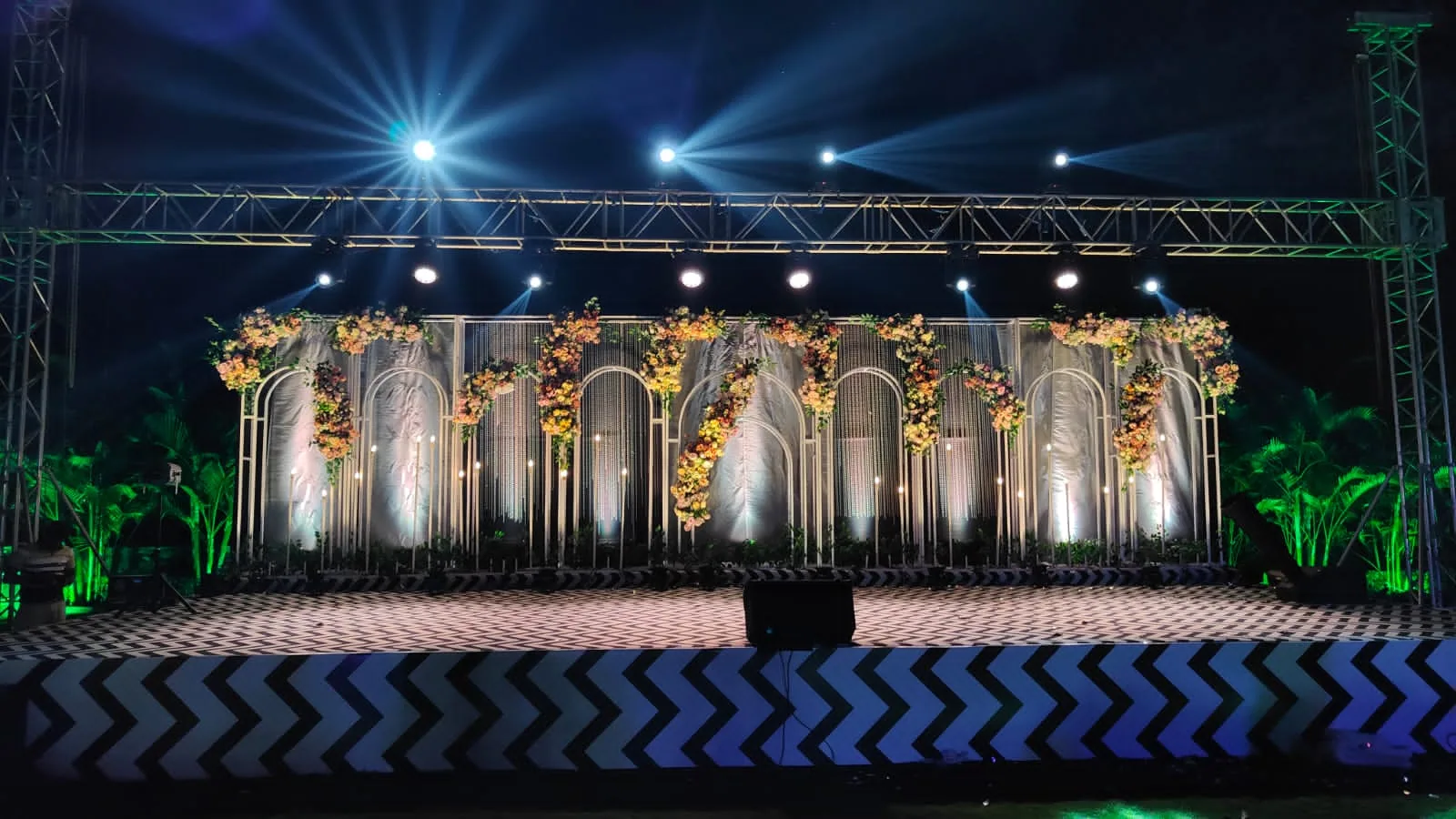
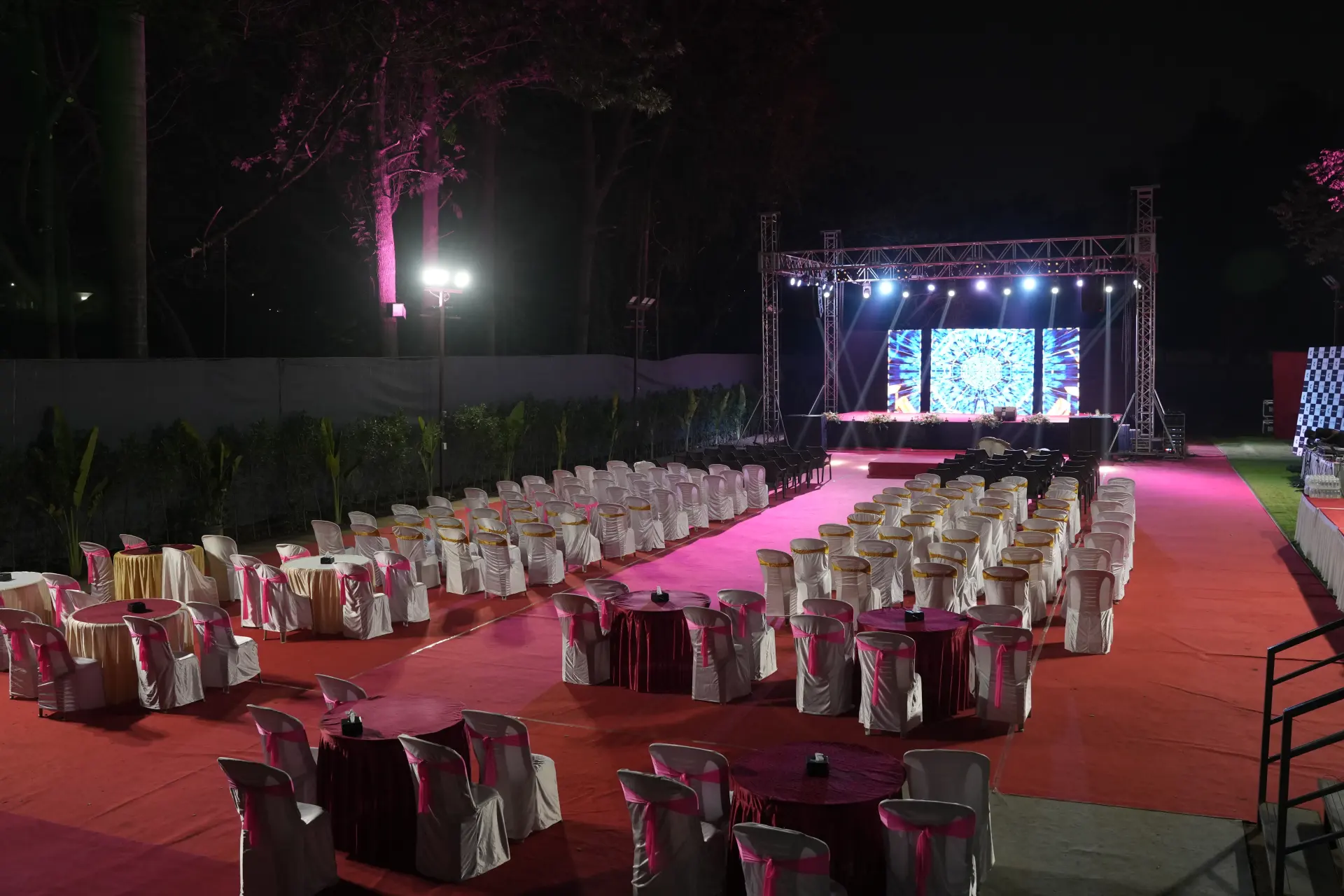
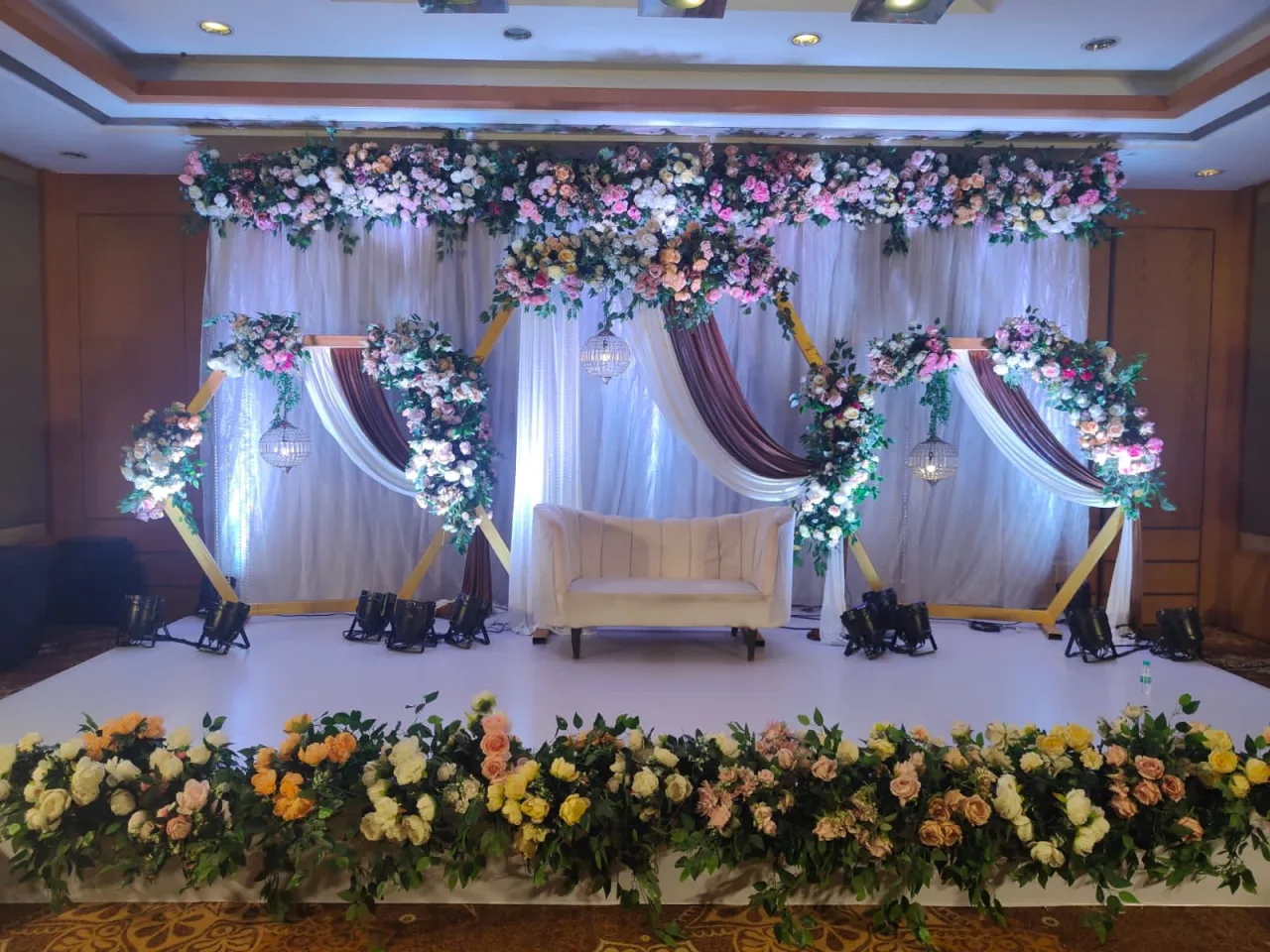
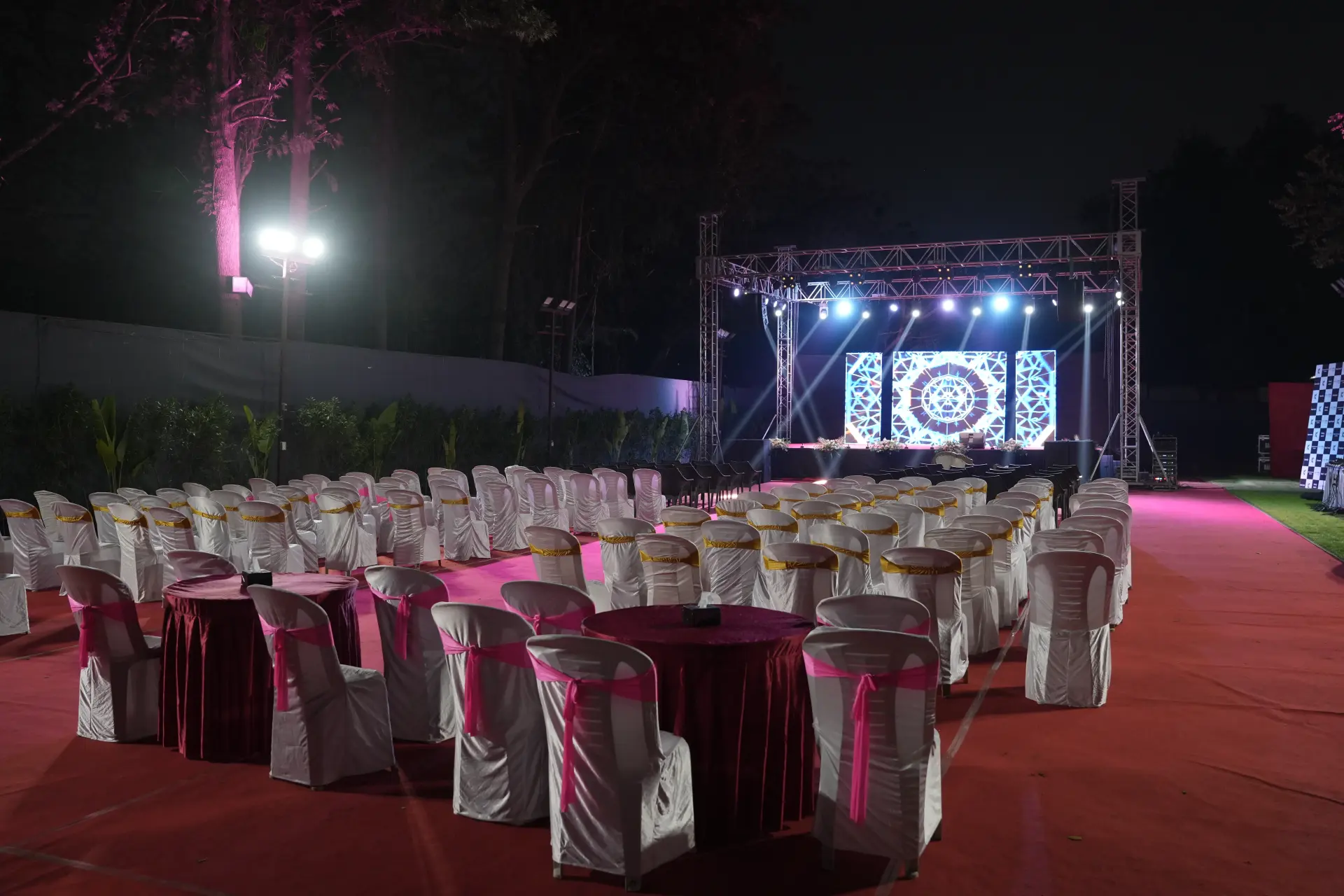
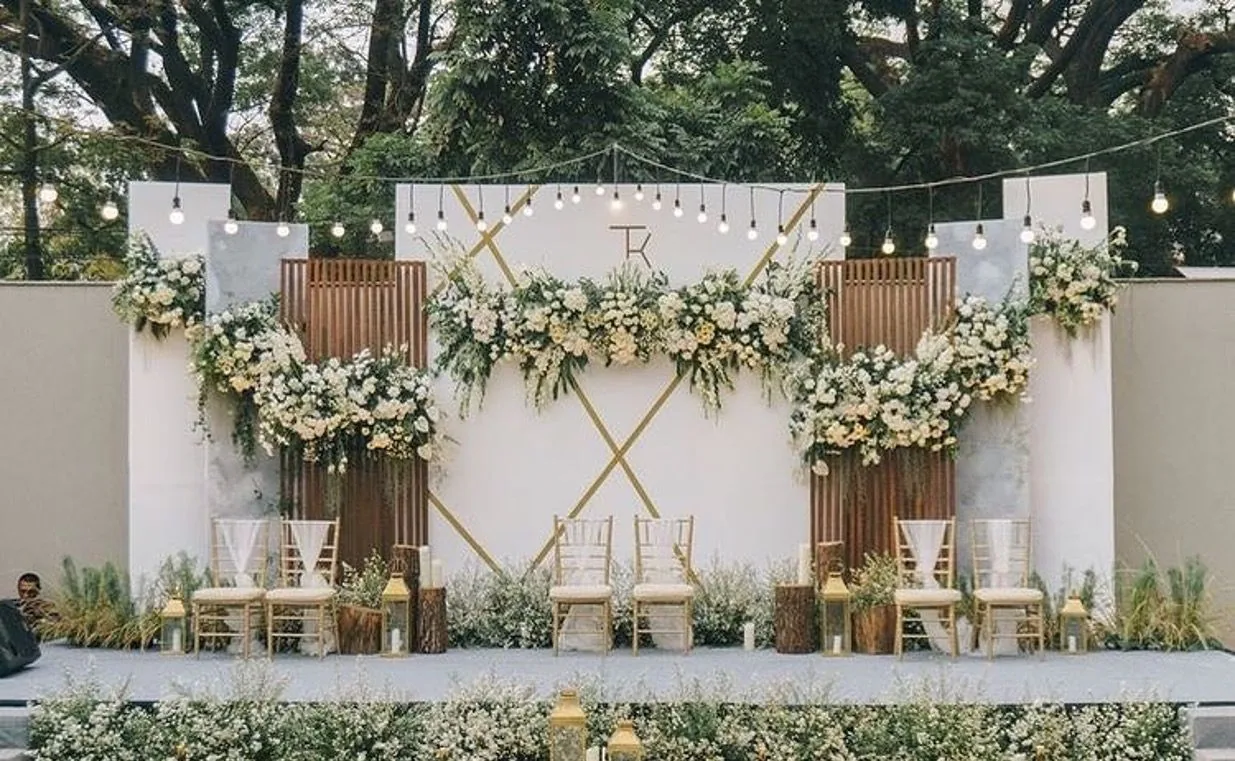
Every photo here is from an event our team planned and ran.
Tell us the date, the guest count, the budget and the feeling you want in the room. We ask the questions most people forget.
You getFirst ideas and a budget range
Theme, décor, stage layout and a minute-by-minute run of show, drawn up and revised until it feels like yours.
You getMoodboard, layout and an itemised quote
Venue shortlists, caterers, artists, anchors and the paperwork — police, music licences and venue approvals — handled by us.
You getLocked vendors, one point of contact
Décor goes up, truss and LED walls are rigged, sound is checked and the anchor rehearses every cue with our show caller.
You getA walk-through before guests arrive
Our crew runs the floor, the stage and the guests. When it is over, we clear the venue and send you the photos.
You getA calm host — you — and the memories
Three calendars and one pile of paperwork decide an event here: the shift chart, the maintenance window, the festival dates, and the permissions that come with using ground and loudspeakers. Settle those and the creative part is straightforward.
Ask for the shift chart and the maintenance schedule before you choose a date. A plant running three shifts has very few hours when most of the workforce is free at once, so the honest answer is usually a weekend, a shutdown day, or an evening that begins once the general shift clears. Anything that pulls people off the line during a production push gets moved anyway, and it is better to move it yourself. Where a works committee or union representatives have a say in the programme, take the plan to them before the date goes on the notice board, because a date announced twice is worse than a date announced late. Send headcount split by location and by shift, and the run-sheet gets built backwards from the last bus home.
Ground and large-hall events need more files than people expect, and each has its own waiting time.
| Clearance | Usually comes from | What it is built on |
|---|---|---|
| Open ground booking | The municipal ward office | Layout, dates, hours and a cleanliness deposit |
| Loudspeaker permission | The local police station | Site plan, timings and which way speakers face |
| Fire clearance | The fire department | Structure drawing, exit widths, extinguisher plan |
| Temporary power | The electricity distribution office | Connected load and a single-line drawing |
| Traffic intimation | The traffic police | Expected vehicles, parking and drop-off plan |
| Plant gate passes | Your own security and HR | Crew names, identity proofs, vehicle numbers |
Start them together rather than one after another. The fire clearance depends on the structure drawing, the power application depends on the connected load, and both come out of the same design, which means the design has to be frozen earlier here than for a small indoor event.
The big halls and mangal karyalayas through Nigdi, Akurdi and the older parts of the twin city are sized for crowds most venues around the city never see, and a stage that looks right in a photograph of a smaller room disappears in one of these. Test the sightline from the last row before anything is confirmed. If the back of the hall cannot read a name on the screen, the screen is too small; if it cannot hear cleanly, delay speakers are needed down the length of the room. Catering is the other scale problem, because one long buffet for a thousand people is simply one long queue, so counters are split and duplicated on both sides. Plan the entry too: a crowd that arrives by bus arrives all at once.
Family days and award nights here move people in fleets rather than cars. That needs pick-up points across the twin city, a marshal on each bus, a drop-off lane that is not the lane the trucks are using, and a stated departure time the programme actually honours. Plant events add the gate: crew names, identity proofs, vehicle numbers and a safety briefing, submitted a week ahead and resubmitted if anything changes. Afterwards the ground or the shop floor has to be usable for the next shift, so the strike is written into the plan rather than left to the end. See how we run annual days, dealer meets and stage production across the region.
The listings for Pimpri-Chinchwad are ordered by ad spend and review count. Both are worth something, and neither answers whether the team has worked your kind of venue.
Three questions separate the shortlist quickly: has the team worked in Pimpri-Chinchwad before, is the quotation itemised, and who is physically on site on the day. Our contact page has both numbers and WhatsApp, and you will get an itemised scope back rather than one figure.
Can't find yours? Call or WhatsApp — a planner answers.
Yes. The twin city is part of our normal working area, so there is nothing billed as outstation travel or crew stay. What changes is the planning, not the coverage: the date comes from your shift chart, the permissions start before the design, and the build is sized to halls and grounds that are larger than most of what the rest of the city offers.
Send the shift chart and the maintenance schedule first, then choose the date. A three-shift plant has very few hours when most people are free together, so a weekend, a shutdown day or an evening after the general shift clears are usually the realistic options. Give us headcount by shift and location and the run-sheet is built backwards from the last bus home.
Typically five: the ground booking from the municipal ward office, loudspeaker permission from the local police station, a fire clearance for any large structure, a temporary power connection, and an intimation to the traffic police. Plant events add gate passes from your own security. We prepare and follow up all of them, and we start them before the design is finished.
Yes. Family days and award nights here move people in fleets rather than cars. We plan pick-up points across the twin city, put a marshal on each bus with a list, keep the drop-off lane separate from the material lane, and fix a departure time that the programme is then written to respect, so nobody is waiting in a car park after the lights go down.
Yes, and for most shop-floor audiences it should be. Anchoring, the script, the citations and the on-screen text can all run in Marathi, or switch between Marathi and English for a mixed room of management and workers. Names on awards and screens are checked against your list before anything is printed, because getting one wrong in front of a full hall is not recoverable.
Headcount drives it more than anything else, because stage size, screen size, sound coverage, catering counters and buses all scale with the number in the room. After that come the venue, the hours, the permission and deposit costs for ground events, and whether a temporary power connection is needed. Send the headcount and the venue and each of those comes back as its own line.
That phrase has no official meaning, so the useful question is what to compare. Plan With YOLO has planned events since 2013 out of Pune and handles safety week programmes, long-service award nights and worker family days in Pimpri-Chinchwad. The same crew covers Pune and In Pune. Ask which parts are handled in house and which are being passed to a third party.
The shortlist worth having is teams who have set up in Pimpri-Chinchwad before; venue quirks are the part nobody writes in a quotation. Our office is in Anand Nagar off Sinhagad Road and the crew travels to Pimpri-Chinchwad with its own kit. Send the date, the venue and a rough guest count and you get a scope back the same day.
The number depends on guests, venue, décor and stage scale, and how close to the date you book. A wedding date in season and a weekday corporate meeting in Pimpri-Chinchwad are not comparable, so a quoted range before anyone has seen the brief is not worth much. You will get an itemised scope for your own event, and every line on it can move.
Schools · Colleges · Companies
Pune · PCMC
LED walls · Truss · Sound · LightsPlanning events in Pune since 2013 — 500+ events for 100+ brands across 30+ cities. Read what clients say on Trustpilot, or find our Anand Nagar office on Google Maps.
Great EventGautam
User friendly experienceRahul Roushan
This company made sure to take care of everythingVaishnavi Todkar
Best Event Planner.Pranali Ladkat
Detailed workMolly Vernon
Give us the shift chart, we will find the date
Share the plant or venue, the headcount by shift and what the programme has to cover, and we will come back with a dated plan.