School Annual Day Event ManagementEvery class gets its moment

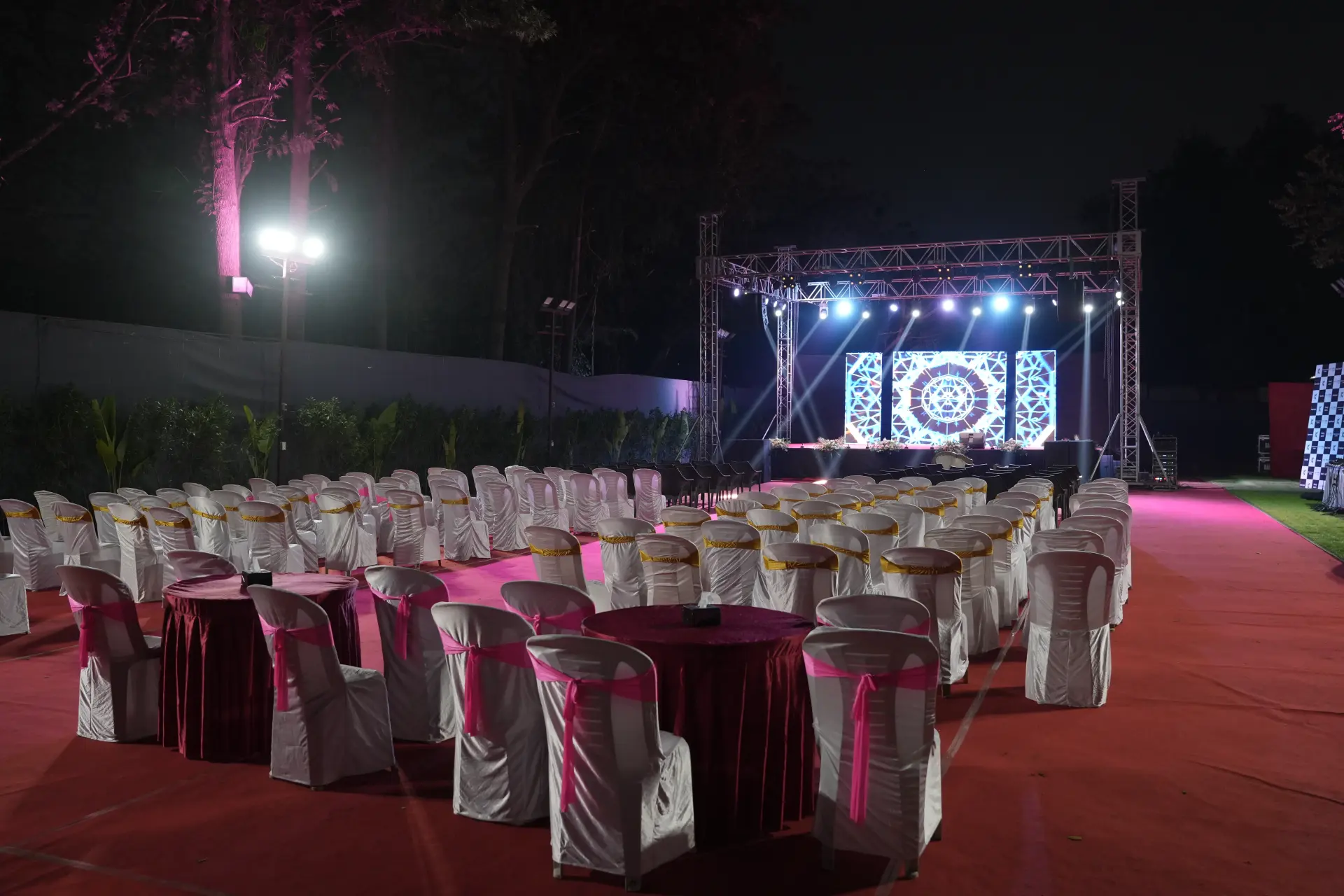
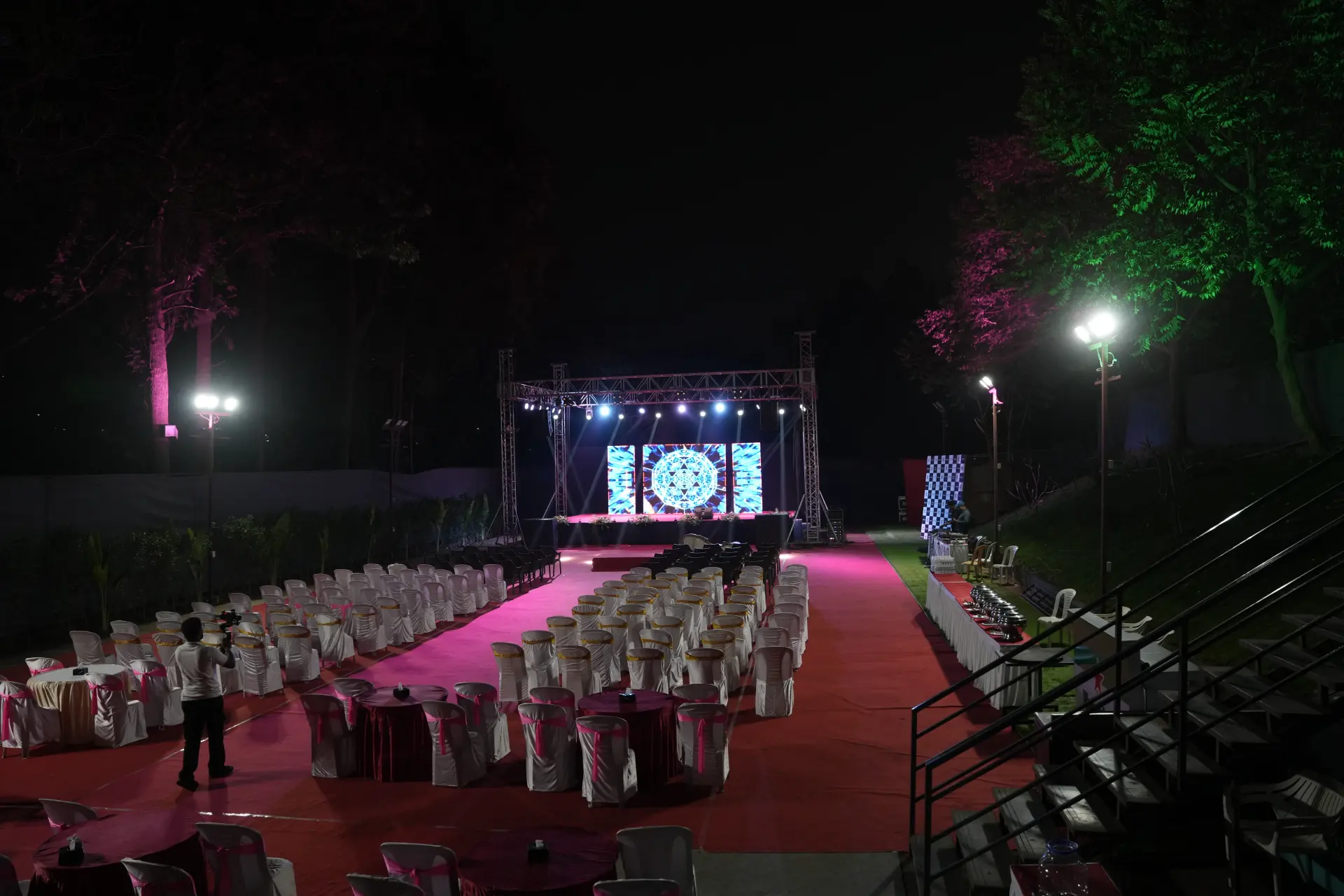
School annual days planned end to end, from the act list to the last prize. We size the stage for group performances, run backstage class by class, and set up sound and seating so every parent hears the narration and sees their child.

  • Stage and backdrop
  • Class-wise cue sheets
  • Backstage and green rooms
  • Narration sound
  • Parent seating
  • Prize distribution
School Annual Day Event Management

School annual day event managementBuilt around the act list

A school annual day has to work for three groups at the same time: the children performing, the teachers moving them, and a hall full of parents who came to watch one child in particular. Everything else is built around that.

We start from your act list. The number of children in the biggest act sets the stage size, the wing space and the backstage plan. The number of acts sets the length of the evening, which is what decides whether families stay for prize distribution or start slipping out after their child performs. From there we design the backdrop and theme, set up sound, lighting and screens, mark the stage for rehearsal, and run the show on a cue sheet with a named adult in each wing.

Schools hold these on their own ground, in a hired auditorium or in a banquet hall, and each needs a different setup. We do the recce, tell you honestly what the space can hold, and plan around the school calendar, including gatherings, sports days and prize distribution ceremonies.

  • Running since 2013, 500+ events planned and run
  • Stage sized to your largest group act
  • Class-by-class report times and wing marshals
  • Narration on its own mic and channel
  • A rehearsal day plus a full technical run
  • One point of contact for your committee
School annual day event management

What we handle for a school annual dayFrom act list to final prize

These are the parts of a school annual day we plan, set up and run for you.

Programme and cue sheet

A running order built from your act list, with report times, entry wings and cue numbers printed for every class.

Stage, backdrop and wings

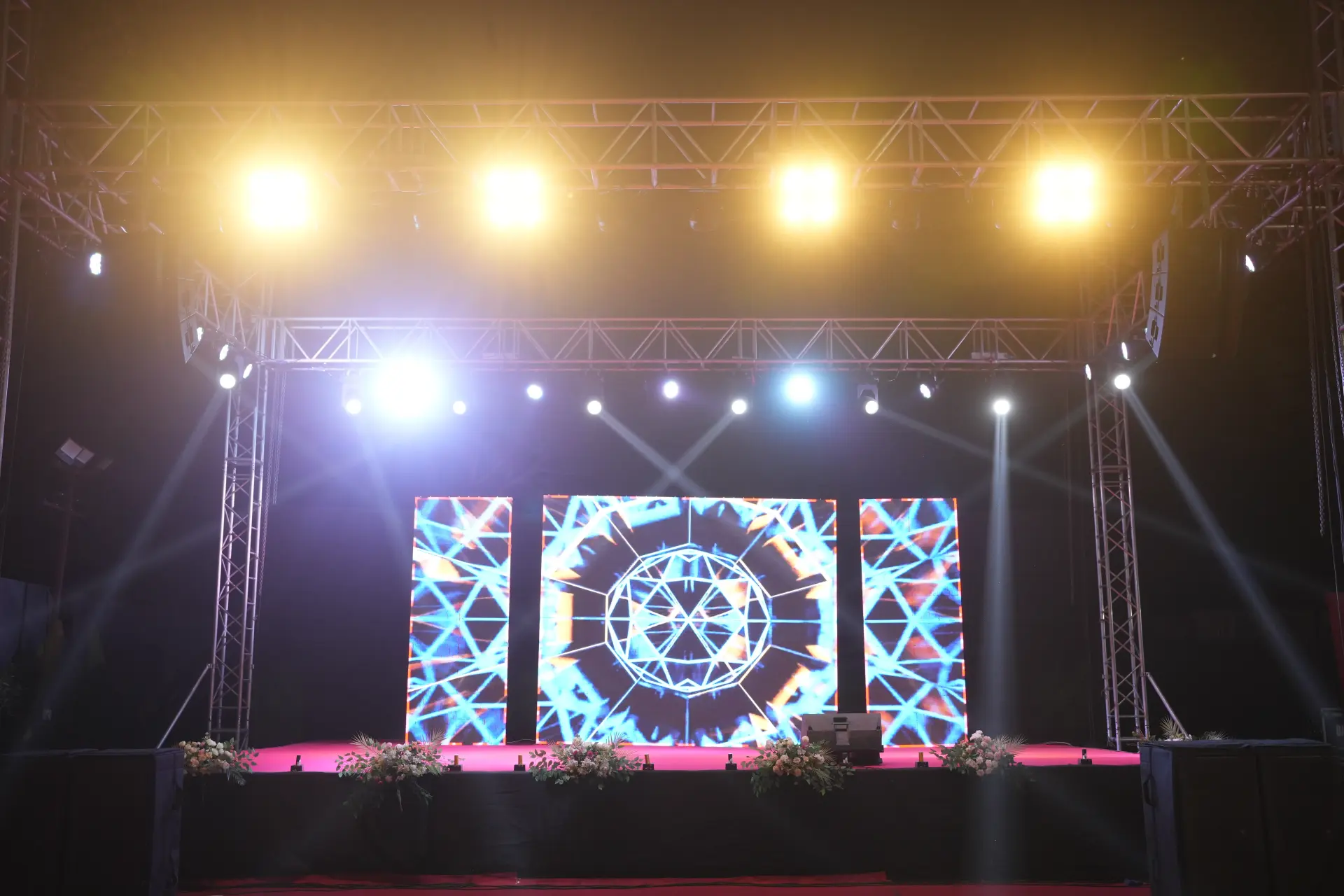
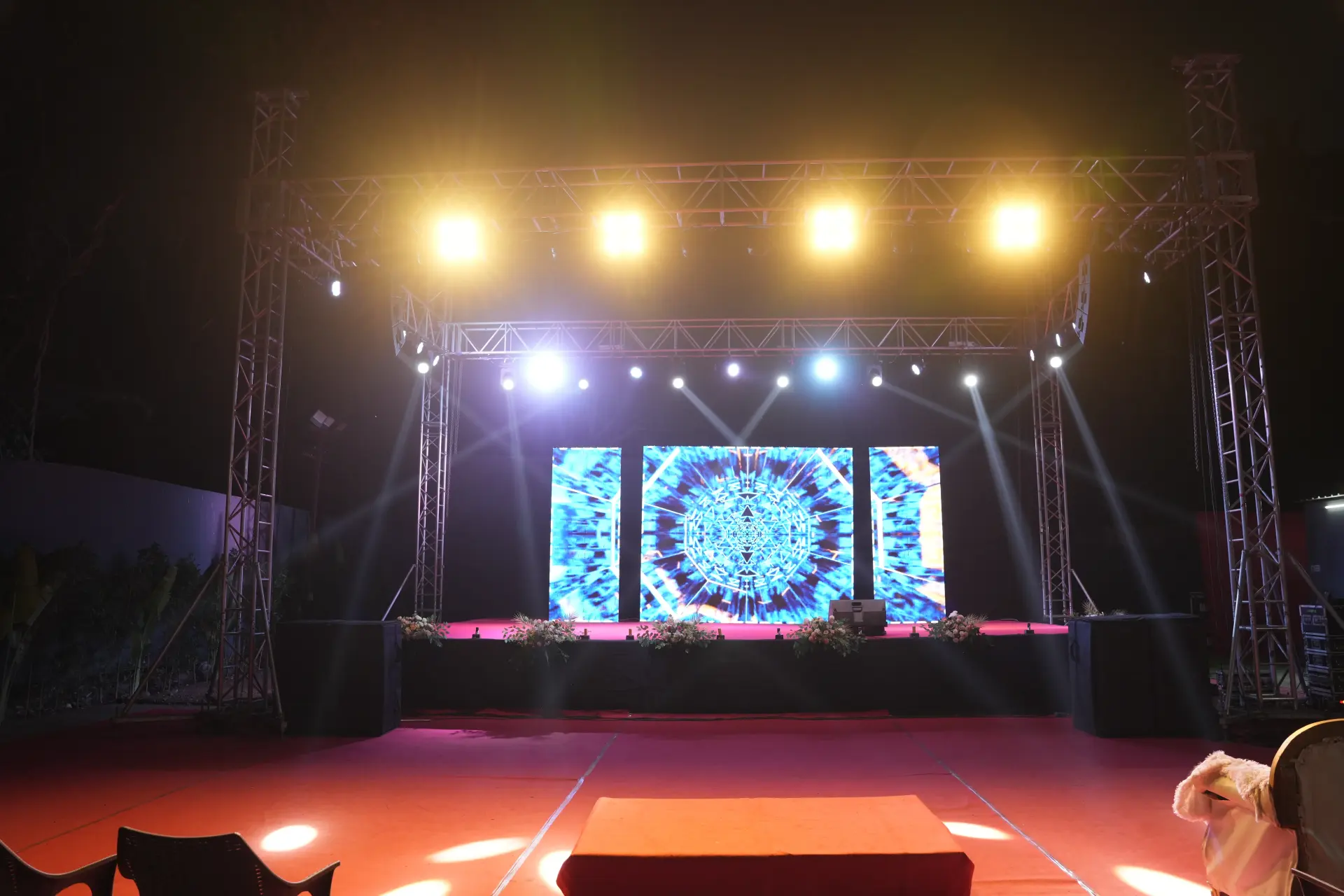
A stage sized for your largest group act, with marked edges, safe steps, proper wings and a backdrop built to the theme.

Sound, lights and screens

Track playback from one machine, narration on its own channel, lighting that changes per act and a screen for photos or video.

Backstage and green rooms

Holding areas, costume tables, named prop bags and marshals in both wings counting each class on and off stage.

Prizes and chief guest

Award lists checked in advance, trophy tables in walk-up order, and a written protocol plan from the guest's arrival to the memento.

Parent seating and safety

Seating blocks with clear sightlines, reserved rows, marked entry and exit routes, first aid and a pick-up plan after the show.

School events we manageAnnual days, gatherings and ceremonies

  1. 01

    School annual day

    Class-wise performances, narration, prize distribution and a chief guest, on your own ground or in a hired auditorium.

  2. 02

    Pre-primary annual day

    A shorter show with a low stage, quick changeovers and holding areas close by, so small children are not kept waiting.

  3. 03

    Annual gathering

    The yearly cultural gathering with inter-house acts, student anchors and a longer, livelier running order.

  4. 04

    Sports day

    Track marking, a shaded guest stand, announcement sound across an open ground, march past and a medal podium.

  5. 05

    Prize distribution ceremony

    A formal ceremony with a checked award list, stage walk-ups and a photographer fixed at the handover point.

  6. 06

    Founder's day

    A milestone programme with school history on screen, long-serving staff or alumni felicitated, and a themed stage.

  7. 07

    Graduation and farewell

    Certificate handovers, a walk across the stage, a photo point for families and a short, warm programme.

  8. 08

    Inter-school competitions

    Several schools in one hall, with team holding rooms, a judges' table, scoring and a clear stage changeover plan.

How our event planning worksFrom first call to final bow.

  1. 01 Day 1

    The call

    Tell us the date, the guest count, the budget and the feeling you want in the room. We ask the questions most people forget.

    You getFirst ideas and a budget range

  2. 02 Week 1

    Concept & moodboard

    Theme, décor, stage layout and a minute-by-minute run of show, drawn up and revised until it feels like yours.

    You getMoodboard, layout and an itemised quote

  3. 03 Weeks 2–4

    Venue, vendors & permissions

    Venue shortlists, caterers, artists, anchors and the paperwork — police, music licences and venue approvals — handled by us.

    You getLocked vendors, one point of contact

  4. 04 Event eve

    Build & rehearsal

    Décor goes up, truss and LED walls are rigged, sound is checked and the anchor rehearses every cue with our show caller.

    You getA walk-through before guests arrive

  5. 05 Show day

    Showtime & wrap

    Our crew runs the floor, the stage and the guests. When it is over, we clear the venue and send you the photos.

    You getA calm host — you — and the memories

A school annual day is a stage show where most of the cast is under fifteen and most of the audience is related to them. That one fact changes how it is built. The stage has to hold a whole class at once, the wings have to move children safely in low light, and the sound has to carry a nine-year-old's narration to a parent in the back row. Settle those three, and the theme, decor and screens fall into place around them.

Fix the act list before you fix the theme

The act list decides the stage, the backstage and the length of the evening, so settle it before anything is designed. Ask each class teacher for three numbers: how many children are in the act, how long it runs, and how much they carry on with them. Add the running times up honestly, then add the welcome, the annual report, the chief guest's address, prize distribution and the vote of thanks. If the total crosses about two and a half hours, something has to go, and cutting in week two is painless compared with cutting at the dress rehearsal.

Then order the acts by size, not by class number. A forty-child dance followed by another forty-child dance leaves the first group nowhere to go. Alternate big and small. Put the youngest classes early so their families can take them home before the evening runs long. Only then pick a theme, and pick one that gives every age band something to perform; a theme that suits only the senior school makes the junior acts look bolted on. Our annual day theme ideas page groups options by what each one needs on stage.

Sizing the stage for group performances

Stage size is set by your largest act, not your average one. Children need more clear floor than adult performers because formations spread and nobody holds a mark exactly. Measure the ground or the hall stage before you promise anyone anything. A school ground in an area like Kothrud will take a wide stage with room to spare, while a fixed auditorium stage means two or three act sizes have to bend instead.

Children on stageWhat the stage needsWings and holdingSound
Up to tenA compact stage with one clear entry sideOne wing, a single waiting lineFloor mics across the front, one handheld for narration
Ten to twenty-fiveExtra depth so back rows are not pushed to the edgeBoth wings used, class lined up in entry orderFloor mics plus a track feed, narration on its own channel
Twenty-five to forty-fiveFull width and depth, front edge taped and rehearsedBoth wings plus an off-stage holding area, two adults per wingTrack-led, floor mics only for spoken lines
More than forty-fiveStage plus steps or a forestage, formations planned in rowsEntry from two levels, a marshal counting children in and outTrack-led, with the level set while the stage is full

Mark the front edge in bright tape and rehearse every class up to it, because at least one child each year walks forward looking for a parent. Use wide steps or a ramp for the small classes rather than a narrow stair in the dark. Check that lighting bars, speakers and hanging decor are out of reach from the stage floor, and that cable runs at the wings are taped flat, then taped again after rehearsal.

Backstage flow, class by class

Backstage is where a school annual day is won, and it is the one part the audience never sees. Give every class a written slot: report time, holding point, entry wing, exit wing and where they go afterwards. Print it, hand it to the class teacher and stick a copy inside each green room.

Keep children moving in one direction only. Two classes crossing in a dark wing is how costumes tear and entries get missed. Two adults per wing, one counting in and one counting out, is the simplest arrangement that holds. Props and costume changes need a table with one named bag per class, because a missing crown two minutes before an entry becomes a gap the whole hall notices. Green rooms need light, a mirror, drinking water and an adult who stays in the room. For pre-primary classes, keep the holding area as close to the wings as you can, since the walk is what tires them. Decide in advance who returns each child to their family after the act, and whether classes sit in a reserved block or leave.

Sound, narration and music tracks

Sound at a school show is two jobs running at once: music tracks at full level, and small voices that have to be heard over them. Collect every track a week ahead, label them in running order, play them from one machine and keep a second copy on a different device. Tracks sent on the day, at different volumes and with different lead-in silences, are the most common reason a programme slips behind.

Narration gets its own microphone and its own channel. Children do not project, so a headset or a mic on a short stand set to their height beats a handheld they will cover with a palm. Ask the sound team for a level check with the stage full, then a second check once parents are seated, because a full hall absorbs sound and morning settings go thin by evening. On a ground, confirm the local sound cut-off time and build the running order backwards from it, so the last act is not the one that gets dropped. Stage, truss, screens and lighting are covered in more detail on our event production page.

Rehearsals and the technical run

Plan two rehearsals on the actual stage and make one of them technical. The first belongs to the children: entries, exits, spacing and where to look. The second belongs to the crew and runs the show as it will run, with tracks in order, lights per act, narration mics live, prize tables in place and the anchors reading their links. Walk the chief guest's route, time the felicitation, and run the opening twice, because that is where nerves show. Book the venue for the rehearsal, not only for the event. Schools using an outside auditorium often get access on the event morning alone, which leaves nothing to fix with. If that is your situation, rehearse on a marked-out area of the school ground to the same stage dimensions and keep the morning purely technical.

Chief guest protocol, prizes and parent seating

Chief guest protocol is a sequence, and it should be written down: who receives the guest at the gate, where the car stops, who escorts them, the lamp lighting or sapling, the bouquet, the seat, when they speak and who presents the memento. Give the anchors the name spelling and designation in writing and have the introduction approved by the school. Nothing sours a good evening faster than a mispronounced name from the stage.

Prize distribution works best in blocks between performances instead of one long stretch at the end. Get the list finalised and checked by two people, print name cards in walk-up order, keep trophies on a covered table in the same order, and fix the photographer at one point so every family gets the same picture. For parents, reserve the front rows for the chief guest, the management and the class performing next, keep centre aisles clear for sightlines, and plan the exit and pick-up honestly, because a car park that empties badly is what people remember. Company annual days run on different logic and are covered on our annual day event management page, and for gatherings and fests see college event management.


School annual day event management — FAQsQuestions people ask us.

Can't find yours? Call or WhatsApp — a planner answers.

How do you plan a school annual day?

Start with the act list. The number of children in the largest act sets the stage size and the wing space, and the number of acts sets how long the evening runs. After that come the theme and backdrop, sound and lighting, a class-by-class backstage plan, two rehearsals on the actual stage, and a cue sheet the crew and anchors work from.

How big should the stage be for a school annual day?

Size the stage for your largest group act, not the average one. Children spread out in formation and do not hold marks precisely, so a class of forty needs full width, real depth and steps or a forestage. Measure the ground or the auditorium stage first, because a fixed hall stage usually means trimming two or three acts to fit.

How much does school annual day event management cost?

Cost is driven by the stage size, the venue, how much sound, lighting and screen the show needs, the number of rehearsal and performance days, the seating you want for parents, and whether we are on a school ground or in a hired auditorium. Send us the act list, the date and the venue and we will send an itemised quote.

How many rehearsals does a school annual day need?

Two on the actual stage, at the minimum. The first is for the children: entries, exits, spacing and the front-edge mark. The second is technical and runs the whole show in order, with tracks, lights, narration mics, prize tables and anchor links. If the venue is free only on event morning, rehearse at school on a marked-out area of the same size.

How do you manage backstage with young children?

With a written slot for each class and adults in both wings. Every class gets a report time, a holding point, an entry wing and an exit wing, and movement stays in one direction so classes never cross in the dark. One adult counts children on, another counts them off. Props and costumes sit in named bags on a table beside the wing.

What is the usual order of a school annual day programme?

Most schools follow a set order: welcome and lamp lighting, the principal's address, the annual report, performances in blocks, the chief guest's address, prize distribution split between blocks, and a vote of thanks. Keep the strongest acts at the start and the end, put the youngest classes early, and hold the whole programme to about two and a half hours.

How do you seat parents so everyone can see?

Plan seating in blocks with clear sightlines and keep the centre aisles free. Reserve the front rows for the chief guest, the management and the class performing next. On an open ground, raise the stage enough that the sixth row is not looking at the back of heads, angle the side blocks inward, and staff the marked entry and exit routes.

Do you handle school sports days and gatherings as well?

Yes. A sports day needs track marking, a shaded guest stand, announcement sound that carries across open ground, march past music and a medal podium. An annual gathering needs a longer running order, student anchors and inter-house acts. Both run on the same backstage discipline as an annual day: report times, marshals in the wings and one cue sheet.

Send us your act list

Tell us the date, the venue and how many children are in the biggest act, and we will plan the stage and the run sheet around them.

Talk to a planner