Ask what a wedding costs and the honest answer is four questions back: how many guests, which date, how many functions, and what kind of venue. Those four decide most of the total. Everything below is the structure behind the number, so you can sanity-check any proposal you are sent, including ours.
Three ways a planner charges
Planners quote on one of three models, and the right one depends on how much of the work you are handing over. A share of the wedding budget is common for full planning, because the work grows with the scale of the wedding. A flat planning fee is agreed against a written scope: these functions, this much décor, these vendors, this many site visits. Coordination on the day is a fixed fee for taking over a wedding you have already planned and running it.
| Fee model | How it is charged | Suits you if | Ask about |
|---|
| Share of the budget | A proportion of total spend, billed in stages | You want full planning and the budget is still forming | What is counted in the base, and whether it is capped if the budget grows |
| Flat planning fee | One agreed fee against a written scope | Your functions and guest count are already settled | What falls outside the scope and how those extras are billed |
| Day-of coordination | A fixed fee for the final weeks and the function days | The family has planned it and wants someone to run it | How many coordinators come, on which days, and for how many hours |
| Décor only | Quoted per mandap, stage or entrance | You need setups, not planning | Whether labour, setup and teardown are inside the price or added after |
Ask which model you are being quoted on, in one line, at the top of the proposal. Two quotes only become comparable once you know what each fee covers. Our wedding planner packages page shows how scope is usually grouped.
Guest count is the multiplier
If you want to move the total, move the guest list. Nothing else comes close. Catering is charged per plate, and it is per plate at every function, not just the reception. Add a hundred names and, across four functions, you have added four hundred meals. Guests also decide the venue you need, the rooms for family who travel, the chairs, the service staff, the shuttle vehicles, the welcome kits and the length of the buffet line.
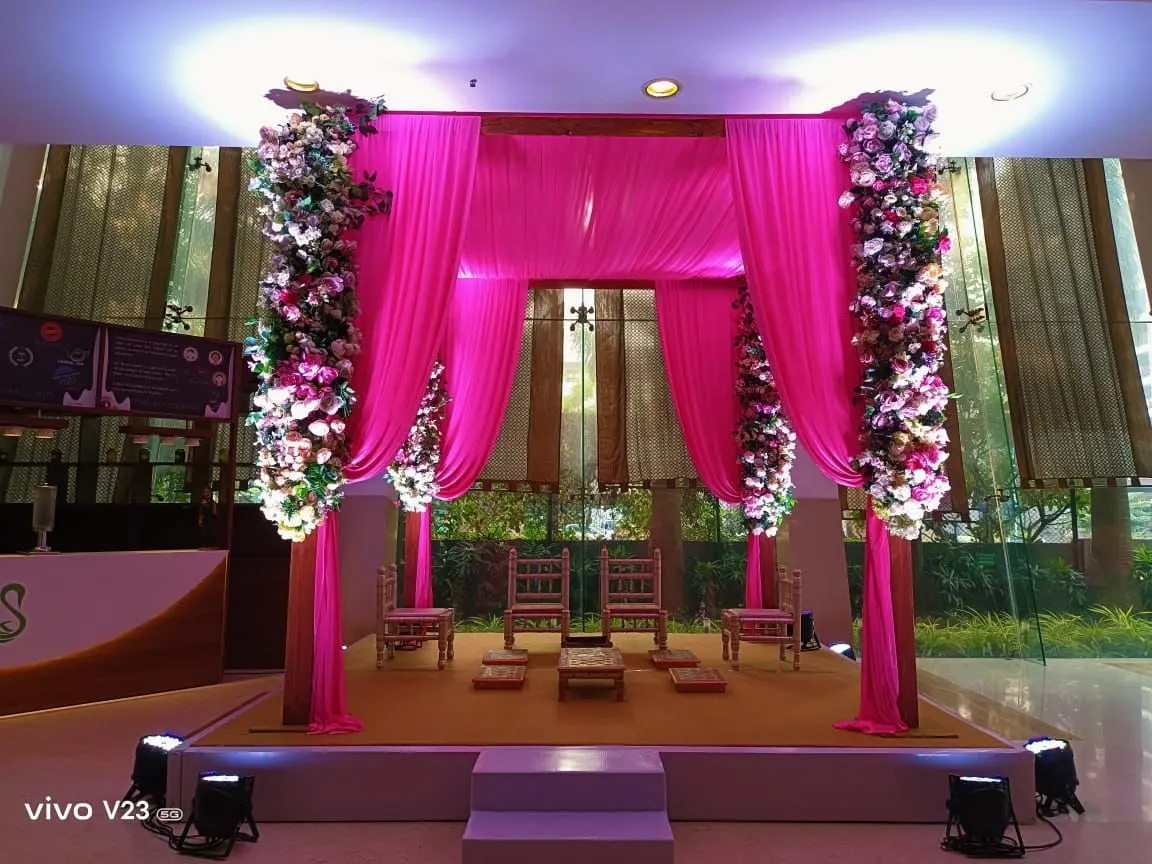
Décor barely notices the difference. A mandap for a small wedding and a mandap for a large one cost roughly the same, because you are paying for the structure, the flowers and the crew hours, not for the audience. So when a budget will not fit, look at the list first and the flowers last. Sit down with both families, mark every name must, should or maybe, and take one honest pass through the maybes. It is an uncomfortable hour and it saves more than any amount of bargaining.
What moves the total, after the guest count
These are the decisions that change a wedding budget most, roughly in the order they bite.
- The number of functions. Each function is a separate build with its own setup, crew, food and sound. Holding the haldi and mehendi on the same day at the same venue removes an entire changeover.
- The venue type. A banquet on a package rate already includes power, cooling, tables, staff and a kitchen. A bare lawn or a farm gives you freedom and a longer bill: generator, flooring, cooling, lighting, toilets and a caterer brought in.
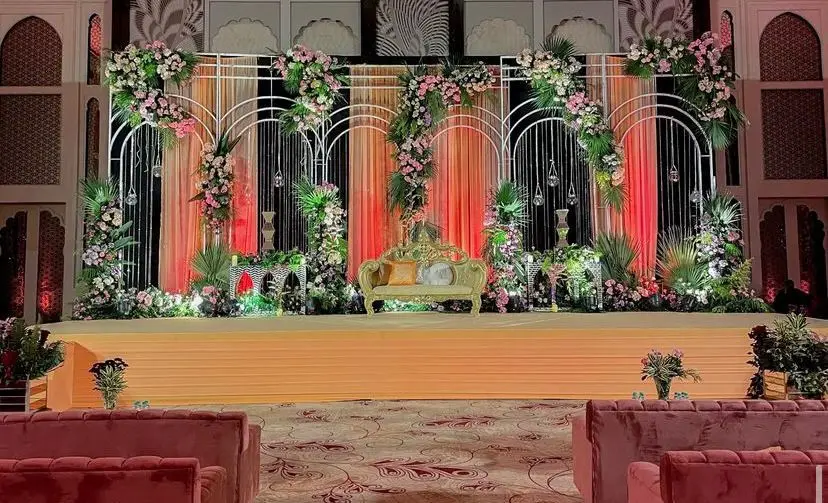
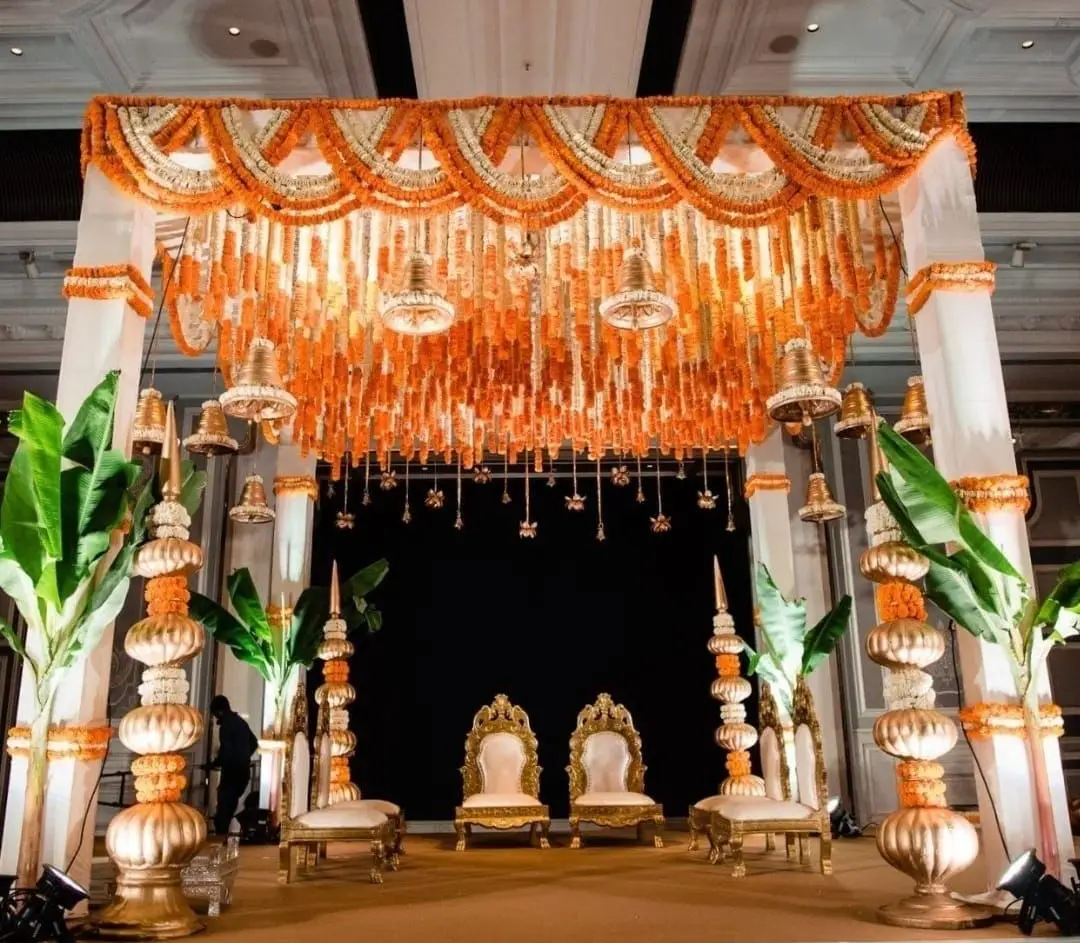
- Flowers against fabric. Fresh flower work is priced by volume and moves with the season. Drape, fabric and lighting-led décor holds its cost more steadily. A design that mixes both, with flowers concentrated where people stand and photograph, usually gives the most back. Our wedding decorators page shows how the two read side by side.
- Production. Truss, LED walls, moving lights and sound are day-rate items with crew hours attached. A sangeet with performances needs real production; a haldi needs good daylight and two speakers.
- The date. A Saturday inside peak season on a popular muhurat is the most expensive combination of the year, for the venue, for flowers and for every vendor who could otherwise take a second booking.
- How much travel and stay you host. Rooms, pick-ups and meals between functions are a budget of their own, and hosting them is a decision, not a given.
Dates, seasons and the Saturday problem
The easiest saving available to most families is the date, and it costs nothing in quality. Peak wedding season here runs from November to February, and the auspicious dates inside it go first, often six to nine months ahead. Shift by a few weeks, or to a weekday, and a venue that had no dates suddenly has options, usually on friendlier terms, because the hall would otherwise sit empty.
Area matters too. A lawn in Koregaon Park and a hall in Pimpri-Chinchwad will not quote the same rent for the same Saturday, and the difference in guest travel time is often smaller than the difference in rent. Flowers follow their own calendar: rates climb around festivals and around the heavy wedding dates, which is exactly when most weddings want them. If your date is fixed and peak, ask for décor designed around what is in season that week rather than around one flower you saw in a photograph.
How to read a quote
A quote should read like a list of things, not a paragraph of promises. Before any advance leaves your account, check that it names the guest count the pricing assumes and what happens if that number moves; every décor element on its own line; setup, show and teardown hours for sound and lights; how many coordinators will be on site and on which days; taxes; the payment schedule with dates; and a written list of what is not included.
That last list is where most disputes begin. Generator fuel, extra hours past the venue's cut-off, society or police permissions, vendor meals, storage, transport to a second venue, and flowers added on the morning are all normal costs. They only hurt when they are unlisted. Ask for the exclusions in writing with every proposal, and keep a contingency line of your own from the first week.
Where families save without it showing
Savings that guests never notice are almost always structural rather than cosmetic.
- Combine two functions into one day at one venue, and cut a full setup.
- Spend on lighting before you spend on more flowers. A well-lit simple stage photographs better than a crowded dark one.
- Move the ceremony florals to the reception entrance the same evening, while the crew is still on site.
- Shorten the menu and lengthen the service: fewer counters, better food, more staff.
- Keep the spend where guests spend their time, at the stage, the entrance and the dining area, and leave the corridors plain.
These are the choices we work through with families every season. If your number is tight, read our notes on budget wedding planning in Pune first, then send us your date and we will put an itemised sheet in front of you.


 Haldi · Mehendi · Sangeet · Pheras · Reception