

Site and venue check
Plot or township hall walked with you, with access, power, water, washrooms, ground condition and permissions noted on the first visit.
+91 84858 38274 · +91 84858 38219
Shop 7, Ekta Nagri, Near Dwarka Apartment, Anand Nagar, Pune 411051
A Wagholi wedding is either a township hall or a bare plot that has to be turned into a venue. We plan the whole thing: the build calendar, the vendors, how your guests get here and how the day runs.
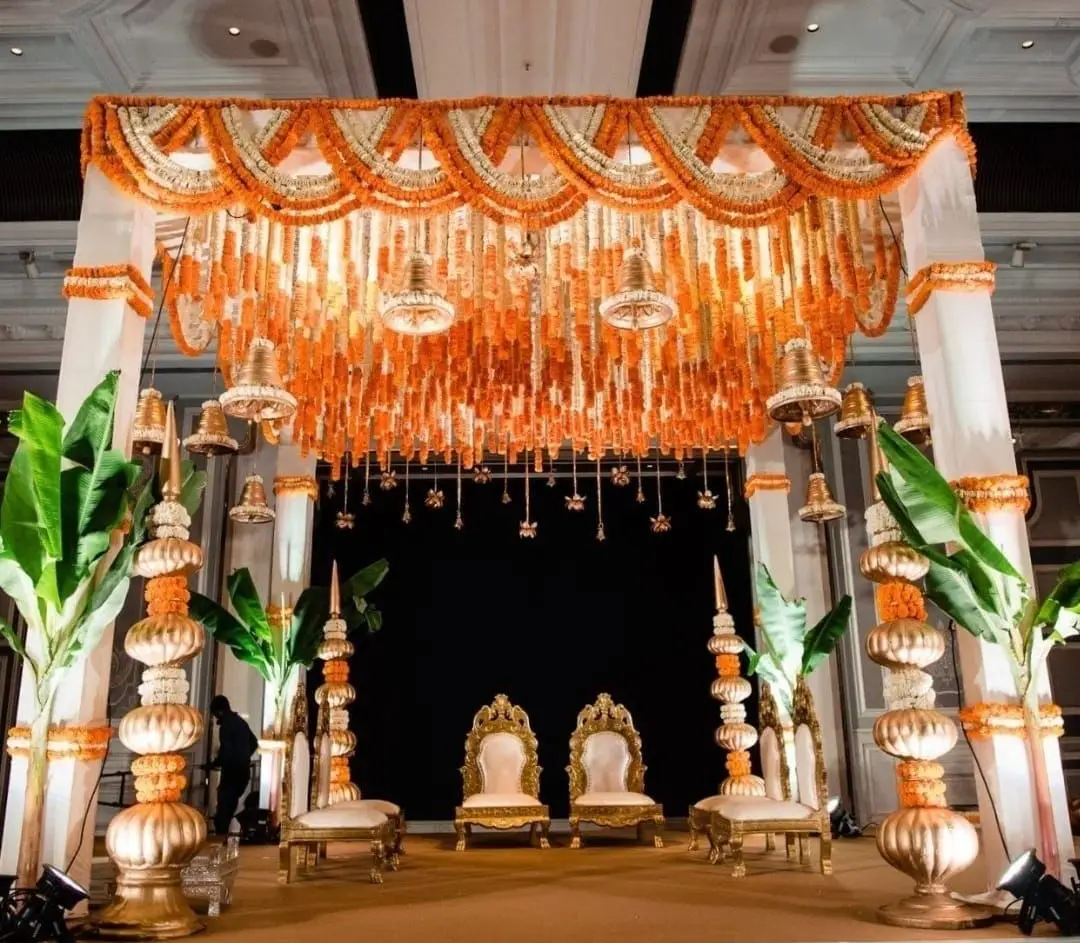
Wagholi gives you two choices, and they are nothing alike. A township hall or clubhouse comes with walls, power, washrooms and a committee that sets the rules. An open plot on the road out comes with space and nothing else, which means the floor, the shade, the power, the lighting, the washrooms and the water all have to be planned, ordered and brought in.
The second option is why families choose Wagholi in the first place. Land here still allows a wedding that would not fit anywhere closer in. But it turns the wedding into a build, and a build runs on a calendar. Decisions that a hall lets you take in the last week have to be taken weeks earlier here, because a covered structure, a generator and a laid floor cannot be arranged on the morning.
One team carries all of it: the site, the build calendar, the vendors, the guest travel and the day itself. Running since 2013, with 500+ events planned and run, and one coordinator who stays with you from the first site visit to the final clear-up.
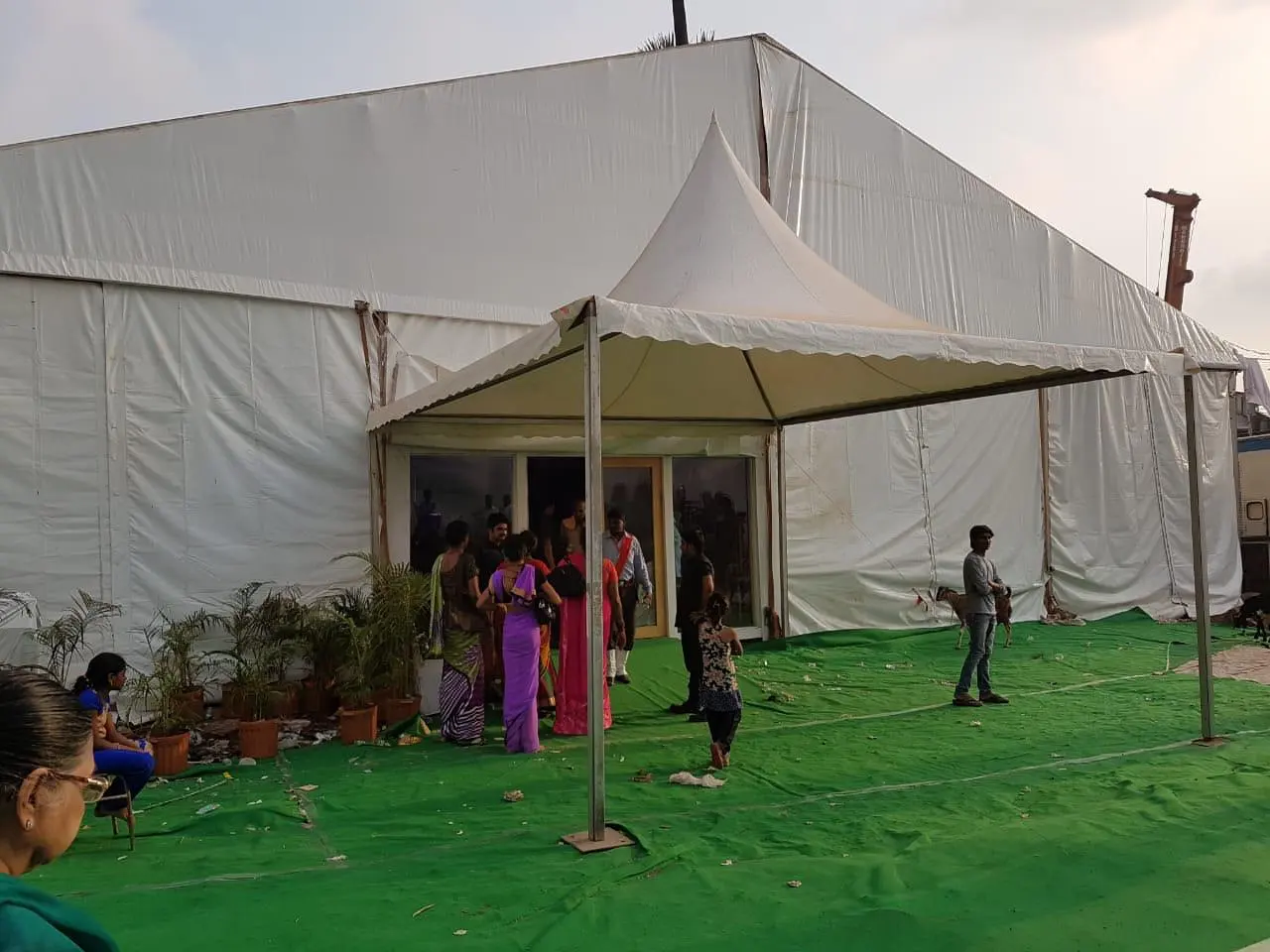
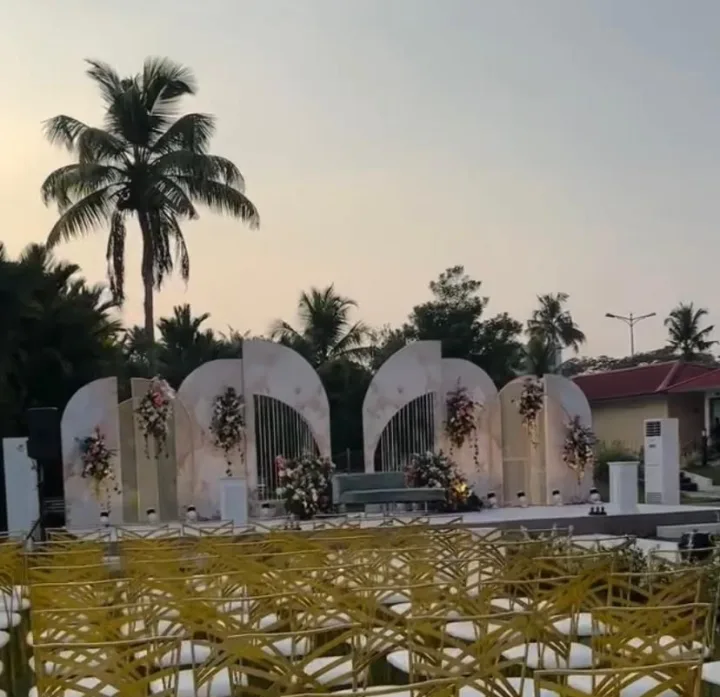
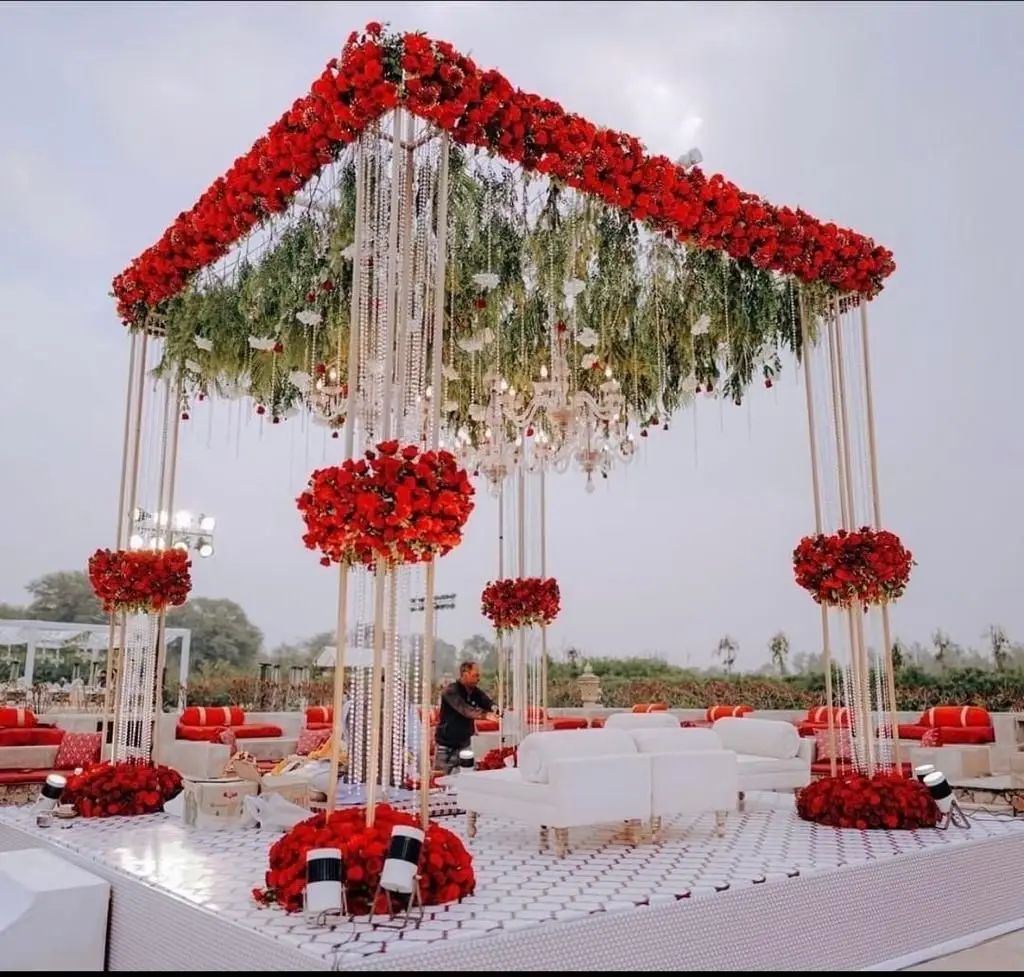
Every photo here is from an event our team planned and ran.
One team from the first site visit to the handover, whatever the venue starts as.
Plot or township hall walked with you, with access, power, water, washrooms, ground condition and permissions noted on the first visit.
A written calendar of what happens on site each day, and the date each decision has to be made by.
Flooring, shade, generator, cabling, water point and lighting planned for the ceremony area and the walk from the gate.
Caterer, priest, photographer, makeup and music booked to the build calendar, so nobody arrives while the ground is still being laid.
Signage from the main road, a drop point at the gate, marked parking on the plot and shared transport where it helps.
A coordinator on site through the build and every function, so the family never has to chase anyone.
A full wedding on bare ground, with flooring, shade, power, lighting and washrooms planned and brought in.
Functions in a society or community hall, planned around its committee rules, guest limit and sound cut-off.
Haldi, mehendi or an engagement in the building's own amenity space, sized to what the committee permits.
All functions on one site across consecutive days, so the build is used twice and nothing travels again.
An indoor function in a hall along the highway, chosen when the season makes an open plot a gamble.
A lit outdoor reception with a stage, warm lighting and a guest route that works after dark.
A bright outdoor function with shade, a wash point and seating protected from the dust.
Planned around a drive, with shared transport, clear signage and a programme that lets people get home.
Tell us the date, the guest count, the budget and the feeling you want in the room. We ask the questions most people forget.
You getFirst ideas and a budget range
Theme, décor, stage layout and a minute-by-minute run of show, drawn up and revised until it feels like yours.
You getMoodboard, layout and an itemised quote
Venue shortlists, caterers, artists, anchors and the paperwork — police, music licences and venue approvals — handled by us.
You getLocked vendors, one point of contact
Décor goes up, truss and LED walls are rigged, sound is checked and the anchor rehearses every cue with our show caller.
You getA walk-through before guests arrive
Our crew runs the floor, the stage and the guests. When it is over, we clear the venue and send you the photos.
You getA calm host — you — and the memories
Decide which kind of venue you are taking before anything else, because the two work on different timescales. A township hall lets you make decisions late; a bare plot does not. On an open site the floor, the shade, the generator, the washrooms and the lighting are all ordered items with their own lead times, and none of them can be conjured on the wedding morning. That is the whole difference, and it is why a plot wedding is planned backwards from a calendar rather than forwards from a design.
This is the shape of a plot wedding. Each row names what is happening on site and the decision that has to be closed by then.
| When | What happens on site | What you decide by then | What stops being changeable |
|---|---|---|---|
| Several weeks out | Site visit, ground and access checked | Guest number, functions and the venue itself | The size of everything that follows |
| A month out | Layout drawn, structures and power sized | Where the ceremony, dining and parking sit | Shade and flooring quantities |
| A fortnight out | Orders placed, vendors confirmed | Menu, guest transport and the running order | The covered structure and the generator |
| The week before | Ground cleared, levelled and marked | Final headcount for the caterer | Seating and sitting counts |
| Two days before | Flooring, frames and cabling go up | Nothing new; only confirmations | The layout on the ground |
| The day before | Lighting, sound and dressing, then a walk-through | Who does what on the day, in writing | Anything needing a fresh delivery |
| Function morning | Flowers, final touches, a power test | Only the family's own timings | Everything except small fixes |
| After the last function | Strike, load-out and the ground cleared | Who signs the site handover | The deposit, once the site is inspected |
How the ceremony structure itself is built on that ground is covered on our mandap decorators in Wagholi page.
Plan the journey, not just the invitation. Most of your list will be coming out from the city along the main road, and a drive they have never done before makes people late in one direction and impatient in the other. Give them the turn off the main road and a landmark, not only an address, and put a lit board at the turn itself for the evening. For a large group from one part of the city, arranging shared transport is easier and cheaper than a queue of cars hunting for space on soft ground. Then plan the exit: mark parking with a clear way out, keep elders' vehicles nearest the gate, and finish the programme early enough that a long drive home is not a burden. If the drive has made you think about a proper out-of-town venue instead, our destination wedding planning page covers that choice.
The dust here is the detail most families forget, and it lands on exactly the things people notice. Keep the dining and the sweet counters under cover rather than open to the wind, put a wash point near the entrance and another near the dining area, and have the seating wiped between functions rather than at the start of the day. Cover the flooring on the walk from the parking, because that stretch carries most of the dust into the setup, and keep a small team on nothing but wiping through the afternoon. A morning haldi needs shade and a wash point beside it, and that is worth saying to the caterer as well as to us.
Confirm the access for a loaded vehicle, whether the ground is graded or still soft, the water arrangement, the power position, where washrooms can stand and who is responsible for clearing the site afterwards. Those answers decide your quote more than the design does. What moves the cost is how much of the venue has to be brought in, the guest number, the number of functions and the travel involved; our wedding cost page shows how those lines are split. For non-wedding functions on the same sites, see event management in Wagholi.
Most people start here with a search rather than a recommendation, and the first results are the ones paying for the position or carrying the most reviews. Neither tells you whether a team has set up in a hall like yours.
A team that has worked Wagholi knows the access, the power and the society timings. Ask for that, ask for the breakdown, and ask who runs the day. Our contact page has both numbers and WhatsApp, and you will get an itemised scope back rather than one figure.
Can't find yours? Call or WhatsApp — a planner answers.
Days before the wedding, not the morning of it. The ground is cleared and marked in the week before, flooring, frames and cabling go up two days out, and lighting, sound and dressing are finished the day before so there is a proper walk-through. Flowers and final touches happen on the function morning. We give you that countdown in writing at the start.
Earlier than the function, and with directions rather than an address. A road people have not driven before makes them late, so give the turn off the main road, a landmark and a lit board at the turn for evening functions. Send it again the night before. We also keep someone at the turn during the arrival hour to wave cars in.
For any large group travelling from one part of the city, yes. Shared transport is simpler than a line of cars looking for space on soft ground, it keeps arrivals together so the function can start, and it removes the worry of a night drive home. We arrange it, schedule it against the running order, and keep the pick-up points on the invitation.
Yes, and it is usually the better plan. Once the flooring, power, shade and lighting are up, using them for two days costs far less than building twice. Haldi and mehendi go on the first day, the ceremony and reception on the second, with the setup re-dressed rather than rebuilt in between. It also saves your guests a second unfamiliar drive.
Almost everything on the build side, and the committee becomes the main constraint. You get walls, power, washrooms and a kitchen, so the site work disappears. In its place come a guest limit, a sound cut-off, a setup window, a list of vehicles allowed inside and rules about what may be fixed. We settle all of that in writing before the design starts.
How much of the venue has to be brought in. A plot where flooring, shade, power, lighting and washrooms are all arranged costs far more in site work than a hall that already has them. After that it is the guest number, the number of functions and the travel involved. The quote shows site work as its own lines, so you can see what the ground is costing you.
Most guests will go back the same night, so plan the exit carefully and finish early. Arrange stay only for elders, for family arriving from other cities and for anyone needed early the next morning. Book those rooms as a block near the venue rather than in the city, and share the address and a contact number with them well in advance.
Nobody awards that title, so it comes down to which team fits the event you are actually running. Plan With YOLO has planned events since 2013 out of Pune and handles open-plot weddings, township hall weddings and clubhouse and podium functions in Wagholi. The same crew covers Pune. Ask each name you shortlist for an itemised scope rather than one figure, and compare the same lines.
Look for a team that has already worked in Wagholi, because venue access, power and society timings are local knowledge and cost you a day to learn. Our office is in Anand Nagar off Sinhagad Road and the crew travels to Wagholi with its own kit. Send the date, the venue and a rough guest count and you get a scope back the same day.
There is no standard rate — the cost follows the guest count, the venue, how much décor and stage you want, and the date. A wedding date in season and a weekday corporate meeting in Wagholi are not comparable, so a quoted range before anyone has seen the brief is not worth much. You will get an itemised scope for your own event, and every line on it can move.
Haldi · Mehendi · Sangeet · Pheras · Reception
Pune · PCMC
Venue · Travel · Guest careSend us the plot and the dates
Tell us where in Wagholi you are marrying, how many guests you expect and which days you have, and we will visit and come back with an itemised plan.