Intimate Wedding Planner in PuneFewer people, and every detail in close-up

Thirty guests or a hundred and fifty, each close enough to see the joins. We plan small weddings the way they need it: a room you can fill, finish that holds at arm's length, and a day that keeps time.

  • Small-venue search
  • Seating plans
  • Close-range décor
  • Plated and counter service
  • Room-sized sound
  • Day coordination
Intimate Wedding Planner in Pune
2013planning events in Pune since

Intimate wedding planner in puneNot a big wedding with the list cut

An intimate wedding is a different job, not a smaller version of the same one. At three hundred guests nobody notices the back of a backdrop or the tape across a floor. At sixty, everybody does, because they are standing an arm's length from it for four hours.

That moves where the attention goes. Scale stops mattering and finish starts to. A stage becomes furniture rather than scenery. Flowers have to be real wherever hands reach them. Sound has to be sized for a room people want to talk in, not for a hall. And the room itself has to be one your list can fill, because eighty guests in a space built for three hundred will feel like a wedding nobody came to, however good the décor is.

Small weddings also need tighter coordination, not looser, because there are fewer people to hide a delay behind. We have been running events since 2013, and we plan, set up and run these exactly the way we run the large ones: one point of contact, one schedule, everybody holding the same sheet.

  • Running since 2013, 500+ events planned and run
  • Venues shortlisted to fit your number, not to fill a hall
  • Finish checked at arm's length, not from the back row
  • Sound sized for a room people still want to talk in
  • One coordinator on site through the whole day
Intimate wedding planner in pune

Kinds of intimate weddingSmall weddings we plan most often

  • Family-only pherasThe ceremony alone, with immediate family and a handful of friends, done properly rather than quickly.
  • Register wedding and dinnerA morning at the registrar's office, then a private dinner in the evening for the people who matter most.
  • Home and terrace weddingsThe family house or a terrace, where everything comes in with us: power, cooling, flooring, kitchen and cover.
  • Boutique hotel weddingsA small banquet with rooms attached, so outstation family stay where the wedding happens and nobody drives at night.
  • Restaurant and rooftop dinnersAtmosphere and a working kitchen already in place, with short setup hours that have to be planned around.
  • Bungalow and villa lawnsA private lawn for a seated ceremony and dinner, with a cut-off time the street decides for you.
  • Two-function weekendsHaldi or mehendi on one day, the wedding on the next, both in the same place so nothing has to move.
  • Small destination weddingsA property taken end to end for a short list, where the whole group stays, eats and celebrates together.

What an intimate wedding needsThe parts that change when numbers drop

Six things behave differently at this size, and all six are where a small wedding is won or lost.

The parts that change when numbers drop

Venues for small numbers

Private dining rooms, terraces, boutique banquets, bungalow lawns and society halls, checked for real seated capacity rather than the brochure figure.

Shaping the room

Drape, lounge clusters and a stage brought forward, so a space that is slightly too large still reads full and warm.

Close-range décor

Finished on every side, cables routed and covered, fresh flowers wherever hands rest, and light warm enough to sit under.

Seating and guest flow

A plan that keeps conversation going: table sizes chosen for the number, a real aisle, and elders near the ceremony.

Sound for a small room

Two speakers placed for coverage rather than power, wired mics for the vows, and levels kept where people can still talk.

One coordinator, all day

Run sheet with real timings, vendors briefed, and one person keeping the muhurat, the food and the photographs in step.

How we plan itFrom first call to final bow.

  1. 01 First call

    The list decides everything

    We start with the final guest number, not an approximate one, because venue, seating, service style and sound all follow from it.

    You getA brief that will not change under you

  2. 02 Week 1

    Rooms that fit the number

    A shortlist of spaces sized for your list, with real seated capacity, setup access and house rules checked before you visit.

    You getOptions you can fill, not just afford

  3. 03 Weeks 2-3

    Design at close range

    Layout, stage, tables and lighting drawn for the actual room, with finishes chosen for how they look from a metre away.

    You getA design and an itemised estimate

  4. 04 Month before

    Seating and service

    Seating plan, menu and service style settled together, dietary notes collected, and the run sheet written with real timings.

    You getA plan both families have seen

  5. 05 Wedding day

    One person running it

    Vendors briefed, the room checked before guests arrive, and every handover kept to time so nothing drifts.

    You getA day you spend with your guests

Pick the room before you pick anything else, and pick one your guest list can fill. Nothing in an intimate wedding is harder to fix later than a hall that is too big.

Why a small wedding is not a shrunken big one

The difference is viewing distance. A large wedding is seen from thirty feet away in a crowd, and it is designed for that: big shapes, strong colour, a stage that reads from the back row. A small wedding is seen from three feet away by people with nothing else to look at. Every join in the drape, every cable tie, the unfinished back of a panel, the tape holding a wire down on the walkway, all of it sits at eye level for the whole evening.

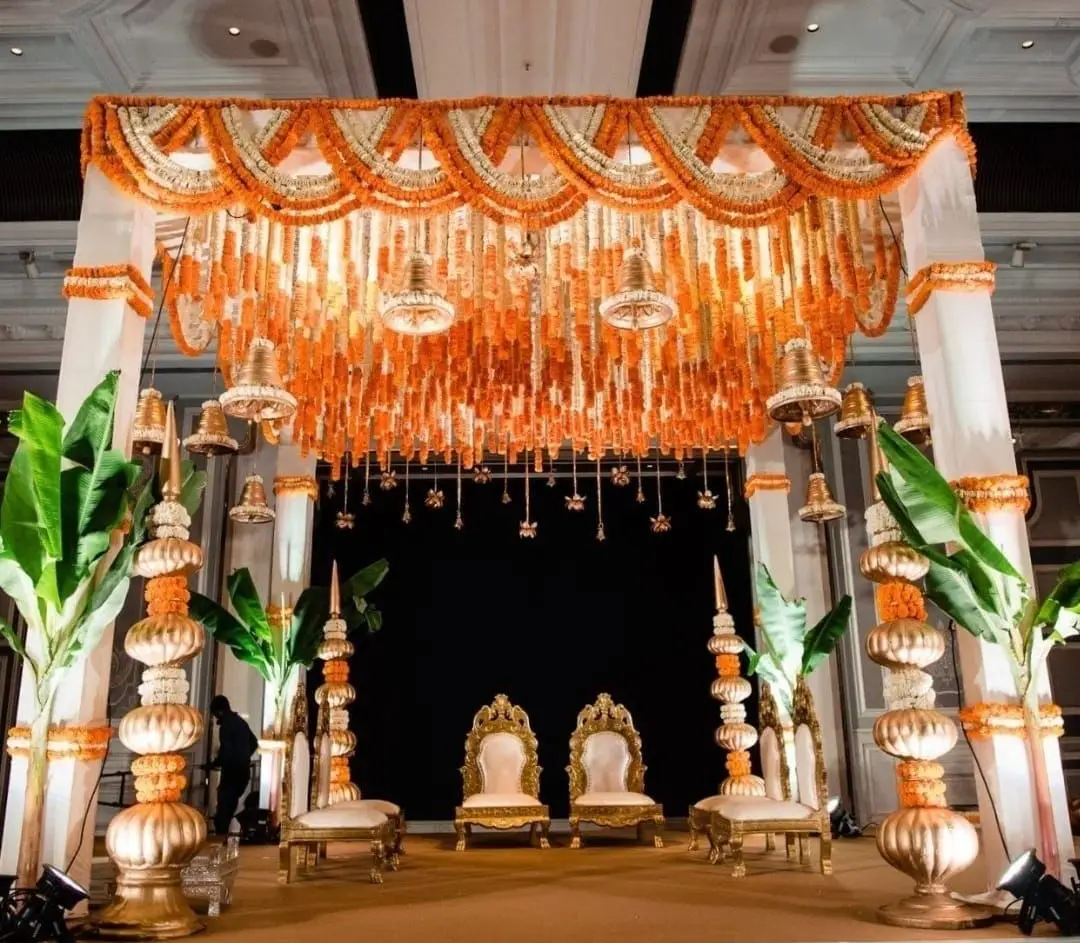
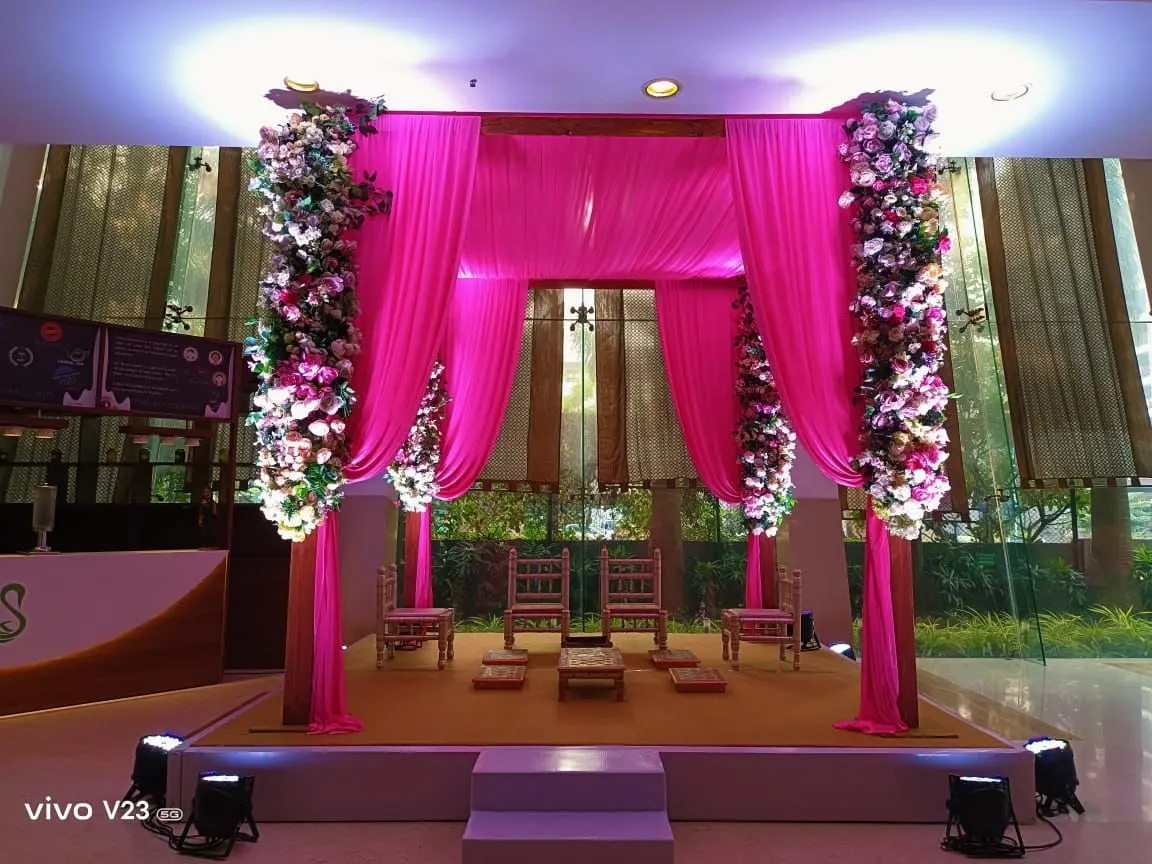
So the standard changes. Structures are finished on all sides, because guests walk behind them. Cables are routed and covered properly instead of taped across a floor. Flowers near the seating and on the mandap pillars have to be fresh, because artificial work is convincing at a distance and obvious in the hand. And with fewer elements, each one carries more weight. You cannot hide a weak stage behind a crowded room.

Hospitality changes as well. At this size you will speak to every guest, so the details become personal rather than logistical: names on seats, a menu built around the people actually invited, someone at the door who greets rather than directs. That is what guests remember from a small wedding, and most of it costs nothing.

Choose a room you can fill

Book the smallest space that comfortably holds your list, then let the design push outward. Venues will happily sell you a bigger hall, and an empty third of a banquet is the most common fault in small weddings. If the only available room is too large, close it down: drape a wall in, bring the stage forward, run lounge clusters along the sides, and curtain off the far section rather than leaving it open.

Venue types that suit small numbers behave nothing like banquets. A restaurant terrace in Koregaon Park gives you atmosphere and a working kitchen, with setup hours that may only start after their lunch service. A boutique hotel banquet in Kalyani Nagar gives you rooms for outstation family and the usual house rules. A bungalow lawn in Baner or a society hall in Kothrud gives you freedom and needs everything brought in, power and cooling included. Ask each one about setup access, whether a mandap with fire is allowed, the noise cut-off, and the real seated capacity rather than the standing number on the brochure.

Seating, food and sound by guest count

Three decisions make a small wedding feel warm: how people are seated, how food reaches them, and how loud the room is. All three shift as the number moves.

GuestsVenue that fitsSeating that worksService and sound
30 to 50Private dining room, terrace, home lawn or a villaOne long table, or three rounds close together so it stays a single conversationPlated and served; one speaker each side and a handheld mic
50 to 80Boutique hotel banquet or a small hallRounds of eight with a clear aisle, lounge seating along the edgesPlated, or two live counters placed where guests already stand
80 to 120Mid-size banquet, or a lawn with a covered sectionRounds plus a few high tables, stage pulled forward so the last row is still closeBuffet with two service lines, or counters split across the room
120 to 150A banquet you can partition, or a farm venueRounds around a defined dance floor, unused area curtained rather than left bareFull buffet with staffed counters, and a modest but proper sound rig

A word on volume, because it goes wrong more often than anything else. Small rooms are reflective, so a rig sized for a hall turns one into a wall of noise and the guests drift outside to talk. Two speakers on stands, placed for coverage rather than power, with the level kept where conversation still works until the dancing starts.

Décor that survives being looked at closely

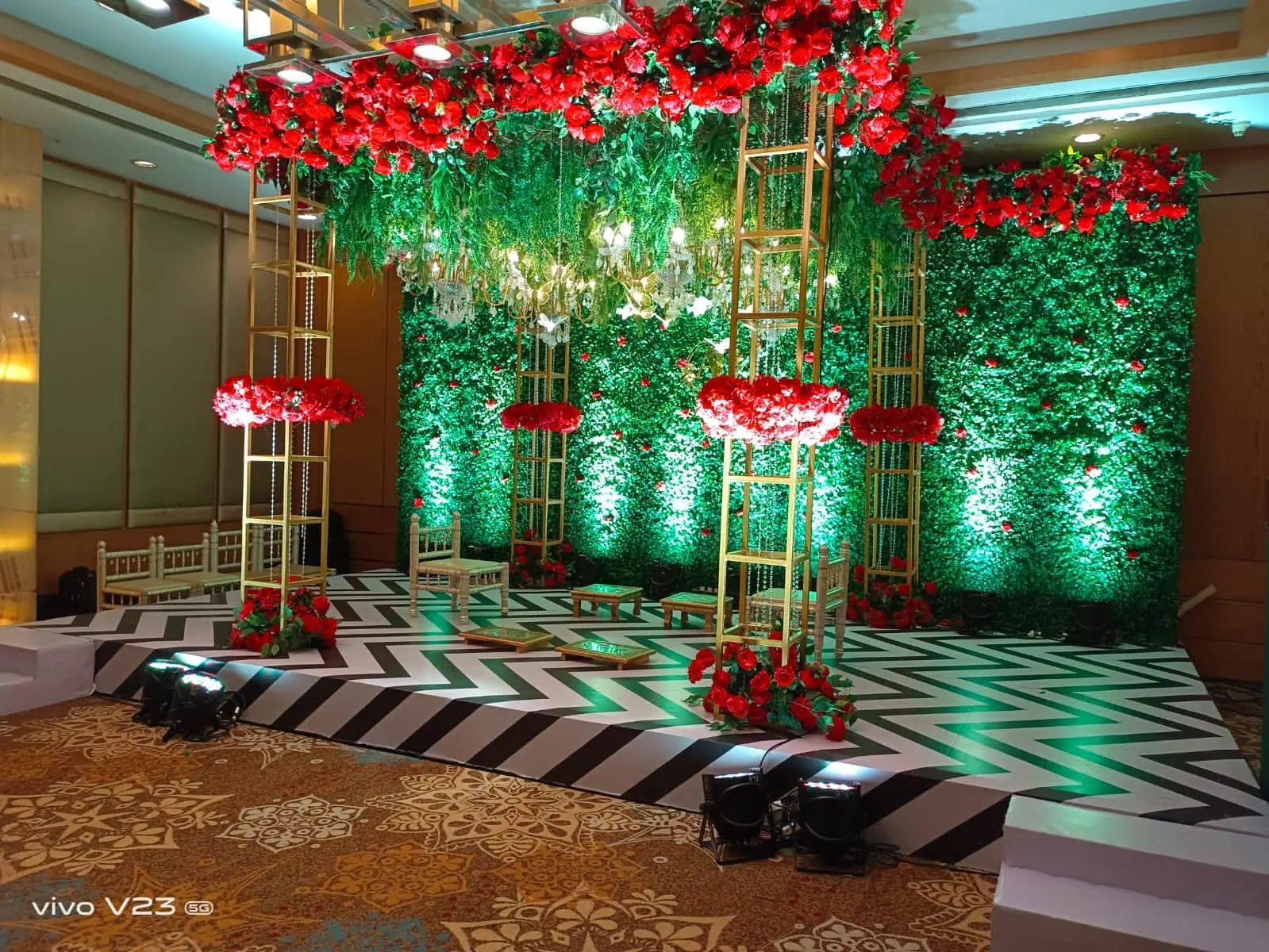
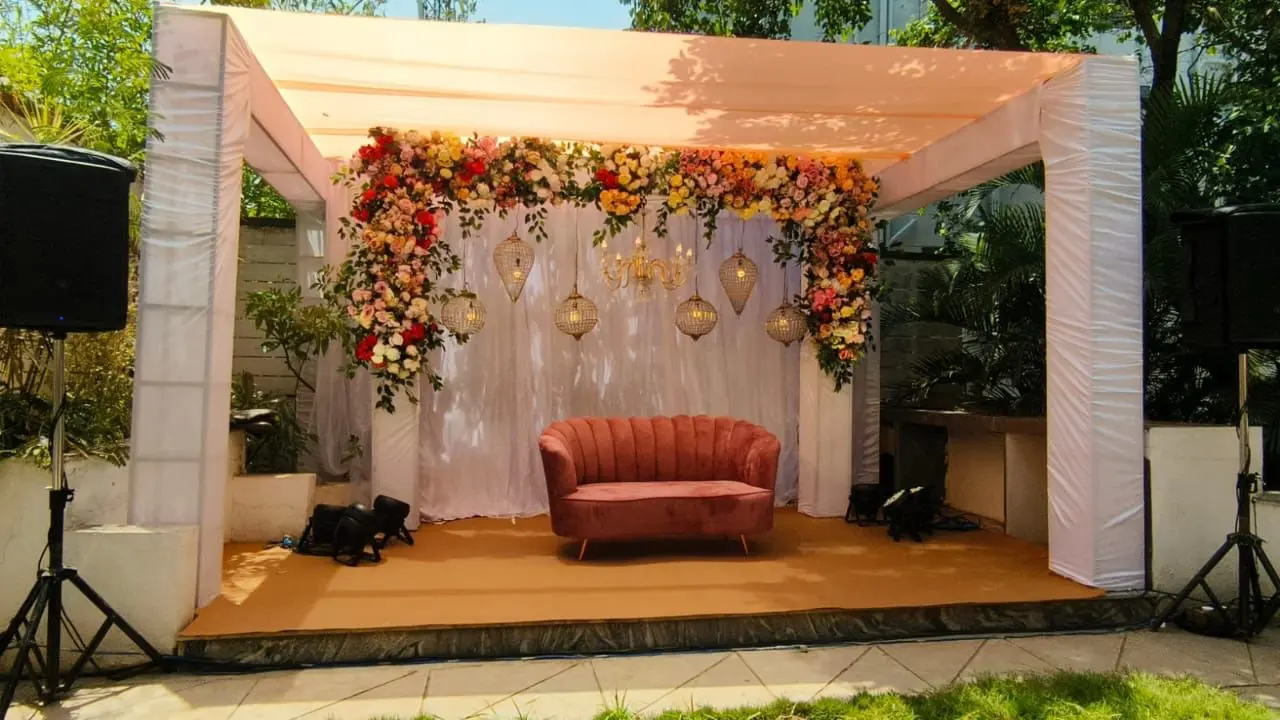
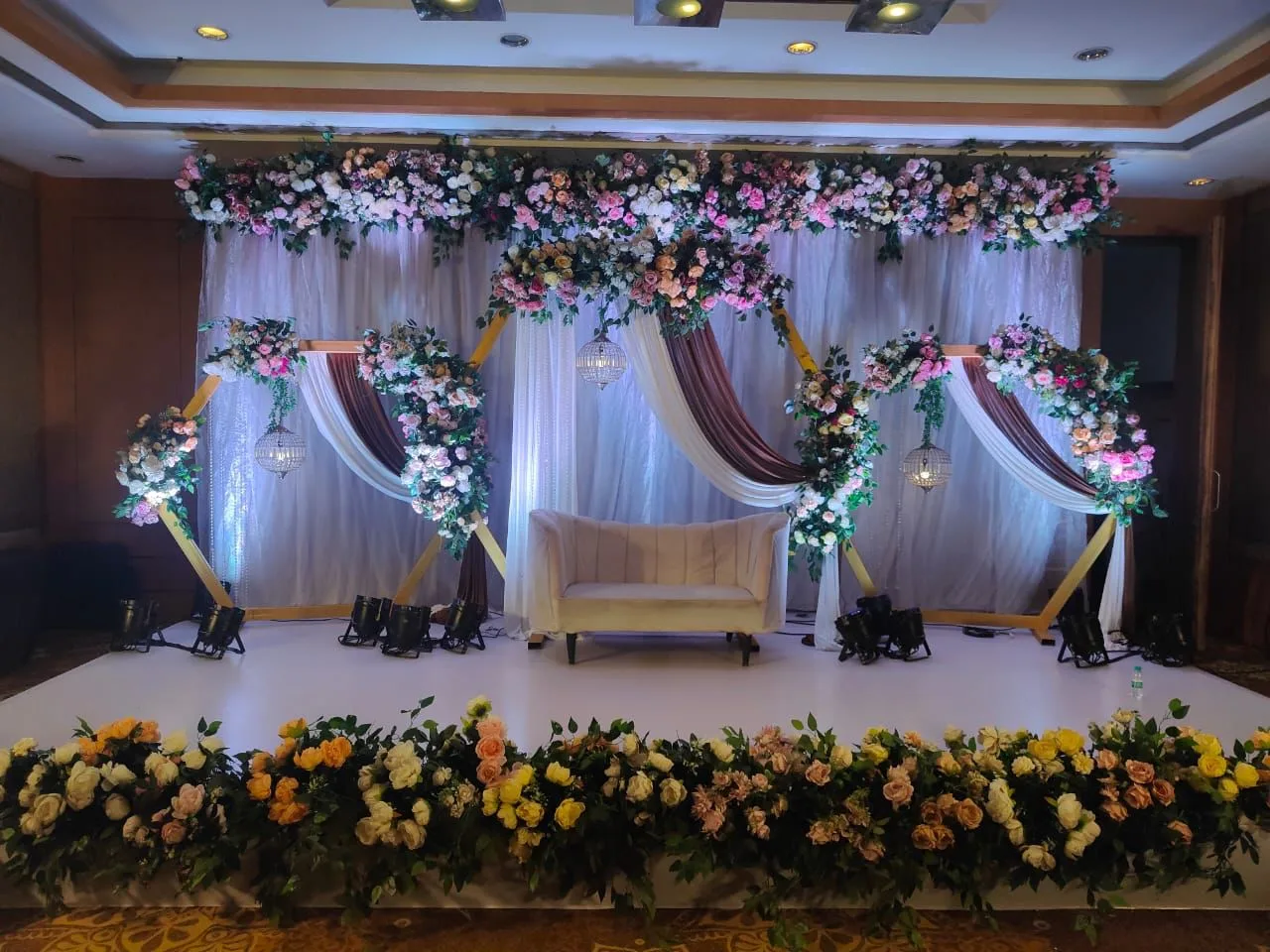
Spend on texture and finish rather than on size. What reads well at close range: fresh flowers on tables and anywhere hands rest, real candles in glass, fabric with weight instead of shine, varied heights across a tablescape, and warm dimmable light. What does not: a huge backdrop behind a small stage, plastic greenery within reach, foam-cut lettering, and any light bright enough to flatten faces.

Photo corners matter more at this size, oddly, because there is no crowd to photograph. Give guests one properly lit corner instead of three weak ones. And treat the stage as furniture, not scenery. The couple stay on it, every guest comes up to it, so it needs a sofa people can genuinely sit on, a side table, and flowers at seat height. Our wedding decorators page shows how one colour story is built at different scales.

A realistic timeline

Three to four months is enough for most small weddings, and the venues that suit small numbers often hold dates open longer than banquets do. A workable order:

  • Three to four months out: settle the guest list first, because everything downstream is sized by it, then the date and the venue.
  • Two months out: caterer and menu, décor design, photographer, the priest and the muhurat timing, rooms for outstation family.
  • One month out: seating plan, invitations sent, dietary notes collected, the run sheet drafted with real timings rather than rough ones.
  • Final fortnight: confirmed numbers to the caterer, a walk-through of the actual room, a sound and light check in that room, and the schedule shared with both families.

For the full-scale version of all this, our wedding planners in Pune page covers every function. If the budget is the driving constraint, read budget wedding planning next, and for the smaller function that usually comes first, see engagement décor.


Intimate wedding planner in pune — FAQsQuestions people ask us.

Can't find yours? Call or WhatsApp — a planner answers.

What counts as an intimate wedding?

Broadly anything from about thirty guests to around a hundred and fifty. The useful line is not a number but a behaviour: an intimate wedding is one where the couple can speak to everybody present. Past that point you start planning crowd flow instead of conversation, and the design has to read from a distance again.

Do we really need a planner for a small wedding?

You need one more than you might think, because a small wedding has nowhere to hide a delay. With sixty guests, a ceremony starting late is visible to everyone and the food suffers for it. A planner also keeps finish standards up at close range, which is the part families cannot check while getting ready.

Which venues in Pune suit fifty to a hundred guests?

Boutique hotel banquets, private dining rooms, restaurant terraces, small society halls, bungalow lawns and farm venues with a compact section. Ask each for real seated capacity rather than standing capacity, the setup hours you are given, whether a sacred fire is permitted, and the outdoor noise cut-off before you hold a date.

How do we stop a hall from feeling empty?

Book the smallest room that holds your list, then shrink what is left. Bring the stage forward, drape or curtain off unused area, place lounge clusters along the sides, and keep tables close enough that the room reads as one gathering. Lighting helps most: pool warm light on the used space and leave the rest dim.

What drives the cost of an intimate wedding?

The venue and the food per head, then how much décor and production the space needs. At this size the fixed items matter more: the mandap, stage, sound, lighting, photography and the priest cost roughly the same whatever the headcount. Finish quality and fresh flower volume move it next. Send your numbers for an itemised estimate.

Is a small wedding cheaper per guest?

The total drops a lot; the per-guest figure usually rises. Fixed costs like the stage, mandap, sound, lighting, photography and minimum venue charges stay much the same whether sixty or three hundred people watch, so they spread over fewer plates. Expect a smaller bill overall and a higher number per head, and plan on the total.

How far ahead should we book a small wedding?

Three to four months is comfortable, and small venues often hold dates open longer than large banquets do. Peak-season Saturdays still go early, so if your date falls between November and February, start sooner. Lock the guest list first, because the venue you can book depends entirely on that number.

Buffet or plated service for a small wedding?

Plated and served for anything up to about eighty guests, because it feels considered and removes queues entirely. Beyond that, either split counters across the room or run a buffet with two service lines, never one. A single buffet line for a hundred people creates a queue that lasts longer than the food stays hot.

A short list, planned properly

Tell us your guest number, the date and the kind of room you have in mind, and we will come back with venues and an itemised plan.

Talk to a planner