South Indian Wedding Planner in PuneCounted backwards from one minute

The muhurtham is a fixed point and the whole wedding is built backwards from it. We handle the overnight build, the fire clearance, the flower supply and the seated meal that follows.

  • Muhurtham countdown
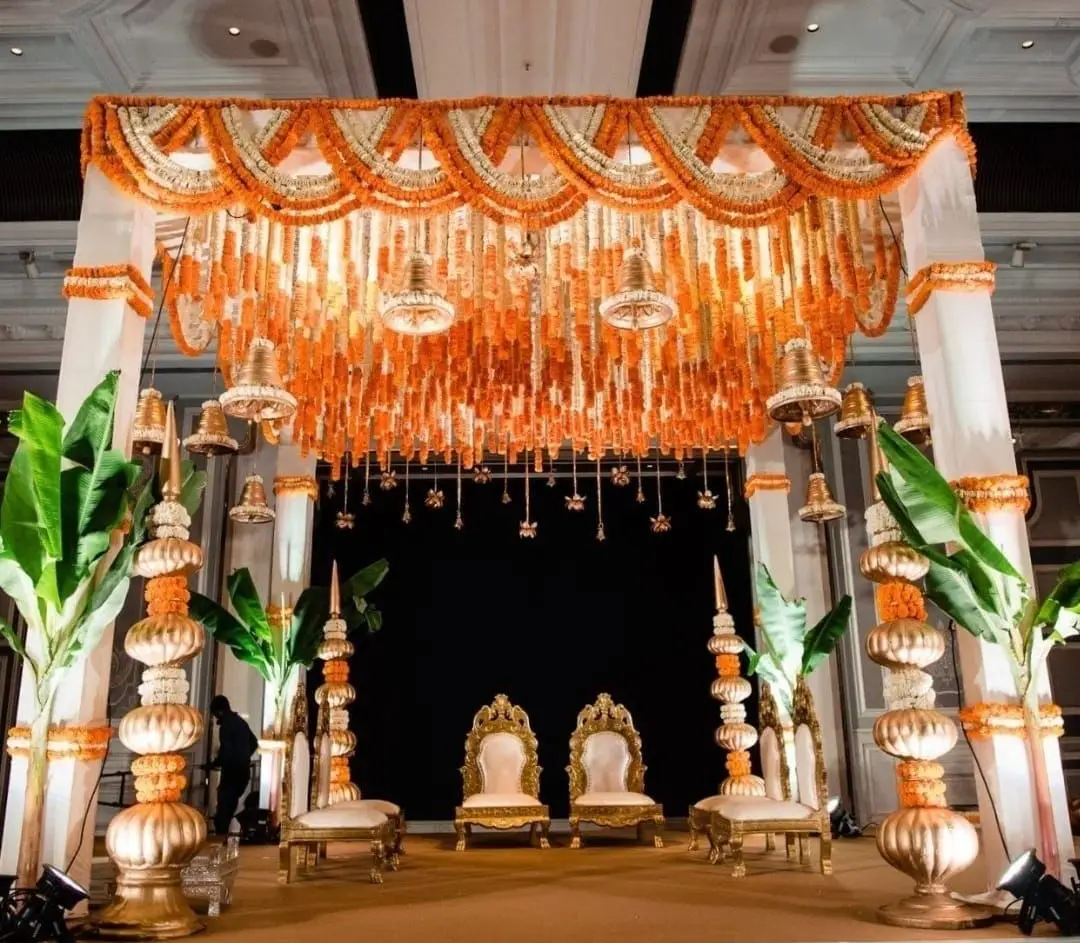
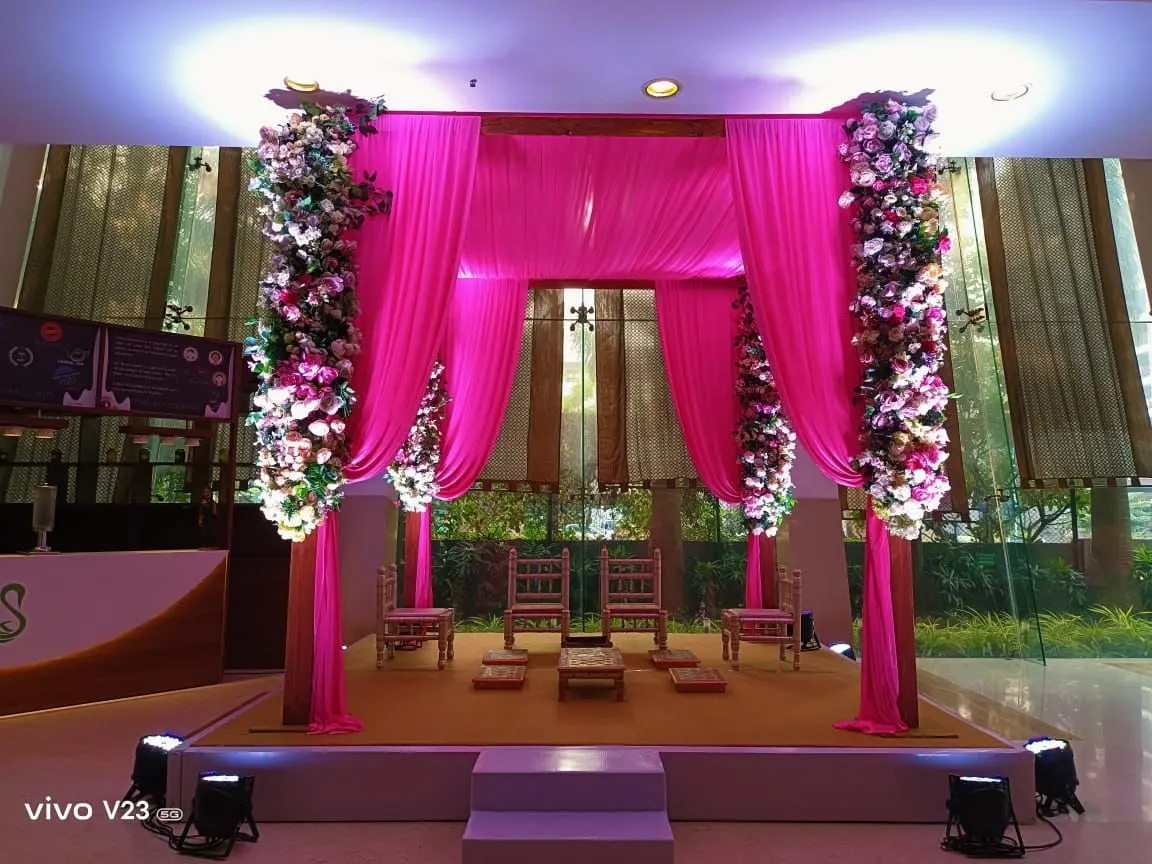
  • Mandapam and oonjal
  • Homam clearance
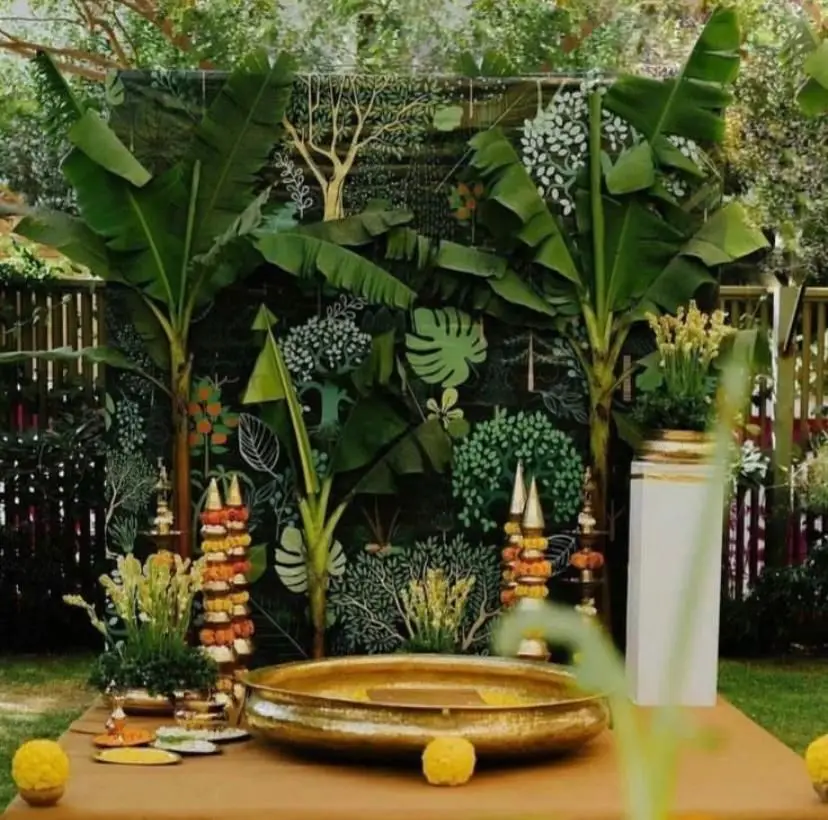
  • Jasmine and plantain
  • Naadaswaram
  • Sadhya seating
South Indian Wedding Planner in Pune
2013planning events in Pune since

South indian wedding planner in puneThe priest gives you an instant to aim at

This wedding is planned in reverse. The priest hands you a muhurtham, occasionally a window only minutes wide, and every other decision — when flowers reach the hall, when the doors open, when the bride starts getting ready — is counted back from that instant.

Two consequences get underestimated. The build happens through the night, so the venue must permit crew and working light after hours, and the family has to accept that the structure rises while they sleep. And the perishables cannot be bought ahead: jasmine, plantain leaves, banana stems and mango leaves all land in the small hours and must stay cool until somebody needs them.

We plan Tamil, Telugu, Kannada and Malayali ceremonies at kalyana mandapams, temple halls and banquet venues across the city, with many families around Kondhwa and the eastern suburbs. What you receive is a countdown rather than a schedule: every task written against hours before the muhurtham.

  • 500+ events and weddings planned since 2013
  • Everything written as hours before the muhurtham
  • Night access agreed before the hall is held
  • Fire and smoke cleared with the venue in writing
  • Flowers and leaves ordered for that night, never earlier
South indian wedding planner in pune

What we take care ofSix jobs the clock decides

Every item here is scheduled against the muhurtham rather than against a convenient working hour.

Muhurtham countdown

A plan written as hours before the chosen minute, so nothing has to be judged on the morning itself.

Mandapam and oonjal

The ceremony structure, a swing hung and load-tested, and seating set so elders sit near the rituals.

Homam clearance

Fire tray, sand, ventilation and written venue permission, with a plan for smoke wherever detectors are fitted.

Flowers and plantain

Jasmine, garlands, banana stems, mango leaves and coconuts ordered for overnight delivery and kept cool until used.

Naadaswaram and welcome

Room for the musicians, a poorna kumbham welcome at the gate, and someone receiving guests who come early.

Sadhya seating

Rows, leaves and aisles wide enough for servers, with the meal set to begin the moment rituals finish.

Traditions we planFour states, four sequences

  • Tamil weddingKashi yatra, oonjal, kanyadaanam and the thaali at a fixed muhurtham, almost always in the morning.
  • Telugu weddingJeelakarra bellam at the muhurtham, a curtain held between the couple, and a longer ritual sequence.
  • Kannada weddingA morning ceremony with dhare and a seated meal, often spread over two days with a nischitartha.
  • Malayali weddingA ceremony of minutes, after which the sadya carries most of the day's weight.
  • Temple ceremonyHeld inside temple premises, with fixed hours, very limited décor and no control over other visitors.
  • Kalyana mandapam weddingA purpose-built hall with kitchen and rooms, made for night setup and a large seated meal.
  • Reception the night beforeThe evening function held ahead of the wedding, which reverses the usual order of the week.
  • Mixed-tradition weddingTwo sets of rituals across two days, needing a programme both families can actually follow.

How our event planning worksFrom first call to final bow.

  1. 01 Day 1

    The call

    Tell us the date, the guest count, the budget and the feeling you want in the room. We ask the questions most people forget.

    You getFirst ideas and a budget range

  2. 02 Week 1

    Concept & moodboard

    Theme, décor, stage layout and a minute-by-minute run of show, drawn up and revised until it feels like yours.

    You getMoodboard, layout and an itemised quote

  3. 03 Weeks 2–4

    Venue, vendors & permissions

    Venue shortlists, caterers, artists, anchors and the paperwork — police, music licences and venue approvals — handled by us.

    You getLocked vendors, one point of contact

  4. 04 Event eve

    Build & rehearsal

    Décor goes up, truss and LED walls are rigged, sound is checked and the anchor rehearses every cue with our show caller.

    You getA walk-through before guests arrive

  5. 05 Show day

    Showtime & wrap

    Our crew runs the floor, the stage and the guests. When it is over, we clear the venue and send you the photos.

    You getA calm host — you — and the memories

Ask for the muhurtham before you ask for anything else. Every hall, florist and caterer involved in this kind of wedding is booked against a single instant, and a plan that does not name that instant is not a plan.

One fixed point, everything else moving

These times fall early, often before sunrise and sometimes inside a window of a few minutes. That one fact chooses the venue, because the hall has to be yours for the entire preceding night. It chooses the crew, since the structure is raised, the flowers fixed and the fixtures focused while the family sleeps. It chooses the bride's morning, because hair, makeup and the first drape all finish in darkness. And it shapes how guests behave: a large share of them will arrive fifteen minutes before the muhurtham and leave once they have eaten, so welcome, seating and parking all peak inside one short stretch instead of spreading through the day.

Counting backwards

Write the day out as hours before that minute. Once it exists on paper in this shape, every argument about who needs the hall when simply stops.

Hours before the muhurthamWhat must already be finishedWho is awake for it
The previous eveningReception over, structure framed, leaves and stems deliveredSetup crew, the decorator, the family's runner
Around midnightFlowers strung, garlands kept cool, fire tray and sand positionedFlorists and the build team
Three or four hours beforeFresh flowers fixed, swing hung and load-tested, fixtures focusedDecorator, electrician, the venue manager
Two hours beforeCouple dressing, jasmine arriving fresh, priest's items laid outMakeup team, the priest, both mothers
One hour beforeMusicians playing, welcome at the gate, elders already seatedUshers, naadaswaram players, immediate family
The minute itselfRoom quiet, cameras placed, thaali and plate ready in handPriest, the couple, both families
Straight afterwardsLeaves laid, rows ready, servers lined in serving orderCaterer, servers and the hall staff

Fire, smoke and what the venue says

A homam means live flame indoors, and the venue's position on that is the first thing to settle. Kalyana mandapams and temple halls expect it and are built for it. Banquet rooms and hotel ballrooms frequently refuse, and a detector above a fire tray will empty a building in the middle of the ritual. Get permission in writing, ask specifically about detectors and sprinklers, and ask whether the tray may sit on the floor or has to be raised. Then handle the practical side: sand, a metal base, ghee and firewood stored safely, ventilation or extraction, and clear space around the pit that neither guests nor camera crew can crowd into once things begin.

The things that cannot be bought early

Parts of this wedding refuse to be organised in advance. Jasmine for the bride's hair, garlands, banana stems, plantain leaves, mango leaves and tender coconuts arrive the night before at the earliest, and warmth is their enemy. Book them for overnight delivery, keep strung flowers covered and cool until the last possible moment, and count leaves against the number actually being seated rather than against the invitation list. Jasmine wilts within hours in a warm room, so the bride's flowers are the last thing fitted and the first thing replaced if rituals overrun. Keep a second supplier's number for the morning, because a failed delivery at four o'clock has no other solution.

The sadhya is a layout problem

Serving is a question of floor plan before it is a question of menu. Guests sit in rows, leaves go down in order, and servers walk continuously between those rows with each item, so aisles must be wide enough for two people to pass and rows have to begin and end somewhere sensible. Seat in batches and plan properly for second and third sittings, because no hall holds everybody at once. Timing matters equally: the meal starts almost as the ceremony ends, which means the kitchen works through the rituals and staff lay leaves while the last of them happen. Mandap structures and their décor across all traditions sit on our mandap decorators page; this one follows the South Indian ceremony. For halls read wedding venues, and for the evening, reception décor.


South indian wedding planner in pune — FAQsQuestions people ask us.

Can't find yours? Call or WhatsApp — a planner answers.

Why is the ceremony scheduled before sunrise?

Because the muhurtham, the moment a marriage is solemnised, is fixed by the priest and frequently lands in the dark hours before dawn. Everything else is arranged to suit that instant rather than anybody's convenience. The practical effect is that the hall has to be yours from the previous evening, and the bride prepares by lamplight.

Do banquet halls allow a homam?

Many will not, and those that do attach conditions. Live flame beneath a smoke detector can empty a building in the middle of the ritual, so ask in writing about detectors, sprinklers, ventilation and whether the tray may rest on the floor. Kalyana mandapams and temple halls are built for this and are usually simpler.

When should flowers and plantain leaves be ordered?

For overnight delivery, never sooner. Jasmine, garlands, banana stems, mango leaves and plantain all suffer in warmth, and anything fixed too early looks tired by the ceremony. Book them for the small hours, keep everything covered and cool, and hold a second supplier's number in case a morning delivery fails.

Where does the budget go in a South Indian wedding?

Catering usually leads, because a seated meal across several sittings needs staff as well as food. Flower volume follows, since jasmine, garlands and plantain are consumed rather than reused. Then night hours at the venue, the ceremony structure, musicians, and how many days the wedding runs. Ask for it itemised by function.

How long does the ceremony itself last?

It varies enormously by tradition. A Malayali ceremony can finish in minutes, while Tamil and Telugu weddings move through kashi yatra, oonjal, kanyadaanam and the thaali across a few hours. Ask your priest for the sequence and the length of each part, then build the guest schedule and the meal around that.

Where should elders and guests be seated?

Elders close to the ceremony on both sides, with a clear view of the fire and the couple, and chairs rather than floor seating wherever it is possible. Fix camera positions in advance so nobody stands in front of the family. Leave a wide route from the entrance, since most guests arrive together.

Can the reception be held on the wedding day?

It can, although many families keep it for the evening before, which is both traditional and kinder. A muhurtham before sunrise means the couple has been awake since the middle of the night, so an evening function the same day makes for a very long stretch. Combining them needs a real rest gap built in.

Give us the muhurtham

Send the muhurtham, the venue and your guest number, and a countdown, a ceremony layout and an itemised quote follow.

Talk to a planner