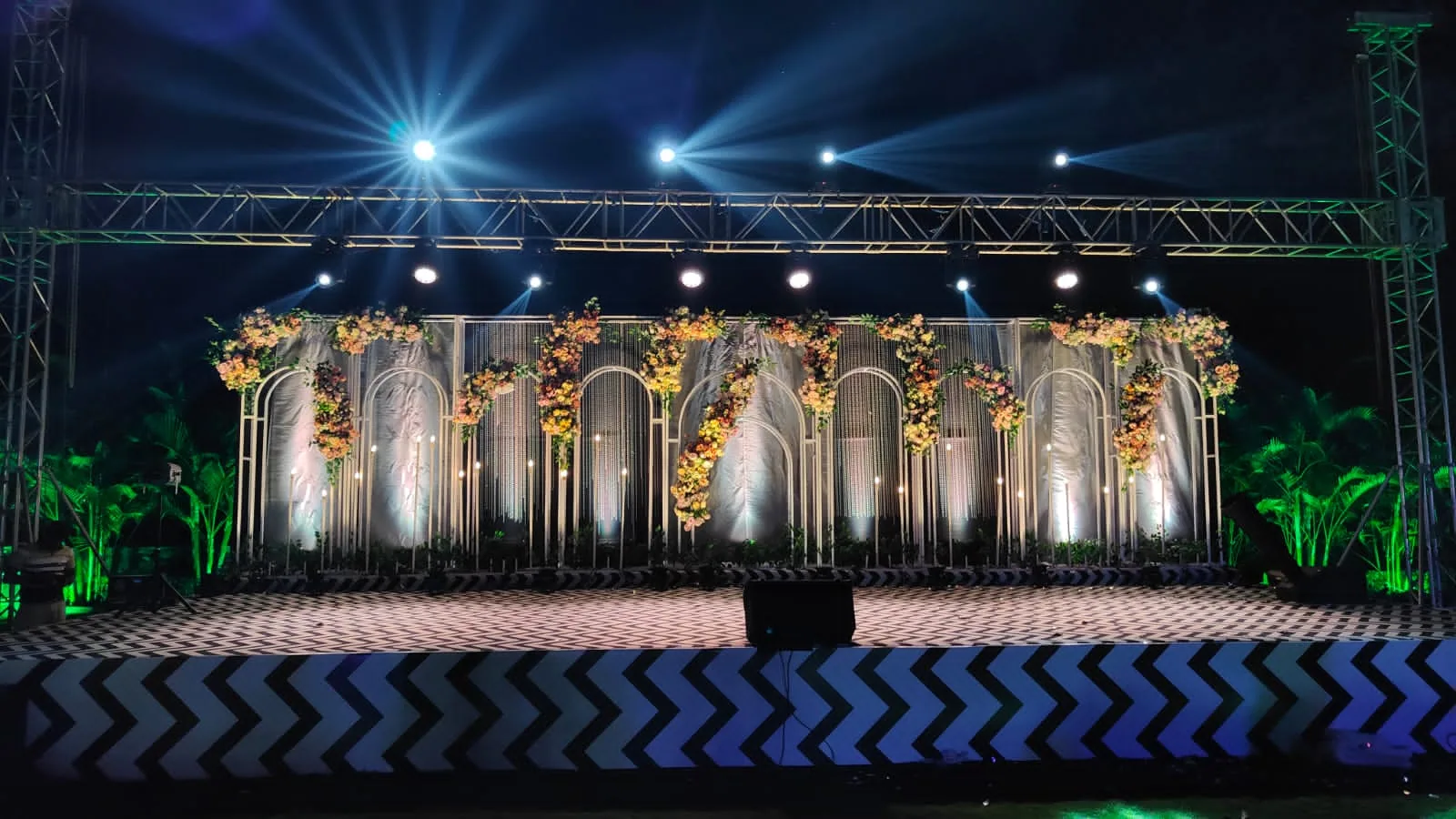

Draped paat or jhula
A floor seat on a decorated paat, or a low swing fixed so it barely moves, with a panel behind it.
Shop 7, Ekta Nagri, Near Dwarka Apartment, Anand Nagar, Pune 411051
Dohale jevan is the seventh-month ritual the women of the house run themselves. We dress the seat, stage the rukhwat, style the oti corner and keep the floor clear for everyone who has to sit on it.
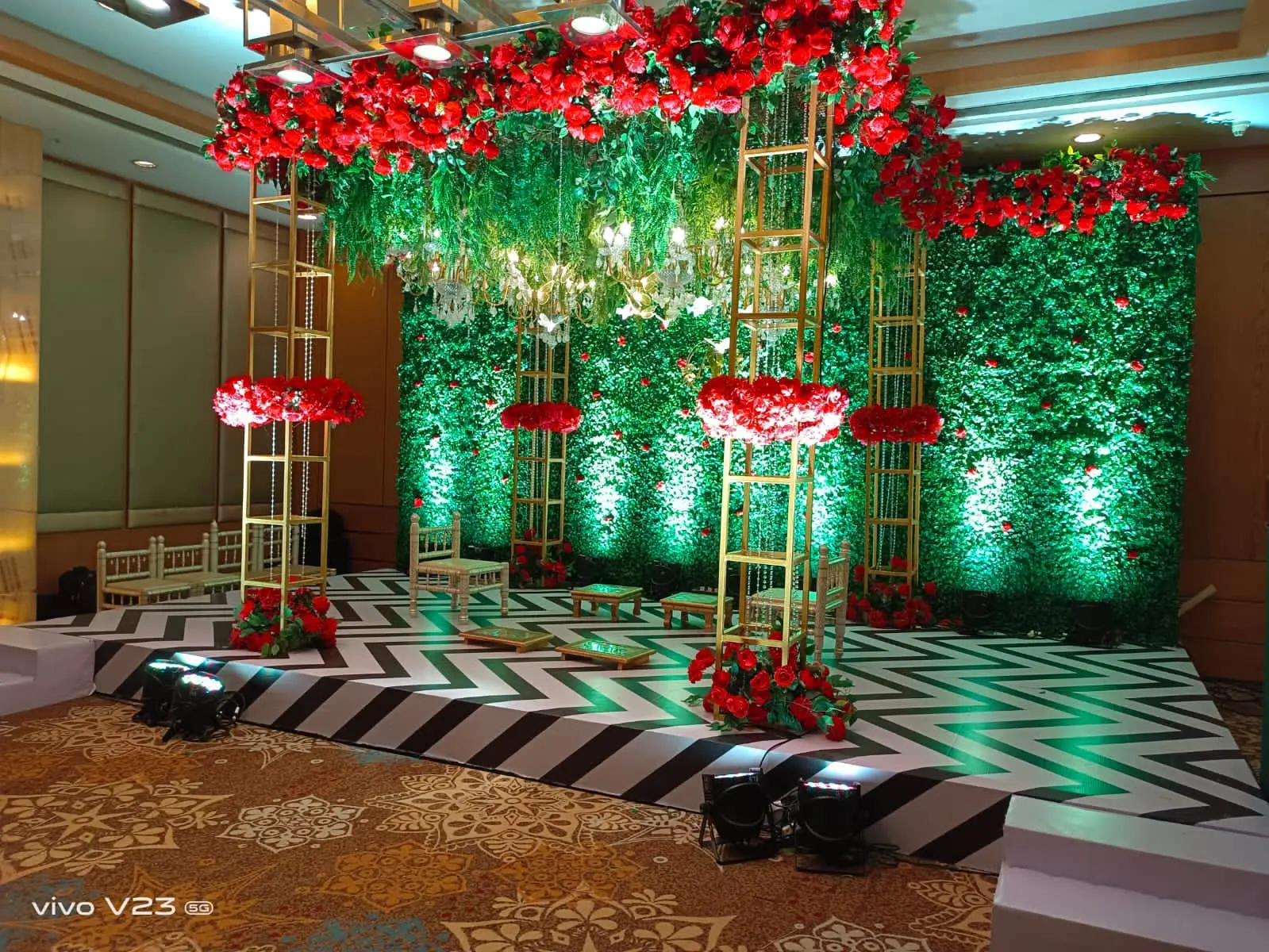
Dohale jevan belongs to the seventh month, and it belongs to the women of the family. The aunts, the sisters and the grandmothers decide the order, feed her the dishes she has been craving, sing, tease, call out ukhane and fill her oti. Our job is to build the room they are going to run, not to run it.
That shapes every choice. She is seated on a draped paat or a low, steadied jhula, low enough for someone to sit beside her on the floor. The flower jewellery is made to match a green saree, so the panel behind her has to stay quieter than both. The oti corner needs standing room on one side, because several women come up in turn. The floor in front of her stays empty, since much of the singing happens seated there.
The rukhwat is the other half of the afternoon. It is the family's own display, homemade sweets, craft work, small handmade pieces and baby things, and guests spend longer at it than anywhere else. We stage it and light it. What goes on it is entirely yours. We set up across the city, from flats off Sinhagad Road to older wadas near Deccan.
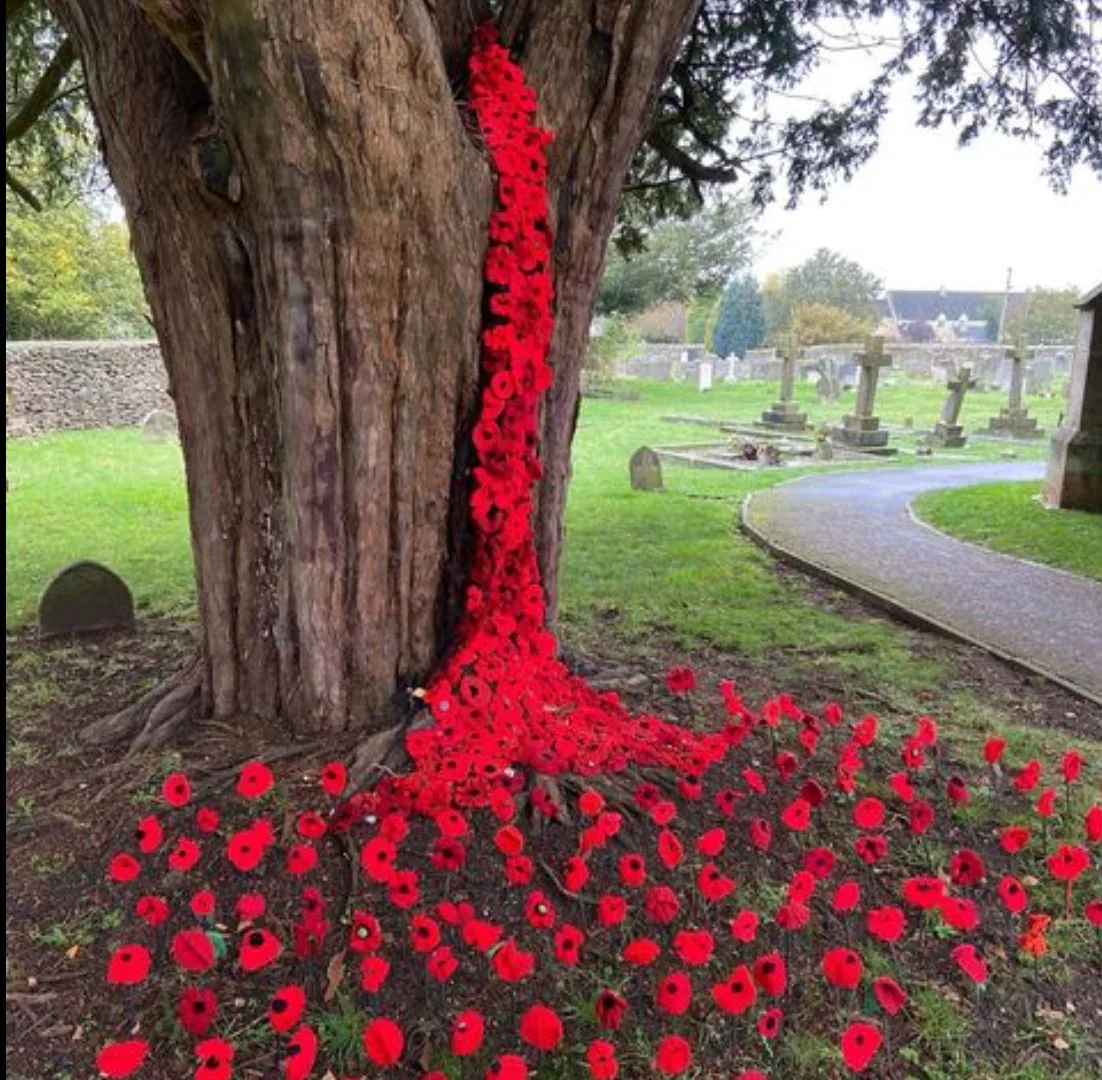
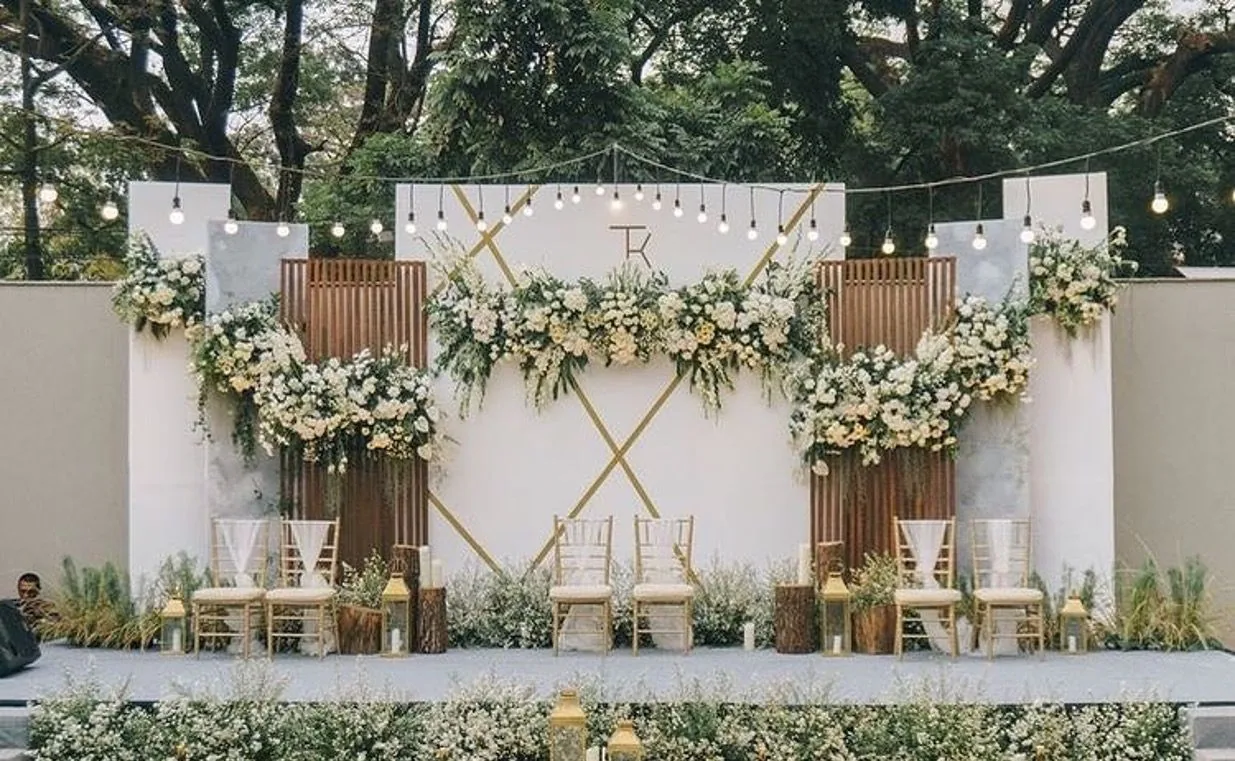
Mango leaves, marigold strings, a draped paat and a traditional panel in the palette families ask for most.
One or two staged tables with risers, cloth and light for sweets, craft work and baby things.
A fixed swing at floor-seat height, steadied and dressed, for families who want the swing photographs.
Drapes and flowers matched to a nine-yard saree, with gold and deep colour carried through the panel.
One wall, a floor seat, a compact display table and enough clear floor for everyone to sit.
A raised seat, a longer rukhwat run, guest tables and an entrance for a wider family gathering.
Warm lighting and a lit panel for families who hold the function after working hours.
Fewer flowers and quieter shades, keeping the paat, the oti and the rukhwat exactly as they are.
Take the pieces your family's custom asks for; the rest we leave out.
A floor seat on a decorated paat, or a low swing fixed so it barely moves, with a panel behind it.
Draped tables, risers and lighting sized to the number of pieces your family is laying out.
A styled low table beside her, with room on one side for women to come up in turn.
A dressed low table or thali stand for the dishes she is fed, matched to the same palette.
A flower or drape wall set apart from the ritual, so nobody crowds the seat for pictures.
Mattresses and bolsters for the women who sit down, and chairs with back support for those who cannot.
Every photo here is from an event our team planned and ran.
Walk us through the order your elders follow, the date, how many women are expected and where it is being held.
You getA brief written around your custom
You get a board for the seat, the panel and the rukhwat run, with the saree shade worked into it and costs listed.
You getA palette you can veto early
We mark where the oti queue stands, where the floor seating goes and how the food reaches the seat.
You getA layout the ritual can move through
The build finishes ahead of the women who run the function, and the rukhwat is filled with your pieces before guests arrive.
You getNothing half-built when it starts
Drapes, flowers and tables leave the same evening, and the rukhwat pieces go back to whoever brought them.
You getYour space returned, swept
Fix three things and the rest is easy: where she sits, what shade her saree is, and how much the family is putting out on the rukhwat. Customs differ from one house to the next, and between one part of Maharashtra and another, so we ask what yours does instead of suggesting what a ritual should contain.
Most families use a draped paat, sometimes on a low platform, sometimes a swing hung low. Whichever it is, the height is the thing to get right. Women will sit on the floor beside her to sing and to tease, so a tall chair puts her above the gathering and out of every group photograph. A swing has to be fixed to something solid, sit low enough to get on and off without help, and barely move. By the ninth month a wide cushioned seat with a proper back is usually kinder than a swing, and the same panel behind it looks just as good.
Leave the floor in front of her empty. That is where the ukhane happen, where the younger cousins collect, and where the photographer will end up kneeling. Keep her away from the kitchen doorway too, because the dishes come out in waves and the traffic never stops.
Green with gold is what most families ask for, with mango leaves, marigold strings and fresh greens. Tell us the saree shade early, because the flower jewellery is usually made to match it and a panel in a near-identical green will swallow both in photographs. A half tone apart is enough. If your family prefers a nine-yard saree in a deeper colour, we pull the drapes back to neutral and let the saree carry the frame.
The rukhwat is where guests spend the most time and gets the least planning. Families lay out homemade sweets and snacks, craft work done at home, small handmade pieces, baby clothes and toys. We handle only the staging: table length, a panel behind it, risers so the back row is visible, cloth in the palette and light that keeps the colours honest. Tell us roughly how many pieces are coming. Two shorter tables almost always photograph better than one long, packed one.
A flat suits close family and a single display table. A society party room gives you a raised seat, a longer rukhwat and somewhere to stand the food. A small hall takes both families, a full panel and an entrance, and comes with a firm handover time. Whichever you choose, share photographs of the space and the saree shade, and book earlier for an auspicious date or a festival weekend.
For the function after the birth, see naming ceremony decoration in Pune. For the party-style version with games and a dessert table, see baby shower decoration, and for other family functions see our event décor work.
Can't find yours? Call or WhatsApp — a planner answers.
Dohale jevan decoration is the setup for the Maharashtrian seventh-month ritual, built around a draped paat or low jhula for the mother-to-be and a rukhwat display for guests. It usually adds a panel behind her seat, an oti bharan corner, a dressed table for the dishes she is fed, floor seating for the women, and a photo wall kept away from the ritual.
Families most often hold it in the seventh month, though some wait until the eighth or ninth and some follow a date the family astrologer gives. The month matters to us because it decides her seat. Early on, a low paat or a swing is comfortable. Later, a wide cushioned seat with real back support is the kinder choice, and it photographs just as well.
Whatever the family wants guests to see. Homemade sweets and snacks, craft work done at home, small handmade pieces, baby clothes and toys, and decorative things kept aside for the occasion. We do not supply any of it. We handle the staging around it: table length, drapes, risers so the back row is visible, a panel behind and light that keeps colours honest.
A green saree is the usual choice, often with fresh flower jewellery made to match it, and some families prefer a nine-yard nauvari drape. Tell us the shade as soon as it is bought. If the panel behind her seat lands in the same green, the saree and the jewellery both disappear in photographs, and half a tone apart fixes it.
It sits within arm's reach of her seat, on a low styled table holding the coconut, rice, fruit and the blouse piece. The important part is the space beside it, because women come up one after another and need somewhere to stand and then step away. We keep that side clear and put the photographer's angle on the opposite side.
The food is the point of the ritual, since she is fed the dishes she has been craving, usually with sweets such as puran poli and a spread laid out by the family. Catering is yours to arrange. We dress the table or thali stand she is fed at, keep it in the same palette and place it where the kitchen traffic does not cross the ritual.
Two to three weeks is comfortable, and a simple home setup can come together inside a week. Book sooner if your date is an auspicious one or falls on a festival weekend, when flowers and setup slots both get tight. Send the date, the venue, how many women are expected and photographs of the room, and we will come back with a design.
Pune · PCMC
Weddings · Birthdays · Stage décor
Proposals · House partiesPlanning events in Pune since 2013 — 500+ events for 100+ brands across 30+ cities. Read what clients say on Trustpilot, or find our Anand Nagar office on Google Maps.
Great EventGautam
User friendly experienceRahul Roushan
This company made sure to take care of everythingVaishnavi Todkar
Best Event Planner.Pranali Ladkat
Detailed workMolly Vernon
Your elders lead it, we build the room
Send the date, the venue and the saree shade, and we will come back with a palette, a rukhwat plan and a costed list.