

Hotel hall walk-through
We see the hall and grounds with you and check power, setup hours, kitchen arrangements, lift access and how close the rooms sit.
+91 84858 38274 · +91 84858 38219
Shop 7, Ekta Nagri, Near Dwarka Apartment, Anand Nagar, Pune 411051
Weddings here are planned around the temple, not around a venue. We build the day so every guest gets their darshan and still reaches the mandap on time, with the whole setup brought up from Pune.
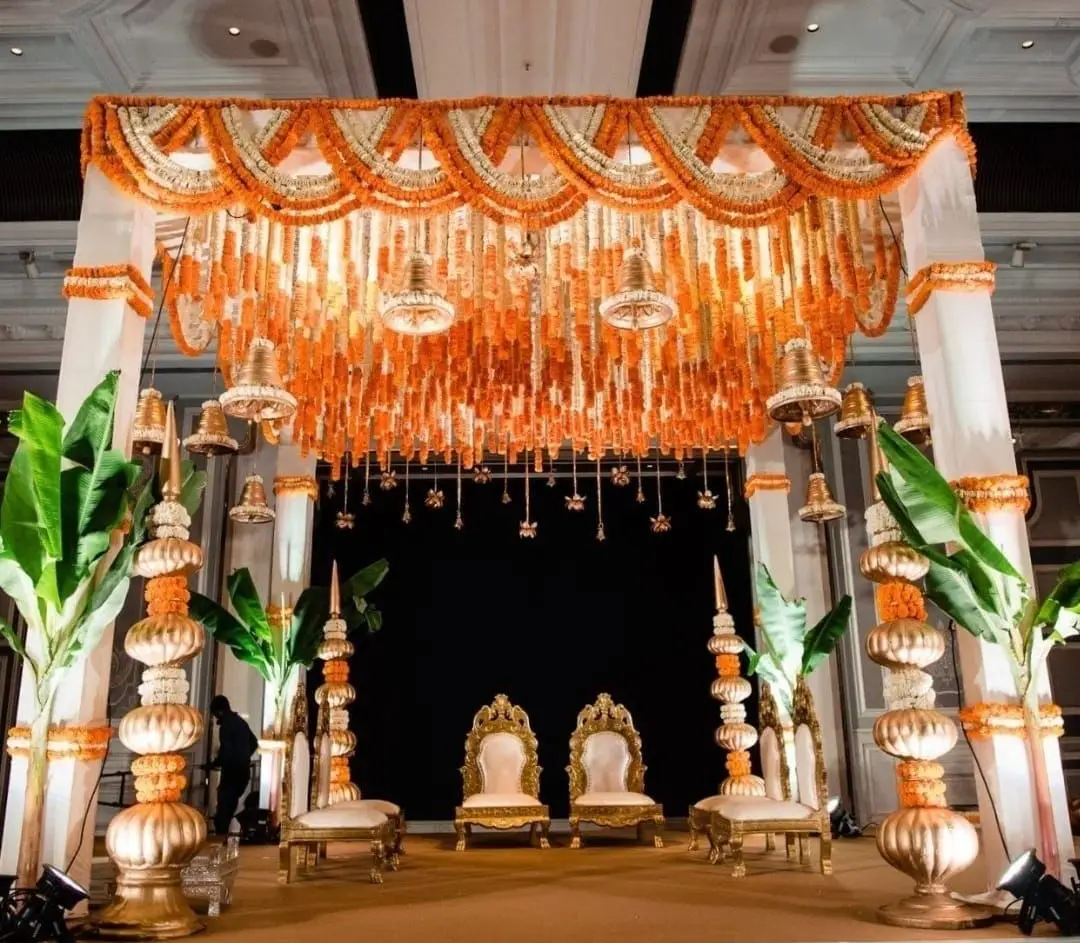
A wedding in Shirdi is unlike any other outstation wedding we plan, because the town is not really a wedding town. It is a place people come to for the temple, and everything else, including the hotels and the halls, is built around that. Families marry here for a reason: a vow kept, a promise made, a grandparent who wanted it this way. The planning follows from that reason, and the first thing it has to protect is the darshan.
Our company works out of Pune, and Shirdi is a long drive north of it. Nothing of ours sits in the town, neither a godown nor a crew on call; our team travels up with the load, stays through the functions and drives back. Flowers and carrying labour are taken from the local market, and we work with the hotel's own kitchen wherever the hotel prefers it that way.
Expect simple rooms rather than ballrooms, vegetarian kitchens in most places, and nights that end early. A design that fights those facts looks out of place here. One that works with them looks right.

Families who choose to marry here for the temple, with the whole guest list travelling in for two days.
Pheras in a pilgrim hotel's hall, with rooms upstairs so nobody has to travel between functions.
Compact mandap and seating for a plain hall, built to fit a low ceiling and a fixed floor plan.
A late-morning function on the terrace or in the grounds, once everyone is back from the early darshan.
Shaded seating and steady working light, held indoors during the hottest part of the afternoon.
A small setup for the pooja many families hold before or after the wedding, kept quiet and unhurried.
An early-evening dinner with a stage and gifting line, finished inside the venue's own cut-off time.
Breakfast, a last darshan and departures planned against the buses and trains leaving through the morning.
This is the work we take on for a wedding in the temple town.
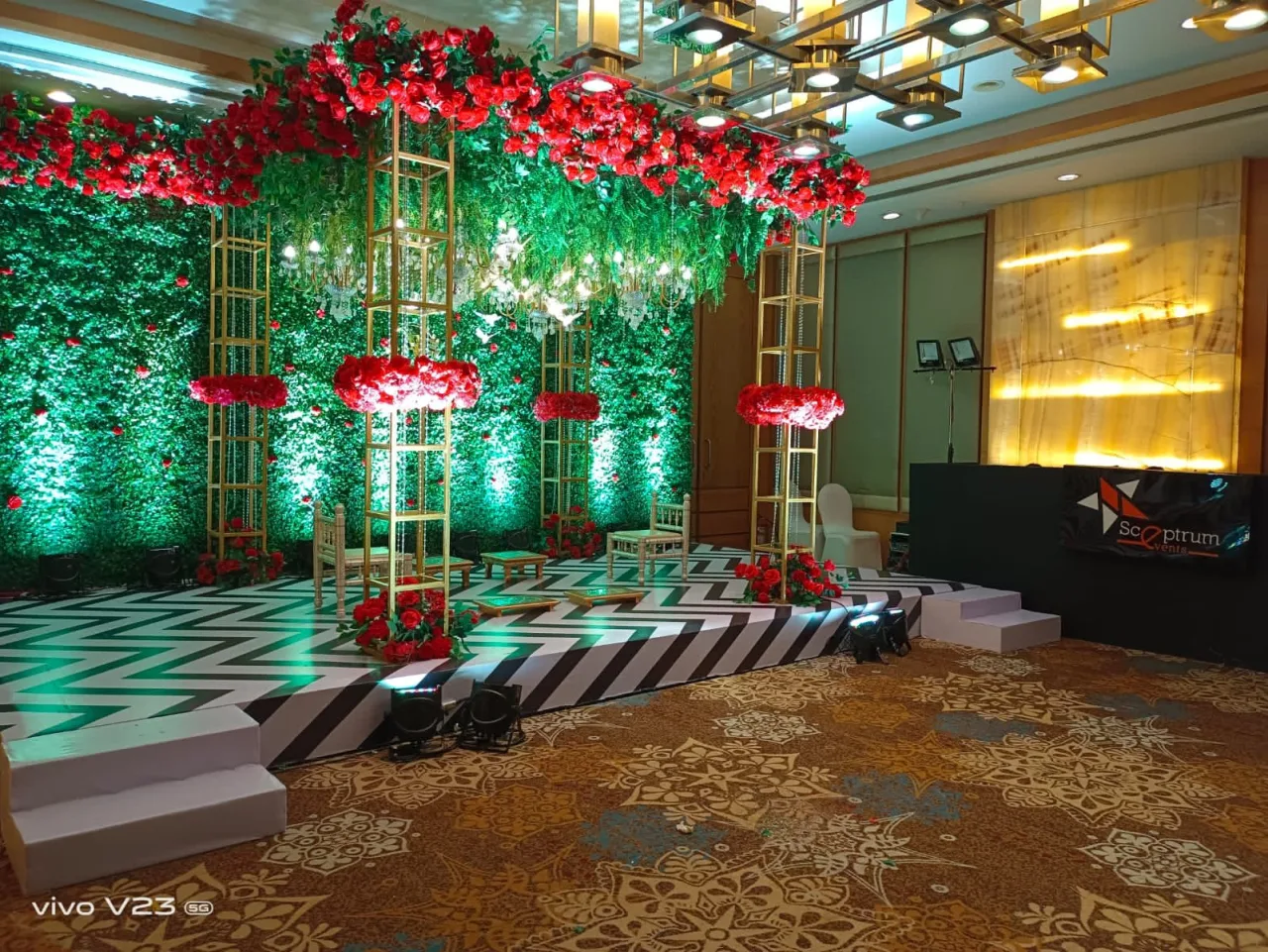
We see the hall and grounds with you and check power, setup hours, kitchen arrangements, lift access and how close the rooms sit.
Functions placed so guests can go for darshan and be back, changed and seated well before the muhurat.
A mandap, havan area and elder seating shaped to the priest's list and to the height a banquet ceiling allows.
Flower and drape work designed for plain halls, keeping colour at eye level where a low ceiling gives you nothing above.
Room blocks by family, arrival lists, a help desk in the lobby and a luggage point for guests reaching before check-in.
Warm lighting, a stage sized to the room and sound set to finish inside the hotel's own quiet-hours limit.
Every photo here is from an event our team planned and ran.
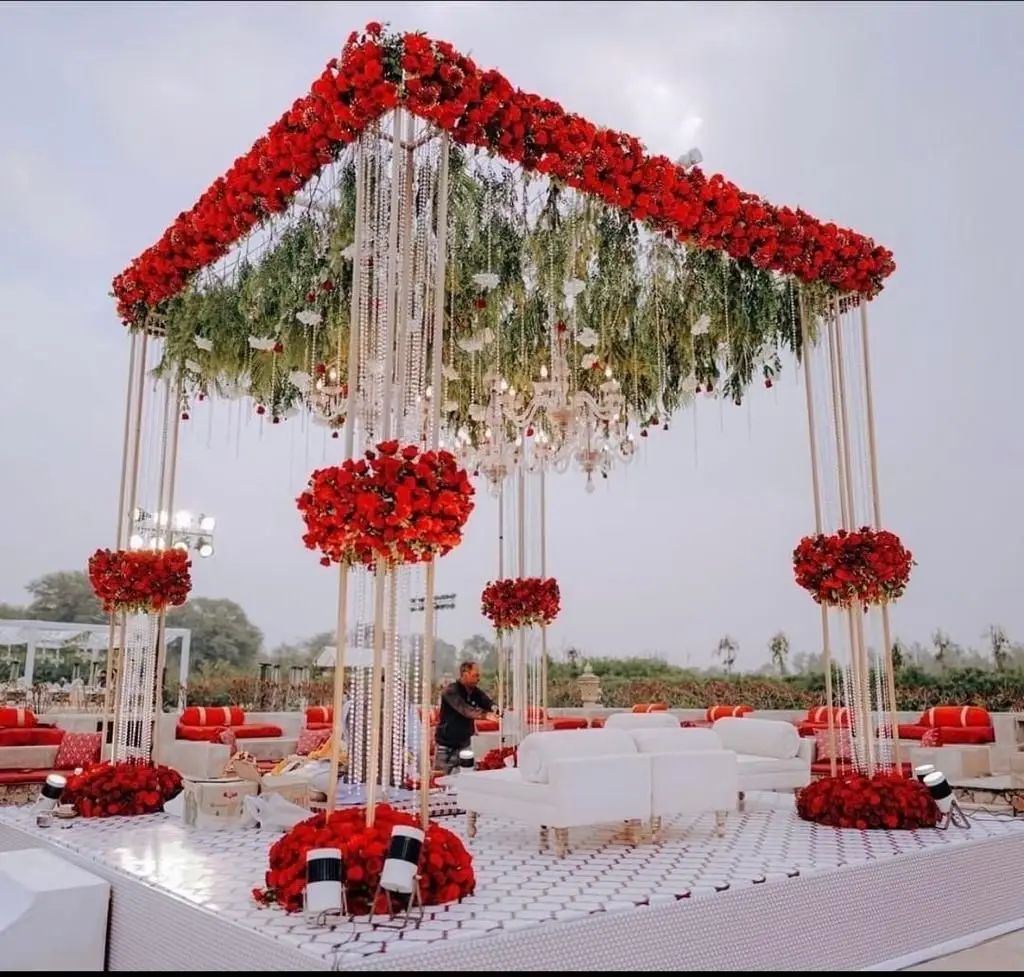
We start with how many people are travelling and how many nights they will stay, because room inventory decides the venue here.
You getA realistic shortlist
We travel up to see the hall and grounds, check power and setup hours, and agree the food and service plan with the kitchen.
You getVenue notes and a layout
Mandap, stage and each function drawn for the real ceiling and floor, with trucking, crew travel and stay priced separately.
You getA plan you approve line by line
Room allocation by family, arrival lists, transport timings and a darshan window written into the run sheet for each day.
You getA printed two-day schedule
The crew reaches ahead of setup, runs your functions to the sheet, then dismantles fast so the hotel gets its space back.
You getTwo days you spend with family
Protect the darshan first, then build the wedding around it. Every family that chooses this town does so for the temple, and the mistake we see most is a schedule that treats the visit as something guests will fit in somehow. They will not. They will go anyway, at the wrong hour, and arrive at the mandap late and unchanged.
Give it a slot the way you would give a slot to the haldi. Queues are at their longest on Thursdays and on festival days, and the early morning is usually the kindest window for elders. Once that visit has a time on the sheet, everything else falls into place, because the guests are together and accounted for between functions. This is the day most families here settle into.
| Time of day | What happens | Why it sits there |
|---|---|---|
| Before sunrise | Guests leave together for darshan | The quietest window, and the rest of the day stays free |
| Mid-morning | Haldi in the grounds or on the terrace | Everyone is back, changed and eating breakfast in one place |
| Midday | Lunch, then rest in the rooms | Rooms are upstairs, and elders need the break before evening |
| Late afternoon | Baraat inside the hotel grounds | A short route avoids the traffic around the temple road |
| Evening | Pheras at the muhurat | The hall is already built and nobody has left the premises |
| Night | Dinner and music to the venue's limit | Pilgrim hotels keep early, quiet nights and mean it |
| Next morning | A last darshan, then departures | Buses and trains out run through the morning |
Judge a venue here on beds and kitchens before you judge it on the hall. Hotels in this town are set up to move large numbers of guests through simple rooms and to feed them quickly, which is genuinely useful for a wedding: your whole guest list can sleep in one building. What they usually do not have is a tall banquet hall, spare power for a full production rig, or banquet staff used to wedding service rather than bulk meals. So we design low and bright, keep the rig modest, and agree the service plan with the kitchen well before the day. Our decor work page shows setups built for rooms with a fixed ceiling.
Book rooms before you book anything else. The town's busy days have nothing to do with the wedding calendar: Thursdays, weekends and festival periods bring the biggest crowds, and the same days make rooms hard to hold and the roads slow near the temple. If your muhurat lands on one of them, that is fine, but hold the room block much earlier than you would elsewhere and confirm check-in times in writing. If the muhurat gives you a choice, a quieter weekday makes the whole wedding easier for guests and cheaper for you.
Structure and technical kit travel; perishables and hands are taken locally. The tempo leaves early and takes most of a day on the road, so the crew reaches the night before setup, builds through the next day and stays through your functions. Fresh flowers come from the local market, which is reliable in a town this size, and carrying labour is engaged there too. Dismantle is planned tight, because hotels here turn rooms and halls over quickly and will want the space back. All of it, including crew travel and stay, appears as its own line in the quote. If several families are travelling together and you want the whole trip planned as one, read our destination wedding page.
Ask yourself who is travelling and how far, because that decides whether this works. A guest list that is already used to making the trip will enjoy it. One that is not will need transport, rooms and a reason to stay two nights. Our full service is set out on wedding planning in Pune, and if you want to talk the dates through before deciding, tell us the muhurat and we will be straight about what the town can hold.
That search returns whoever advertises hardest in Shirdi, not whoever runs the better event. It is a starting list, and the sorting is still yours to do.
A team that has worked Shirdi knows the access, the power and the society timings. Ask for that, ask for the breakdown, and ask who runs the day. Our contact page has both numbers and WhatsApp, and you will get an itemised scope back rather than one figure.
Can't find yours? Call or WhatsApp — a planner answers.
No. We sit in Pune, at Anand Nagar off Sinhagad Road, and the town is a long drive north of us. Nothing of ours is kept there. Our team travels up for the venue visit and again with the load before setup, stays through the functions and drives back afterwards. That travel is shown as its own line in your quote.
Give it a fixed slot on the run sheet, usually early in the morning before the first function. Guests go together, come back, change and eat breakfast in one place, and the rest of the day runs on time. Left unplanned, people go at their own hour and reach the mandap late. Thursdays and festival days need an even earlier start.
Yes, with a design made for it. These hotels are built for rooms and for feeding large numbers quickly, so you get plenty of beds and a simple hall rather than a tall ballroom. We keep the mandap and stage low, put the colour at eye level, keep the technical rig modest, and agree the food service plan with the kitchen in advance.
Cost is driven by your guest number, how many nights they stay, how many functions you hold and how much decor each one carries. Bringing the setup and crew that distance adds transport and stay lines, and those are shown separately. Room demand on busy temple days also affects it. Send your dates and guest count for an itemised quote.
On Thursdays, weekends and festival periods, when the town is busiest with pilgrims. Those days also slow the roads near the temple. If your muhurat falls on one, hold the room block much earlier than you would elsewhere and get check-in and check-out times confirmed in writing. A quieter weekday is easier on guests and on the budget.
In most cases yes, because many hotels and halls in the town run vegetarian kitchens as a matter of course. Confirm it with the venue before you plan the menu rather than assuming either way. We plan the menu and service rounds with the kitchen, and where the venue insists on using its own team, we coordinate timing rather than bringing in a caterer.
Not as late as in a city, and you should plan for that. Pilgrim hotels keep early, quiet nights, and many set their own cut-off for sound. Get the exact time in writing before you book a sangeet, and schedule the last performance to finish inside it. An early dinner and an early close suits the rhythm of the town anyway.
It is worth treating that search as a shortlist, not an answer — no one certifies a best. Plan With YOLO has planned events since 2013 out of Pune and handles temple-town weddings, hotel banquet ceremonies and simple hall mandaps in Shirdi. The same crew covers Pune. Ask who is on site on the day and who answers the phone if something slips.
The shortlist worth having is teams who have set up in Shirdi before; venue quirks are the part nobody writes in a quotation. Our office is in Anand Nagar off Sinhagad Road and the crew travels to Shirdi with its own kit. Send the date, the venue and a rough guest count and you get a scope back the same day.
The number depends on guests, venue, décor and stage scale, and how close to the date you book. A wedding date in season and a weekday corporate meeting in Shirdi are not comparable, so a quoted range before anyone has seen the brief is not worth much. You will get an itemised scope for your own event, and every line on it can move.
Venue · Travel · Guest care
Haldi · Mehendi · Sangeet · Pheras · Reception
Pune · PCMCTell us the muhurat, we will plan the two days
Share your dates, guest number and how many nights people will stay, and we will send back a two-day plan with every line priced.