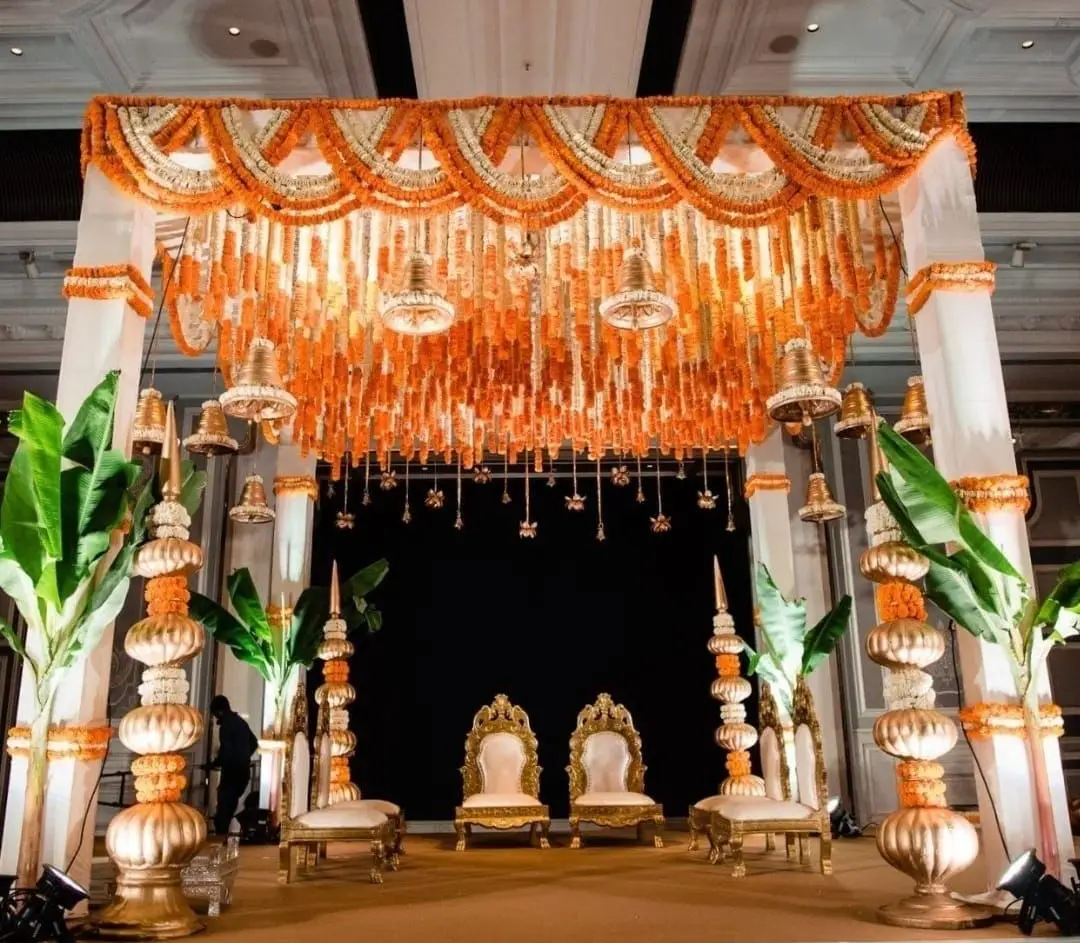
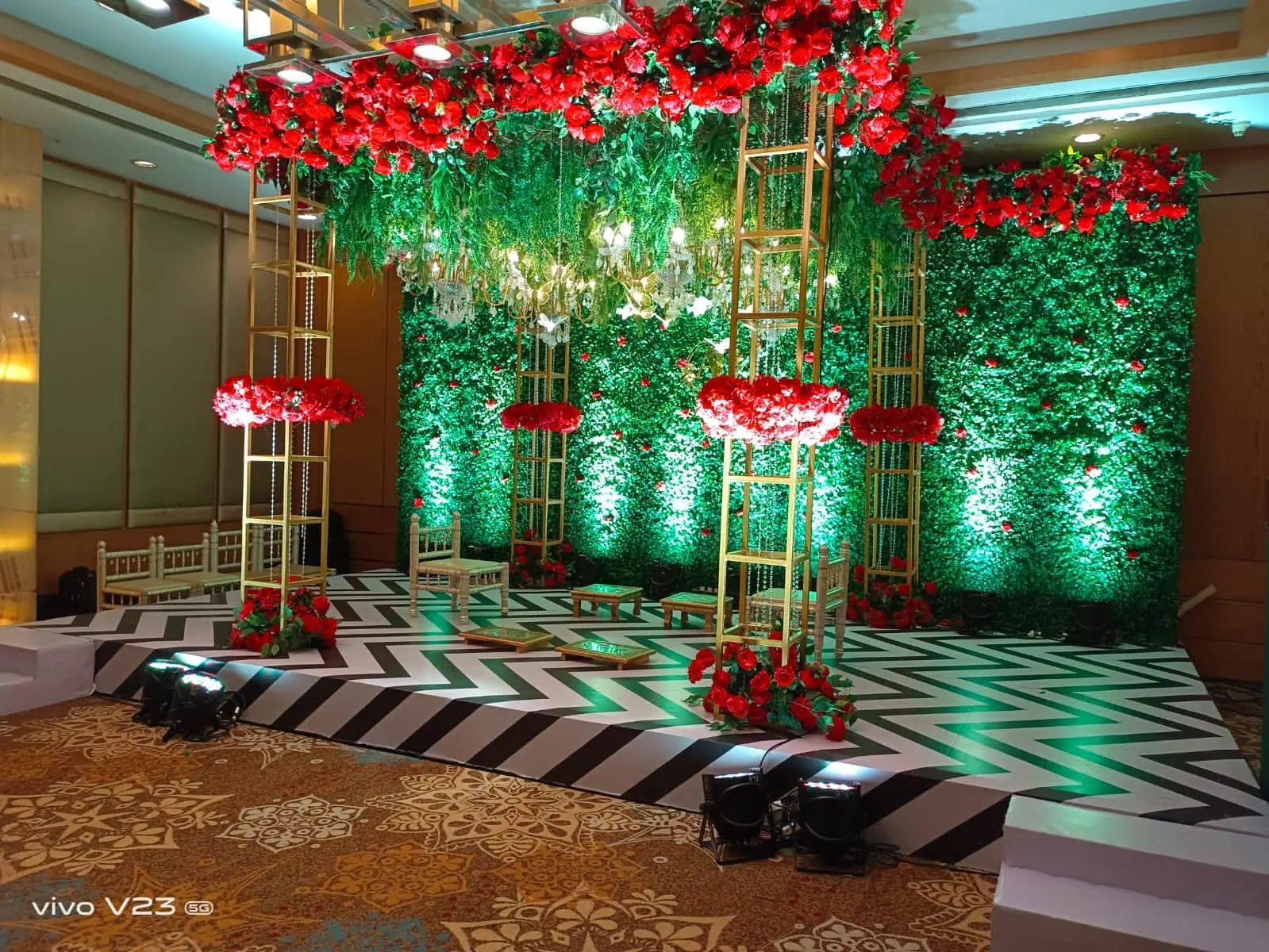
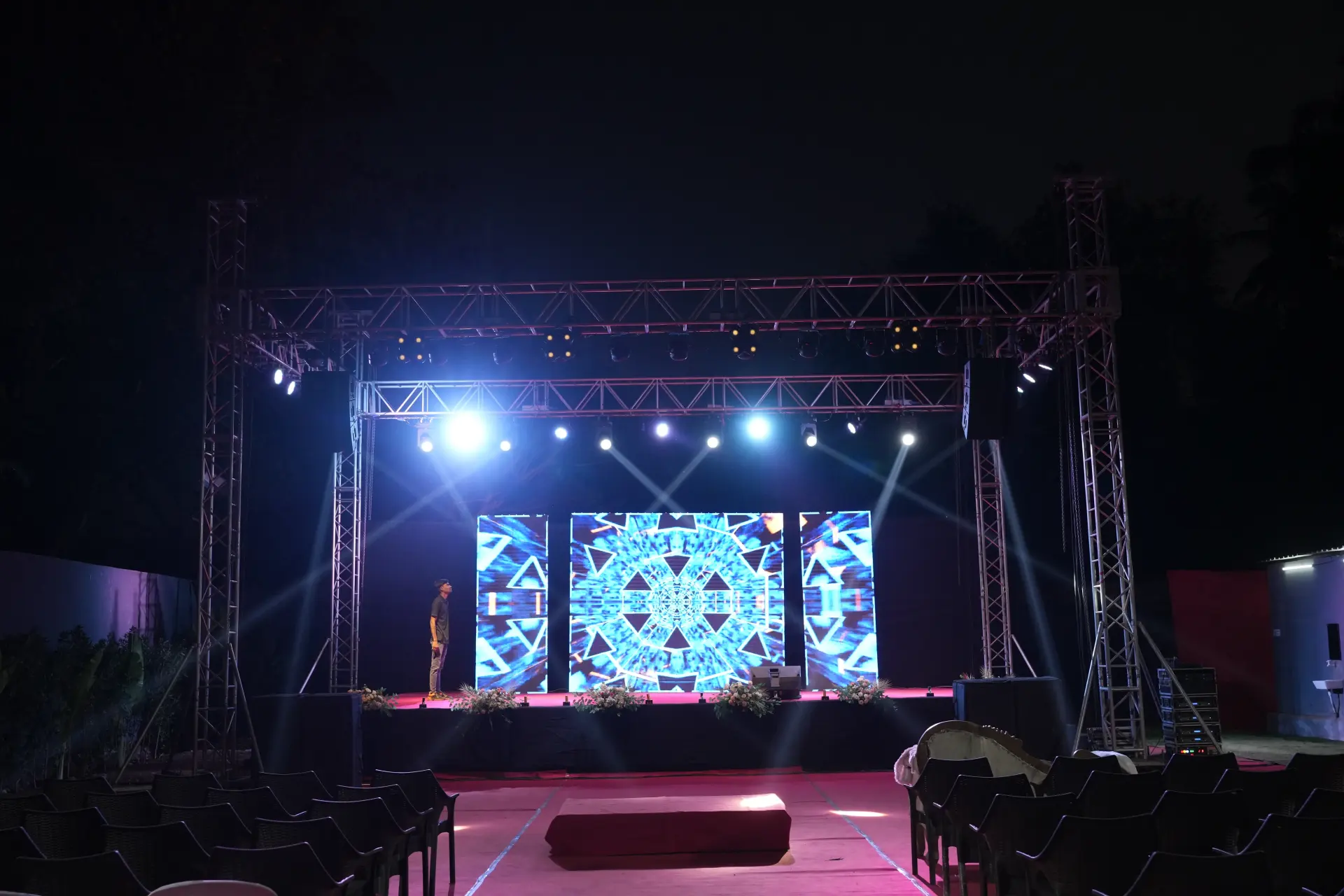
Mandap and backdrop
Frame, drapes or panels and the theme backdrop, built to stand through rain and ten days of handling.
+91 84858 38274 · +91 84858 38219
Shop 7, Ekta Nagri, Near Dwarka Apartment, Anand Nagar, Pune 411051
A society Ganpati is not one evening. It is a setup that has to look right on day one, survive ten days of crowds and weather, hold the aarti queue twice a day, and come down cleanly after visarjan.

Every society Ganpati is run by a committee working to a collected budget, and that shapes the whole job. The money is raised flat by flat, it is spent on decoration, sound, prasad, cultural nights and visarjan together, and every head has someone watching it. So we quote head by head, mark clearly what is a one-time cost and what runs for the full ten days, and leave the committee room able to answer any member who asks where the money went.
The build itself has to last. A parking bay in Kothrud, a lawn in a Pimpri-Chinchwad township and a covered lobby are three different problems, but the questions are the same: where the murti sits, where the queue stands, where the sound goes, and how people get out when the whole building turns up for the evening aarti at once.
We plan, set up and run the whole thing with one point of contact for the committee, from the first drawing to the last truck on visarjan day. Share your ground, your dates and your budget heads and we will draw a layout around them.
Six heads cover most society Ganpati budgets, and the committee signs off each one separately.
Frame, drapes or panels and the theme backdrop, built to stand through rain and ten days of handling.
A platform at a height everyone can see and garland, with the makhar and flower work around it.
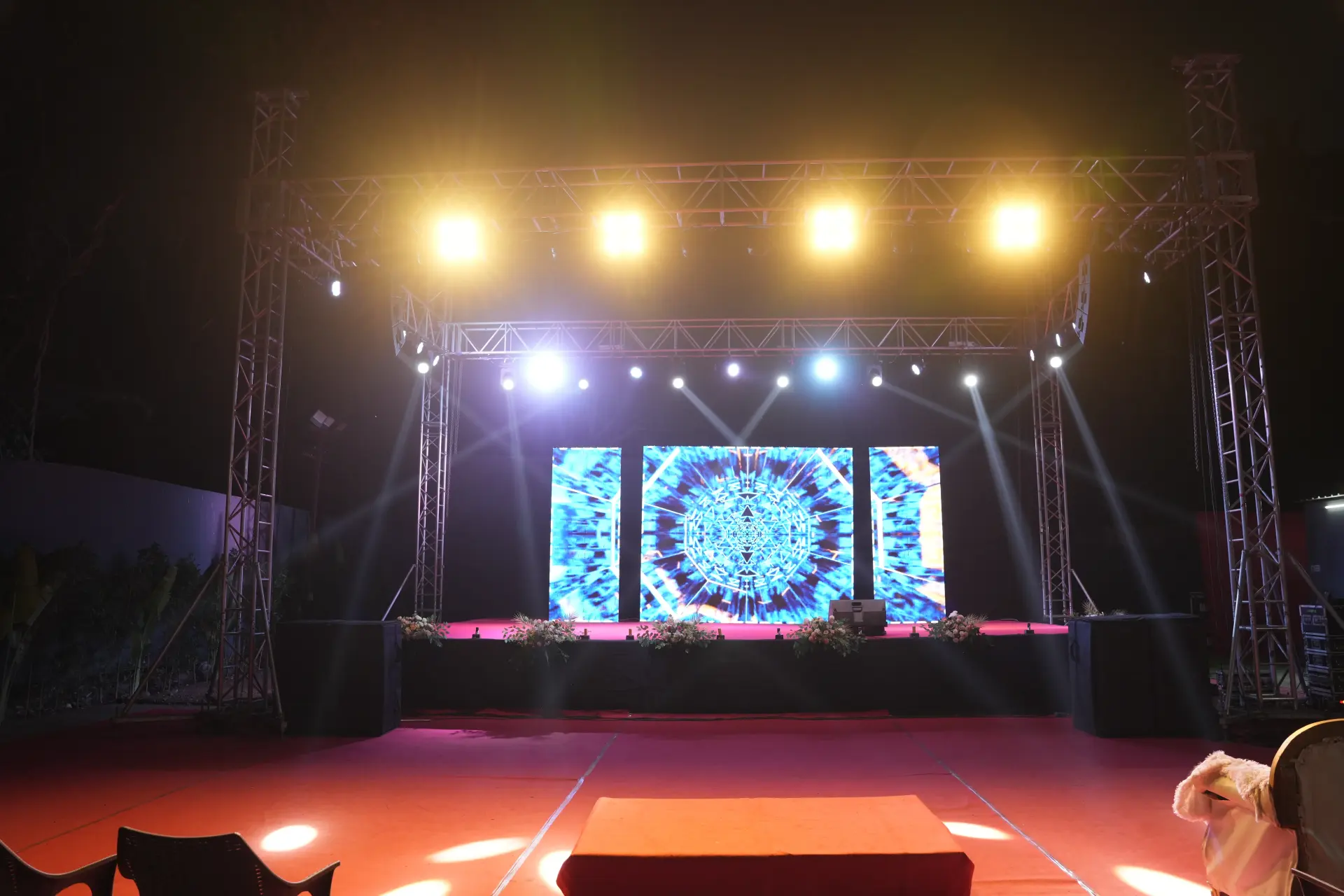
A stage for aarti and cultural nights, with speakers placed for the ground and mics for anchors and singers.
Gate, string lighting, focus lights on the murti and a lit path so the queue can be seen after dark.
Barricades, matting and rope lines that hold the darshan queue and keep the exit clear at aarti time.
Everything taken down after visarjan, waste cleared and the parking bay or lawn handed back usable.
Every photo here is from an event our team planned and ran.
Tell us the date, the guest count, the budget and the feeling you want in the room. We ask the questions most people forget.
You getFirst ideas and a budget range
Theme, décor, stage layout and a minute-by-minute run of show, drawn up and revised until it feels like yours.
You getMoodboard, layout and an itemised quote
Venue shortlists, caterers, artists, anchors and the paperwork — police, music licences and venue approvals — handled by us.
You getLocked vendors, one point of contact
Décor goes up, truss and LED walls are rigged, sound is checked and the anchor rehearses every cue with our show caller.
You getA walk-through before guests arrive
Our crew runs the floor, the stage and the guests. When it is over, we clear the venue and send you the photos.
You getA calm host — you — and the memories
Plan a society Ganpati as ten days of operations, not as one decoration order. The mandap is the part everyone talks about, but the things that decide whether the festival runs smoothly are the budget heads, the queue line and the schedule. Committees that settle those three early spend the ten days enjoying the festival. Committees that settle them late spend it arguing in the group.
Split the collection into heads and approve each one separately. Decoration, murti, sound, lighting, prasad and food, cultural nights, and visarjan are the usual heads, and most disputes happen because two of them were treated as one. Ask for a quote written the same way, so the committee can cut one head without redrawing the whole plan. Say plainly which costs are one-time and which run daily, because lighting and sound for ten evenings are not the same as a backdrop built once. Keep a small contingency for rain damage and for the extra hands you will want on the busiest night. If your committee also wants the cultural nights handled, our event management services page explains how that is quoted.
Set the murti platform height before you design anything else. Everyone in the queue should be able to see the face without standing on something, and elders should be able to reach to garland without a step. From there work outwards: the backdrop behind, the makhar around, the flower work on the sides, then the mandap frame that covers all of it. Leave a working gap behind the platform for the priest, the lamps and the daily change of flowers, because a mandap built flush to a wall makes the morning puja awkward for ten days. Check the frame against the weather too. September rain arrives sideways, so sides need covers that can be rolled down, and the electrical points need to sit above the water line.
Plan the queue and the exit as one drawing, with separate ways in and out. Aarti is the only time of day when the whole society arrives together, and a single opening turns into a jam within minutes. Mark an entry, a darshan line that passes the platform, a prasad point after it and a separate exit that does not cross the incoming line. Keep a clear lane through the middle for anyone who needs to leave quickly and keep it clear of chairs. Seat elders to one side rather than in the queue. Brief two or three volunteers by name for each aarti, because barricades do nothing without someone standing at the turn.
Each day asks something different from the same setup, and the schedule should say so.
| Day | What happens | What the setup has to do |
|---|---|---|
| Day before | Build, wiring, sound check | Everything finished and tested before the murti arrives |
| Sthapana day | Murti brought in, first puja, first aarti | Clear path to the platform, biggest crowd of the festival |
| Middle days | Morning and evening aarti, visitors from other societies | Daily flower change, lights checked, queue line reset each evening |
| Cultural nights | Dance, singing, games, competitions | Stage cleared of the queue, sound raised, seating laid out |
| Prize and felicitation evening | Winners called, elders and volunteers thanked | Mics for anchors, a table for mementoes, lighting on the stage |
| Visarjan day | Final aarti, procession, trolley loaded | Mandap opened up for the lift, dhol space kept clear |
Decide the visarjan route and the lifting plan while the mandap is still being drawn. The platform has to open on one side so the murti can be lifted out without tilting, the path to the gate has to be wide enough for the trolley and the people carrying it, and the dhol needs a space that is not the same space as the queue. Confirm the permissions and the sound hours that apply to your ground and your dates with the local police station well before the schedule is printed, rather than assuming last year's answer still holds. Then agree who strikes the setup and when, so the parking bay is usable again quickly. For stage, sound and lighting on the bigger nights see event production, and for the decoration itself see our decorators in Pune.

Can't find yours? Call or WhatsApp — a planner answers.
A society Ganpati setup usually covers the mandap frame and cover, the backdrop, the murti platform and makhar, flower work, lighting and the entry gate, a stage with sound and microphones, and barricading for the darshan queue. Strike and clear-up after visarjan should be quoted with it. Each head is listed separately so the committee can approve or cut it on its own.
Start about two months ahead. That window lets the committee settle the budget heads, collect from members, approve a theme, apply for whatever permissions the ground and the dates need, and book the setup before the festival rush. Late bookings usually cost more and give you less choice of design. If your dates are close, send the ground details and we will tell you honestly what is still possible.
Size and duration drive it. The area of the mandap, the height of the frame, the material used, how much flower work is fresh versus artificial, the number of lights and how many evenings they run, the sound and stage for cultural nights, and the labour for a ten-day standby all move the figure. Send your ground size and your heads and we will quote head by head.
That depends on your ground, your dates and whether the setup spills onto a public road. Permissions for the mandap, loudspeakers, the sound hours and the procession are checked with the local police station and the civic ward for your specific location every year. We tell you which applications your committee needs and by when, and we do not assume last year's answer still applies.
With separate entry and exit lines drawn before the mandap is built. The queue passes the platform, prasad is handed out after darshan, and the way out never crosses the way in. A clear lane is kept through the middle, elders are seated to one side, and named volunteers stand at each turn for every aarti. Barricades only work when someone is posted at them.
It will if it is built for it. We use frames and covers that take rain and daily handling, keep electrical points above the water line, and design the sides so covers can be rolled down when it pours. Fresh flowers are the part that needs changing, so the platform is built with a working gap behind it and a daily refresh is quoted openly.
Yes, the stage, sound, lighting and running order for cultural nights are planned with the decoration. The stage is placed so that it can be cleared of the darshan queue when a programme starts, mics are arranged for anchors and singers, and the prize evening gets a table and lighting of its own. Share your programme list and we will build the schedule around it.
Weddings · Birthdays · Stage décor
LED walls · Truss · Sound · Lights
Pune · PCMCSend your ground, we will send a layout
Share your dates, the area you have and your budget heads, and we will come back with a drawing and a head-by-head quote for the committee.