Format and venue advice
An honest shortlist of office floor, restaurant room, banquet hall or lawn, matched to your headcount, budget and finish time.
+91 84858 38274 · +91 84858 38219
Shop 7, Ekta Nagri, Near Dwarka Apartment, Anand Nagar, Pune 411051
Baner is full of mid-size offices that do not have an auditorium or an events team. We plan, set up and run annual parties, town halls, launches and team nights in office floors, restaurant rooms and banquet halls along this stretch.

Corporate event management in Baner is mostly mid-size work, and that is a skill of its own. The offices along this stretch and out towards Balewadi are growing companies rather than large campuses: a few floors, a few hundred people at most, an HR or admin lead who is also doing four other jobs, and no auditorium, no loading bay and no events team waiting downstairs.
So the question is never which grand venue to book. It is what format actually suits this headcount, this budget and this week. A team win might deserve a private restaurant room and nothing more. An annual party needs a banquet hall with a real stage. A town hall can happen in the office if somebody clears the seating and brings proper sound. Picking the wrong size in either direction is the common mistake, and it costs either money or atmosphere.
We size the event to the company, run it with one planner and one run-sheet, and keep the setup small enough to fit through an ordinary office lift.
These are the parts we plan, set up and run for corporate events across Baner.

An honest shortlist of office floor, restaurant room, banquet hall or lawn, matched to your headcount, budget and finish time.
Agenda, speech order, award block, music and breaks written as one timed sheet everybody works from.
Risers, backdrops, projection or LED, lighting and sound scaled to the room, then rehearsed before guests arrive.
Entrance setups, backdrops, table styling and a photo corner that fits an indoor room rather than a large ground.
Hosts, live music, games and acts briefed for a work audience, and scheduled where attention usually dips.
Sectional builds that fit an office lift, timings agreed with the building, and the space handed back the same night.
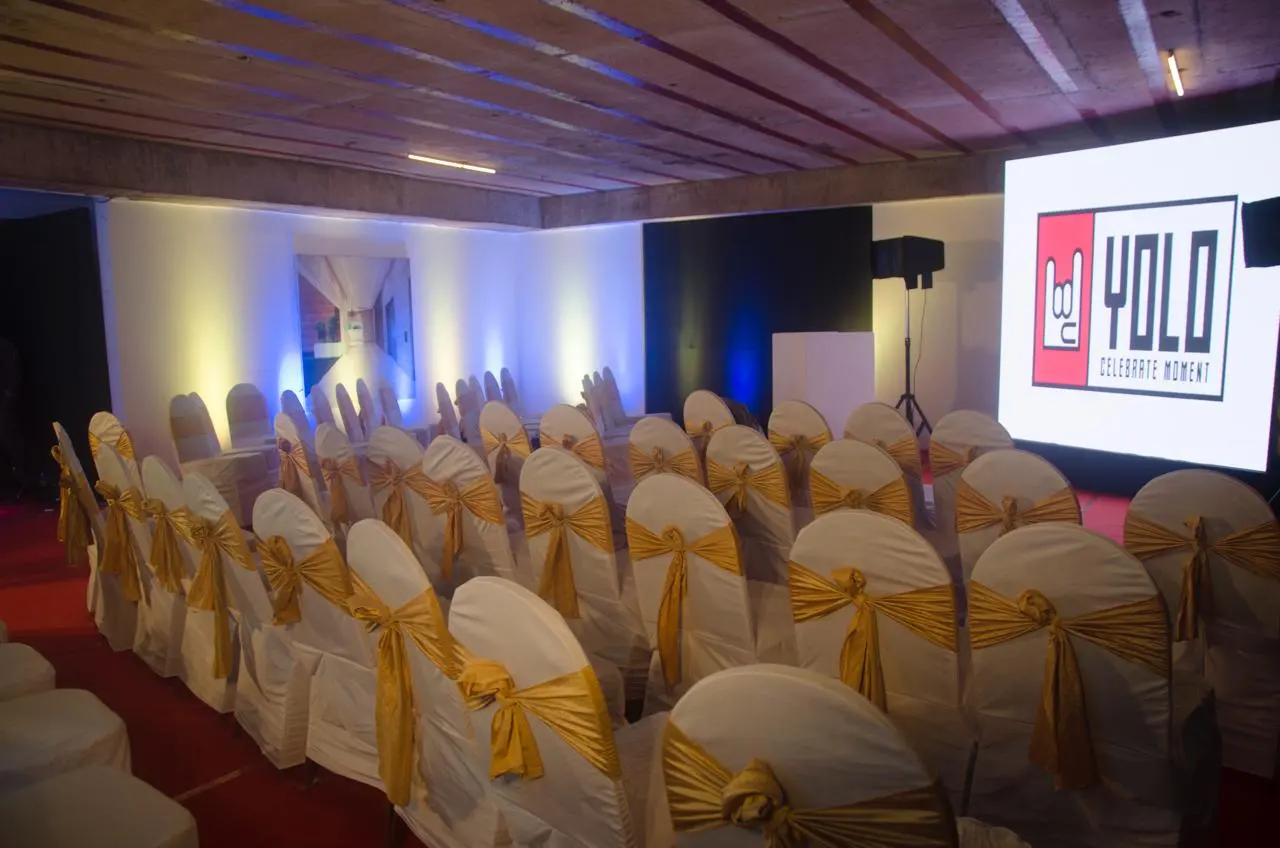
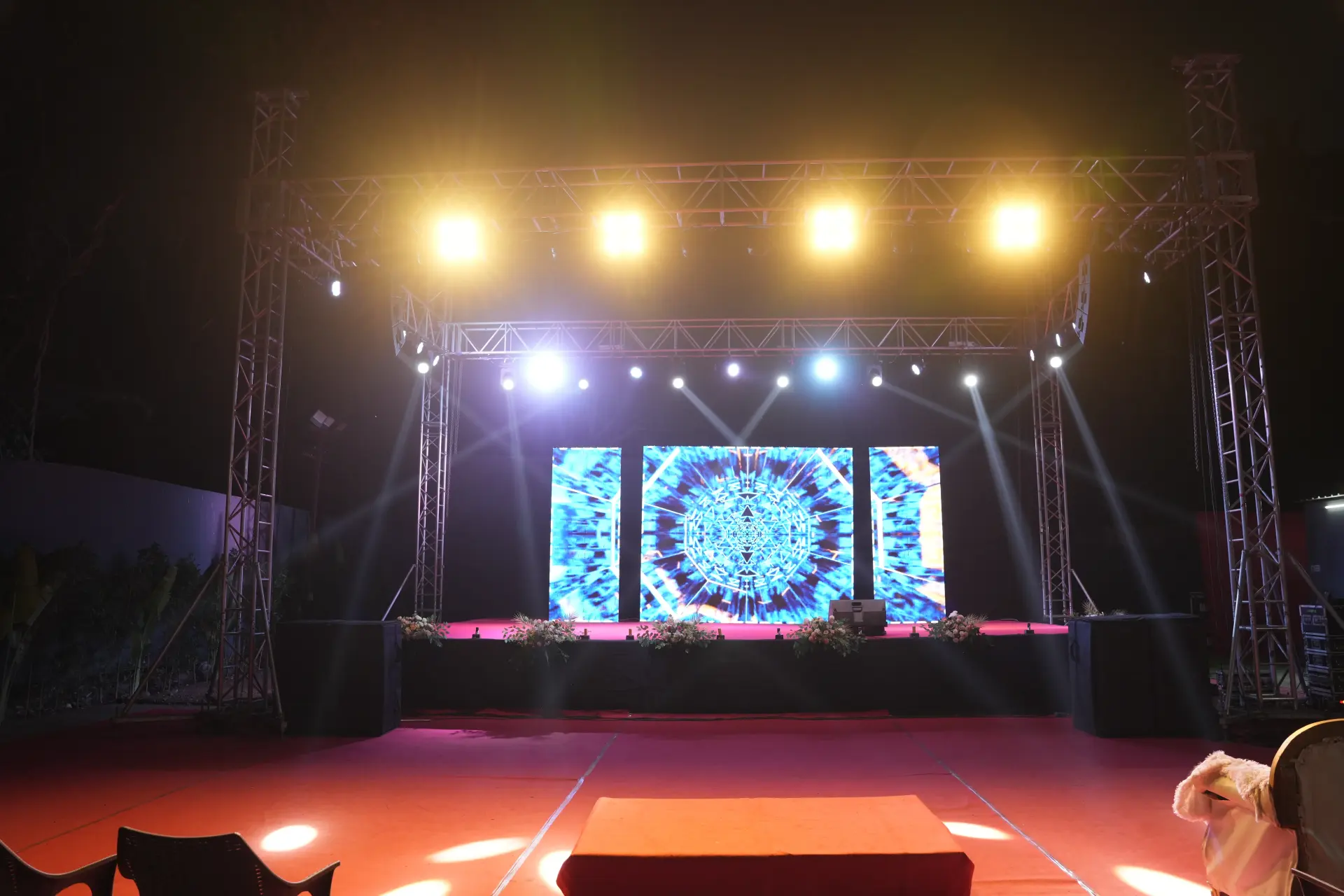
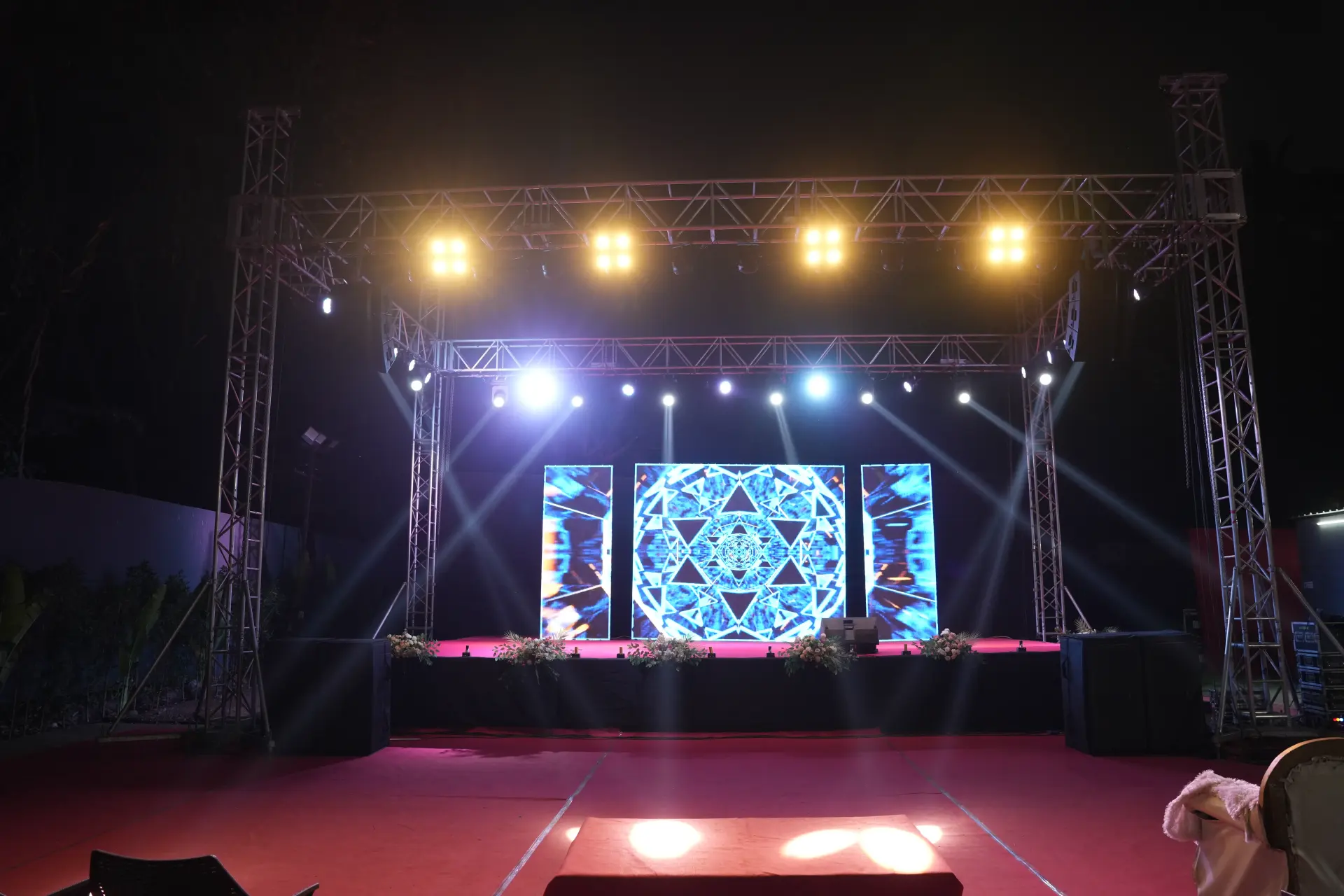
Every photo here is from an event our team planned and ran.
The one big evening of the year, with a theme, a stage, awards, food and music.
All-hands sessions in the office or a hall, with a screen, clear sound and question mics.
Smaller evenings for a project go-live, a quarter closed or a team that hit its number.
Award blocks with a clean category order, certificates, trophies and photos at the walk-up.
Reveal moments with a stage, screen and demo corners for customers, partners or the press.
Day sessions with presentations, breakouts and a working lunch, closing with an evening.
Daytime events with games, stalls and a short stage block for employees and their families.
Diwali, new-year and festival days with décor, activities and food, in the office or nearby.
Tell us the date, the guest count, the budget and the feeling you want in the room. We ask the questions most people forget.
You getFirst ideas and a budget range
Theme, décor, stage layout and a minute-by-minute run of show, drawn up and revised until it feels like yours.
You getMoodboard, layout and an itemised quote
Venue shortlists, caterers, artists, anchors and the paperwork — police, music licences and venue approvals — handled by us.
You getLocked vendors, one point of contact
Décor goes up, truss and LED walls are rigged, sound is checked and the anchor rehearses every cue with our show caller.
You getA walk-through before guests arrive
Our crew runs the floor, the stage and the guests. When it is over, we clear the venue and send you the photos.
You getA calm host — you — and the memories
Most corporate events that disappoint were the wrong size, not the wrong idea. A hall booked for double the crowd feels empty however good the stage is, and a restaurant room squeezed past its capacity ruins a good evening before the food arrives. Getting the format right for your headcount is the first decision, and it decides almost everything after it.
Count the people who will genuinely attend, not the people on the payroll. Weeknight attendance in a working office is never the full list, and a format chosen for the optimistic number leaves gaps in the seating. Once you have a realistic figure, the format follows almost mechanically.
| Who is coming | Format that works | What to watch |
|---|---|---|
| One team | Private restaurant room, a microphone, music, no stage | Fixed tables, a shared entrance, noise from the rest of the floor |
| Two or three teams | Small banquet room with a riser, a screen and a short award block | Build access hours, and whether the screen is bright enough with lights on |
| A whole office floor | Banquet hall, proper stage, lighting and dinner seating | Parking capacity, a firm finish time, sound levels for neighbours |
| The full company | Larger hall or lawn, stage programme, entertainment, food counters | Weather cover, an entry that does not queue, how people get home |
| Company plus families | Daytime lawn with zones, games and a short stage block | Shade and drinking water, a kids' area, a named meeting point |
| Company plus customers | Hall with registration, branding and hosted seating | Badges, who greets whom, a clean brand look from the door inward |
An office event costs less and gets better attendance, as long as somebody plans the physical side. That means knowing what the building allows before you promise a stage: lift dimensions, whether anything may be drilled or hung, where power can be drawn, what time the noisy part of the build may start, and whether the floor must be back in working order the next morning. We build in sections that fit an ordinary passenger lift, use floor-standing lighting instead of rigging, tape cable routes along walls, and plan the strike as a separate crew call. For a town hall, a review or a festive afternoon, this is usually the better answer. For an annual party with dinner and a late finish, it is not.
Avoid a Friday finish that sends everybody onto the highway at the worst hour. The road through this belt carries weekend traffic out of the city as well as the daily office rush, and a Friday event either starts late because people are stuck coming in, or ends badly because they are stuck going out. Midweek evenings fill better than they sound. If the date must be a Friday, start later, keep the programme tight, and choose a venue people can reach without crossing the highway. Load-in follows the same logic: we bring material in before the evening build-up rather than during it, and keep the crew on site instead of running vehicles back and forth. Our corporate party planning page covers the evening format in more detail.
Ask for an itemised proposal, then cut by line rather than by percentage. In a mid-size event the big lines are venue, food and AV, and the cost usually moves most when you change the venue type or the guest count, not when you trim décor. Common savings: a weeknight instead of a weekend, an office town hall instead of a hired hall, a shorter programme with one strong act instead of three small ones, and printing done once rather than reprinted after a late change. Common false economies: skipping the rehearsal, hiring a screen too small for the room, and under-sizing food counters so a queue forms. There is more on this in our guide to a corporate event budget.
Plan the year at the start of the year. A mid-size company usually runs a town hall or two, a festive celebration, one recognition evening, an annual party and perhaps a family day. Planned together, the brand files, guest lists, supplier details and photo assets carry from one event to the next, and each one takes less of your time than the last. Give a stage event about two months of runway and a smaller evening around a month. We are based on the other side of the city, so recce visits are booked outside peak hours. See how we approach corporate event planning across Pune, or read about event management in Baner for weddings, birthdays and other occasions here.
That search returns whoever advertises hardest in Baner, not whoever runs the better event. It is a starting list, and the sorting is still yours to do.
Compare the breakdown rather than the total, check the crew is theirs and not hired in, and ask what they have already done in Baner. Our contact page has both numbers and WhatsApp, and you will get an itemised scope back rather than one figure.

Can't find yours? Call or WhatsApp — a planner answers.
No. A large share of our Baner work is exactly that size: one or two teams, a private room, a microphone, music and a good dinner. Smaller events need fewer moving parts but the same care with timing, food and the programme. You get the same planner and the same run-sheet, scaled to what the evening actually needs.
Midweek, more often than not. A Friday event on this stretch fights both the office rush and the weekend exodus, so people arrive late and leave early. Tuesday to Thursday evenings usually get better attendance and a calmer load-in. If the date has to be a Friday, we start later, tighten the programme and pick a venue nobody has to cross the highway to reach.
Venue and food, in that order, because together they set the shape of everything else. Stage and AV come next, then entertainment and décor. Guest count multiplies all of them, so an honest attendance estimate is worth more than any negotiation. You get an itemised proposal rather than one figure, and a straight answer on which cuts show on the night.
Yes, for a single team or a small group it is often the better choice. You get food, service and atmosphere without hiring a hall. The limits are a fixed table layout, no real stage, shared noise from the rest of the venue and a hard closing time. We check those on a recce, then plan a programme that suits a room rather than a stage.
Yes, and many offices here do. We clear and re-lay the seating, bring in a screen sized for the room, set up proper microphones so the back rows hear the questions, and add lighting on stands rather than anything rigged overhead. The build fits a passenger lift, and the floor is handed back ready for work the next morning.
Yes, and it is cheaper and quicker than treating each one as new. We map the calendar once: town halls, a festive celebration, a recognition evening, the annual party and a family day if you want one. Brand files, guest lists, supplier details and photographs carry across, so each event takes less of your team's time than the previous one.
Two months is comfortable for a stage event, and about a month for a town hall or a smaller evening. The binding constraint is usually the venue, not the setup, and good halls on this side of the city are taken early for December and the wedding months. Short-notice events are possible; you simply get fewer venue choices to pick from.
Search results do not rank planners by quality, so the label is only ever someone's opinion. Plan With YOLO has planned events since 2013 out of Pune and handles annual parties, town halls and team nights and milestones in Baner. The same crew covers Pune. Ask which parts are handled in house and which are being passed to a third party.
Start with teams that already work in Baner — they know the venues, the loading access and the society rules, which is where most local jobs go wrong. Our office is in Anand Nagar off Sinhagad Road and the crew travels to Baner with its own kit. Send the date, the venue and a rough guest count and you get a scope back the same day.
The number depends on guests, venue, décor and stage scale, and how close to the date you book. A wedding date in season and a weekday corporate meeting in Baner are not comparable, so a quoted range before anyone has seen the brief is not worth much. You will get an itemised scope for your own event, and every line on it can move.
Pune · PCMC
Pune · PCMC
Pune · PCMCBaner office event? Let's get the size right
Tell us your headcount, date and budget range, and we will send an itemised proposal.