Conference budgets
Food across several sessions, delegate kits, AV in the main hall and breakout rooms, and speaker travel driving the total.
+91 84858 38274 · +91 84858 38219
Shop 7, Ekta Nagri, Near Dwarka Apartment, Anand Nagar, Pune 411051
A corporate event budget is a set of line items, not one number. This page shows how those lines are built in Pune, which of them move with headcount, and what an itemised quote should put in writing before you approve it.

Most corporate event budgets fail the same way. One number is approved, then the event turns out to need three things nobody costed. The fix is boring and it works: break the event into lines, price each line against a real headcount and a real venue, and keep a contingency that is written down instead of hoped for.
The lines are broadly the same for a conference, an annual day or a dealer meet. Venue hire, food and beverage, AV and production, branding and print, entertainment and content, hospitality and gifting, travel and transport, crew and coordination, permissions, and contingency. What changes is the weight of each line. A product launch spends on stage and screens. A day-long conference spends on food and rooms. A family day spends on ground work, activity setups and safety cover.
We plan, set up and run corporate events across Pune, and we quote them line by line with the assumptions written beside each one: how many people, how many hours, which venue, what is included and what is not. When a number has to come down, you can see exactly which line to cut and what cutting it costs you.
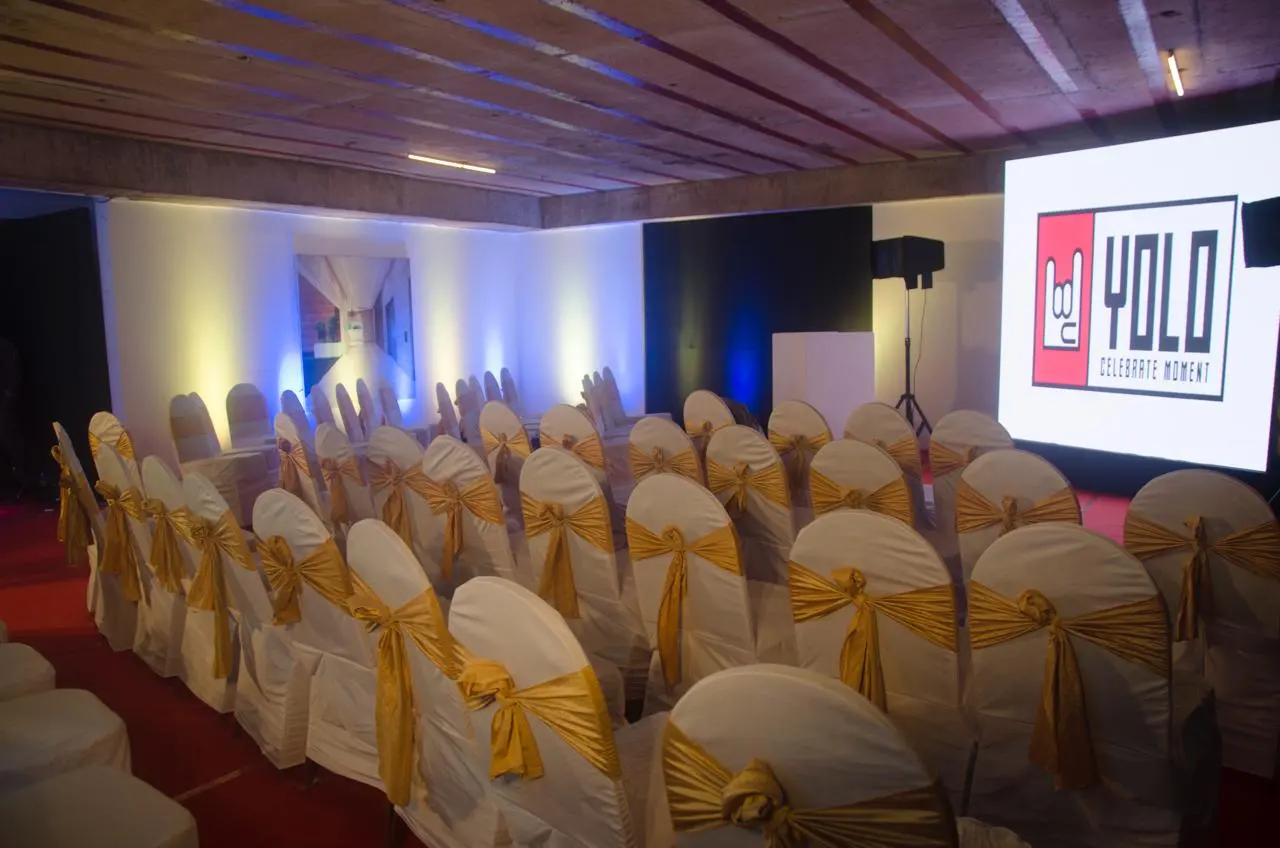
Food across several sessions, delegate kits, AV in the main hall and breakout rooms, and speaker travel driving the total.
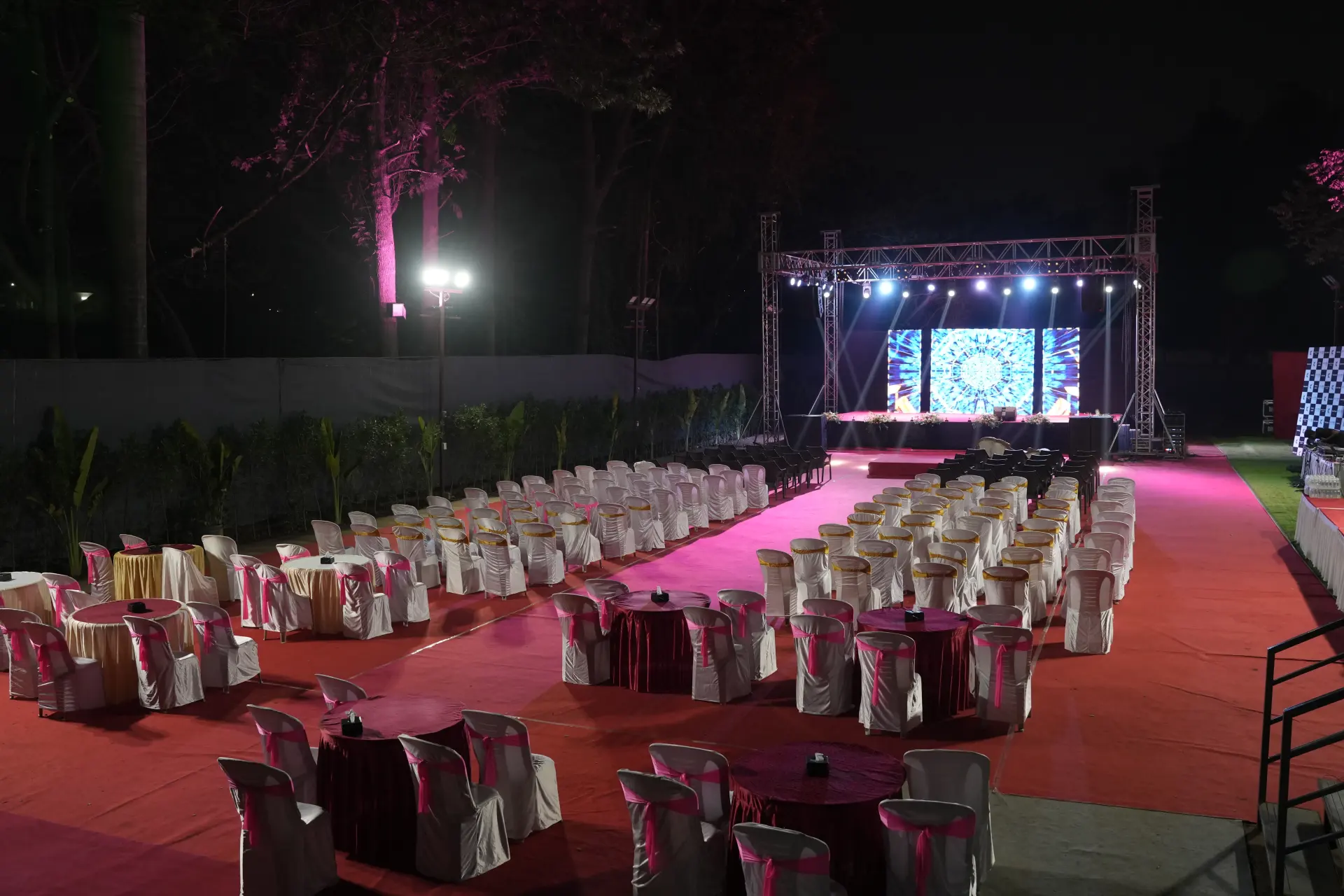
Stage, screens, lighting and entertainment lead, with dinner for employees and their families close behind.
Content, screens and the reveal carry the spend, with press hospitality and photography sitting alongside them.
Out-station travel, rooms and gifting are the heavy lines, with an awards segment and a dinner to plan around.
Trophies, stage, lighting and an artist slot lead, and the guest list decides food and seating.
Small on paper: screen, audio, seating, a stream for remote teams and crew for a short build.
Ground work, activity setups, safety cover, food for mixed ages and transport, priced per attending family.
Property, rooms, meals and travel set the base, with activities, sessions and an evening programme on top.
These are the parts of budgeting we handle when you ask us to price a corporate event.
Every element costed separately, with quantity, unit and duration, so you can read the event back from the sheet alone.
Food, kits, cabs and badges shown against headcount; stage, sound, branding and crew shown as fixed, so you see the real exposure.
Hire, hours, minimum guarantees, service and deposits checked with the venue before the figure reaches your sheet.
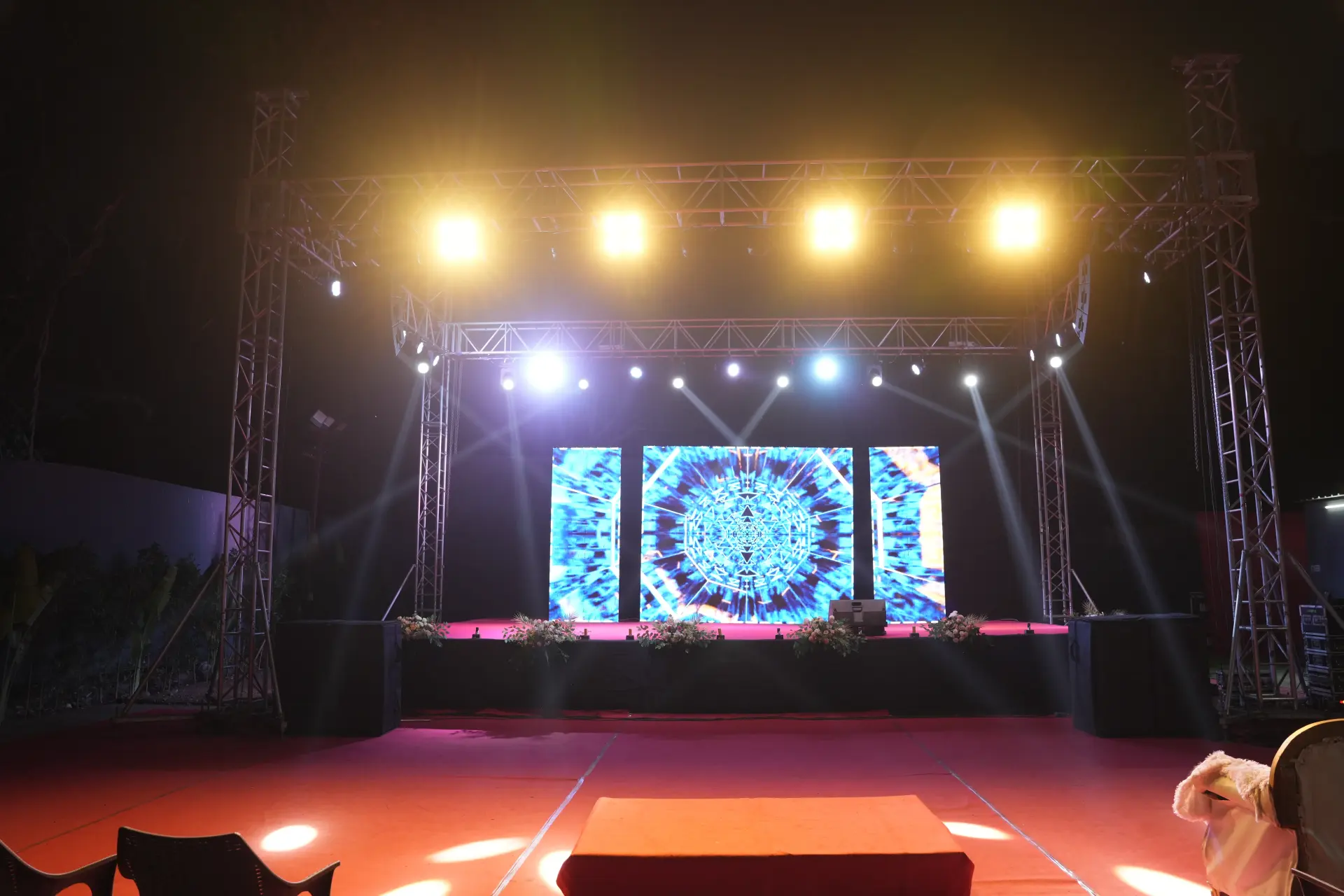
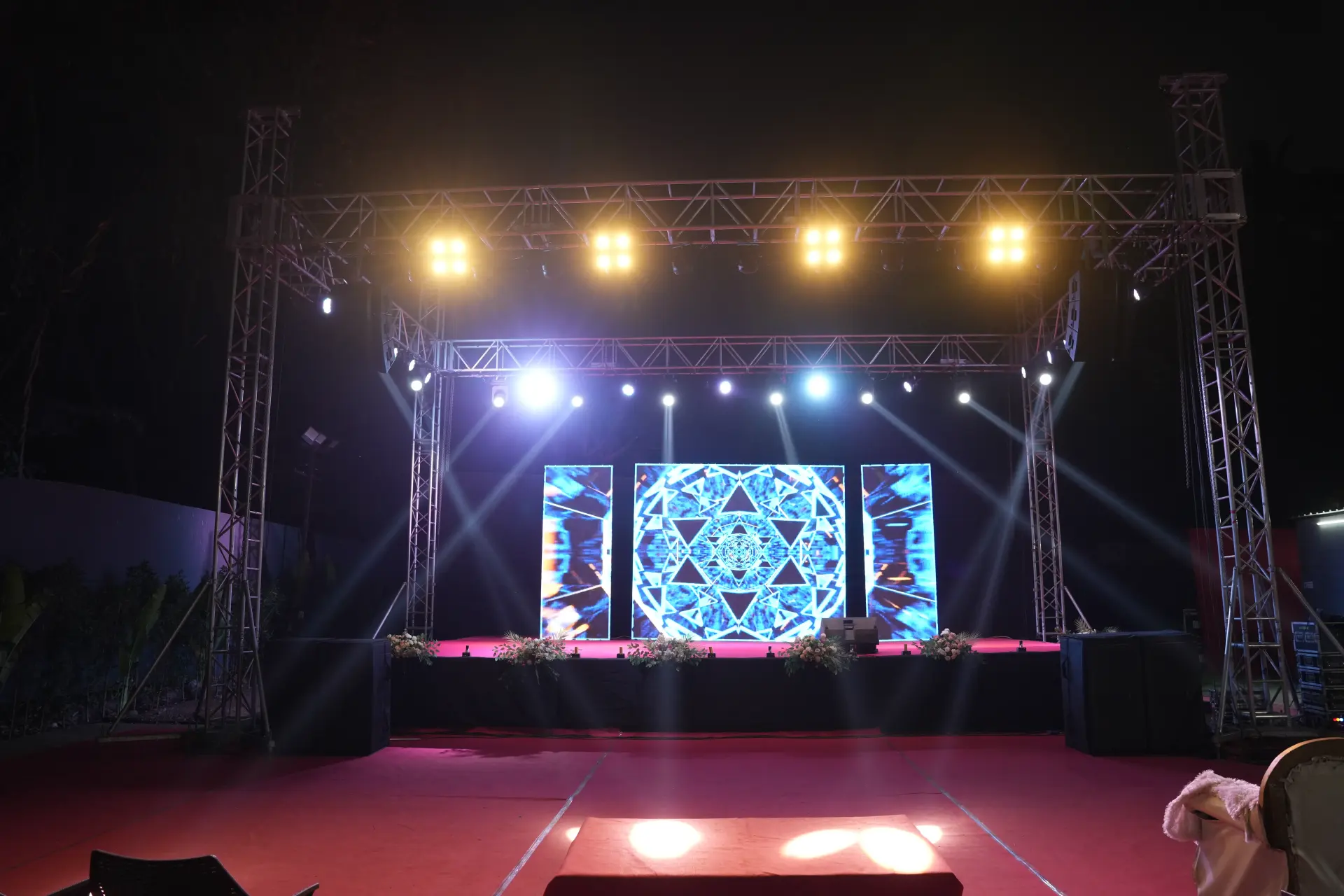
Stage, screens, sound, lighting, power and crew days written out as scope, not as one word with a number beside it.
Weather cover, extra guests, reprints, standby gear and the hour everyone wants at the end, planned inside the approved number.
Actuals set against the approved sheet after the event, with every variation explained, so finance can close it without chasing.
Every photo here is from an event our team planned and ran.
Tell us the date, the guest count, the budget and the feeling you want in the room. We ask the questions most people forget.
You getFirst ideas and a budget range
Theme, décor, stage layout and a minute-by-minute run of show, drawn up and revised until it feels like yours.
You getMoodboard, layout and an itemised quote
Venue shortlists, caterers, artists, anchors and the paperwork — police, music licences and venue approvals — handled by us.
You getLocked vendors, one point of contact
Décor goes up, truss and LED walls are rigged, sound is checked and the anchor rehearses every cue with our show caller.
You getA walk-through before guests arrive
Our crew runs the floor, the stage and the guests. When it is over, we clear the venue and send you the photos.
You getA calm host — you — and the memories
A corporate event budget is a forecast, and a forecast is only as good as the assumptions under it. Two quotes for the same event can sit far apart and both be honest, because one assumed a six-hour venue block and the other assumed ten. So before you compare anything, fix the assumptions in writing: date, venue, headcount, start and end time, and what your company is supplying itself.
Build the budget as lines, never as one number. Ten of them cover almost every corporate event: venue hire, food and beverage, AV and production, branding and print, entertainment and content, hospitality and gifting, travel and transport, crew and coordination, permissions and paperwork, and contingency. The names stay the same across a conference, an annual day and a dealer meet. What changes is which line carries the weight.
A product launch puts its money into stage, screens and content. A day-long conference at a hotel in Hinjewadi puts it into food, rooms and AV. Knowing which line is your heavy one tells you where attention pays off.
| Line item | What sits inside it | What moves it | Usually charged |
|---|---|---|---|
| Venue | Hall or lawn hire, extra hours, parking, security deposit | Day of the week, season, hours held, exclusivity | Fixed, plus overtime by the hour |
| Food and beverage | Menu, service staff, crockery, counters, bar or mocktails | Headcount, number of meal sessions, menu format | Per head, often with a minimum guarantee |
| AV and production | Stage, truss, screens, sound, lighting, power, technicians | Room size, stage width, screen area, show length | Fixed per setup, plus crew per day |
| Branding and print | Backdrop, standees, signage, badges, stage graphics | Number of items, sizes, design rounds, reprints | Per unit or by area |
| Entertainment and content | Artists, anchor, films, photography, trophies | Artist scale, slot length, travel and stay | Fixed per act, plus hospitality |
| Hospitality and logistics | Rooms, cabs, welcome kits, gifting, helpdesk | Out-station guests, distances, kit contents | Per head or per trip |
| Crew and coordination | Planning, recce, supervisors, show caller, on-site team | Build days, show days, team size | Fixed fee or per day |
| Contingency | Weather cover, extra guests, reprints, standby equipment | Outdoor risk, how late the headcount is confirmed | A held-back share of the total |
Separate the per-head lines from the fixed ones on the sheet itself, because they behave differently under pressure. Food, welcome kits, gifting, cabs, badges and seating rise with every extra person. Stage, screens, sound, lighting, branding, artists and crew barely notice twenty more guests, because they are set by the room, the show and the day.
That split explains something people find strange. Per head, a small event looks expensive and a large one looks cheap, since the fixed block is shared across more people. If the headcount is soft, almost all the exposure is in the per-head lines, so ask for those to be quoted in bands with a written last-confirmation date. Venues running a minimum guarantee will charge for the guaranteed number whether people come or not, so confirm that figure late and honestly rather than early and optimistically.
Most overruns are not surprises, they are omissions, and the same items get left out every time. Power, because a venue's sanctioned load rarely carries a full production rig, so a generator and its fuel belong in the sheet from day one. Venue overtime, charged once you cross the block you booked. Crew days for build and teardown, which are not show days. Transport and storage of material, both ways. Taxes on nearly every line. Artist travel, stay and food. Meals for crew, drivers and security. Reprints, because one name or designation is always wrong. Waste removal after teardown. Guest parking at a venue in Kharadi where the company picks up the charge. And the extra hour everyone wants at the end.
None of these is large on its own. Together they are the gap between the number that was approved and the bill that arrives, so put them on the sheet even when the amount is small.
Say the number. Planners work better with a cap than with a guessing game, and a good one designs to it, not around it. Then give three more things: the two elements that matter most to you, the ones you are happy to keep plain, and what is genuinely fixed: the date, the venue, the headcount or all three.
Ask for the plan to be built inside the cap, with contingency held within it rather than added on top. Ask what the same money buys on a different day of the week, because that one change usually moves the venue line further than any negotiation will. And ask for a trimmed second version, so you have something to approve quickly if finance asks for less. We work this way as a matter of course, and the wider service is set out on our corporate event planner page.
An itemised quote should let you rebuild the event in your head from the sheet alone. Every line needs a quantity, a unit, a duration and an inclusion note. "LED wall" is not a line. "LED wall, sixteen feet by nine, indoor pitch, with a technician for one build day and one show day" is a line, and you can hold it against anyone else's.
Then read the edges, where the disagreements live. What is excluded. Whether taxes sit inside the figures or are added. The payment schedule and what each stage releases. The basis on which overtime is charged. What happens to advances if the date moves. Whether the quote is valid only to a date, since venue and artist rates do change. Production lines are the hardest to compare, and our event production page sets out what each of them actually covers.
Move the day before you move the menu. A weekday date, a quieter month and an earlier finish do more for the number than trimming the things guests actually touch. After that, shorten the venue block rather than the programme. Pick one hero element, a strong stage or a good band or a genuinely nice dinner, and let the rest be clean and simple. An event with one memorable thing beats an event with four half-funded ones.
Reuse what you can. Branding designed once can carry a town hall, an annual day and a sales meet with a change of line. Keep the guest list honest, since every extra plus-one lands on your heaviest per-head line. And check the plan against a list instead of memory: ours sits on the event planning checklist page, and the food and room maths for multi-day formats is covered under conference organisers.

Can't find yours? Call or WhatsApp — a planner answers.
Cost is driven by six things: headcount, the venue and how many hours you hold it, how much stage, screen and sound the show needs, the food and beverage format, entertainment, and how many days our team is on site. Branding, gifting and transport sit on top of those. Send us the date, venue, headcount and what the event has to achieve, and we will send an itemised quote.
Ten lines cover almost everything: venue, food and beverage, AV and production, branding and print, entertainment and content, hospitality and gifting, travel and transport, crew and coordination, permissions and paperwork, and contingency. Write the assumptions beside each line, meaning headcount, hours and venue, because a budget without assumptions cannot be compared with anything or defended in a review.
Usually food and beverage or production, and which one depends on the format. A day-long conference or a family day spends most on food, because it is charged per head across several sessions. An award night or a product launch spends most on stage, screens, lighting and content. Find your heavy line first, since that is where attention pays off.
Keep a written contingency rather than a mental one, and hold it inside the approved number instead of on top. It covers extra guests, weather cover, reprints, standby equipment and venue overtime. Outdoor events and late headcount confirmations need more of it. Agree at the start who can release it on the day, so a small call at eight in the morning does not wait for an approval chain.
Power and fuel, venue overtime, build and teardown crew days, transport and storage of material both ways, taxes, artist travel and stay, meals for crew and drivers, reprints, waste removal and guest parking. None of them is large alone. Together they are the gap between the number that was approved and the bill that arrives, so ask for them to be listed.
Put them on the same assumptions first: same headcount, same venue hours, same build days. Then compare line by line rather than total against total, checking quantities, durations and what each line includes. A cheaper quote usually has fewer crew days, a smaller rig or a shorter venue block. Ask both parties what is excluded, since that answer separates them faster than the figures do.
Yes, and a cap works better than an open brief. Tell us the number, the date, the headcount and the two things that matter most to you. We build inside that number with contingency included, show what each line buys, and mark what can be trimmed if finance asks for a smaller version. You approve the sheet before anything is booked.
Most corporate events run on staged payments: an advance to hold the date and book the venue, a larger stage once production and artists are confirmed, and the balance after the event against a reconciled bill. Purchase orders, vendor onboarding and payment terms take time inside large companies, so start that paperwork the week your budget is approved.
Pune · PCMC
LED walls · Truss · Sound · Lights
Pune · PCMCAsk for an itemised quote
Send us the date, the venue, the headcount and the number you have to work inside, and we will come back with a budget built line by line.