
An event planning checklist moves through clear stages: set goals, audience and budget; choose the date and venue; book decor, AV, catering and entertainment; manage invitations and RSVPs; build a run sheet and rehearse; run the event; then close payments and collect feedback. Large events need these steps started months ahead, small ones weeks ahead.
Every well-run event, whether it is a 50-person product briefing or a 1,000-guest annual day, follows the same basic event management process. The steps do not change much; only the scale and the lead time do. This event planning checklist walks you through each stage in order, from the first brief to the last thank-you note, so nothing important slips through.
1. Define goals, audience and budget
Start every event by writing down why it is happening, who it is for and what you can spend. These three answers guide every later decision.
- Write the goal in one sentence: launch a product, thank the team, celebrate a milestone, win dealers’ loyalty.
- Describe the audience: who they are, how many, where they are coming from, what they expect.
- Decide what success looks like: attendance, feedback scores, leads, media coverage or simply a happy host.
- Set a budget range and list the main heads: venue, food, decor, production, entertainment, travel, gifts, contingency.
- Name one decision-maker who approves plans and payments.
2. Set the timeline
How far ahead you start depends on the size and type of event. Use this as a rough guide:
| Event | Start planning | Key early bookings |
|---|---|---|
| Small meeting, workshop or party | 2 to 4 weeks ahead | Venue, food |
| Birthday or theme party with decor | 3 to 6 weeks ahead | Venue, decorator, entertainer |
| Corporate conference or annual day | 2 to 4 months ahead | Venue, production, speakers, artists |
| Brand activation or roadshow | 1 to 3 months ahead | Locations and permissions, fabrication, staff |
| Wedding | 6 to 12 months ahead | Venue, caterer, decorator, photographer |
| Destination or multi-city event | 6 months or more | Venue, rooms, travel |
Work backwards from the event date and put deadlines against every major decision: venue confirmed, designs approved, invitations sent, final numbers given.
3. Venue and date
Lock the date and venue before anything else, because every other booking depends on them.
- Check the date against holidays, festivals, exams, financial year-end and the wedding season.
- Shortlist venues by capacity, location, parking, accessibility and budget.
- Visit in person. Check the stage area, ceiling height, power supply, green rooms, washrooms, loading access and mobile network.
- Ask about rules: outside caterers, decor limits, music cut-off time, setup and teardown hours.
- Get the booking, inclusions and cancellation terms in writing.
4. Vendors: decor, AV, catering, entertainment
Book suppliers in order of how quickly they fill up and how much they shape the event: usually production and decor first, then catering, then entertainment and extras.
Decor
- Agree on a theme, colour palette and mood board.
- Approve stage, entrance, photo booth and table designs.
- Confirm setup time and what the venue allows.
Sound, light and AV
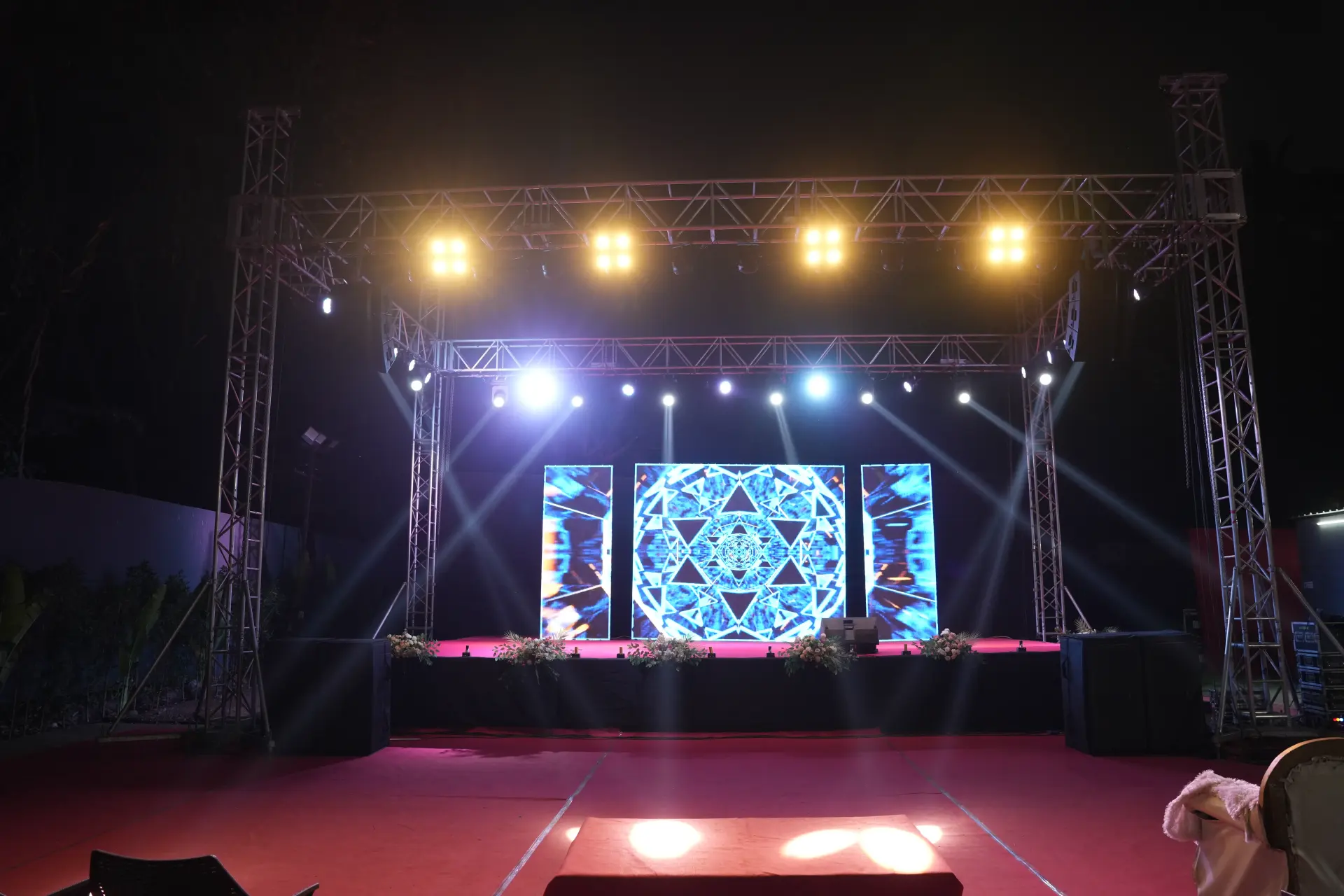
- Stage size, LED screen or projector, sound system, microphones, lighting design.
- Power backup and a technician on site throughout.
- Playback laptop, presentations and videos collected well in advance.
Catering
- Menu tasting, dietary options, counters and service staff.
- Timings for tea breaks, lunch or dinner, synced with the programme.
Entertainment and extras
- Anchor, artists, DJ, performers and their technical needs.
- Photographer and videographer with a shot list.
- Printing, branding, gifts, trophies and signage.
5. Guest management and invitations
Guest management is about getting the right people there, on time, and making them feel expected.
- Build the guest list with contact details and any VIPs flagged.
- Send a save-the-date for large events, then the invitation with date, time, venue, dress code and RSVP deadline.
- Track RSVPs and send reminders a week before and a day before.
- Arrange travel, rooms and local transport for outstation guests.
- Plan registration: a guest list at the desk, badges or wristbands, and a QR check-in for larger events.
- Share final numbers with the venue and caterer by the agreed deadline.
6. Run sheet and rehearsals
A run sheet is a minute-by-minute plan of the event that tells every team member what happens, when, and who is responsible. It is the single most important document on the day.
- List every segment with its start time, duration, people on stage, music, lighting and video cues.
- Add setup and teardown times, vendor arrival times and meal times.
- Share it with the venue, anchor, AV team, decorator, caterer and your own team.
- Hold a technical rehearsal for sound, screens and lights.
- Rehearse stage entries, award handovers and performances with the people involved.
- Make a contingency plan for rain, power failure, a late speaker or a no-show artist.
7. Event-day checklist
On the day, your job is to keep the plan on time and solve problems quietly. Use this list:
- Arrive before the first vendor and walk the venue.
- Check stage, decor, seating and branding against the approved plan.
- Test every microphone, screen, video and light cue.
- Brief the team, volunteers, anchor and security.
- Open registration on time and keep the queue moving.
- Keep a printed run sheet and a contact list of every vendor.
- Carry an emergency kit: extension boards, tape, batteries, safety pins, first aid, chargers, spare printouts.
- Watch timings and adjust later segments if something runs over.
- Look after VIPs, speakers and performers.
- Supervise teardown and make sure nothing is left behind.
8. Post-event wrap-up
The event is not finished when the guests leave. A proper wrap-up protects your budget and makes the next event better.
- Settle vendor payments against what was actually delivered.
- Send thank-you messages to guests, speakers and the team.
- Collect feedback within 24 hours with a short survey.
- Share photos and videos, and publish highlights if the event was public.
- Compare actual spend against the budget.
- Hold a debrief and write down three things to keep and three to change.
Common planning mistakes
Most event problems come from a handful of avoidable mistakes. Watch for these as you work through the checklist.
- Booking the venue before the budget is clear. The venue often sets the tone for every other cost, so fix the budget range first.
- No contingency line. Keep part of the budget aside for surprises. Something always comes up, from extra guests to last-minute printing.
- Late final numbers. Caterers and venues need confirmed guest counts by a deadline. Missing it means paying for empty plates or running short.
- Skipping the technical rehearsal. A video that will not play or a mic that feeds back is the most visible failure at any event.
- Too many decision-makers. When approvals pass through several people, vendors wait and prices rise. Name one owner.
- Ignoring travel time. Guests crossing a busy city on a weekday evening will arrive late. Plan the start time and the first segment around that.
- Overpacked programmes. Leave breathing room. Speeches, awards and performances almost always run longer than planned.
- No wrap-up. Without feedback and a debrief, the same problems return at the next event.
Keep this checklist as a living document. After each event, add whatever you wish had been on it.
Hand over the checklist
This checklist works whether you plan the event yourself or hire help. If you would rather hand it over, our team has planned and run 500+ events since 2013, from conferences and annual days to weddings, parties and brand activations. We plan, set up and run the whole list for you, with one point of contact. Browse our event services, see our stage and production work, or send us your brief for a timeline and an itemised quote.
Frequently asked questions
What are the steps of event planning?
The main steps of event planning are: define the goal, audience and budget; set a timeline; choose the date and venue; book suppliers for decor, AV, catering and entertainment; manage invitations and RSVPs; prepare a run sheet and rehearse; run the event; and finish with payments, thank-you notes, feedback and a debrief on what to improve.
How far in advance should an event be planned?
Small meetings and parties can be planned in two to six weeks. Corporate conferences and annual days usually need two to four months. Weddings need six to twelve months, and destination or multi-city events six months or more. Start earlier for festival dates and the wedding season, when venues and suppliers fill up quickly.
What is a run sheet?
A run sheet is a detailed, minute-by-minute schedule of an event. It lists every segment with its start time and duration, who is on stage, and the music, lighting and video cues, plus vendor arrival, setup and meal times. Everyone on the event team works from the same run sheet, which keeps the day on time.
What should be on an event-day checklist?
An event-day checklist should cover an early venue walk-through, checking decor and seating against the plan, testing microphones, screens and cues, briefing the team and anchor, opening registration on time, keeping a printed run sheet and vendor contact list, carrying an emergency kit, watching timings, looking after VIPs and supervising teardown.