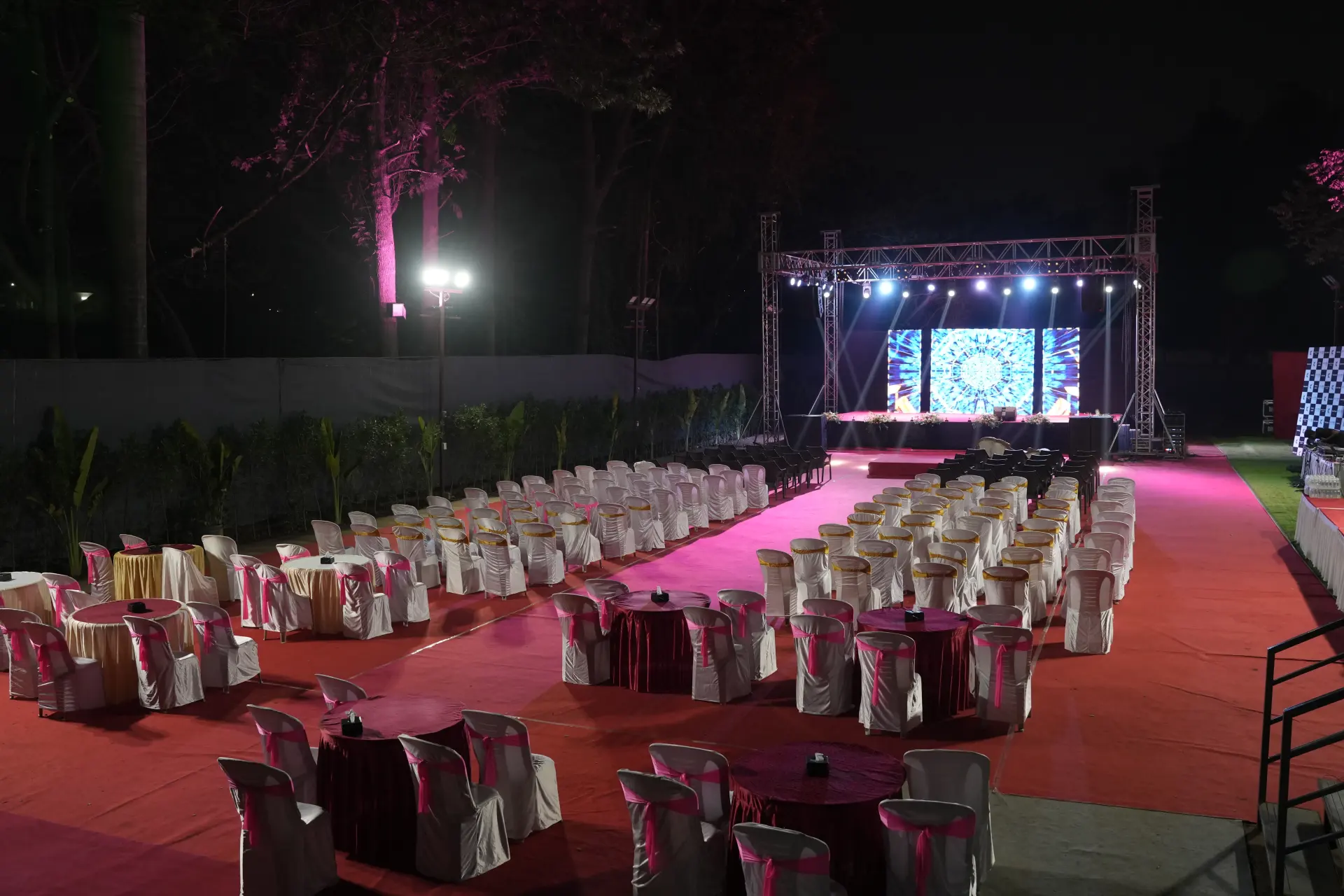


An event management company plans and runs events for its clients. It shapes the concept and budget, finds the venue, books and coordinates decor, sound, lighting, catering and entertainment, handles guest logistics and runs the event on the day. Most charge a management fee, a margin on the services they arrange, or a package price.
If you have never hired one, an event management company can feel like a black box. You share an idea and a budget, and a few weeks later a stage, lights, food and a room full of guests appear. This guide opens the box. It explains what an event management company is, what it does at each stage, how it makes money, and how to decide whether you need one. We have been doing this work in Pune since 2013, so this is how it looks from the inside.
What an event management company is
An event management company is a business that plans, coordinates and runs events on behalf of a client, from the first idea to the last guest leaving. It takes responsibility for the whole event so that the client can focus on their guests, their brand or their celebration.
Event companies work on many kinds of events:
- Corporate: conferences, annual days, product launches, offsites, award nights, dealer meets
- Social: weddings, milestone birthdays, theme parties, family functions
- Brand and marketing: mall activations, roadshows, exhibitions, sampling campaigns
- Institutional: college fests, school annual days, cultural programmes
Some companies specialise in one type, such as weddings. Others, like us, work across several, which helps when a corporate client also needs a family day or a founder wants their daughter’s wedding handled by the same team.
Services it provides
An event management company provides planning, design, supplier coordination and on-ground execution. The exact list depends on the event, but a full-service company typically covers:
| Area | What it includes |
|---|---|
| Concept and planning | Theme, format, schedule, budget, guest experience |
| Venue | Shortlisting, recces, negotiation, layout planning |
| Design and decor | Stage design, floral and theme decor, entrance, photo booths |
| Production | Stage, sound, lighting, LED screens, truss, power backup |
| Food and hospitality | Caterer selection, menus, bar, guest welcome |
| Entertainment | Anchors, artists, DJs, performers, games |
| Guest logistics | Invitations, RSVPs, travel, hotel rooms, transport |
| Branding | Backdrops, standees, signage, welcome gates, digital creatives |
| Permissions and safety | Venue approvals, licences, security, crowd and fire safety |
| Show running | Run sheet, rehearsals, cue calling, on-ground team |
How the planning process works
Most event companies follow the same basic process: brief, proposal, planning, production and show day, followed by a wrap-up. Here is what happens at each stage.
- Brief. You share the occasion, date, guest count, budget range and what success looks like. A good company asks a lot of questions here.
- Proposal. The company comes back with a concept, venue options, a rough plan and an itemised estimate.
- Planning. Once you approve, suppliers are booked, designs are finalised and a detailed timeline is shared. You get regular updates and sign off on key decisions.
- Production. Stages are built, decor is installed, sound and lights are tested, and rehearsals are held, usually on the day before or the morning of the event.
- Show day. The event team runs the programme to the minute, manages guests and fixes problems before anyone notices them.
- Wrap-up. Dismantling, final payments, photos and video, and a debrief on what to improve next time.
Who actually does the work
An event is always a team effort. The planning and coordination sit with the event company’s own staff: planners, designers, production managers and the people who run the show on the day. Specialist work such as catering, florals or large LED walls is often delivered by trusted specialists the event company has worked with for years.
What matters to you as a client is not who holds which tool, but who is accountable. With a good event company you get one team and one point of contact. If the lights are late or the caterer runs short, it is the event company’s job to fix it, not yours. Ask any company you speak to how they manage quality across every part of the event, and who you will call on the day.
How event companies charge
Event management companies usually earn through a management fee, a margin on the services they arrange, a package price, or a mix of these. The model matters less than transparency.
- Management fee: a separate fee for planning and running the event, either fixed or linked to the size of the budget.
- Margin on services: the company quotes a single price for decor, sound, food and so on, which includes its own earnings.
- Package price: a fixed price for a defined event, common for birthdays and smaller functions.
- Day-of coordination: a smaller fee for running an event you have mostly planned yourself.
What drives the total cost is the event itself: guest count, venue, the scale of stage and production, decor, food, entertainment, travel and the number of days. Always ask for an itemised quote so you can see where the money goes and which choices change it.
When hiring one makes sense
Hiring an event management company makes sense when the event is too large, too important or too time-consuming to manage alongside your real job. Typical signs:
- The guest list is large, or includes senior leaders, clients or VIPs.
- There is a stage programme, performances or a live audience to manage.
- Guests are travelling in from other cities, or the event is out of town.
- You need several suppliers to work together to a tight schedule.
- No one on your side has the time to be available to suppliers for weeks.
A good event company can also save money. Experienced planners know what things should cost, avoid expensive last-minute fixes, and put the budget where guests will notice it.
What you still decide as the client
Hiring an event company does not mean handing over every decision. You stay in charge of the choices that shape the event; the company handles the work of making them happen.
- The goal: what the event must achieve, whether that is launching a product, thanking a team or celebrating a family moment.
- The budget range: a realistic figure, shared early, so the proposal fits it rather than being cut down later.
- The guest list: who is invited, who speaks and who needs special attention.
- Approvals: the concept, venue, designs, menus and the final run sheet.
- Your brand or family preferences: colours, rituals, dos and don’ts, and anything that must not go wrong.
The best results come when one person on your side is the decision-maker and replies quickly. Events slow down and costs rise when approvals wait in long email chains or change late in the process.
Questions to ask before hiring
Before you sign, ask these questions and listen for clear, specific answers.
- Have you done events of this type and size? Can we see photos and videos?
- Who will be our point of contact, and will they be at the event?
- What exactly is included in the quote, and what could cost extra?
- How do you handle changes, delays and bad weather?
- What is the payment schedule and the cancellation policy?
- How will you keep us updated during planning?
- Who handles permissions, safety and venue rules?
Talk to an event team in Pune
Plan With YOLO has planned and run 500+ events for 100+ brands and companies since 2013, from annual days and conferences to weddings and brand activations. We plan, set up and run each event with one team and one point of contact. Start on our home page to see what we do, browse all our event services, or share your brief and we will come back with a plan and an itemised quote.
Frequently asked questions
What is the role of an event management company?
The role of an event management company is to plan, coordinate and run an event on the client's behalf. It turns the brief into a concept and budget, finds the venue, books and manages decor, production, food and entertainment, handles guest logistics and permissions, and runs the programme on the day so the client can focus on their guests.
How do event management companies make money?
Event management companies make money through a management fee for planning and running the event, a margin built into the price of the services they arrange, fixed package prices, or a combination. Reputable companies explain their model clearly and give an itemised quote, so you can see what you are paying for each part of the event.
Is it cheaper to hire an event company?
Hiring an event company is not always cheaper on paper, but it often costs less overall. Experienced planners know fair rates, avoid costly mistakes and last-minute fixes, and spend the budget where guests notice it. You also save weeks of your own team's time. Compare itemised quotes rather than totals to judge the value properly.
What is the difference between an event planner and an event manager?
An event planner focuses on the early work: concept, budget, venue, suppliers and schedule. An event manager focuses on execution: coordinating suppliers, running the setup and managing the event on the day. In practice most event management companies do both, and the same team carries the event from the first idea to the final wrap-up.