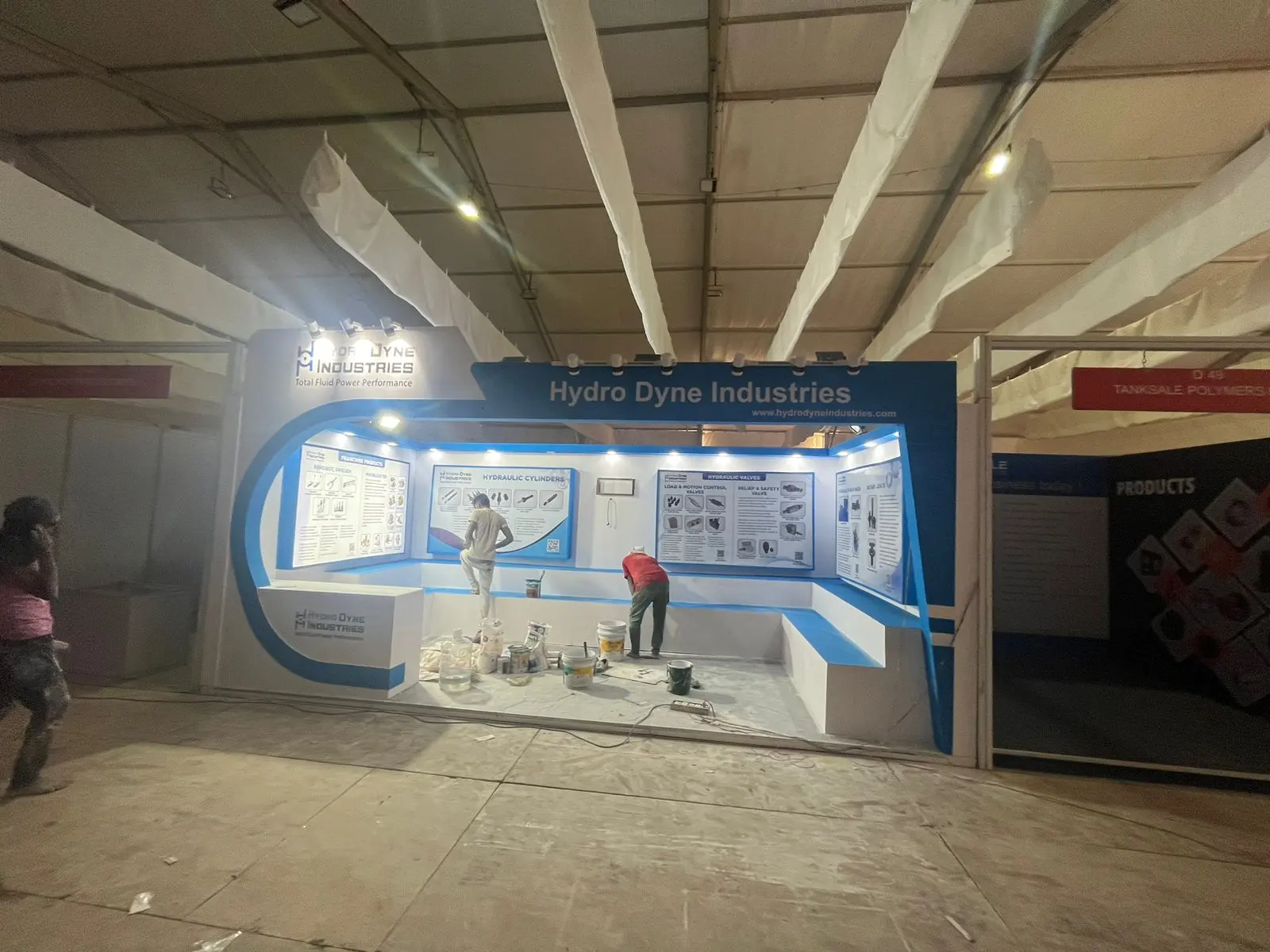
Ground and hall recce
The site walked and measured with you: spare power, ground condition, vehicle access, water, toilets and where the sun sits.
+91 84858 38274 · +91 84858 38219
Shop 7, Ekta Nagri, Near Dwarka Apartment, Anand Nagar, Pune 411051
Most events in Ahilyanagar happen on ground that has nothing on it. We come up from Pune with the stage, the sound, the shade and the lighting, and hand you back a cleared site at the end.

Events in and around Ahilyanagar, still widely called Ahmednagar, mostly happen in three kinds of place: a community hall, a farm lawn, or an open ground with nothing on it at all. The third is the most common and the most demanding. There is no stage, no power worth the name, no shade and no seating, so the event is built from the soil up on the morning before.
The work here follows the land. Agri input brands, dairies, co-operative units and machinery dealers hold farmer meets, demo days and distributor gatherings. Societies and institutions hold annual functions. Companies hold annual days and family days at the unit. Families hold weddings on lawns and in community halls.
Our office is in Pune, three hours away. We keep nothing here: no godown, no crew on call, no branch. The stage, truss, lighting, sound, shade structures and branding travel up on a tempo with our technical team; carrying labour, housekeeping, ushers and flowers are engaged locally. Trucking, the crew journey and their stay each carry their own line in the quote.
This is what gets planned, built and cleared for an event here.
The site walked and measured with you: spare power, ground condition, vehicle access, water, toilets and where the sun sits.
A stage tall enough to be seen from the back rows, with sound and screens planned to carry across an open area.
Shade structures, seating blocks, matted walkways and a rain answer that can be ordered well before the date.
Entry points, marshalled parking for cars, tractors and two-wheelers, a registration line and drinking water at the entrance.
Script, running order and anchoring in the language your audience actually speaks, with speaker briefs prepared in advance.
Departure times, crew stay near the site, dismantle and a cleared ground handed back the way it was found.
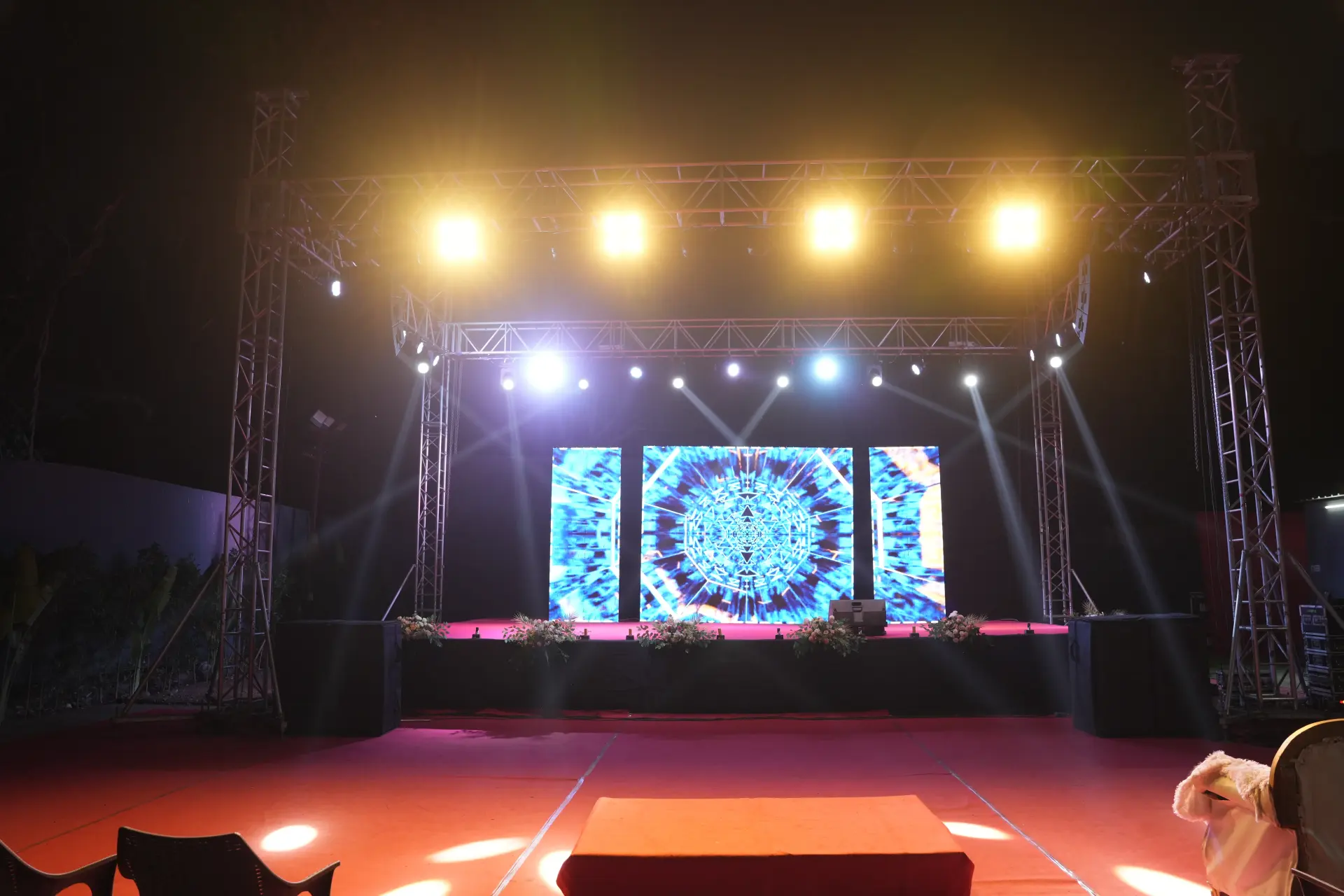
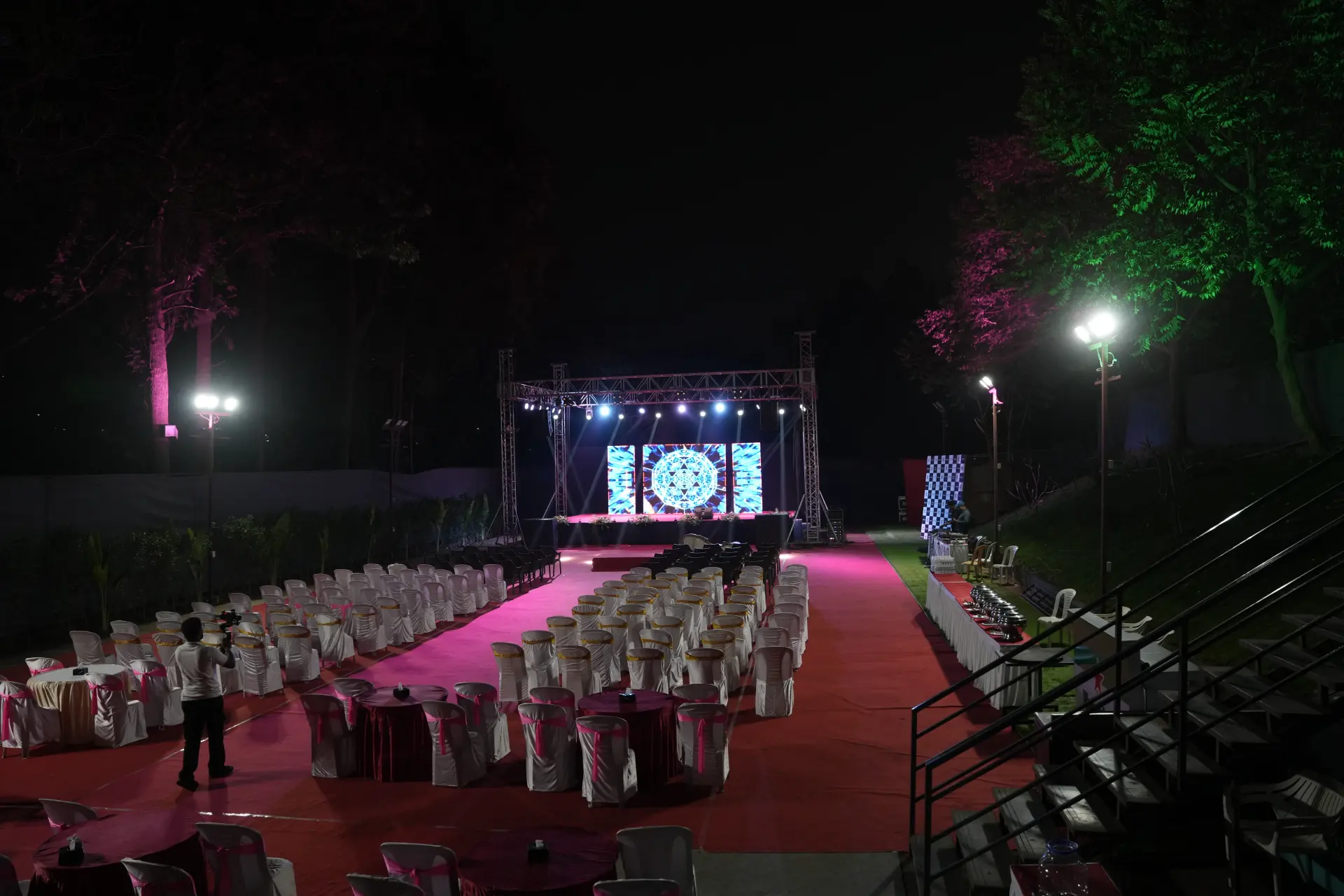
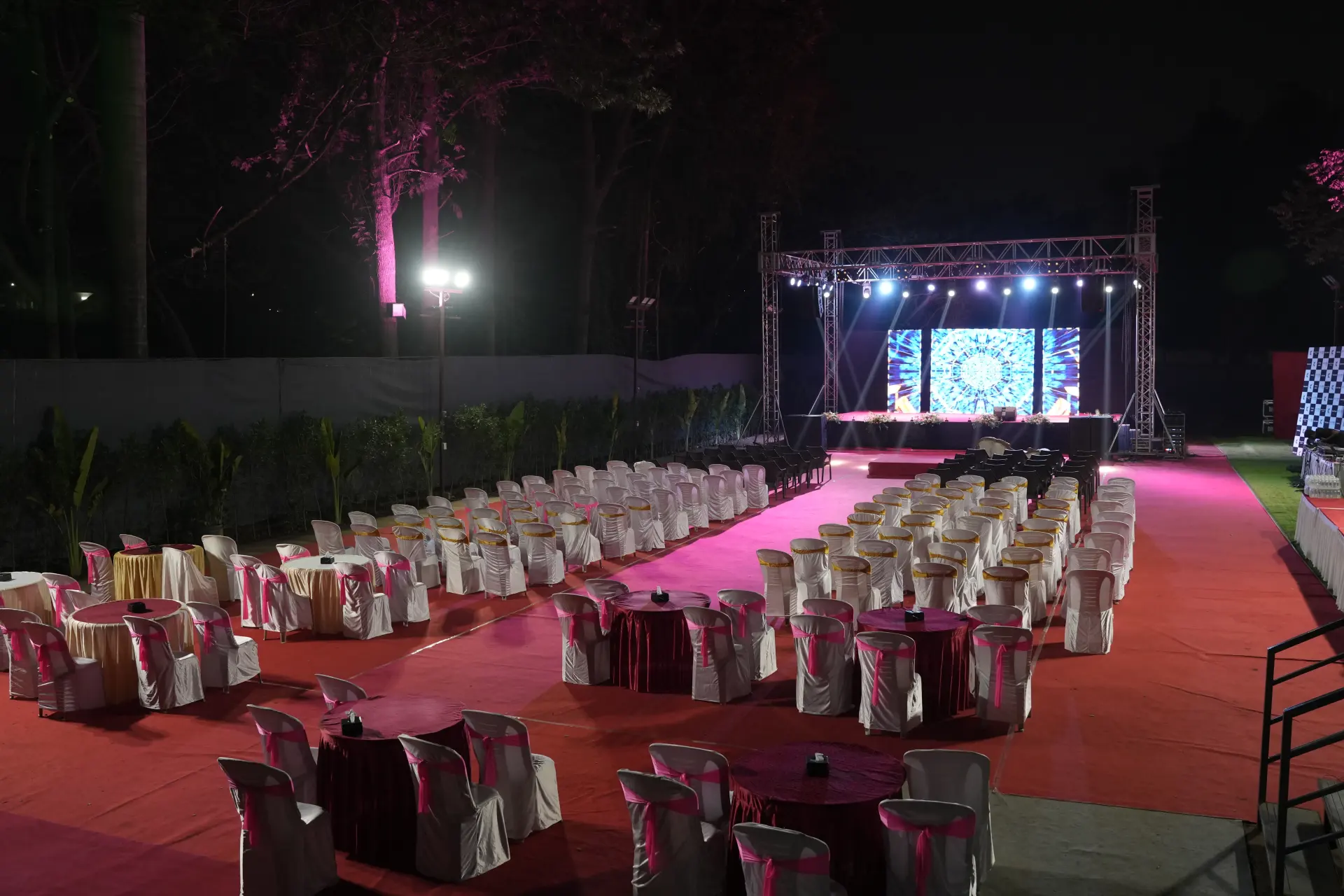
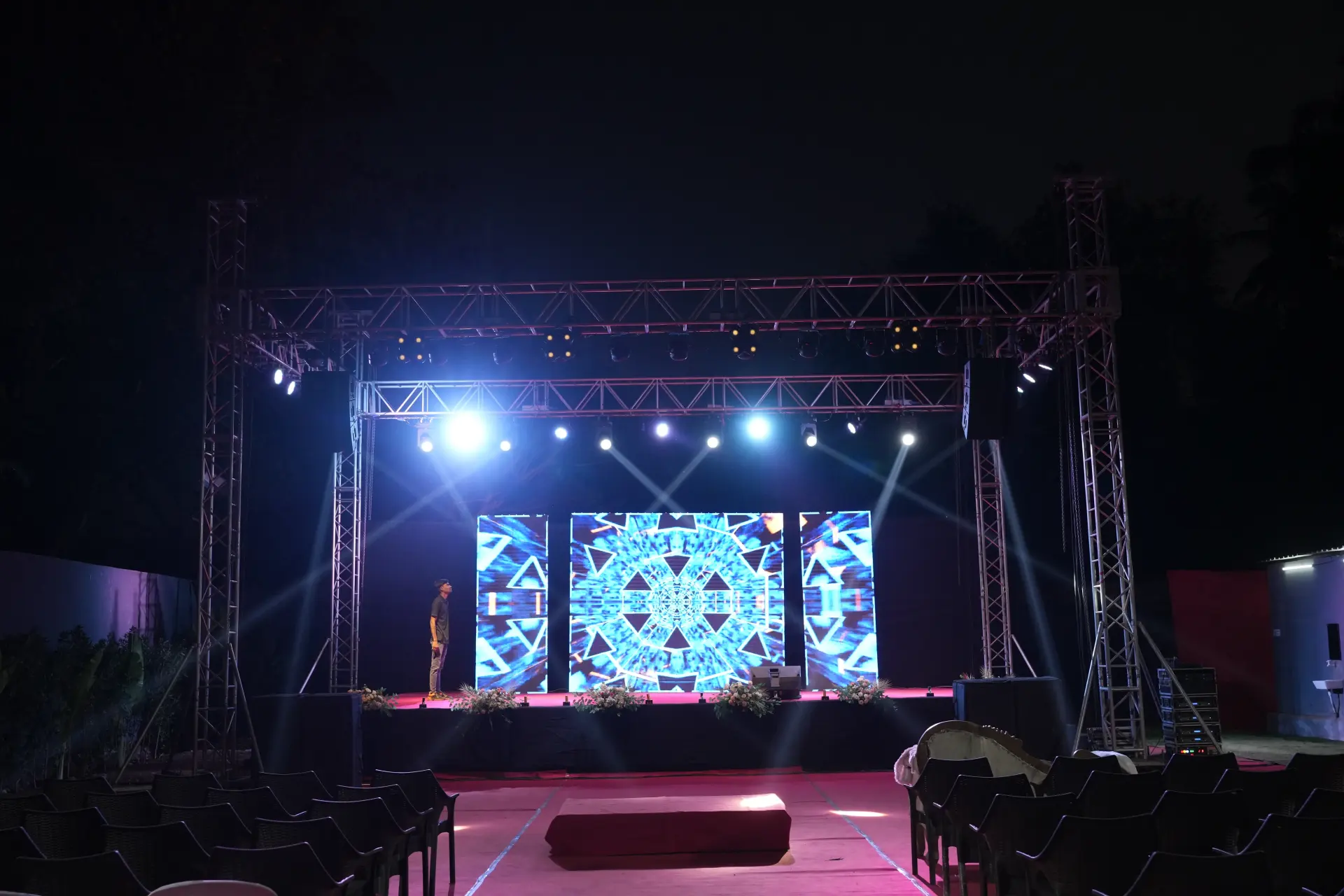
Every photo here is from an event our team planned and ran.
We take the objective, how many people you expect and the date, then say what kind of site that actually needs.
You getA site type and format
Power, soil, access, water, toilets, signal and sun direction all checked and written down before anything is designed.
You getGround notes and a layout
Stage, shade, seating, generator, stalls and branding drawn out, with trucking, crew travel and stay as separate lines.
You getA budget you approve line by line
Gate passes where needed, the crowd and parking plan, the script and anchoring, and the load list checked before departure.
You getA dated run sheet
Build a day early, run the programme to the sheet, then dismantle and leave the site clean and as it was found.
You getA ground left clean
Start by accepting that the venue is a field. Community halls exist and hotel rooms exist, but the events this district is known for happen on open land, and open land gives you nothing but space. Once the plan is written that way, the budget makes sense and the build stops being a surprise.
Design for sightlines and sound coverage before you design the backdrop. A crowd on open ground spreads much wider than the same number of people in a room, so the stage has to be built high enough to be seen from the last row, and the speakers have to be spread rather than stacked in one place. Screens help only if they are shaded, because a bright sky washes out a display that looked fine indoors. Then think about arrival and departure: everybody comes within the same hour and everybody leaves within the same fifteen minutes, so parking for cars, tractors and two-wheelers needs marshals and marked lanes, and the food counters need to be spread out rather than lined up. A demo or stall area works best at the side of the seating, not behind it, so people can walk through before the programme starts. That layout is the same one we use for exhibition stalls.
Do this walk-through before anything is promised to anyone. Each answer changes the plan, and finding out late is what makes an event expensive.
| What to check | Why it matters | What it changes |
|---|---|---|
| Spare power at the board | A domestic supply cannot carry sound, lights and a kitchen | Generator size, placement and fuel for the full day |
| Ground condition | Soft soil, stubble and slope all defeat chairs and heels | Levelling, matting and where the seating block sits |
| Vehicle access | A tempo that cannot reach the site means carrying everything | Build time, labour count and the load-in hour |
| Sun direction | A screen facing the afternoon sun shows nothing | Which way the stage faces and where shade is built |
| Water and toilets | A field has neither, and a crowd needs both | Portable units, drinking water points and their servicing |
| Mobile signal | Registration, payments and streaming all depend on it | Offline registration lists and a backup connection |
| Kitchen or cooking area | Food is usually cooked on site, not delivered | A separate service area with its own power and water |
The distance is long enough to matter and short enough to work with. A recce is a comfortable day trip, so we see the site properly before quoting rather than working off photographs. The loaded tempo leaves a clear day ahead, the technical crew travels with it, and the show team follows that evening. Something forgotten can still be brought up from the city, but it costs half a day, so the load list is checked before departure and spares travel for cables, lamps and microphones. Dismantle happens straight after the close, and the ground is cleared of waste and fittings before we leave.
Start the approvals before the design. An event inside a working unit needs gate passes, a vehicle list, safety induction for our crew and often written permission to run a generator on the premises. Shift timings decide the programme, not the other way round, and a family day that begins after the night shift has slept is a kinder event for everyone. Keep one contact from administration and one from safety, and share the crew list early. The programme side is covered on annual day events and the partner side on dealer meets.
Treat food as a flow problem, not a quantity problem. At a ground event the cooking nearly always happens on site, in a service area that needs its own water, its own power and enough distance from the seating that smoke does not drift across the stage. The queue is the part that goes wrong. Counters spread around the edge of the seating clear a crowd far faster than one long line, and separate drinking water points keep people out of the food queue entirely. Serve after the programme rather than through it, and announce from the stage where to go, because a crowd left to guess will follow whoever moves first. What we cover across all of this is set out on event management services.
Most people start here with a search rather than a recommendation, and the first results are the ones paying for the position or carrying the most reviews. Neither tells you whether a team has set up in a hall like yours.
Compare the breakdown rather than the total, check the crew is theirs and not hired in, and ask what they have already done in Ahilyanagar (Ahmednagar). Our contact page has both numbers and WhatsApp, and you will get an itemised scope back rather than one figure.

Can't find yours? Call or WhatsApp — a planner answers.
No. Everything runs from our Pune office at Anand Nagar, off Sinhagad Road. We keep no godown, branch or crew in the district. We drive up for the site visit before quoting, bring the load and the technical crew a clear day before the build, and stay through the event. The travel is itemised in your quote.
Yes, and it is the format we are asked for most in this district. We build the stage high enough to be seen from the back, spread the sound rather than stacking it in one place, shade the screens, and lay out stalls and demo bays at the side of the seating. Parking, water points and food counters are planned for a crowd arriving together.
That is the usual situation and it is planned for, not improvised. Stage, lighting, sound and screens come up from Pune with our technical crew and are rehearsed on site. On the recce we measure ceiling height, door widths and spare power, because those three decide what can physically be built in the room and whether a generator is needed.
It is driven by crowd size, whether the site already has power, floor and shade or all three must be brought, the number of days, and the size of stage and AV. Trucking, crew travel and stay are separate lines so you can see what the distance adds. Send the brief and the site and we will itemise it.
Yes, and for most audiences here it should be. The script, the anchoring, the stage announcements and the signage can all be prepared in Marathi, or mixed with Hindi and English where the audience is mixed. Tell us the audience at briefing stage, because it changes the anchor we suggest and how speaker briefs are written.
Yes, with the approvals started early. A working unit will want gate passes, a list of vehicles, a safety induction for our whole crew and, in most cases, written approval before a generator runs inside the premises. The shift pattern sets the programme, and a clearing deadline is agreed in the same conversation.
The answer has to be built, not improvised, which means deciding it at design stage. A roofed structure with closed sides and a laid floor takes days to arrange and cannot be conjured on the morning. We plan matting for walkways, cover for the stage and technical gear, and a fallback hall where one is available nearby.
It is worth treating that search as a shortlist, not an answer — no one certifies a best. Plan With YOLO has planned events since 2013 out of Pune and handles farmer and demo meets, dealer and distributor meets and co-operative functions in Ahilyanagar (Ahmednagar). The same crew covers Pune. Ask to see work from the same kind of event, not a showreel of somebody else's.
The shortlist worth having is teams who have set up in Ahilyanagar (Ahmednagar) before; venue quirks are the part nobody writes in a quotation. Our office is in Anand Nagar off Sinhagad Road and the crew travels to Ahilyanagar (Ahmednagar) with its own kit. Send the date, the venue and a rough guest count and you get a scope back the same day.
It moves with guest count, venue, the scale of décor and stage, and whether the date is in season. A wedding date in season and a weekday corporate meeting in Ahilyanagar (Ahmednagar) are not comparable, so a quoted range before anyone has seen the brief is not worth much. You will get an itemised scope for your own event, and every line on it can move.
Pune · PCMC
Pune · PCMC
Pune · PCMCSend the site photos, we will send the build plan
Tell us the occasion, the crowd you expect and the date, and we will visit the ground and come back with an itemised quote.