Destination Wedding in AlibaugSalt air, bare feet, and a ceremony timed to the sun

A coastal property for two or three nights, with a ceremony that starts when the light is right. We plan the route, the arrival slots, every function, and what the sea wind does to all of it.

  • Road and ferry planning
  • Beach and lawn setups
  • Wind-proof décor
  • Sunset ceremony timing
  • Coastal sound plan
  • Guest hospitality

Destination wedding in alibaugTwo questions the hills never ask

A coastal wedding runs on two things a hill wedding never worries about: how your guests arrive, and which way the wind is blowing. Road from Pune is the dependable option, four to five hours down through the ghats and across the flat stretch past Pen. The ferry from the Mumbai side is shorter and far nicer, and it is also a timetable that sea conditions can change, so it decides what time your first function can begin.

Then the coast itself. Wind builds through the afternoon and settles after sunset, which is exactly backwards from what most setups assume. Loose petals strip. Drapes behave like sails. Sound travels away from the people it was meant for. Salt settles on fixtures overnight. None of this is a problem once it has been designed for, and all of it is a problem when a city setup is simply carried down to a beach.

Running since 2013, with events in 30+ cities behind us, we plan, set up and run the whole trip, from the first arrival slot to the last load leaving the property.

  • Running since 2013, events in 30+ cities
  • Routes and arrival slots fixed before function times
  • Setups designed for afternoon wind and salt air
  • Flooring worked out surface by surface
  • Ceremony timed to the light, not to a round number
Destination wedding in alibaug

What we handle on the coastArrival, surface, light and sound

A coastal wedding is decided by four practical things, and we plan all of them together.

Property and beach survey

We walk the lawn, the deck and the sand, check access, measure the usable stretch above the tide line and note where power actually reaches.

Route and arrival slots

Road convoys, ferry bookings well before the last sailing, a road contingency for anyone the wedding cannot start without.

Décor built for wind

Tight wire-bound flower work, low weighted structures, vented drapes, hurricane glass on flames and signage that will not curl.

Sound against the sea

Speakers oriented so nobody sits downwind of the stage, windshields on every mic, and wired mics for the vows.

Surface and flooring

Decking under anything with legs on sand, matting for elder seating, cable routes kept off walkways and away from water.

Rooms and guest comfort

Rooms allotted by family across the buildings, rinse points after barefoot functions, cooling and shade through the humid hours.

Functions on a coastal propertyWhich function belongs on which surface

  1. 01

    Sundowner welcome

    The first evening on a terrace or jetty with drinks and light food, so guests who travelled can sit and breathe.

  2. 02

    Sunset varmala on sand

    The one moment worth putting on the beach, timed to the warm low light, with the seating kept small and close.

  3. 03

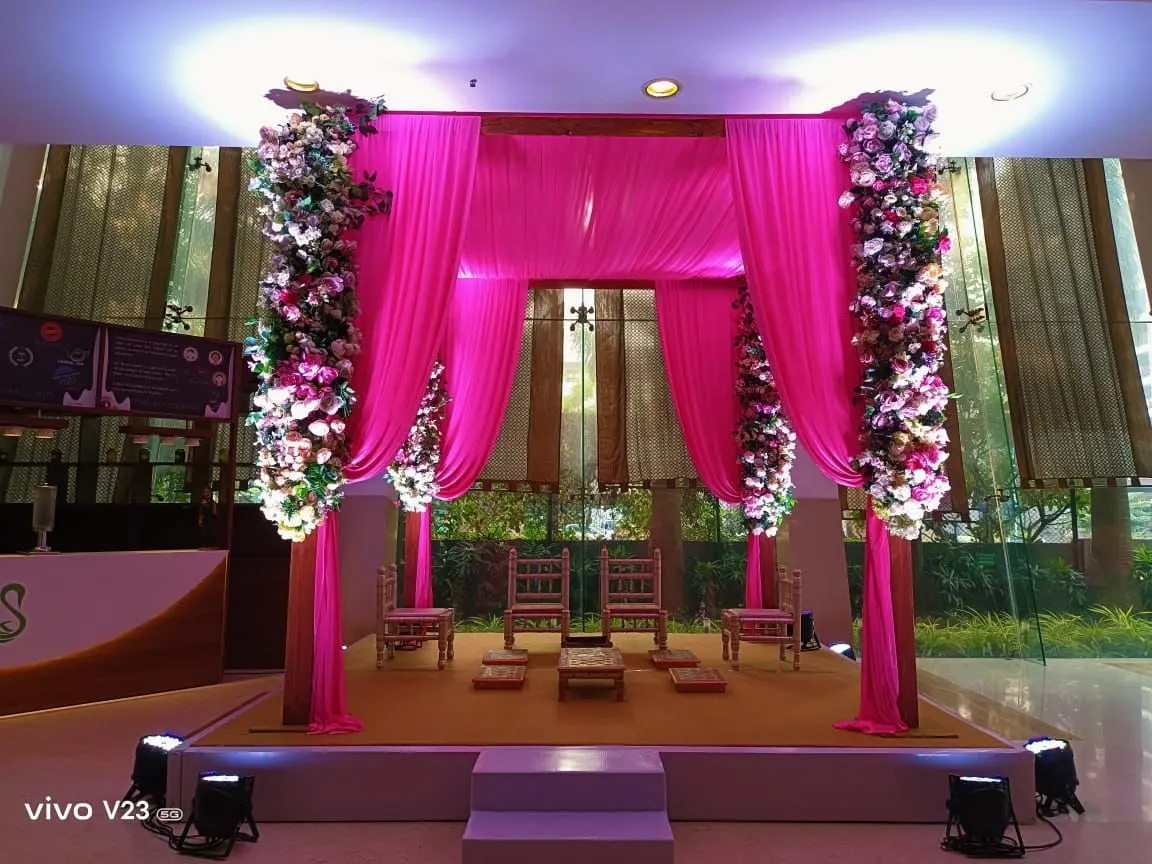
    Lawn mandap

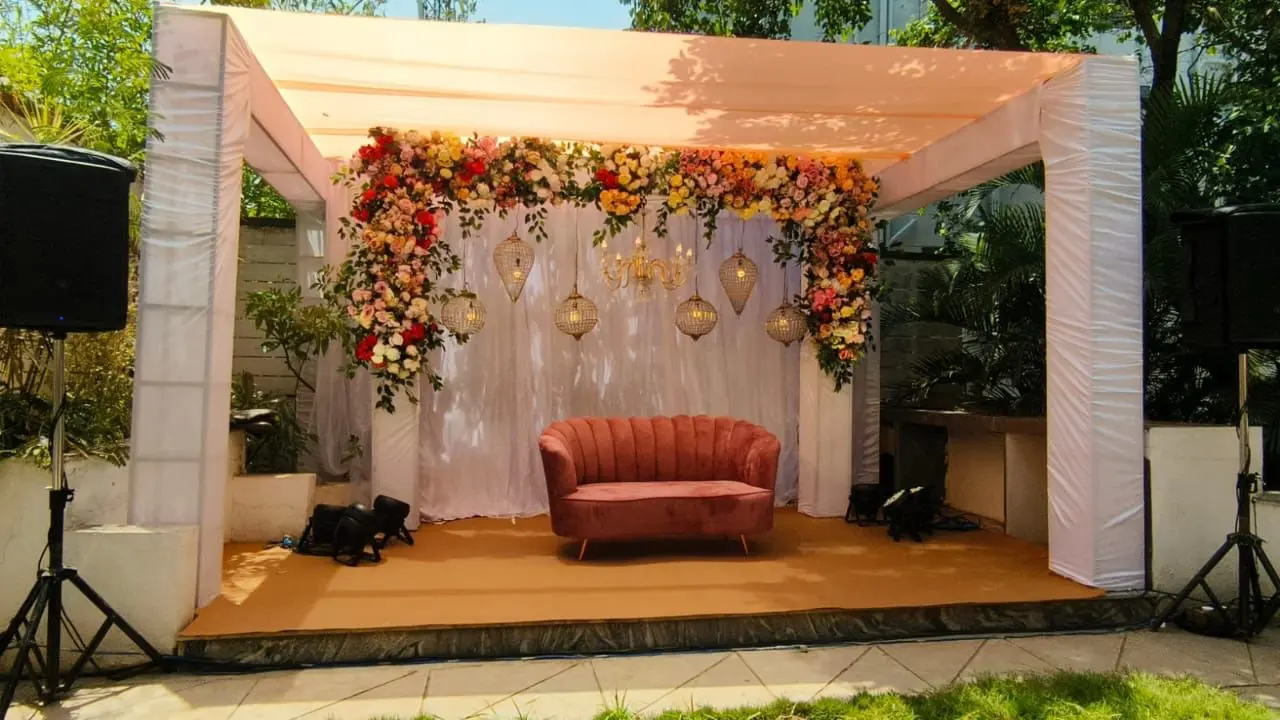
    The ceremony itself on stable grass behind the treeline, where structures anchor properly and elders can walk to their seats.

  4. 04

    Poolside mehendi

    Low seating, shade and fans on a deck, with artists placed where the light is steady and the wind cannot reach.

  5. 05

    Morning haldi in shade

    Held early, under cover or trees, before the sun gets hard and the afternoon breeze starts pulling at the drapes.

  6. 06

    Covered sangeet

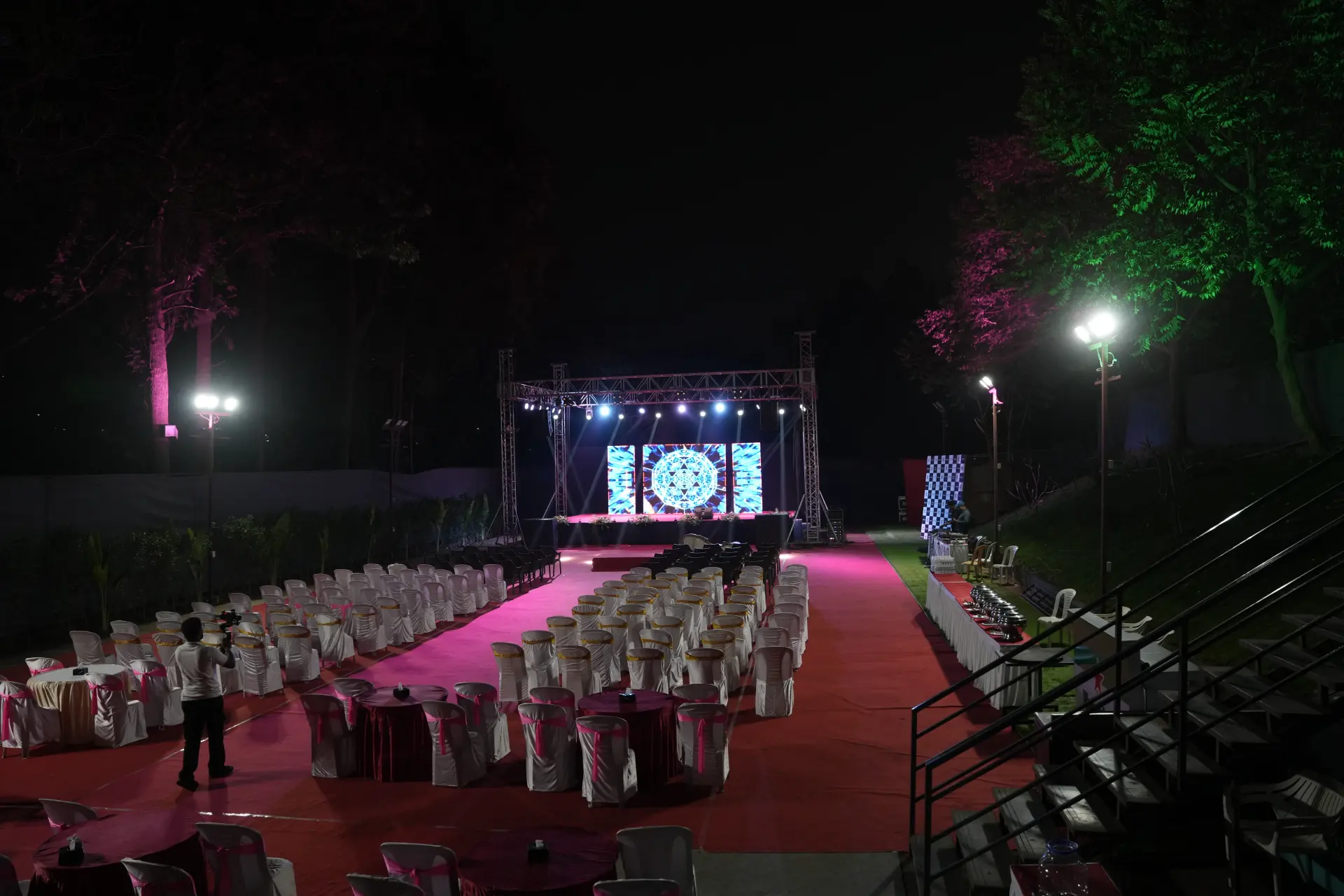
    The loud night belongs in a hall on the coast, where sound behaves, cooling works and the cut-off stops being a fight.

  7. 07

    Beach-side dinner

    Seated dinner on the lawn edge with the sea in earshot, lit warm, so nobody is eating in the dark.

  8. 08

    Villa buy-outs

    A whole coastal house taken end to end, with the cut-off time decided by whoever lives on either side.

How we plan itFrom first call to final bow.

  1. 01 First call

    Guests, nights and route

    How many are travelling, from where, and how many nights. That decides whether the ferry is worth using at all and which properties can hold you.

    You getA realistic brief and a route plan

  2. 02 Weeks 1-2

    Property visit

    We walk the lawn, the deck and the sand, measure the usable stretch, check access and power, and ask what is allowed on the beach.

    You getA shortlist with photos and honest notes

  3. 03 After booking

    Design per surface

    Each function is drawn for the surface it sits on, with wind, salt and the sunset time built into the design rather than added later.

    You getFunction-by-function design and an itemised plan

  4. 04 Four weeks out

    Arrivals and rooms

    Ferry bookings, road convoys, arrival windows, room allocation by family and a contingency for the people who must arrive on time.

    You getA travel and room sheet for every guest

  5. 05 Wedding days

    On site, first and last

    Crew arrive ahead of the loads, kit is covered and wiped nightly, and coordinators run every function to the sheet through to check-out.

    You getA wedding you attend rather than manage

Decide how people arrive before you decide anything else. On this coast the route and the arrival slot set your first function, your load-in window and how much of the wedding can sit on sand.

Road or ferry, and what each one costs you in time

Road is the reliable answer from Pune. Four to five hours through the ghats and across the flat stretch past Pen, and it runs whatever the sea is doing. It is also the only sensible way to move décor, production and anything heavy, so your crew and your loads go by road regardless of what the guests do.

The ferry is the better guest experience, and it belongs to relatives coming from the other side of the bay rather than to the convoy from here. It is shorter, it is memorable, and it is a timetable. Sailings depend on sea conditions and are usually suspended through the monsoon, so check the schedule for your exact dates rather than for the season in general. Two rules make it workable. Put guests on a sailing well before the last one, because a missed slot is a long wait and a bad start. And keep a road contingency for anyone the wedding cannot begin without: the bride's side, the priest, hair and makeup, and whoever is carrying the jewellery.

Then set the first function after the last arrival, not around it. A welcome dinner that starts while the final vehicle is still on the road turns into two dinners and one exhausted host.

Wind, salt and what the sea does to a setup

Coastal wind has a daily rhythm, and it runs opposite to what most décor assumes. It builds through the afternoon and settles once the sun is down. So the daytime functions people picture as breezy are the ones that actually get the wind, while the night functions are calm.

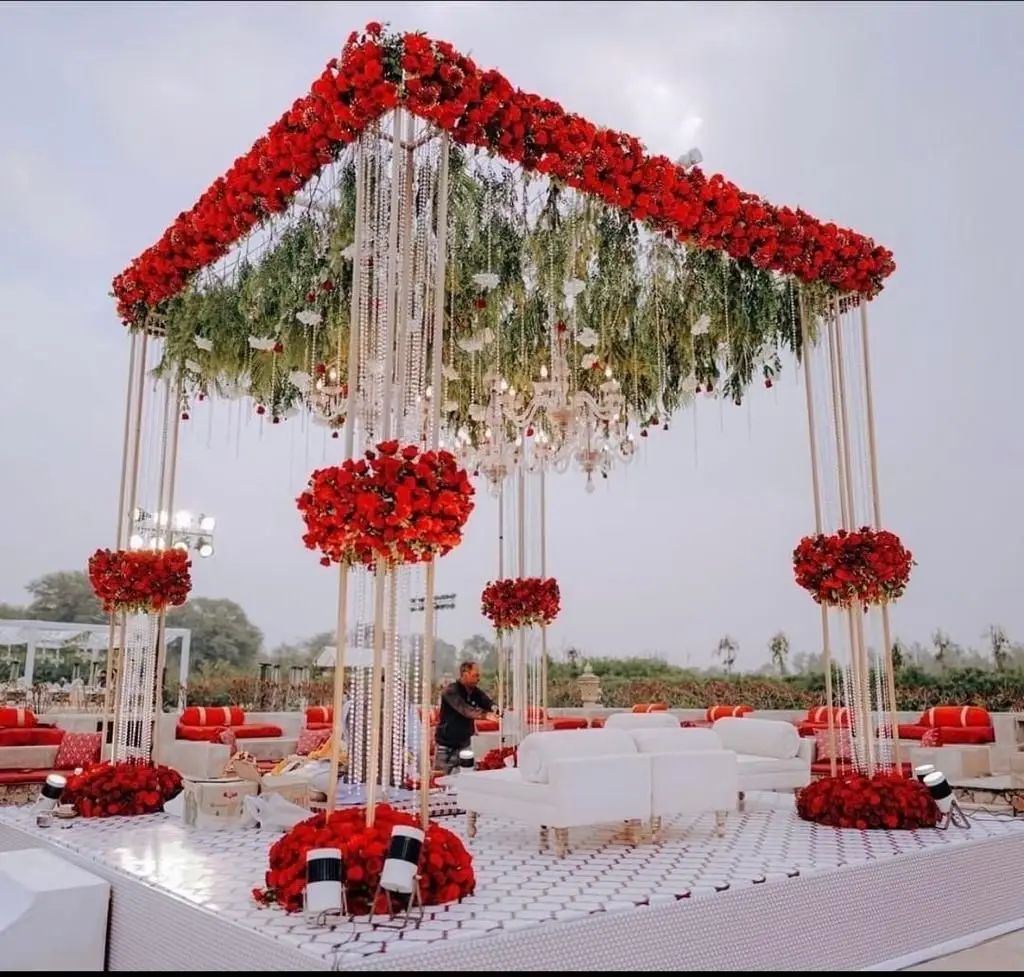
Design for that. Flower work goes tighter and wire-bound instead of loose and airy, because loose petals strip within the hour. Tall, thin backdrops are the wrong shape on open sand; low, wide and weighted holds. Drapes act like sails, so outdoors they are either cut from the design or vented and weighted at the hem. Open flames need hurricane glass. Anything printed curls in the damp, so signage goes on board rather than paper.

Sound needs separate thinking. Wind carries sound away downwind, which means a system that reads perfectly at the console can be inaudible to half the seating. Orient the setup so no guest sits downwind of the stage, fit windshields on every mic, and run wired mics for the vows rather than a clip-on that will pick up nothing but air. Salt is the quiet one: it settles on truss, fixtures and connectors overnight, so kit is wiped and sheeted every night and struck the same evening wherever the schedule allows. Our production team builds coastal rigs on that basis.

Sand, lawn or deck: pick the surface per function

The common mistake here is treating the beach as the venue. The beach is one surface among several, and it carries fewer functions than families expect.

SurfaceWhat it carries wellWhat has to go underneathWhere it fails
Open sandSunset varmala, couple portraits, a barefoot drinks hourDecking or ply under anything with legs, hand-carried load-in, lighting brought to the spotChairs sink, heels and walking sticks give up, and the tide sets your usable width
Lawn behind the treelineMandap, seated dinner, the main ceremonyProper anchoring, matting under elder seating, cable routed off the walkwaysAfternoon wind, so tall narrow backdrops have to be redrawn
Poolside or deckMehendi, cocktails, a small sangeetNon-slip matting and cable runs kept well away from the water's edgeNo room to grow if the guest list moves up
Covered hallSangeet, reception, and every wet-weather planReal cooling, because a coastal hall gets close very quicklyIt will feel indoors, so the design has to work harder

Two questions settle the sand argument fast. Ask how much usable width sits above the high-tide line on your dates, because that changes through the month. And ask whether the stretch is exclusively yours or shared, because a shared beach means strangers walking through your ceremony photographs.

Time the ceremony to the sun

The sun sets into the water here, and that one fact should drive the timing of at least one function. The useful window is roughly the half hour before sunset, when the light is low and warm and everything photographs well. Work backwards from it: guests seated a quarter of an hour earlier, the procession before that, hair and makeup finished long before.

Two practical notes. Sunset shifts by a good stretch of minutes across the year, so take the real time for your date instead of assuming. And once the sun has gone, a beach goes dark quickly with no ambient light at all, so anything continuing outdoors needs its own lighting, brought to the spot and powered from a point that may sit some distance away. If your muhurat falls at night, put the varmala and the portraits in the sunset window and hold the pheras on the lawn later, with the mandap lit properly. Our mandap setups are built differently when they have to stand on soft ground.

What a coastal property has to confirm

  • What the property is permitted to set up on the beach itself, until what time, and who arranges any permission needed.
  • Usable beach width above the tide line on your dates, and whether that stretch is private or shared.
  • Vehicle access to each function area, and what has to be carried by hand across sand.
  • Power points near the beach and the lawn, generator capacity, and where the set and the fuel sit.
  • The outdoor sound cut-off, and how strictly the neighbours hold you to it.
  • Covered hall capacity, seated rather than standing, for rain or for a wind that will not settle.
  • Rooms released to your wedding, spread across which buildings, and how far the furthest one is from the ceremony.
  • Fresh-water rinse points near the sand, and where guests change after a barefoot function.

If you are still comparing coast, hills and farm country, the destination wedding planner page sets them side by side, and our notes on wedding costs explain which lines move once a wedding leaves the city.


Destination wedding in alibaug — FAQsQuestions people ask us.

Can't find yours? Call or WhatsApp — a planner answers.

How do we get to Alibaug from Pune for a wedding?

By road for the wedding party, and by ferry for anyone coming from the other side of the bay. The drive is four to five hours through the ghats and past Pen, and it runs in any weather. Décor, production and heavy loads always go by road, so the crew travels that way regardless of what guests choose.

Is the ferry reliable enough for wedding guests?

It is reliable in the dry months and not worth depending on in the monsoon, when sailings are usually suspended. Check the timetable for your exact dates, book guests onto a crossing well before the last one, and keep a road option for the people the wedding cannot start without. Treat a missed sailing as a two-hour delay, not a small one.

Can we hold the wedding ceremony on the beach?

Some of it, yes, and the sand suits fewer functions than families expect. A varmala at sunset and the couple's photographs work beautifully. A full seated ceremony does not, because chairs sink, elders struggle and the tide decides your width. Most coastal weddings put the pheras on the lawn and keep the beach for one memorable moment.

How does sea wind affect the décor?

It builds through the afternoon and drops after sunset, so daytime functions get the worst of it. Loose flower work strips within an hour, drapes act like sails, open flames go out and printed signage curls in the damp. We use tight wire-bound florals, low weighted structures, vented fabric, hurricane glass and board-mounted signage instead.

What time should a beach ceremony start?

Work backwards from sunset on your actual date, not from a general idea of evening. The warm low light sits in roughly the half hour before the sun goes, so guests should be seated a quarter of an hour before that and the procession earlier still. After sunset the beach goes dark fast and needs lighting brought to the spot.

What drives the cost of an Alibaug wedding?

Room nights, the season and how much of the wedding sits on sand rather than on serviced ground. Decking, lighting carried to the beach, extra power, cooling for coastal halls, crew stay and transport are all real lines. Full property buy-outs and peak-season weekends sit at the top. Send your guest count and dates for an itemised estimate.

Which months suit a coastal wedding?

The cool dry months from late autumn into early spring are the comfortable window, with settled seas and manageable humidity. Late spring is workable if functions move to early morning and after sunset. The monsoon is out for beach setups: ferries stop, the sand is unusable and outdoor functions need a full covered structure anyway.

Will guests be comfortable in the humidity?

They will if the schedule respects it. Keep daytime functions early or under shade with fans, run cooling in every covered space, and put water and fresh juice where people actually stand rather than at one counter. Advise light fabrics on the invitation, keep rinse points near the sand, and leave real gaps between functions.

More from Plan With YOLOPages people read next.

Send your dates, we will plan the arrival

Tell us your guest count, where people are travelling from and the nights you want, and we will come back with properties and a plan.

Talk to a planner