Plan the journey before you plan the wedding. The drive is four to five hours from Pune with a ghat section at the end, and it quietly sets your arrival time, your first function, your load-in schedule and how much spare kit travels with the crew.
The drive decides day one
Work backwards from daylight. Every guest should be off the ghat before dark, because mist settles on those turns in the evening and drivers who do not know the road slow to a crawl. That means departures from the city in the morning, a planned halt roughly halfway for tea and washrooms, and a welcome dinner rather than a heavy first function. The last stretch climbs past Panchgani, and it is slower than the distance suggests.
Check vehicle size before you book coaches. The final approach to a hill property can be narrow, with turns a full-size bus cannot take, and a gate that looks generous in photographs may not clear a tall vehicle. Ask the property what the largest vehicle to reach their porch has been. Smaller vehicles, more of them, each with a named contact on board, is the arrangement that actually works. Keep one car and a driver who knows the road on standby for the whole trip.
Travel sickness is not a small detail on this route. Ask families to put children and elders in the front vehicles, leave early enough to stop when somebody needs to, and keep water and something plain to eat in every car. Guests who arrive unwell miss your first evening.
Cold and mist change what a setup has to do
Damp air is the real design constraint here, more than wind or rain. Mist arrives without warning, sits for an hour, lifts, comes back. It is beautiful, it spoils some things and improves others, and a setup drawn in a city office does not account for any of it.
| What it affects | What the hill does to it | How we plan around it |
|---|
| Fresh flowers | The cold keeps them far longer than they would last in the city | Flower work is built the previous evening, which buys hours before a morning muhurat |
| Drapes and fabric | Damp air makes panels heavy, and hems stain where they touch wet grass | Hems lifted clear of the ground, lined fabric outdoors, spare panels in the load |
| Sound | Mist and open ground swallow clarity, and turning it up only makes it worse | More speakers placed closer to guests, wired mics for the vows and the mangalashtaka |
| Lighting | Haze makes every beam visible, which is a gift outdoors | Beam fixtures used properly, all of them covered and raised off damp ground |
| LED and cabling | Condensation forms on panels and connectors overnight | Everything sheeted at night, powered up early to dry, control desk under cover |
| Food service | Plated food goes cold outdoors faster than anyone expects | Counters moved close to the seating, more chafing, kitchen next to the dining area |
| Guests | The temperature drops sharply once the sun goes behind the ridge | Shawls at the entrance, heaters near elder seating, hot drinks running all evening |
None of this is an argument for staying indoors. It is an argument for deciding which function goes where before the design is drawn. Our production team plans sound and lighting for the real space instead of sending a standard rig up a hill.
Your date is competing with strawberry season
The months that suit a hill wedding are exactly the months the hill is busiest. From late autumn into spring the plantations are in fruit, the town fills at weekends, rooms are held at season rates, and the road in backs up on Saturday afternoons. Property staff are running a full house and your wedding at the same time.
There are three ways around it. Book much earlier than you would for a city wedding, because good properties sell their season months ahead. Take a weekday, which costs less, gets you more attention and keeps your guests off the busiest roads. Or choose a shoulder date, when the weather still holds and the town has emptied. If your muhurat allows any flexibility, ask for quotes on two dates before deciding. Whichever you pick, block rooms early and in one go, because topping up a room block here in the last month is far harder than it is closer to the city.
Everything arrives up the ghat, once
Plan as though nothing can be fetched. A forgotten bracket is a nine-hour round trip, so the packing list has to do the job a hardware shop does in the city. Loads leave the night before and reach the property in the morning, which gives the crew a full working day before the first function instead of half of one.
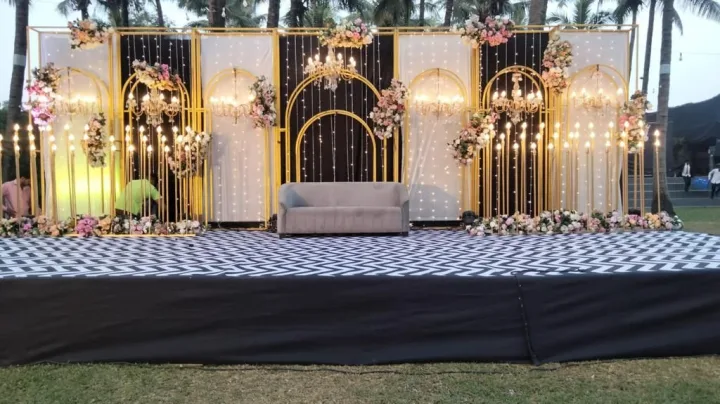
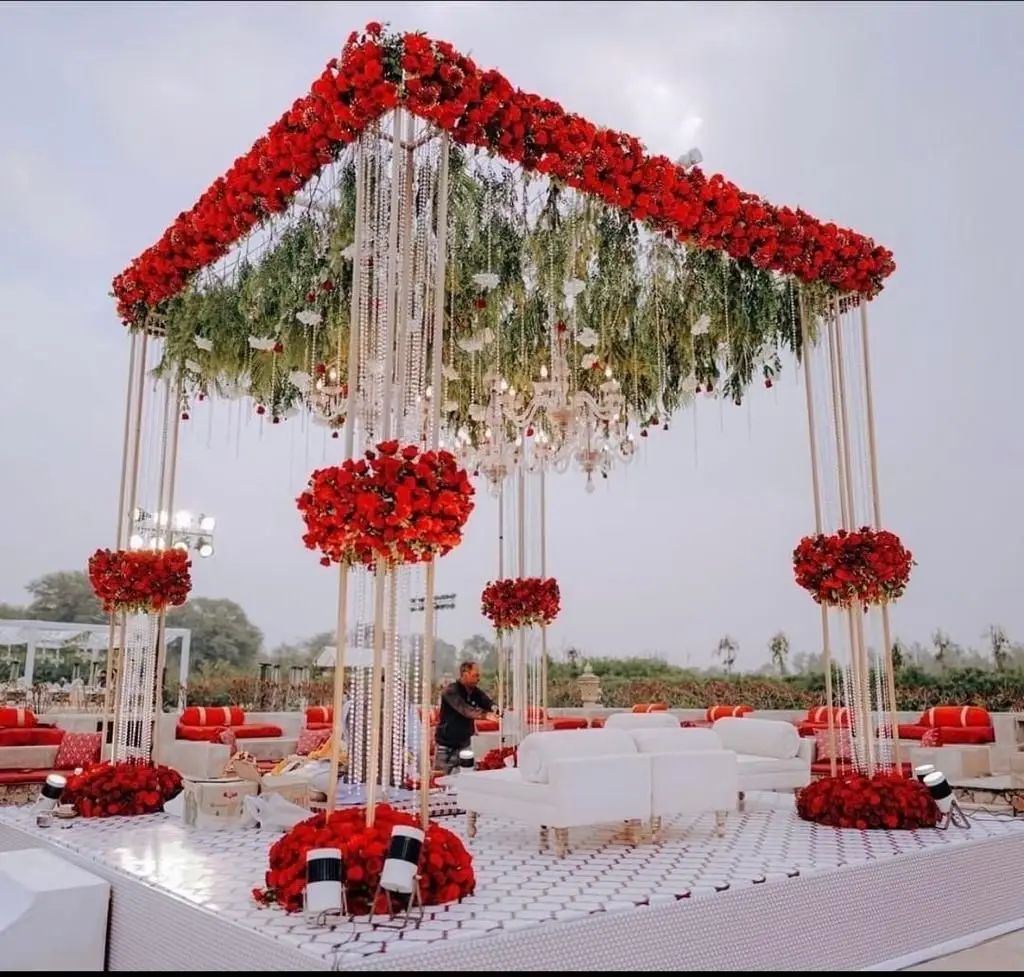
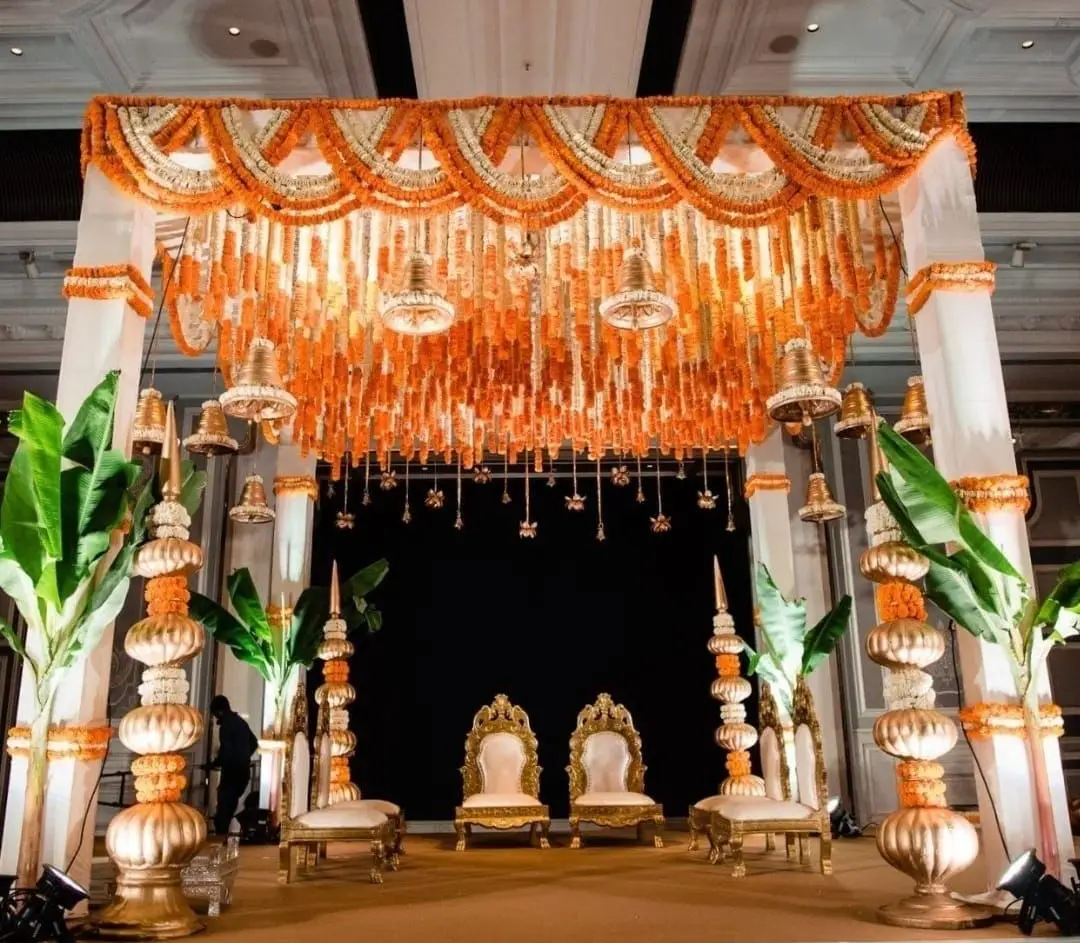
Break structures into sections a smaller tempo can carry. Label every crate by function. Pack spares of the things that fail: cable, gaffer, lamps, fixings, a second set of mics. Mandap and backdrop frames are dry-fitted before they leave, so nothing is being solved on a cold lawn at midnight. Flowers are the one thing that cannot travel early; they come overnight and arrive on the morning, which is why the floral design is locked weeks ahead and not adjusted on site. Our décor team draws hill setups differently for exactly this reason, and the crew stays on the property rather than driving back.
A three-day shape that uses the warm hours
Three days suits this destination better than two, because a full day goes to travelling. The shape most families settle into keeps the outdoor functions in the middle of the day and the loud ones under a roof at night.
- Day one: arrivals through the morning and afternoon, rooms allotted by family, a welcome dinner around a fire with shawls handed out at the door.
- Day two: haldi mid-morning once the grass has dried, mehendi under cover through the afternoon, sangeet indoors after dark.
- Day three: pheras at the muhurat, with the mandap built and lit the previous evening, then lunch and departures early enough to clear the ghat in daylight.
Before you sign, confirm the covered hall and its seated capacity, the generator load left spare after the kitchen and rooms, overnight access for a morning build, the largest vehicle that can reach the porch, heating for elder seating, and the outdoor sound cut-off. If you are still weighing this against a shorter drive, read the Lonavala page next, then the wider destination wedding planner notes.



 Venue · Travel · Guest care
 Pune · PCMC
 Pune · PCMC