
Business event relationships are built by design, not by chance. The sequence runs from a specific invitation, through a room arranged for conversation and breaks long enough to use, to named hosts who make introductions, and finally a follow-up in the first few days. Skip a step and you get attendance instead of relationships.
Two companies run an evening for their customers on the same week. One produces a dozen conversations that turn into work. The other produces a hall full of people looking at their phones between speeches. The budgets were similar and the food was the same. What differed was a set of design choices made weeks earlier, most of which had nothing to do with the programme. Business event relationships are made by those choices, and this is the sequence that produces them.
Planning this in Pune? See our customer meet event: one team plans and runs it with you, since 2013.
What a conversation needs, and what most rooms remove
People connect when three conditions hold at once: they have a reason to speak, they are physically able to, and someone has told them who the other person is.
A standard corporate evening removes all three with great efficiency. Guests are seated in rows facing a stage, so nobody can turn around. The programme fills the time end to end, so the only unstructured window is while people are eating. Nobody knows who anybody is, because a badge with a company name tells you almost nothing about whether this is a person worth twenty minutes. Under those conditions, guests do what anyone would: they talk to the colleague they arrived with and leave early.
Everything below is about restoring those three conditions on purpose.
The sequence, stage by stage
Each stage has one job, and the next stage cannot fix what the previous one skipped.
| Stage | What the design must do | What it produces if it works |
|---|---|---|
| The list | Invite people who have a reason to be interested in each other, not simply everyone on the database | A room where most pairings would make sense |
| The invitation | Say who else will be there, in categories, and what the evening is for | Guests who arrive with an intention rather than out of politeness |
| Arrival | Give people something to do in the first fifteen minutes other than stand still | Early conversation instead of a wall of people waiting for the programme |
| The room | Make it physically possible to face another human being | Groups of three and four, which is where anything useful gets said |
| The programme | Say less, and leave gaps wide enough to be used | Time that guests spend with each other rather than with a screen |
| The hosts | Put named people in charge of introducing named guests | Introductions that happen, instead of introductions that were hoped for |
| The days after | Get something specific to each guest while they still remember the evening | A second conversation, which is where the relationship actually starts |
The invitation does half the work
Who accepts is decided by what the invitation promises, so promise the room rather than the refreshments.
Tell people what kind of company the other guests come from, what the evening is meant to achieve, and how long it will take. An invitation that says senior people from manufacturing and logistics will be in the room, for an hour of discussion and an hour of dinner, filters accurately. An invitation that says join us for an evening of celebration attracts whoever is free. Send it early enough that diaries are still open, and send a personal note to the people you most want, because a forwarded mass mailer is an easy thing to ignore.
One more thing belongs in the invitation: a reason to arrive on time. A short opening that only happens once, a small thank-you handed over at the door, anything that makes lateness a loss. Half the value of these evenings is destroyed by guests trickling in through the first hour.
Layout decides who ever speaks
Arrange the space so that facing someone is the default posture, not an effort.
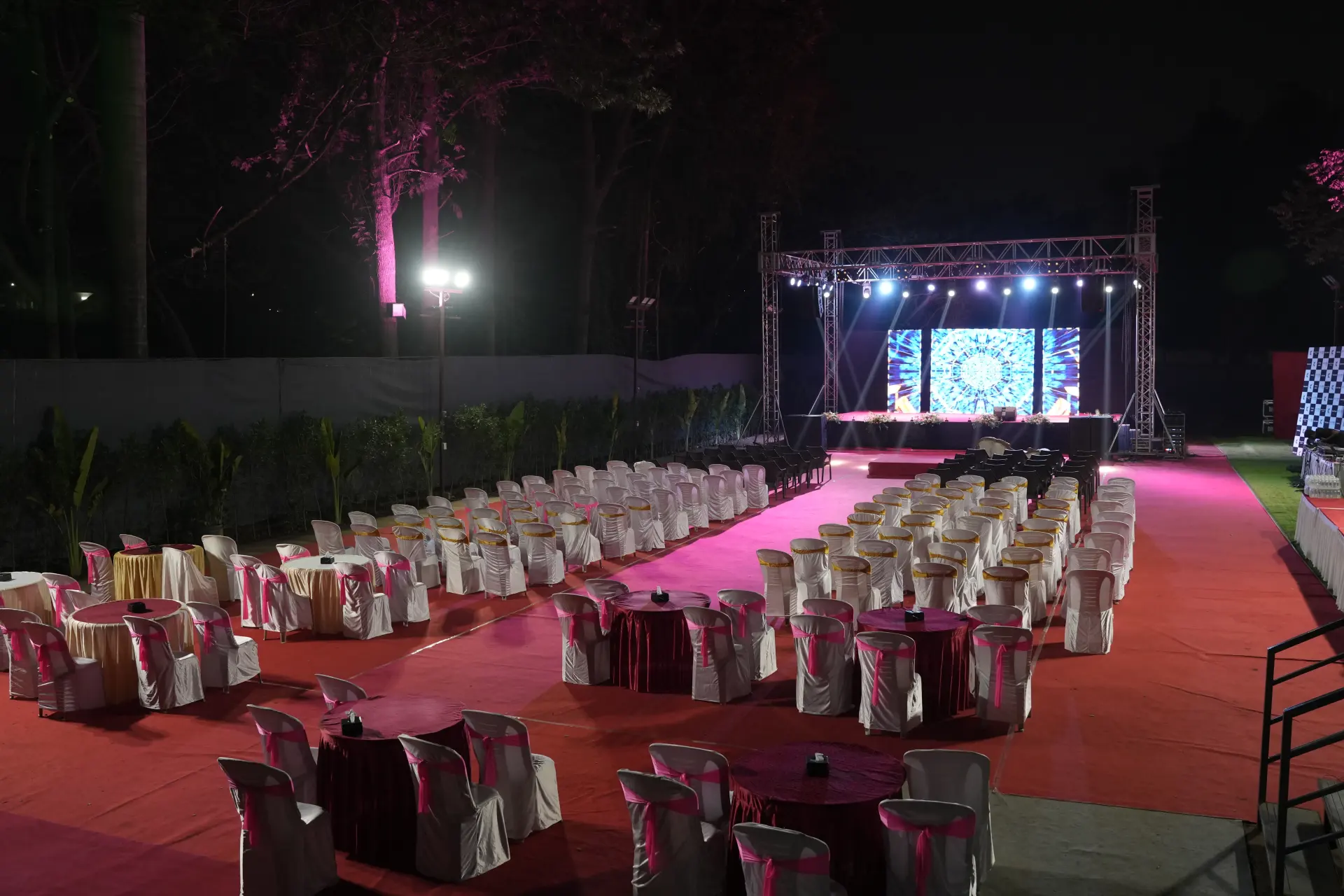
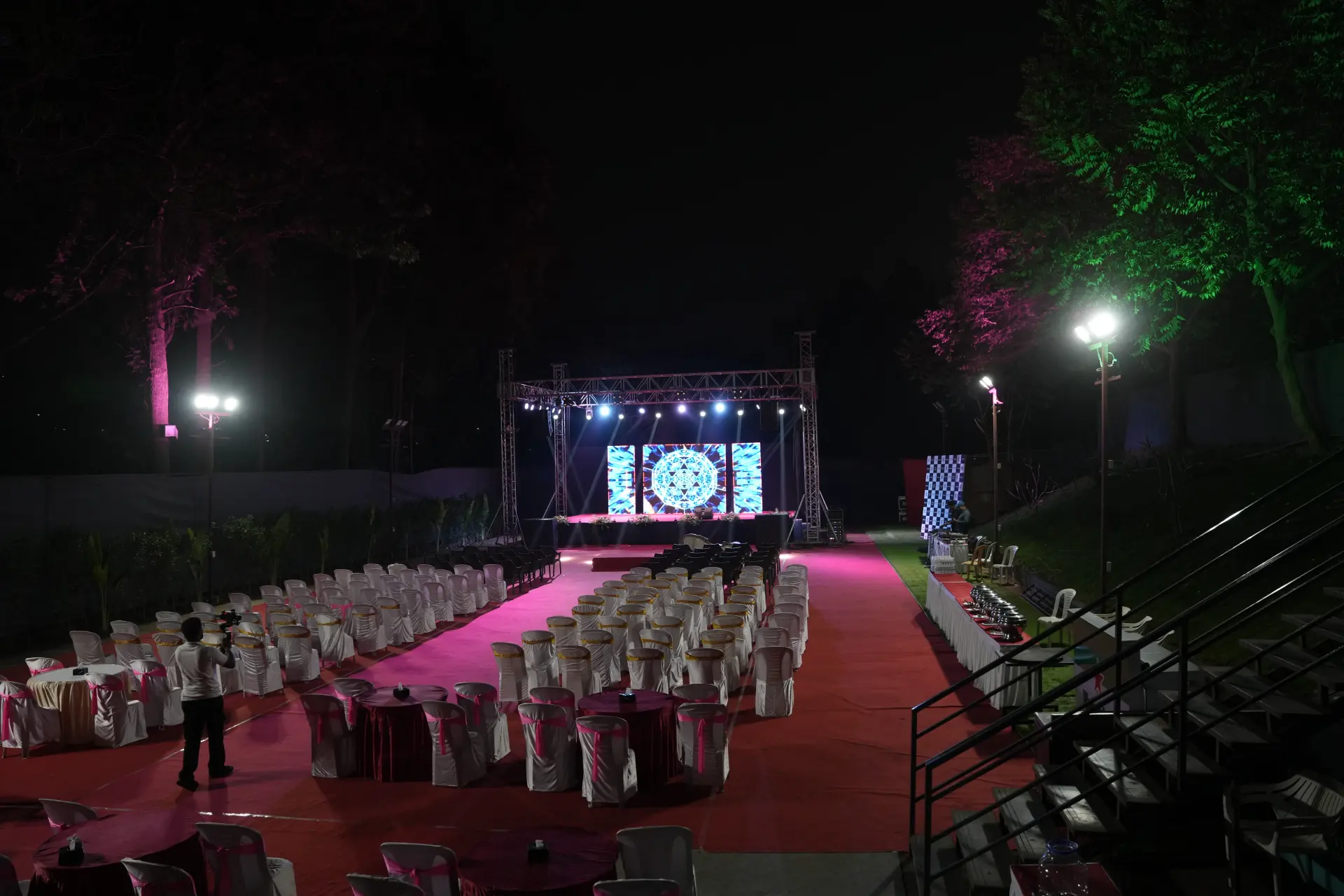
Round tables of eight beat rows of chairs. Standing clusters with a few high tables beat a long buffet queue. Wide aisles beat a packed floor plan that squeezes in extra seats, because movement between groups is the whole mechanism. Keep the music low enough that people over fifty can hear across a table, which sounds trivial and ends more conversations than anything else. If there are speeches, put them at one end of the evening rather than in the middle, so the room does not have to be reassembled twice.
Where numbers allow, seat deliberately. Mixing customers, partners and your own team across tables produces far more than letting everyone sit with whoever they came with. Print the plan, brief the staff at the door, and expect to defend it politely.
Breaks are the event
Treat unstructured time as content, and give it the space content gets.
The sessions are the reason people justify attending. The break is where the work happens. A break of fifteen minutes disappears into tea and washrooms; a break of forty minutes with enough counters produces actual conversation. Put the refreshments where you want people to gather, spread the counters so no queue forms, and resist the temptation to fill the gap with a video. If your agenda is overcrowded, cut a session rather than shortening the breaks.
Named hosts, briefed in advance
Introductions do not happen by themselves; somebody has to be responsible for making them.
Give a handful of your own people a list of guests to find, with one line each on who they are and who they should meet. Brief them properly: their job for the evening is not to enjoy it, it is to spend two minutes with each name and hand them on to somebody else. Tell them how to leave a conversation gracefully, because a host stuck in one corner for an hour has stopped hosting. Guests notice this immediately. Being introduced to somebody relevant is the single most memorable thing that can happen to a person at a work event.
Formats that help, and one that rarely does
Some shapes of evening generate conversation almost automatically.
- Hosted tables on a stated topic. Guests choose a table by subject, and each has a briefed host. Conversation has a starting point built in.
- A working session. Ask groups to produce something small in half an hour. Solving anything together skips weeks of small talk.
- A site or floor walk. Moving side by side is easier than talking face to face, which is why factory tours and showroom walks work so well.
- Small and repeated. Thirty people three times a year builds more than three hundred once, and costs less.
- The format that struggles is the long stage programme with dinner afterwards. It is comfortable to organise, it photographs beautifully, and it gives guests almost no chance to speak to anyone new.
The days after decide everything
Whatever was built in the room decays quickly unless somebody follows up within the week.
Plan that before the event, not after it. Decide who writes to whom, what each message will contain, and when it goes. Specific beats polite every time: the article you mentioned, the introduction you promised, the answer to the question they raised at your table. Make sure the notes taken during the evening actually reach the person who will follow up, because the usual failure is not indifference but a list sitting in somebody’s notebook. Channel programmes live or die on this, and our dealer and channel meets page covers how that follow-through is built into the plan.
Design the room around the conversation
If you want relationships rather than attendance, the room, the timing and the hosting have to be planned for it from the start. We plan customer evenings, partner meets, small-group sessions and hospitality programmes across Pune and Maharashtra, and we will argue with you about the agenda if it leaves no space to talk. Our customer meet management page explains how these evenings are built, and our corporate offsite planning page covers the small-group version away from the office. Tell us who you want in the room through the contact page, and we will suggest a format before we suggest a venue.
Frequently asked questions
How do you build relationships at a business event?
By designing for conversation rather than hoping for it. Invite people who have a reason to be interested in each other, tell them in advance who else is coming, arrange the room so guests can face one another, keep breaks long, assign named hosts to make introductions, and follow up with something specific within the week.
What is the best format for a customer or partner evening?
Hosted tables on stated topics work consistently well, because each conversation has a starting point and a briefed host. Working sessions and site walks also help, since doing something together removes the awkwardness of small talk. A long stage programme followed by dinner is the most common format and the least effective at producing conversation.
How long should breaks be at a business event?
Longer than feels comfortable when you are drawing up the agenda. Fifteen minutes vanishes into tea and washrooms. Around forty minutes, with enough counters that no queue forms, gives people time to finish one conversation and begin another. If the agenda is too full, remove a session rather than trimming the gaps between them.
Does seating people deliberately really matter?
Yes, more than almost any other decision. Left alone, guests sit with the colleagues they arrived with and speak to nobody new. A printed plan that mixes customers, partners and your own team across tables changes who meets whom. Brief the door staff, expect some polite resistance, and hold the plan anyway.
When should we follow up after the event?
Within the first few days, while the evening is still recent. Decide before the event who writes to whom and what each message will say, and make sure notes taken in the room reach the person sending them. A specific message referring to the actual conversation is worth far more than a general thank-you to everyone.

Vicky founded Plan With YOLO in Pune in 2013 and leads the planning on corporate events, weddings and stage production across Maharashtra.