
Planning a wedding stage design requires balancing physical space, ceiling heights, and guest sightlines. Start by measuring your venue floor area, pick a comfortable sofa that matches your outfit bulk, and coordinate warm lighting fixtures so your photographs come out clear and natural.
Getting your wedding stage design right sets the visual anchor for your entire celebration. When family and friends gather to wish you well, all eyes turn toward the focal point of the hall or lawn. Whether you are hosting an intimate gathering in Kothrud or a grand evening in Baner, getting the technical and aesthetic details right makes a major difference. Let us walk through the practical steps of building a setup that looks magnificent and stays comfortable all evening.
Planning this in Pune? See our wedding stage decoration in Pune: one team plans and runs it with you, since 2013.
Getting the Dimensions Right for Your Space
Size dictates whether your platform looks grand or cramped. A standard platform usually spans sixteen to twenty feet in width and twelve to sixteen feet in depth, giving enough room for the couple, family members, and photography teams without crowding. Before finalising dimensions, check the ceiling height of your venue. If the ceiling sits low, a tall structure will look crushed. Always leave adequate clearance for hanging chandeliers or floral arrangements so guests do not feel restricted.
Calculating Depth and Clearance
Allow at least six to eight feet of clear floor space in front of the platform so guests can approach comfortably. If you plan to include heavy floral installations or large wooden props, add extra depth to ensure the sofa and chairs sit well forward. This prevents the backdrop from crowding the seating area, keeping your photographs clear and well-balanced.
Choosing Backdrops and Structural Heights
The vertical backdrop frames every photograph taken during the ceremony or reception. Standard heights range from twelve to sixteen feet depending on venue capacity. Fabric drapes, wooden paneling, and floral installations require secure anchoring to remain steady throughout the event. If your venue is outdoors, account for Pune wind conditions by requesting heavy base weights and reinforced framing.
Layering Materials for Depth
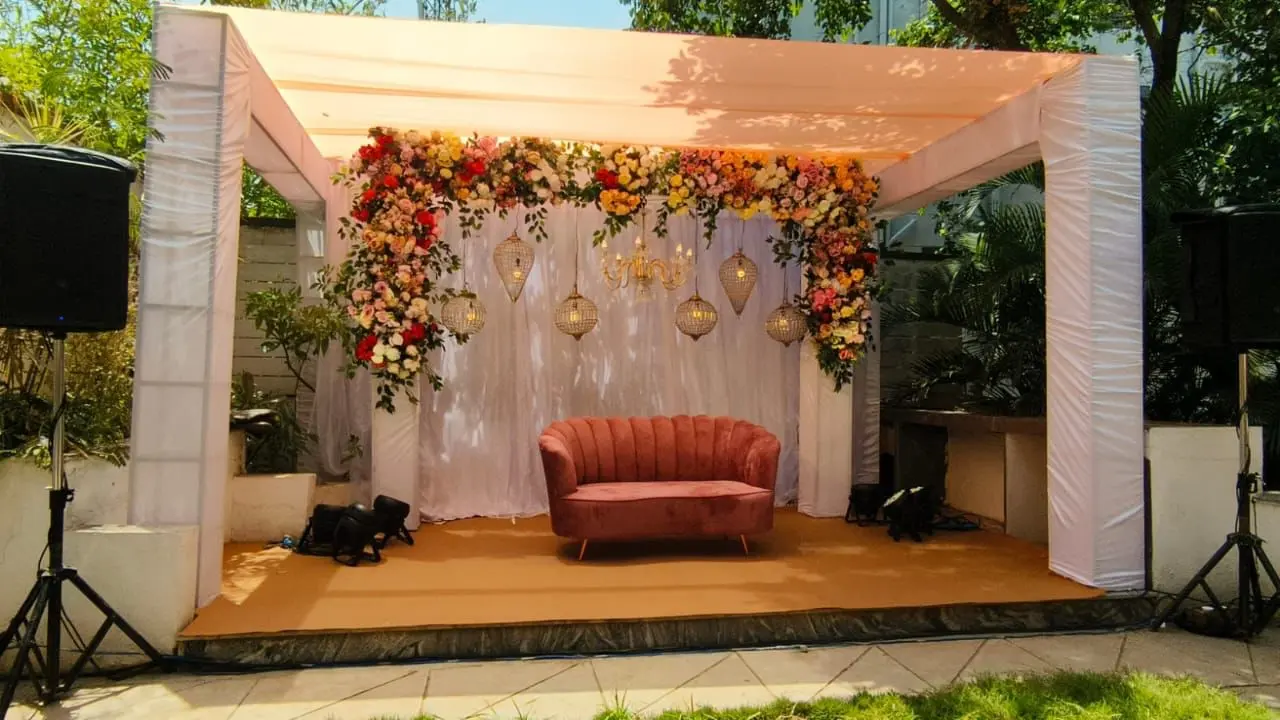
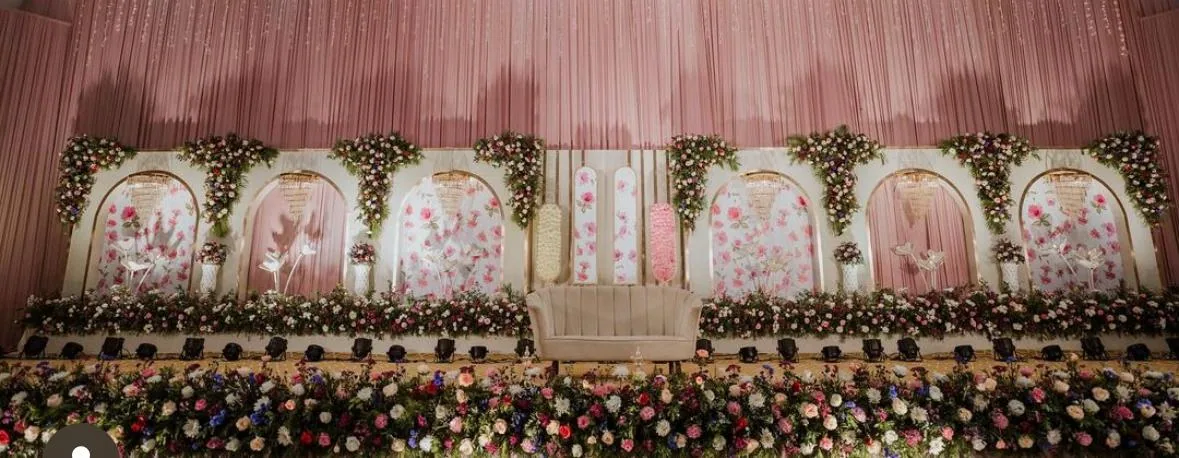
Flat walls look dull in professional photographs. Create visual depth by layering materials. Place sheer drapes behind sturdy wooden arches or floral walls. This technique catches warm spotlights and creates natural shadows, giving your focal point a rich, multi-dimensional look without overwhelming the space.
Selecting Seating That Comfortably Fits Everyone
Couples often choose oversized designer chairs without testing them in wedding attire. Heavy lehengas and sherwanis take up significantly more space than everyday clothing. Pick a diwan, couch, or paired armchairs that offer enough width for two people to sit comfortably without feeling squished. Test the seat height relative to the platform floor so your feet rest naturally and photographers get an unobstructed angle.
Comparing Seating Options
| Seating Type | Best Suited For | Key Consideration |
|---|---|---|
| Classic Diwan | Traditional ceremonies, Maharashtrian setups | Requires matching bolsters and ample width |
| Modern Loveseat | Contemporary receptions, cocktail nights | Check seat depth against heavy attire |
| Matching Armchairs | Formal receptions, stage greetings | Ensure comfortable back support |
Lighting Choices That Make Photos Look Clear
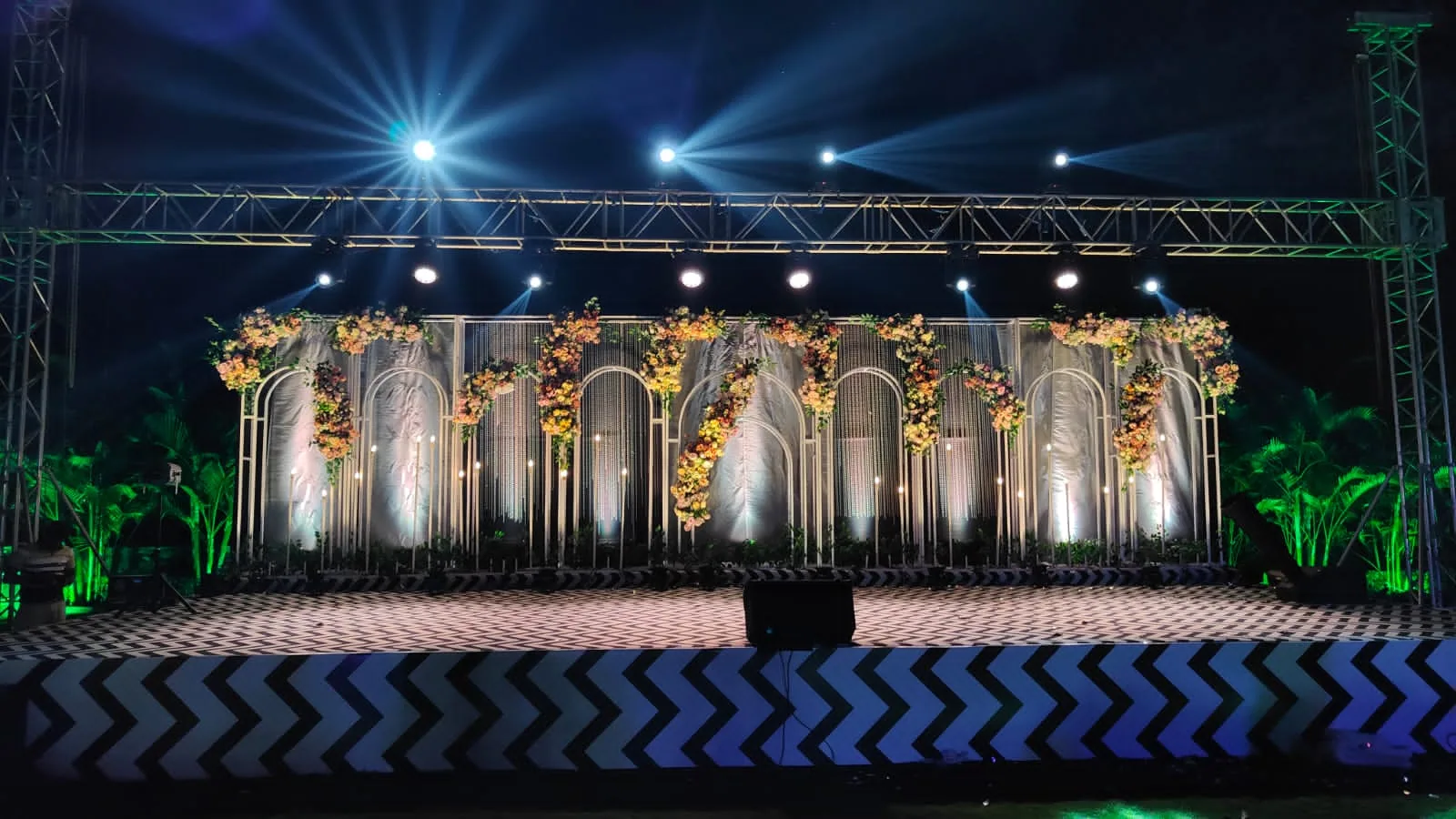
Lighting controls the mood and dictates whether your photographer captures crisp images or grainy shadows. Avoid relying solely on harsh overhead venue tube lights. Instead, use a mix of warm white LED pars, spotlight washes, and subtle profile lights focused directly on the seating area. If you use fairy lights or hanging Edison bulbs in the backdrop, ensure the wiring remains safely hidden behind decorative panels.
Balancing Ambient and Focus Lights
Layer your lighting design carefully. Ambient wash lights brighten the overall floral arrangements, while sharp focus spotlights ensure your faces remain well-lit when family members join you for photographs. Work with your technical team to test light temperatures before guests arrive, avoiding overly blue or harsh yellow tones that distort makeup and clothing colors.
Designing Safe Steps and Easy Access
Functionality matters just as much as aesthetics. Guests of all ages will walk up to greet you, so the approach must be safe and sturdy. Build wide, carpeted steps with secure handrails if the platform sits more than two feet high. Avoid slippery floor laminates or loose fabric runners that can cause trips, especially when elders and children walk up with heavy gifts.
Managing Guest Flow
Plan clear entry and exit paths around the platform to prevent bottlenecks. If your venue is located near Hinjewadi, transit times for setup crews can vary, so ensure your installation team builds in extra buffer hours before the guests arrive. A well-planned walkway keeps the entire evening moving smoothly.
Common Mistakes to Avoid During Setup
Many couples run into avoidable issues because they leave design decisions to the last minute. One frequent mistake is ignoring sightlines from the back rows of the dining area. If pillars block the view of the platform, guests will struggle to see key rituals. Another oversight is failing to check power load capacities with the venue management before plugging in heavy lighting rigs.
Timeline Checklist for Your Plan
- Measure venue floor dimensions four weeks prior
- Finalize backdrop materials and color palettes
- Confirm seating measurements against bridal outfits
- Schedule lighting tests with technical crew
- Map out guest entry and exit pathways
What to Ask Before Booking Your Setup Team
Getting Clear Answers Before Finalizing
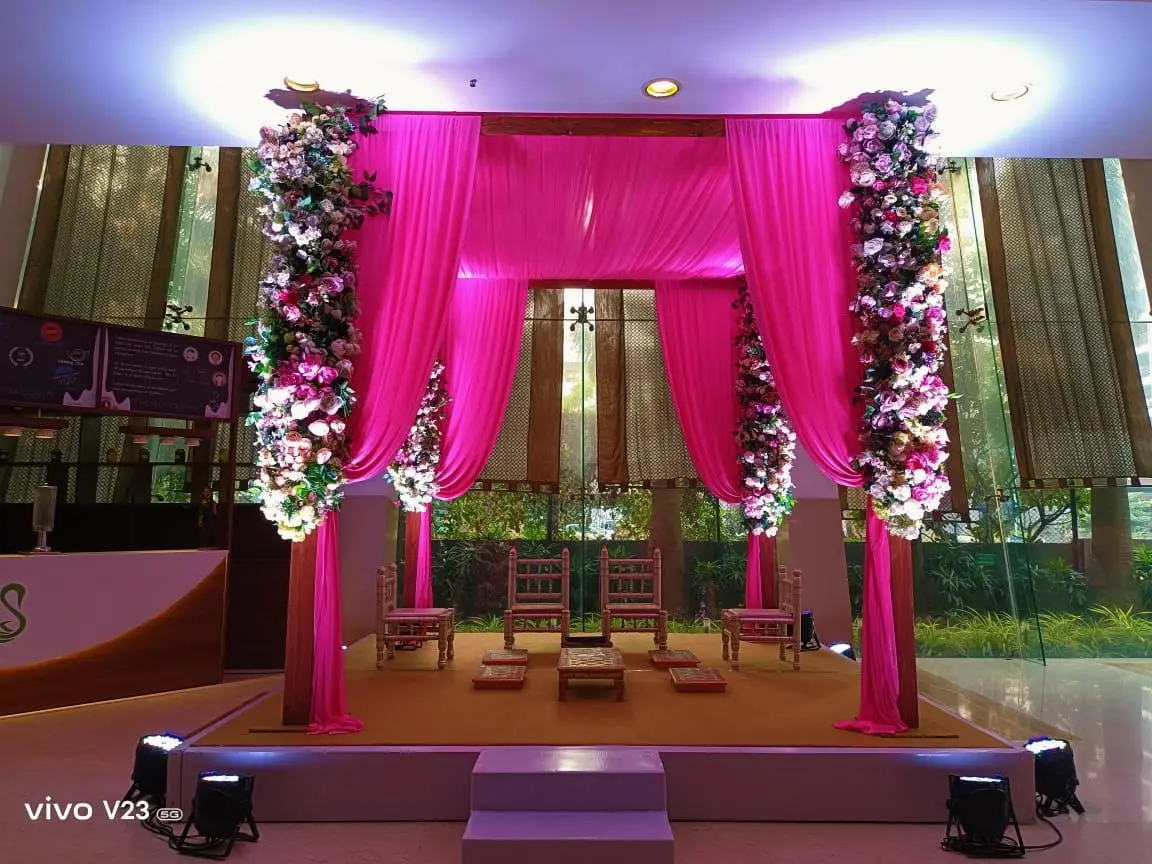
Before locking in your mandap and platform arrangements, you need to have a proper chat with the installation crew. Do not just look at pretty pictures on their phone and assume everything will match your venue. Ask them how long the complete build takes on the actual day, because tight banquet hall schedules leave very little room for delays.
Key Questions for Your Setup Crew
- Can the backdrop structures stand firmly on their own, or do they need to drill into the floor?
- How do you manage loose floral waste and heavy props once the event ends?
- Do you provide power distribution boards for the heavy lighting rigs, or do we need to coordinate with the venue electrician?
- What is your backup plan if a prop or floral panel gets damaged during transport?
Planning these details in advance saves you from unnecessary stress on the wedding day. Make sure you also check who stays back to manage quick repairs or bulb replacements while the function is going on. Clear communication prevents misunderstandings and ensures the platform looks stunning from morning until the final guest leaves.
Step by Step Assembly Order on the Big Day
The Sequence of Building a Platform
Putting together a grand focal point requires careful timing so different teams do not bump into each other. If carpenters, electricians, and decorators all arrive at the exact same minute, chaos is guaranteed. A well-planned schedule ensures everyone gets enough space to do their job properly without rushing the final finish.
- The base platform and steps are locked into position and checked for balance on uneven floors.
- Main backdrop frames and heavy wooden or metal structures are bolted securely to prevent shaking.
- Concealed wiring for spotlights and decorative hanging elements is neatly routed behind the panels.
- Fabric draping, floral installations, and acrylic signage are layered over the structure.
- The central seating arrangement and side accent tables are placed in the middle.
- Final touch-ups, sweeping away dust, and testing all light switches are completed before guests arrive.
Following this logical order means heavy lifting happens first, leaving the delicate cosmetic work for the final hours. Keep your wedding planner or coordinator nearby to oversee this timeline so everything runs smoothly.
Ready to Plan Your Celebration?
Bringing together a magnificent setup takes careful coordination, structured timelines, and attention to every small detail. Whether you need a grand mandap or a modern reception aesthetic, we are here to help you plan, set up, and run the entire celebration smoothly. Explore our dedicated wedding stage decoration in Pune services to see how we can bring your vision to life. Get in touch with our team today to share your ideas and ask for an itemised plan tailored to your venue.
Frequently asked questions
How high should a wedding stage be built?
A wedding stage platform typically sits between eighteen inches and three feet high. This height ensures guests seated across a large banquet hall can maintain clear sightlines while still allowing elderly family members to walk up the steps comfortably without steep climbs.
What size sofa is best for a couple on stage?
A sofa measuring between five to six feet in width works best for most couples. This extra space accommodates heavy bridal lehengas and sherwanis comfortably, ensuring you can sit down and stand up easily throughout the evening without feeling cramped.
How can I make my stage backdrop look unique?
You can make your backdrop stand out by layering textures such as wooden arches, sheer fabric drapes, and fresh floral walls. Adding warm spotlight washes behind these layers creates natural shadows and depth, making your photographs look vibrant and professional.
When should stage decoration installation begin at the venue?
Stage setup typically begins at least twelve to twenty-four hours before the event starts, depending on the complexity of the backdrops and floral arrangements. Starting early ensures your technical crew has enough time to test lighting and secure all structural elements safely.
How do I coordinate lighting for my stage photos?
Combine warm white LED wash lights with focused spotlights on the seating area to keep faces clear in photographs. Avoid relying on harsh overhead venue lights, and test the color temperature with your photography team before guests arrive at the venue.
Vicky founded Plan With YOLO in Pune in 2013 and leads the planning on corporate events, weddings and stage production across Maharashtra.