Promotional activities examples include in-store sampling, mall game zones, retail demonstrations, roadshow vans, society drives, campus contact programmes, weekly market stalls, dealer counters and transit displays. Pick by where your buyer already stands, then settle four things for each: the offer, the qualifying action, the data you capture, and the daily target.
Choosing a format is where most ground campaigns are won or lost, and it usually gets three minutes in a meeting. The list below is a working set of promotional activities examples, grouped by the place they happen in, with the decisions each one forces on you. The second half is the part people skip: the same decisions arranged in the order they have to be taken, with a name against each.
Planning this in Pune? See our roadshow organisers: one team plans and runs it with you, since 2013.
Promotional activities examples at a glance
Pick the format from where your buyer already stands, not from what looked good last quarter.
| Example | Where it runs | Suits |
|---|---|---|
| Sampling counter | Supermarket aisle, near the billing queue | Food, beverages, personal care, anything with a taste or smell |
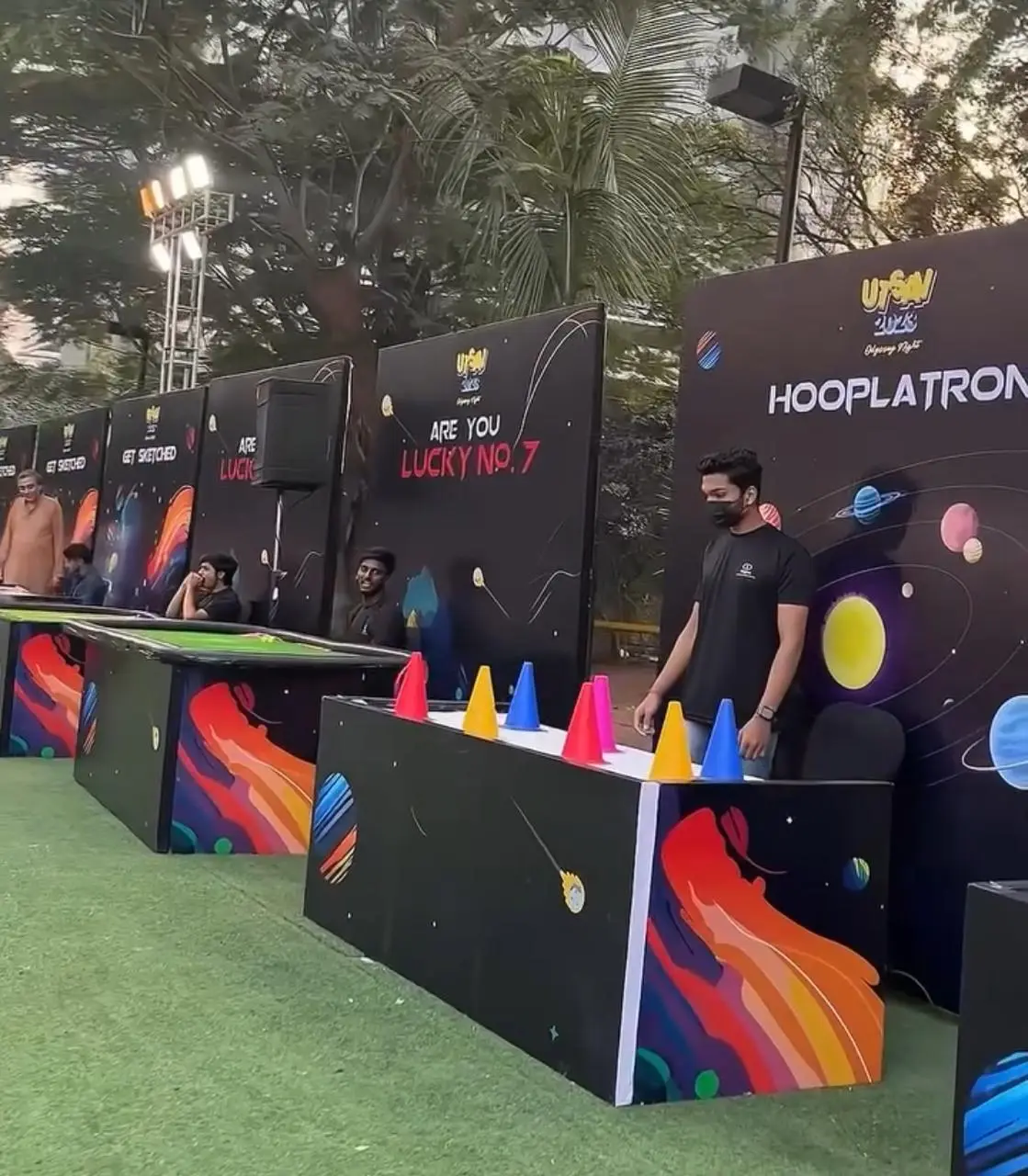
| Game zone | Mall atrium or a wide concourse | Brands that need a crowd and a photograph |
| Live demonstration | Electronics floor, appliance store, hardware counter | Products people do not understand until they see them work |
| Roadshow route | A branded vehicle moving between fixed halts | Covering many small markets in one week |
| Junction and transit presence | Metro exits, bus stands, busy signals | Reach and reminder, with a short offer |
| Society gate drive | Entrance of a residential complex, evenings | Services sold to a household: broadband, water, tuition, cleaning |
| Society festival stall | Ganeshotsav, Navratri or Diwali grounds | Family products, with a contest built in |
| Campus contact programme | College canteens and fest grounds | Phones, apps, banking, courses, quick commerce |
| Tech park kiosk | Office lobby or cafeteria, weekday lunch | Salaried buyers: insurance, cars, travel, wellness |
| Weekly market stall | A recurring open market | Value products and first-time buyers |
| Dealer counter push | Inside a partner’s own shop | Moving stock a dealer already holds |
| Expo booth | A trade fair or industry exhibition | Business buyers and specification-led selling |
Retail and mall examples
Retail formats work because the wallet is already open. The shopper came to buy something, so the distance between trying your product and paying for it is a few steps.
- Sampling counter. Decide the portion size, the hourly quantity and what a shopper receives if they like it. A coupon redeemable in the same store on the same day converts far better than a leaflet.
- Live demonstration. Script a ninety-second run-through and rehearse it. Decide who restocks the demo unit and who cleans it, because a grubby demo piece sells nothing.
- Game zone. Keep one rule, one round and one prize tier. The queue is the advertisement, so the game has to finish quickly enough to keep the queue moving.
- Shelf-adjacent host. A single trained person beside the relevant shelf, answering questions. It looks modest and often out-performs a large counter placed where nobody shops.
For any format inside a mall, the shape of the space decides the design. A Hinjewadi mall atrium with three floors overlooking it wants height and light; a narrow supermarket aisle wants a counter that does not block a trolley.
Street, transit and roadshow examples
Street formats trade depth for reach. People are moving, so the interaction has to survive being had in twenty seconds.
- Roadshow route. A wrapped vehicle with a fold-out stage or counter, halting at planned points. Settle the halt list, the minutes at each halt and the travel time between them before the route is printed.
- Junction presence. Standees, umbrellas and hosts near a signal or a metro exit. Decide what is handed over in the seconds available, and keep it to one thing.
- Mobile service demonstration. A van fitted out so a service can be shown, not described: a health check, a water test, a device repair.
- Market day stall. A stall that follows a weekly market circuit, which lets one set-up serve several neighbourhoods on different days.
Street work has the heaviest approval burden of all the examples here, so choose these formats only if there is genuine time on the calendar.
Residential and community examples
Society formats reach the household rather than the shopper, which suits anything a family buys once and keeps for years.
- Gate drive. A table at the entrance in the evening, when residents return. Best for sign-ups and appointments rather than impulse sales.
- Clubhouse session. A booked slot indoors with seated residents, suited to anything that needs explaining: financial products, health services, home improvement.
- Festival stall. A stall on the society’s own event ground during a festival, where the crowd is already relaxed and families are together.
- Children’s activity corner. Colouring, craft or a small contest, run with the committee’s consent and a parent present for photographs.
All four run through a managing committee, which meets on its own timetable. Approach societies in Baner or anywhere else as a written request with dates, not a phone call the same week.
Campus and workplace examples
Campus and office formats give you a captive audience inside a fixed window: the lunch hour, or the days of a college festival.
- Canteen table. Short, cheerful, offer-led. Works for apps, subscriptions and anything with a student or employee price.
- Fest sponsorship with a stall. You buy visibility on the stage and a physical presence on the ground. Agree what the college controls and what you control, in writing.
- Office lobby kiosk. Booked through the facilities team of a tech park or a single company. Suits insurance, vehicles, travel and health checks.
- Workplace demonstration day. A half-day stall in a cafeteria in Kharadi or a similar office cluster, timed for the week salaries land.
Trade, dealer and channel examples
These face your partners rather than your consumers, and the measure is stock movement rather than trials.
- Counter push. A promoter placed inside a dealer’s shop for a few days, selling your line alongside the dealer’s own staff.
- Dealer board and shop branding. A refresh of signage across a cluster of outlets, planned as one campaign rather than one shop at a time.
- Expo booth. A trade fair presence where the visitor is a buyer with a specification. Our exhibition stall design page covers how those are built.
- Channel meet with a demonstration zone. A gathering of dealers with the product set up to be handled, which sits closer to an event than a promotion.
The order to settle things, and who owns each item
Every example above asks the same twelve questions, and the campaigns that run smoothly are the ones where each question has a name against it. Work down the list in order; each row depends on the ones above it.
| Decision | Settle it before | Who owns it |
|---|---|---|
| The number that will define success | Anything else is discussed | Brand marketing lead |
| Which example you are running, and why | The format is priced | Brand marketing lead |
| The shortlist of locations | Approvals are filed | Agency proposes, brand signs |
| The offer or giveaway | Artwork begins | Brand marketing lead |
| What a person must do to qualify | The counter is designed | Agency drafts, brand approves |
| Data fields and the consent wording | Forms are printed | Brand legal or compliance |
| Stock quantity per location per day | Dispatch is planned | Brand supply chain |
| Artwork and brand approvals | Anything goes to print | Brand design team |
| Daily target per location | The roster is fixed | Agency floor lead |
| Who may speak to press or creators | The first day opens | Brand communications |
| The escalation contact after office hours | The first day opens | Both sides, one name each |
| Who receives the contacts afterwards | The campaign closes | Sales team lead |
Three items people leave until it is too late
Three rows in that table are the ones that come back to bite, and all three are cheap to settle early.
- Consent wording. Contacts collected without a clear line about being called later are contacts your sales team should not use. Fix the wording before the form is printed, not after the data is in a spreadsheet.
- The escalation name. Something will break at eight in the evening on a Saturday. One name on each side, with a phone that is answered, turns a lost day into a lost hour.
- Who receives the contacts. Decide the handover before the campaign starts, because a list with no owner goes stale in a fortnight and the next campaign gets blamed for it.
Choosing the examples that suit your product
Pick two formats, not six. A campaign that does sampling and a society drive properly beats one that does six things thinly across the same calendar, and it gives you a clean comparison for next time.
We plan, set up and run these formats across Pune and further afield: format selection, site approvals, counter fabrication, promoters, daily supervision and an honest closing report. Running since 2013, we have worked with 100+ brands and companies.
If your plan is a moving route with fixed halts, start on our roadshow organisers in Pune page. If it is counters, malls and retail, our BTL activation page is the better fit. Either way, send the product, the area and the dates through the contact page and ask for the costs broken out by location and day.
Frequently asked questions
What are some examples of promotional activities?
Common examples are in-store sampling counters, live product demonstrations, mall game zones, roadshow vans with fixed halts, junction and metro-exit presence, housing society gate drives and festival stalls, campus contact programmes, office lobby kiosks, weekly market stalls, dealer counter pushes and exhibition booths. Each one reaches a different buyer in a different frame of mind.
Which promotional activity works best for a new product?
For a new product, trial beats visibility. Sampling counters and live demonstrations work hardest, because a person who has touched or tasted the product needs far less convincing later. Pair the trial with a coupon redeemable nearby on the same day. Reserve game zones and large displays for products people already understand and simply need reminding about.
How do you choose between a mall activation and a society activation?
Choose by who buys. Malls reach individual shoppers with money already in hand, which suits impulse products and anything with a nearby outlet. Societies reach households and decision-makers at home, which suits services bought once and kept: broadband, insurance, water purifiers, tuition. Malls give you volume in a day, societies give you better-quality conversations.
What should a brand decide before booking a promotional activity?
Settle six things first: the number that defines success, the format, the location shortlist, the offer, what a person must do to qualify, and the consent wording on your data form. Everything else, including artwork and rosters, follows from those. Name one owner per item on your side, so no decision waits for a meeting.
Do promotional activities need permission?
Yes, every location has its own approval process. Malls and large stores issue written activation guidelines, housing societies decide through a managing committee, colleges through the administration, and public roads through the local authority. Anything amplified needs separate sound permission. Start these requests in the first week of planning, because they usually decide your start date.

Vicky founded Plan With YOLO in Pune in 2013 and leads the planning on corporate events, weddings and stage production across Maharashtra.