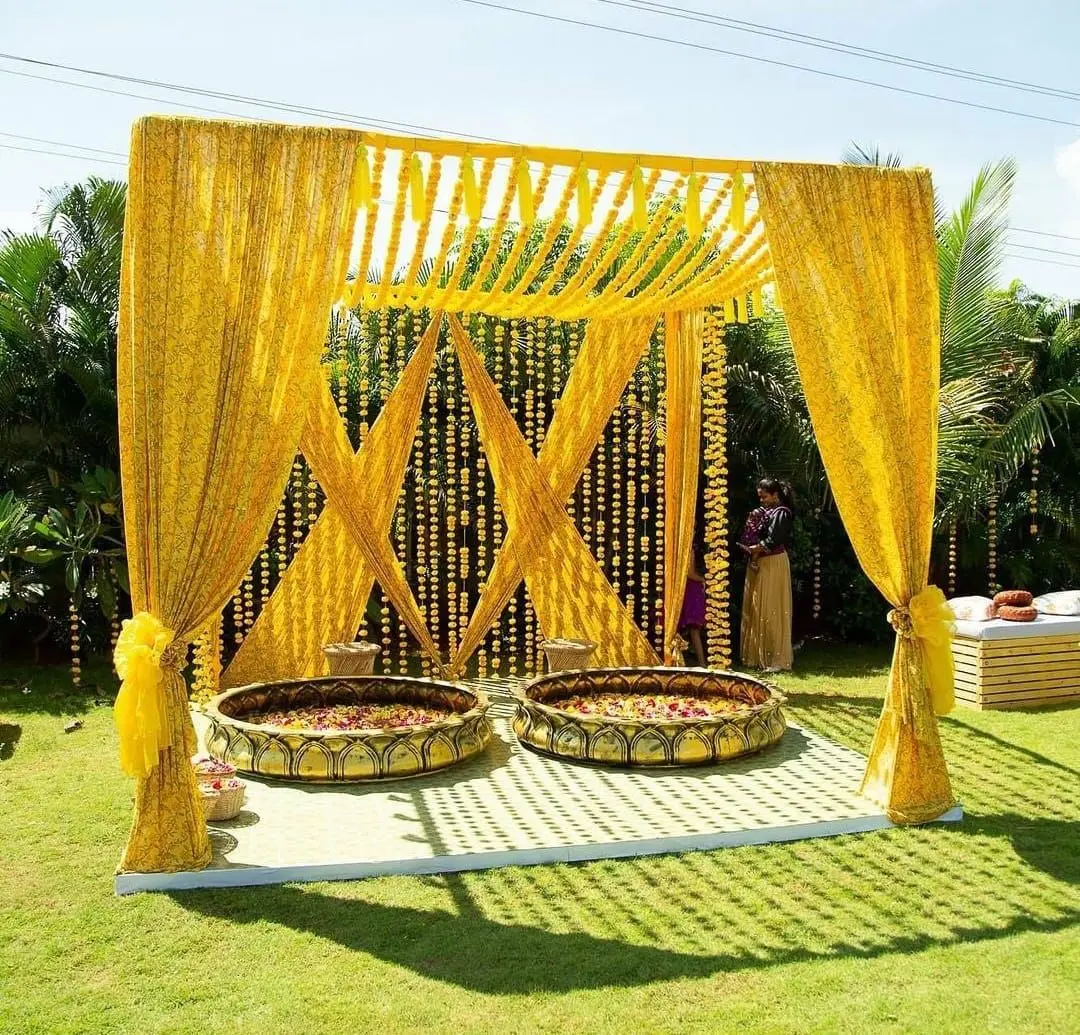

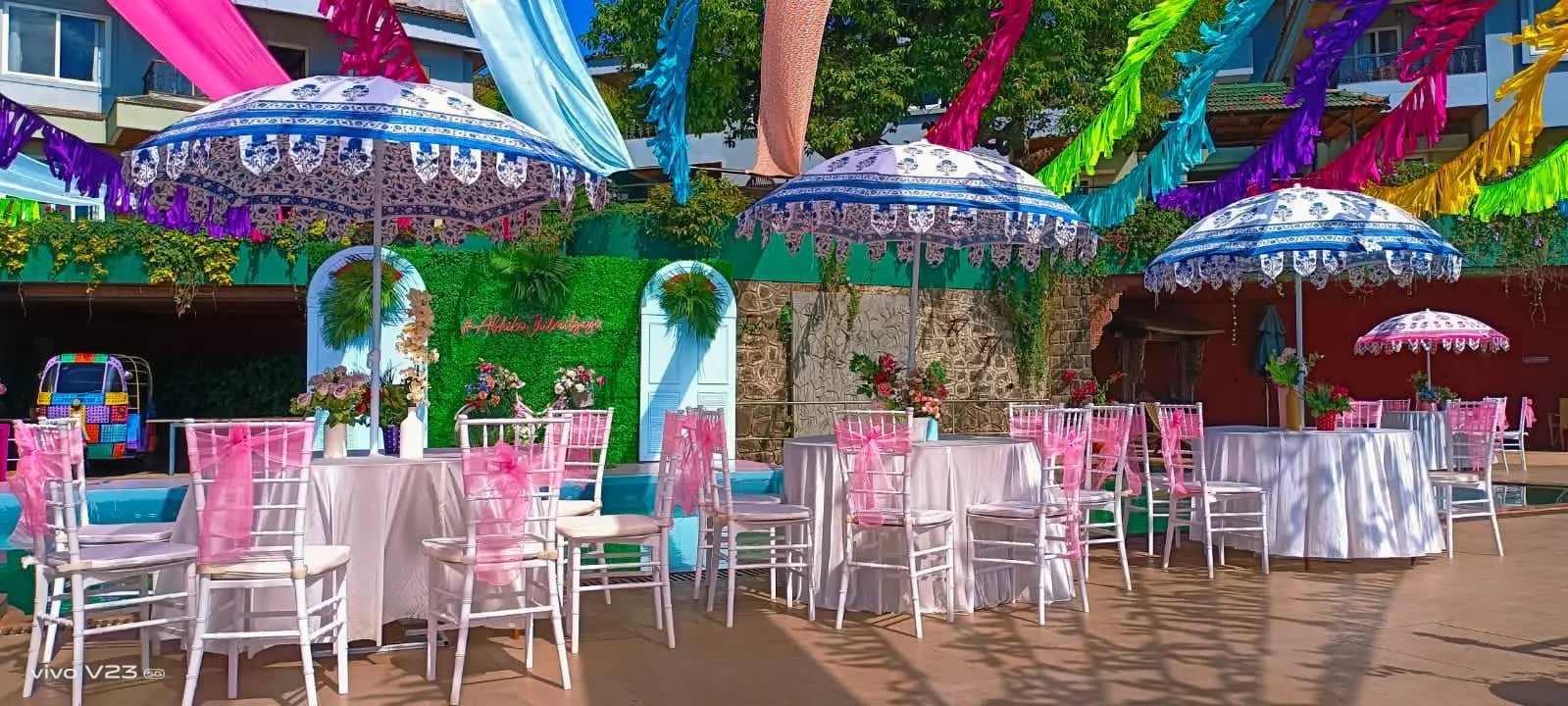
Good mehendi decoration is colourful, relaxed and practical. Use bright umbrellas or fabric canopies overhead, a floral swing for the bride, low seating with cushions and one strong photo corner. Plan comfortable stations for mehendi artists with good light, and add warm fairy lights and lanterns if the function runs into the evening.
The most memorable mehendi setups feel like a colourful afternoon among family, not a formal event. These mehendi decoration ideas cover the pieces that make that happen: canopies and umbrellas overhead, a swing or seat for the bride, low seating where guests can relax for hours, a colour palette that ties it together, and lighting for a mehendi that carries on into the evening. We also look at the part most people forget to plan, which is space for the mehendi artists to work.
Planning this in Pune? See our mehendi and wedding decor in Pune: one team plans and runs it with you, since 2013.
What makes a mehendi setup work
A mehendi function works when guests are comfortable enough to stay for hours. The bride may sit for a long time while her mehendi is applied, and guests queue for theirs, chat, eat and dance in between.
That means the decor has three jobs. It must look joyful in photos, it must give people comfortable places to sit, and it must leave room for the artists, the music and the food. Pretty decor that blocks the walking paths or leaves guests in the sun does not work, however good it looks.
Mehendi decoration ideas for overhead decor
Overhead decor gives a mehendi its character and, outdoors, its shade. These mehendi decoration ideas suit lawns, terraces and courtyards.
- Umbrella canopy. Bright umbrellas hung open or upside down across the seating area. They add colour and filter the sun.
- Fabric canopy. Strips of pink, green, orange and yellow cloth stretched overhead in a criss-cross pattern.
- Kite and tassel strings. Paper kites or woollen tassels hung in rows for a playful, folk feel.
- Bangle and bell strings. Glass bangles or small bells strung together catch the light and make a soft sound in the breeze.
- Hanging flowers. Marigold or rose strings dropping from a frame above the bride’s seat.
- Lanterns. Paper or metal lanterns at different heights, which double as evening lighting.
Floral swings and the bride’s seat
The bride’s seat is the centrepiece of the mehendi, and a swing is the most loved option. It photographs beautifully and gives the bride a spot that feels special.
- A wooden or cane swing wrapped in flowers and fabric, fixed firmly to a strong frame.
- A low floral seat with bolsters, for brides who prefer to stay still while the artist works.
- A small raised platform with cushions, a floral backdrop and space for the artist beside it.
- A frame of flowers or an arch behind the seat for a clear focal point.
A practical note: brides often sit for a long time. Whatever you choose, it must support the back, stay stable and leave room for the artist to sit comfortably at the bride’s side. Test the swing before the day.
Low seating and lounges for guests
Low seating suits a mehendi because it feels relaxed and puts guests at the same level as the artists. It also turns the space into small conversation groups.
- Floor mattresses with bright covers and bolsters.
- Poufs and floor cushions in mixed colours and prints.
- Low wooden tables for snacks, drinks and henna cones.
- Durries or rugs to mark each lounge area.
- A few regular chairs at the edge for elders who cannot sit on the floor.
Group the seating into three or four small lounges rather than one long row. It keeps the energy up and makes it easy for the artists to move between groups.
Colour palettes for a mehendi
A mehendi palette usually starts with green, the colour of henna, and adds two or three bright companions. Pick one palette and repeat it in the drapes, cushions, flowers and props so the setup feels planned.
| Palette | Mood | Where it works |
|---|---|---|
| Green, pink and orange | Classic, festive and bright | Outdoor lawns and daytime functions |
| Green and yellow | Fresh and sunny | Terraces and gardens, and it links to the haldi |
| Pink, fuchsia and gold | Glamorous and warm | Evening mehendis and banquet halls |
| Pastel mint, peach and lilac | Soft and modern | Intimate home functions and small courtyards |
| Multicolour folk prints | Playful and relaxed | Informal family gatherings with music and dance |
Lighting for an evening mehendi
An evening mehendi needs two kinds of light: warm decorative light for the mood, and bright, even light where the artists work. Many setups get the first right and forget the second.
- Fairy lights strung overhead or wrapped around trees and pillars.
- Lanterns and diyas on low tables and along paths.
- Warm spotlights on the bride’s seat and the photo corner.
- Task lights at every artist station, so the designs come out neat. Henna is fine detail work, and dim light slows the artists down.
- Path lights on steps and uneven ground so guests do not trip.
If the function starts in the afternoon and runs past sunset, ask your decorator to fix and test all lights during setup, not after dark.
Planning space for mehendi artists and guests
Artist stations are the most overlooked part of mehendi planning. The number of artists and guests decides how long the queue will be, and the layout decides whether the queue feels like a party or a waiting room.
- Bride’s station. Place the lead artist next to the bride, with a small table, good light and a cushion.
- Guest stations. Set up a low seat for the artist and one for the guest at each station, with a side table for cones and tissues.
- Drying area. Guests with fresh mehendi need a spot to sit without touching anything. A lounge near the stage or dance floor keeps them part of the fun.
- Queue. Keep a simple list so guests know their turn and can enjoy the function meanwhile.
- Hand-washing point. Place it away from the artists, with towels and lemon-sugar mix ready.
Guests with fresh mehendi cannot eat easily. Plan finger food and servers who can bring snacks to them, or a live counter with small portions.
Photo corners and small details
One well-lit photo corner does more for your pictures than decorating every wall. Try one of these:
- A wall of colourful umbrellas or fabric panels with a floral swing.
- A doorway frame with flowers, bangle strings and the couple’s names.
- A rickshaw or cycle prop decorated with flowers and bunting.
- A signboard with a playful line about the couple.
Small details finish the look: brass urlis with floating flowers, bangle stands for guests, mini henna cones as favours and bright potlis with dry fruits or sweets.
Music, dance and the flow of the day
A mehendi often doubles as a small sangeet, so the decor should leave room for music and dance. Plan the layout around three zones: a quiet zone for the artists, a lounge zone for talking and eating, and an open floor near the speakers for dancing.
- Keep the dhol or DJ at the far end from the artist stations, so the artists can hear each other and concentrate.
- Leave a clear, flat patch of floor for dancing, marked with a rug or a ring of lanterns.
- Place the bride’s swing where she can watch the dancing while her mehendi is applied.
- Put the food counters along one side, not in the middle of the walking path.
Share a simple timeline with the decorator, the artists and the music team, so everyone knows when the bride sits down, when the performances start and when dinner opens.
Planning a mehendi in Pune
Pune’s mild evenings through the winter months make outdoor mehendis very popular. For a daytime function in the warmer months, plan canopies and fans. In the monsoon, keep a covered backup space ready.
If your haldi and mehendi are at the same venue, ask your decorator to reuse the base structure and change the drapes, flowers and props between functions. A family courtyard in Koregaon Park and a society lawn near Wakad need very different layouts, so share photos and measurements of the space early. Our wedding theme ideas can help you choose a style that runs from the mehendi through to the reception, and our wedding planners in Pune can take the whole schedule off your hands.
Plan your mehendi decor with us
Plan With YOLO has been planning and setting up mehendi, haldi and wedding decor since 2013, with one team and one point of contact from design to pack-down. See our wedding setups on the wedding decorators in Pune page, or share your date and venue photos and we will suggest a mehendi setup that fits your space and your style.
Frequently asked questions
What is the theme colour for a mehendi function?
Green is the traditional base colour for a mehendi function, because it reflects the henna itself. It is usually paired with bright pink, orange or yellow for a festive look. For an evening mehendi, pink and gold feel warm and rich, while pastel mint, peach and lilac suit a softer, modern style at smaller home functions.
How do I decorate for a mehendi at home?
Decorate for a mehendi at home with a colourful fabric or umbrella canopy, floor seating with cushions and bolsters, a floral seat or swing for the bride and one photo corner. Move large furniture out to free up space, set up artist stations near good light, and add fairy lights and lanterns if the function continues after sunset.
How much space do mehendi artists need?
Each mehendi artist needs a low seat, a seat for the guest facing them and a small side table for cones and tissues, with good light and room to move around. Keep stations away from the dance floor and food counters so the designs are not disturbed. Also leave a nearby lounge where guests can sit while their mehendi dries.
What lighting is needed for an evening mehendi?
An evening mehendi needs warm decorative lighting and bright task lighting. Use fairy lights, lanterns and diyas for the mood, warm spotlights for the bride's seat and photo corner, and bright lamps at every artist station so the designs come out neat. Add path lights on steps and uneven ground, and test everything before sunset.

Vicky founded Plan With YOLO in Pune in 2013 and leads the planning on corporate events, weddings and stage production across Maharashtra.