
Good haldi decoration uses yellow and orange as the base, with marigold strings, bright drapes, a low seat for the bride or groom and one strong photo corner. Keep materials washable, protect the floor, plan shade or cover for the weather and leave open space around the couple so family can apply haldi comfortably.
These haldi decoration ideas are built around one fact that many people forget: haldi is messy. Turmeric paste will land on the floor, the drapes, the seat and at least one cousin’s white kurta. The prettiest haldi setups are the ones that look bright and joyful in photos while being ready for that mess. Below you will find ideas for backdrops, flowers, seating and photo corners, how to adapt them for a home, terrace or lawn, and what to plan with your decorator before the day.
Planning this in Pune? See our wedding decorators in Pune: one team plans and runs it with you, since 2013.
The look of a haldi ceremony
A haldi setup works when it looks warm, bright and informal. Unlike the wedding mandap, it does not need to be grand. It needs to feel like a family celebration in full sunshine.
Yellow is the natural base, since it matches the turmeric and the outfits. Orange, green and a touch of pink or white keep it from looking flat. Natural textures such as jute, cane, banana leaves and brass work better than shiny fabrics, and they photograph well in daylight.
Haldi decoration ideas for the backdrop
The backdrop is where every photo will be taken, so spend your effort there first. These haldi decoration ideas suit different spaces and budgets.
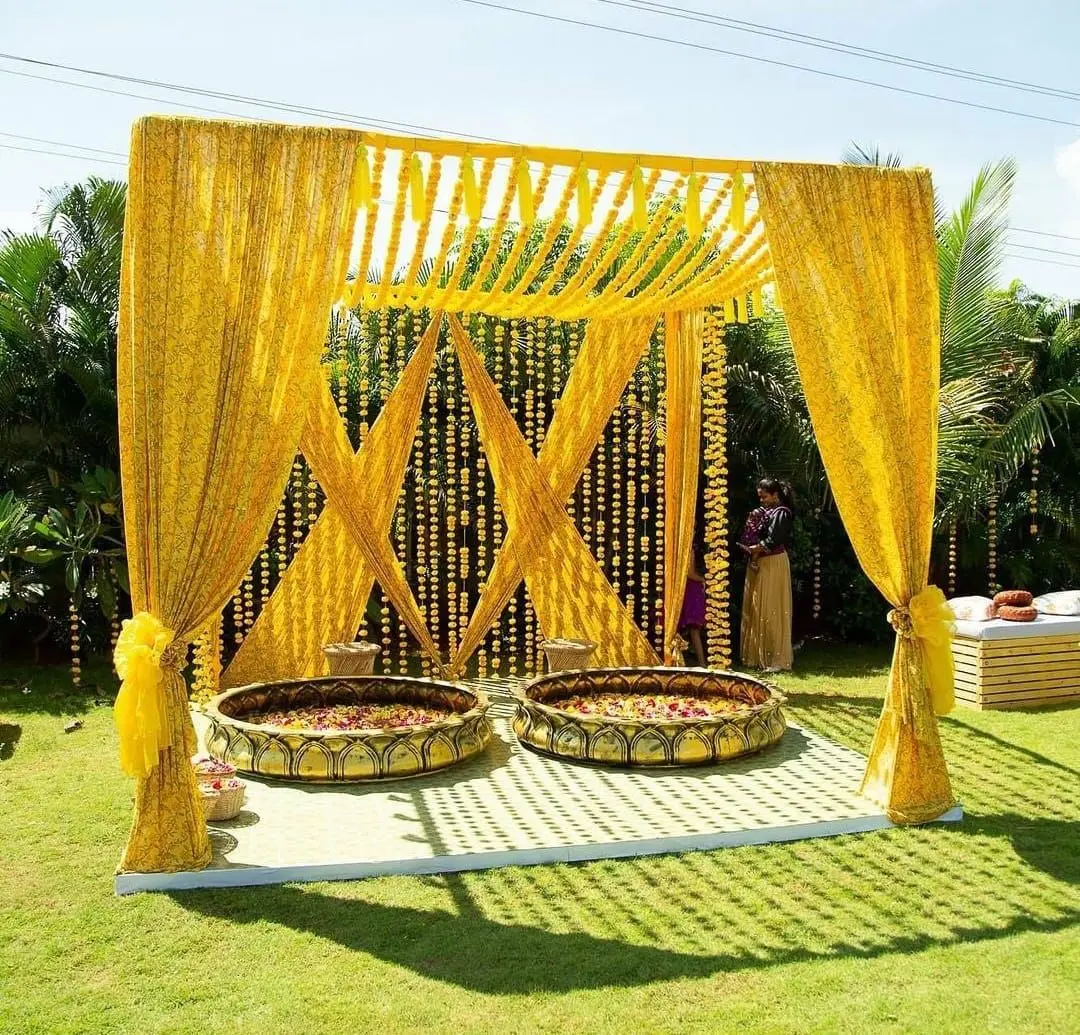
- Marigold curtain. Long strings of yellow and orange marigolds hung close together make the classic haldi wall. Add a few rows of mango leaves at the top for a traditional touch.
- Yellow drape wall. Layers of yellow and orange fabric gathered at the top and pulled to the sides. It is quick to set up and easy to wash.
- Green wall with fruit. A leafy panel dotted with oranges, lemons or marigolds feels fresh and modern.
- Umbrella canopy. Bright umbrellas hung upside down above the seating give colour and a bit of shade.
- Floral frame. A round or arched frame covered in flowers, placed behind the seat, works well in smaller rooms.
- Name board. A wooden or cane signboard with the couple’s names or a playful line makes a personal focal point.
Flowers and natural elements
Marigold is the heart of haldi decor because it is bright, easy to find and holds up well in heat. Use it generously, but mix in other elements so the setup does not look like a temple entrance.
- Marigold strings on pillars, doors and railings.
- Loose petals in a brass urli with floating diyas.
- Banana leaves or mango leaves as a green border.
- Jute and cane baskets holding flowers or fruit.
- Small pots of yellow chrysanthemums along the aisle.
Plan for flowers to be delivered on the morning of the ceremony so they stay fresh through the day.
Seating and the couple’s seat
The couple’s seat is the working centre of a haldi. Family members will crowd around it, so it needs to be low, stable, easy to clean and reachable from three sides.
- A low wooden chowki or a cane chair covered with a washable cloth.
- A small raised platform so the couple is visible in photos without standing.
- Floor cushions and low stools around the seat for elders who want to sit close.
- Chairs set a little further back for guests who prefer to watch.
- A clear walking path so people can come and go without stepping on each other.
Put a large tarpaulin or old sheet under the seat area, hidden under a durrie or mat. It saves the floor and the security deposit.
Photo booths and fun corners
A haldi photo corner gives guests somewhere to take pictures away from the busy seat. Keep it simple and close to good light.
- A green wall with two chairs and hanging oranges or lemons.
- A frame with a playful sign for friends to pose with.
- A swing decorated with marigolds and yellow ribbons.
- Props such as floral sunglasses, turmeric-coloured dupattas and cheeky signboards.
- A small area for a flower shower, with baskets of petals ready.
Home, terrace or lawn: choosing the setup
The right haldi setup depends on where you hold it. Each space has its own strengths and its own risks.
| Setting | What works well | What to watch out for |
|---|---|---|
| Home living room or courtyard | Drape walls, floral frames, floor seating | Floor protection, furniture moved out, limited space |
| Society terrace or open area | Umbrella canopy, marigold curtains, a photo corner | Sun, wind, society rules on noise and water use |
| Garden or lawn | Large backdrops, swings, separate photo zones | Uneven ground, insects, rain cover, power points |
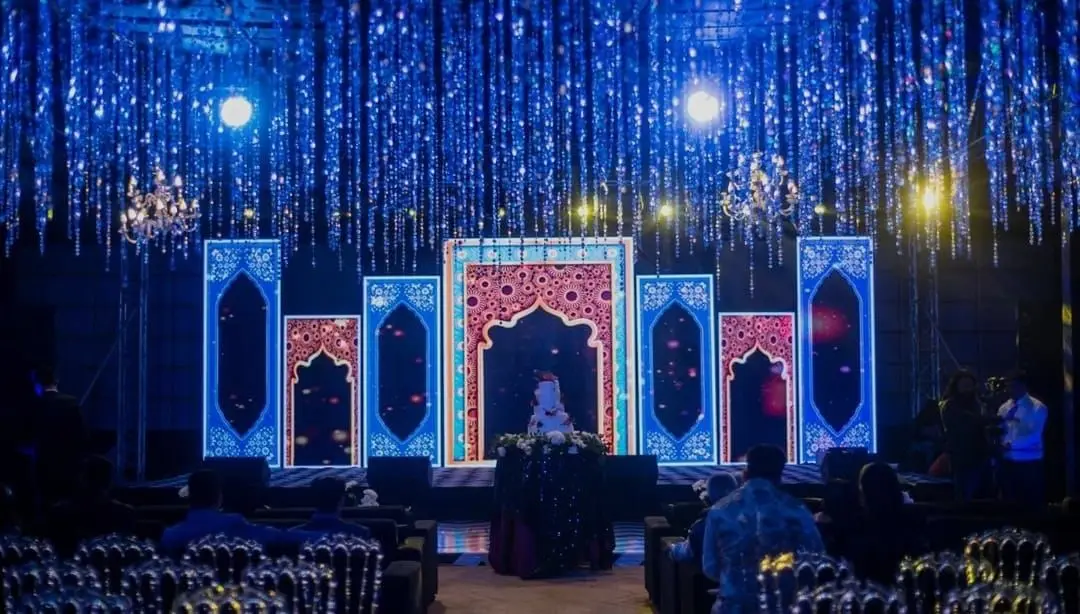
| Banquet hall | Full stage backdrop, raised couple seat | Hall rules on turmeric, water and cleaning charges |
A small haldi at a family home in Aundh can be set up in a few hours with drapes and marigolds. A larger lawn haldi on the outskirts of the city may need a tent, a generator and a full morning of setup, so plan the timings with your decorator.
Weather tips for a haldi in Pune
Pune weather changes a lot through the year, and an outdoor haldi needs to be planned for the season. Most haldis happen in the morning or early afternoon, which is exactly when the sun is strongest.
- Summer months. Mornings are pleasant but afternoons get hot. Start early, add shade over the seat and keep water and fans ready.
- Monsoon. Rain can arrive with little warning. Book a waterproof canopy or a covered backup space, and avoid fabrics that sag when wet.
- Winter. Clear skies and cool mornings make this the easiest season. The water and turmeric can feel cold, so keep warm water handy for the couple.
- Wind. Open terraces can be breezy. Tie down light drapes and avoid tall, top-heavy decor.
What to plan with your decorator
A short planning call with your decorator avoids most haldi problems. Go through these points together:
- The exact space, with photos and measurements, and where power points are.
- Setup and removal timings, especially if the same space hosts another function later.
- Floor protection and who handles the cleaning afterwards.
- Which elements can be reused for mehendi or sangeet decor.
- A rain or heat backup plan for outdoor spaces.
- Where the dhol, music and photographer will stand.
- A washing area with buckets, mugs and towels near the seat.
If you are planning the whole run of functions, our wedding planning checklist puts the haldi in its place on the timeline, and our wedding theme ideas help you connect it to the rest of the wedding.
Keeping haldi decor simple and affordable
A haldi does not need a large decor budget to look good. Because the function is short, informal and usually for close family, a few well-placed pieces do more than a full stage.
- Spend on the backdrop and seat. These appear in almost every photo. The rest of the space can stay plain.
- Choose fabric over fresh flowers for large areas. Drapes cover more wall for the money and can be washed and reused.
- Use marigolds where people look. Frame the seat and the entrance, not the far corners.
- Borrow from the home. Brass plates, copper pots, family sarees and potted plants make charming decor and carry meaning.
- Share the base with the mehendi. If both happen at the same place, keep the frame and switch the colours from yellow to green and pink.
If the bride’s and groom’s families hold separate haldis on the same morning, a matching palette and a common signboard design make both sets of photos feel connected.
Small touches that make a big difference
- Keep old towels and wet wipes in baskets near the seat.
- Give guests a small bowl of turmeric paste each, rather than one shared bowl.
- Set out a juice or buttermilk counter, which suits a hot morning.
- Place a dustbin and a water point out of sight but within reach.
- Ask the photographer to shoot the setup before guests arrive.
Get your haldi decor planned
Plan With YOLO has designed and set up haldi, mehendi and wedding decor across Pune since 2013, from simple home setups to full outdoor lawns. We plan it, set it up and clear it away, with one point of contact for the whole job. See our work on the wedding decorators in Pune page, or send us photos of your space and we will suggest a setup that suits it.
Frequently asked questions
Which colours are used for haldi decoration?
Yellow and orange are the main colours for haldi decoration, because they match the turmeric and the traditional outfits. Green from leaves and plants balances the warm tones, while small touches of white or pink add freshness. Natural materials such as marigolds, jute, cane and brass fit the look far better than shiny fabrics or metallic balloons.
How can I decorate for a haldi ceremony at home?
Decorate for a haldi at home with a marigold curtain or yellow drape wall behind a low chowki, some floor cushions and a small photo corner. Move furniture out, protect the floor with a sheet under a durrie, and keep towels and water nearby. Most home haldi setups can be done in a few hours on the morning of the ceremony.
How do I protect the venue from haldi stains?
Protect the venue from haldi stains by laying a tarpaulin or old sheet under the seating area and covering it with a washable mat. Use washable covers on the couple's seat, keep turmeric bowls on trays, and place towels and water within reach. Check the venue's rules and cleaning charges beforehand, since some halls restrict turmeric and water.
What if it rains during an outdoor haldi?
If rain is possible, plan a waterproof canopy over the seating and a covered backup space before the day. In Pune, the monsoon months are the riskiest for an outdoor haldi. Avoid fabrics that sag when wet, keep electrical points covered and away from water, and agree with your decorator on the time by which you will decide to shift indoors.

Vicky founded Plan With YOLO in Pune in 2013 and leads the planning on corporate events, weddings and stage production across Maharashtra.