
Engagement ceremony planning starts with three decisions: the guest count, the venue type and the date. Home suits small family gatherings, a banquet suits mid-sized groups and any season, and a lawn suits larger evening functions. Then plan the stage backdrop, the ring entry, a short programme and dinner, and give one person charge of the timeline.
An engagement, or ring ceremony, is often the first time both families celebrate together in public. It is smaller than the wedding, but it sets the tone for everything that follows. Good engagement ceremony planning keeps it warm, personal and on time. This guide covers how to choose between home, a banquet and a lawn, decor and backdrop ideas, ring tray and entry ideas, a simple programme flow and a checklist you can work through with your family.
Planning this in Pune? See our engagement decoration in Pune: one team plans and runs it with you, since 2013.
Engagement ceremony planning: decide these three things first
Every other choice depends on the guest count, the venue type and the date, so settle these before you look at decor. Once these are fixed, the rest of the planning becomes a list of small, clear decisions.
- Guest count. Is this close family only, or both families plus friends and colleagues? The number decides the venue, the seating and the catering.
- Venue type. Home, banquet hall or open lawn. Each has a different mood, a different set-up time and different rules.
- Date and time. Families often consult an auspicious date and muhurat. Once you have it, check that the venue and your decorator are free.
Also agree early on what kind of ceremony this is. Some families keep it religious, with a puja and exchange of gifts between the families. Others prefer a party-style evening with a ring exchange on stage. Many do a little of both.
Home, banquet or lawn: which suits your engagement?
The right venue depends on how many people you are inviting and how much set-up you want to manage. This comparison helps you decide.
| Factor | At home | Banquet hall | Open lawn |
|---|---|---|---|
| Best for | Close family, small gatherings | Mid-sized guest lists, any season | Larger evening functions |
| Mood | Intimate and personal | Polished and comfortable | Festive and open |
| Weather risk | Low | None | Needs a rain plan in the monsoon |
| Decor needed | Backdrop, entrance, a few floral touches | Stage, entrance, table centrepieces | Stage, lighting, entry path, seating zones |
| Catering | Home-cooked or a caterer with a small counter | Usually the venue’s own menu | Caterer with a full buffet set-up |
| Sound rules | Consider neighbours and society rules | Fewer restrictions indoors | Check the cut-off time for music |
| Set-up time | Morning of the event | A few hours before | Often most of the day |
Engagement at home
A home engagement feels the most personal. It works well for a flat or bungalow where the living room or terrace can hold a small backdrop and a seating area. If you live in a housing society in Kothrud or Aundh, tell the society office in advance, especially if you plan music or use the common area.
Engagement in a banquet hall
A banquet is the easiest option for a mid-sized guest list. It is weatherproof, has air conditioning, parking and a kitchen, and the staff know the drill. Choose a hall with enough ceiling height for a proper stage backdrop and a separate area for dinner.
Engagement on a lawn
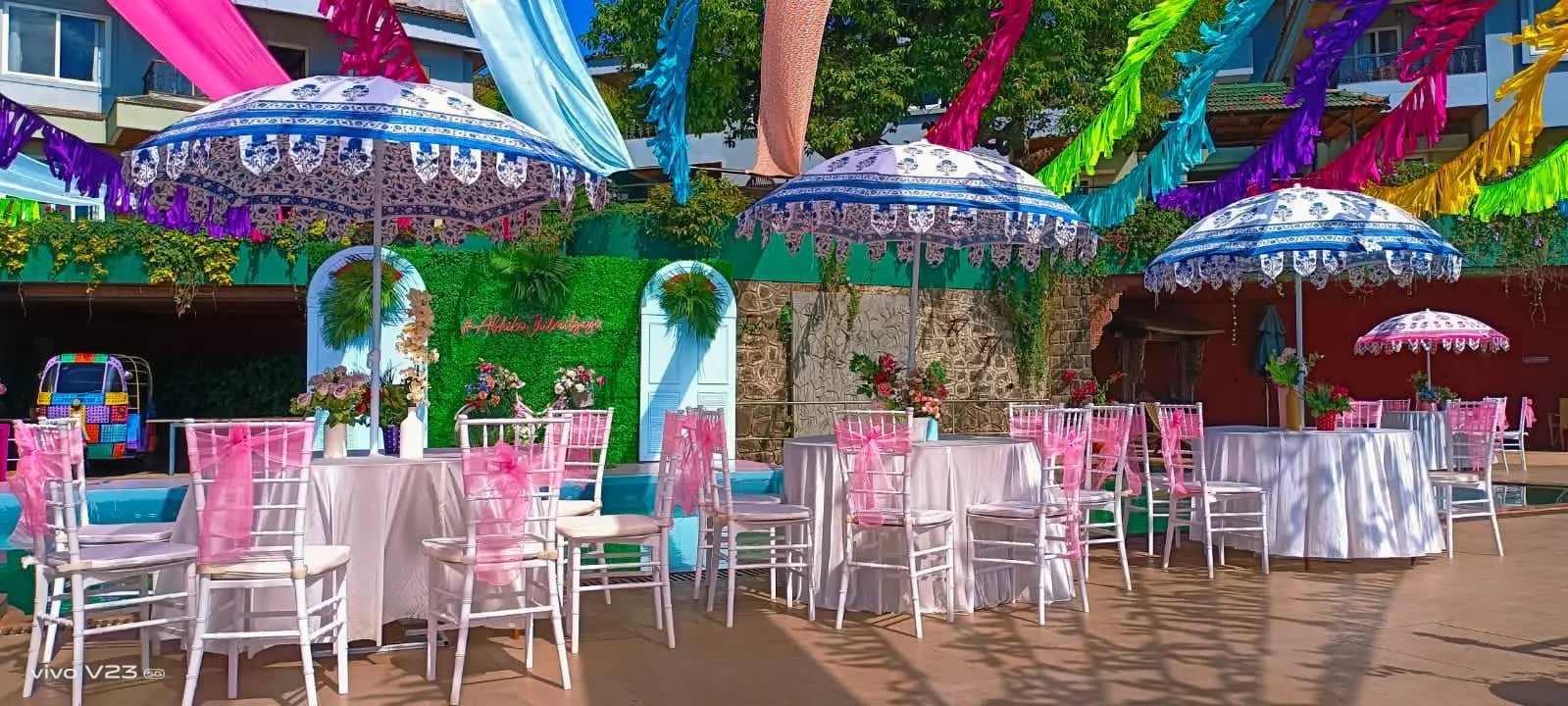
A lawn suits an evening function with a larger guest list. It gives you room for an entry path, a stage, a lounge area and a buffet. In the monsoon, ask for a covered option or a tent. Lawns around Baner or Wagholi fill up in the wedding season, so book early.
Decor and stage backdrop ideas
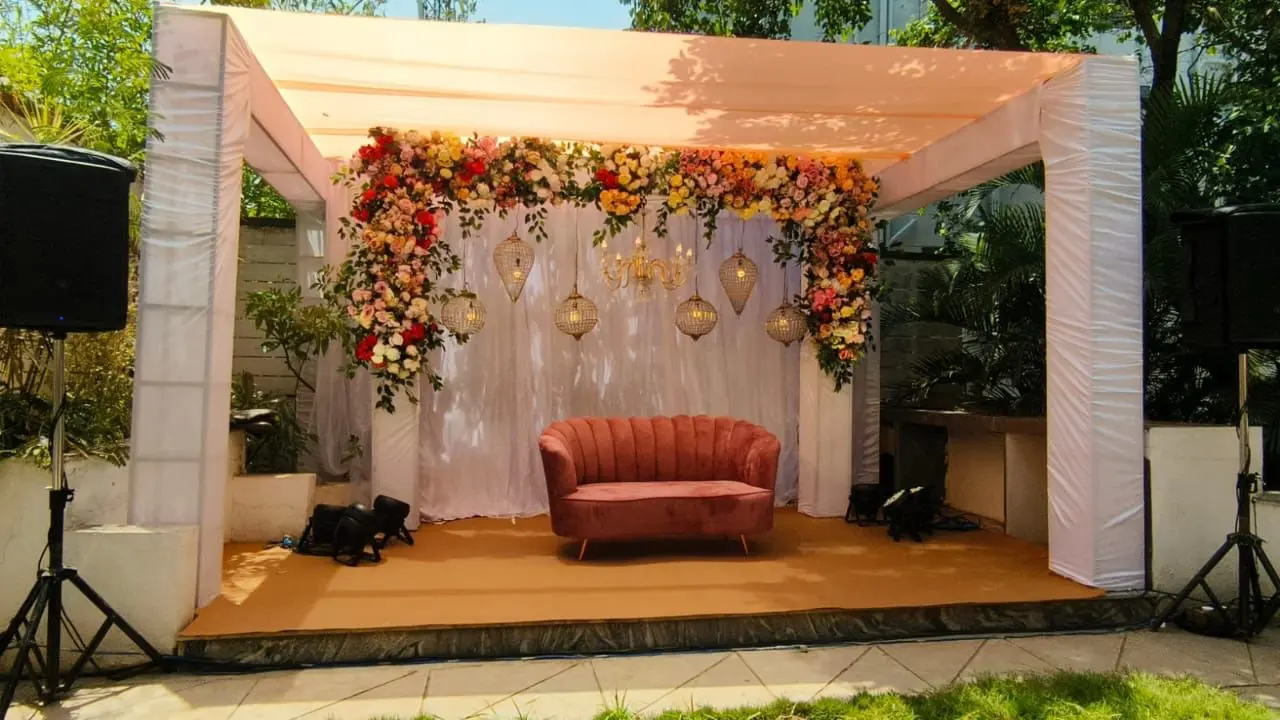
The stage backdrop is the one decor item that appears in almost every photo, so spend your decor effort there first. The couple will stand in front of it for the ring exchange, the family photos and many selfies.
- Floral wall. A full wall of fresh or artificial flowers in soft pinks, whites or peach, with a sofa or two chairs in front.
- Arch with drapes. A circular or rectangular arch with flowing fabric and a few floral clusters. Simple and elegant.
- Name board. The couple’s initials or first names in a neon sign or a laser-cut board on the backdrop.
- Greenery and lights. A green leaf wall with warm fairy lights suits a garden or terrace setting.
- Traditional touches. Marigold strings, brass urlis and diyas for families who prefer a traditional feel.
Keep the colour palette to two main colours and one accent, and carry it into the entrance, the ring tray and the table flowers. Our engagement decoration page shows backdrop styles we set up for ring ceremonies.
Ring tray and ring entry ideas
The ring exchange is the moment everyone watches, so plan how the rings reach the stage. A little thought here gives you the best photos of the evening.
Ring tray ideas
- A velvet box on a small decorated plate with fresh petals.
- A glass cloche with flowers and the two rings on a small cushion.
- A tray with the couple’s initials and a thin ribbon holding each ring.
- A mini brass thali for families who like a traditional touch.
Ring entry ideas
- Sibling entry. A younger sibling or cousin carries the tray down the aisle to a chosen song.
- Kids’ entry. Small nieces and nephews walk in together, one holding the tray.
- Grandparents’ blessing. The grandparents bring the rings to the stage and bless the couple.
- Spotlight moment. The lights dim, a single spotlight follows the tray, and the music changes as it reaches the stage.
Whatever you choose, make sure the photographer knows the plan. Tell them where the tray will enter and where the couple will stand, so they are in position before it happens.
A simple programme flow
A short, clear programme keeps the engagement warm without dragging. Most ring ceremonies need only a few planned segments.
- Guest arrival. Welcome drinks, a photo booth and time for the two families to meet.
- Couple’s entry. Together or separately, with their own track.
- Puja or blessings. If the family wants a short religious ritual, keep it before the ring exchange.
- Exchange of gifts between the families. Keep it on stage so every guest can see.
- Ring entry and ring exchange. The main moment, with the lights and music planned.
- Short speeches or a toast. One from each side, a few minutes each.
- Couple’s dance or a family performance. Optional, and kept short.
- Family photos on stage. Group by family so it goes quickly.
- Dinner and music.
Photos on stage take longer than anyone expects. Ask one relative from each side to call the next group up, so the couple is not stuck on stage for an hour.
Engagement planning checklist
Work through this checklist from the date backwards. Most families can plan a ring ceremony comfortably in four to eight weeks.
| When | Task | Who owns it |
|---|---|---|
| Six to eight weeks before | Fix the date, guest count and venue type | Both families |
| Six weeks before | Book the venue and the decorator | Family or planner |
| Five weeks before | Choose the backdrop theme and colour palette | Couple |
| Four weeks before | Book the photographer, caterer and sound | Family or planner |
| Four weeks before | Send invitations | Both families |
| Three weeks before | Finalise the outfits, rings and ring tray | Couple |
| Two weeks before | Fix the programme flow and song list | Couple and planner |
| One week before | Confirm final numbers with the caterer | Family |
| Two days before | Share the timeline with everyone involved | Planner |
| On the day | Keep the rings with one trusted person | Named relative |
Common mistakes to avoid
- Choosing decor before fixing the guest count.
- No rain plan for an outdoor engagement in the monsoon.
- Leaving the rings with the couple on the day instead of one named person.
- Too many speeches.
- Forgetting parking for guests, especially at home engagements.
- No one in charge of the timeline.
Plan your engagement with us
An engagement should feel easy for the couple and both families. Plan With YOLO has been decorating and running celebrations in Pune since 2013, from the stage backdrop and ring entry to sound and the programme flow, with one team and one point of contact. See the styles we set up on our engagement decoration in Pune page. If the wedding is next, our wedding planning team can carry the same look through. Or simply tell us your date and guest count and we will suggest a venue type and backdrop that fit.
Frequently asked questions
How early should we start planning an engagement ceremony?
Start planning an engagement ceremony about six to eight weeks before the date. That gives you time to book a venue, a decorator, a photographer and a caterer, and to send invitations. A small home engagement can come together in three or four weeks, but lawns and banquets in the wedding season get booked quickly, so plan earlier.
Is it better to have an engagement at home or in a banquet hall?
It depends on your guest count. Home suits a small gathering of close family and feels the most personal. A banquet hall suits a larger guest list, handles weather and parking, and usually includes catering. If you invite both families plus friends and colleagues, a banquet or lawn is more comfortable for everyone.
What is the order of events at an engagement ceremony?
A typical engagement runs in this order: guest arrival, the couple's entry, a short puja or blessings if the family wants one, exchange of gifts between the families, the ring entry and ring exchange, short speeches, an optional performance, family photos on stage, then dinner and music. Keep each segment short so the evening flows.
What decor is essential for an engagement?
The essential engagement decor is a stage backdrop, a welcoming entrance and a decorated ring tray. The backdrop matters most because it appears in almost every photo. Add seating for the couple, some table flowers and good lighting on the stage. Keep to two main colours and one accent so everything looks connected.

Vicky founded Plan With YOLO in Pune in 2013 and leads the planning on corporate events, weddings and stage production across Maharashtra.