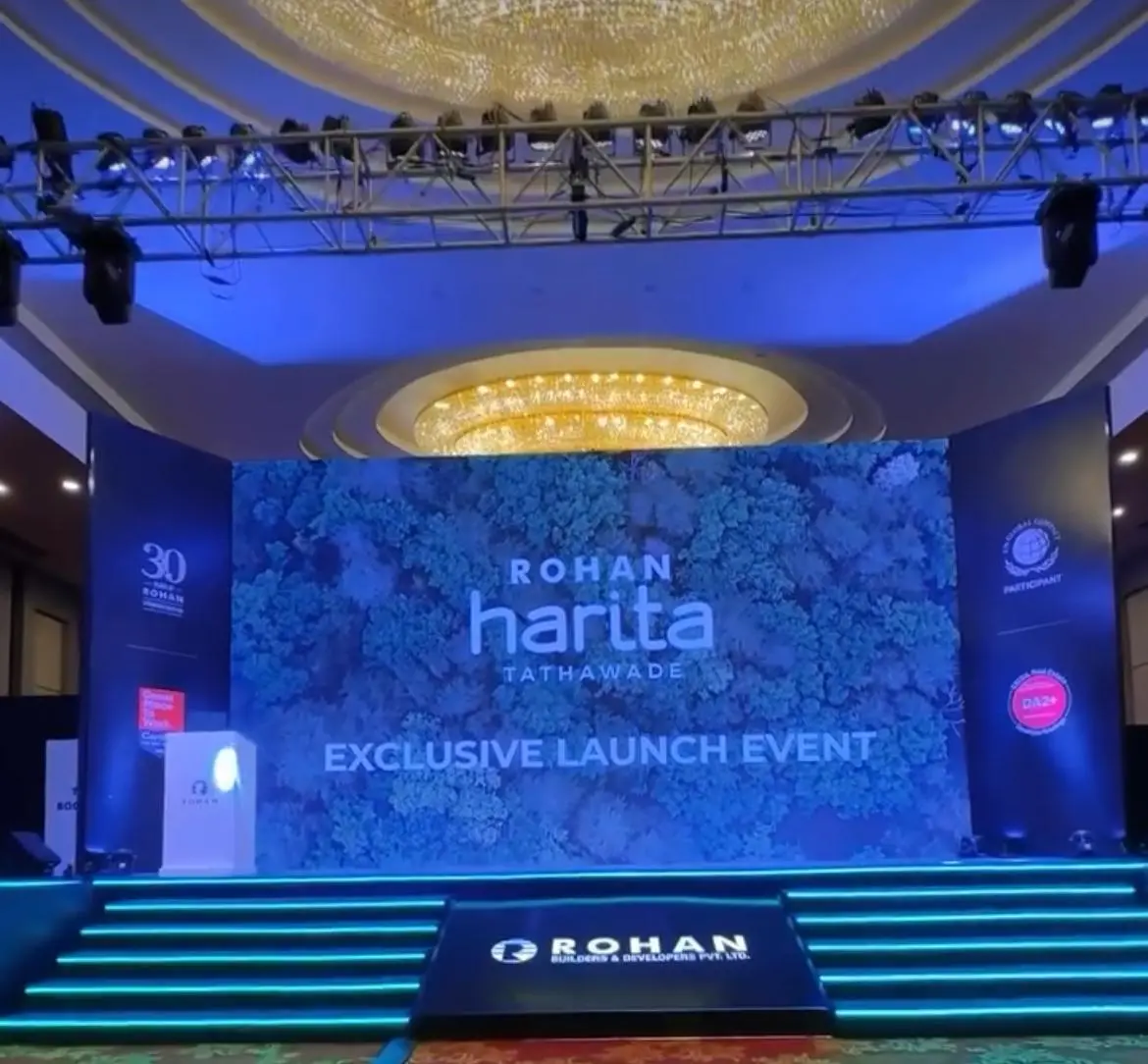
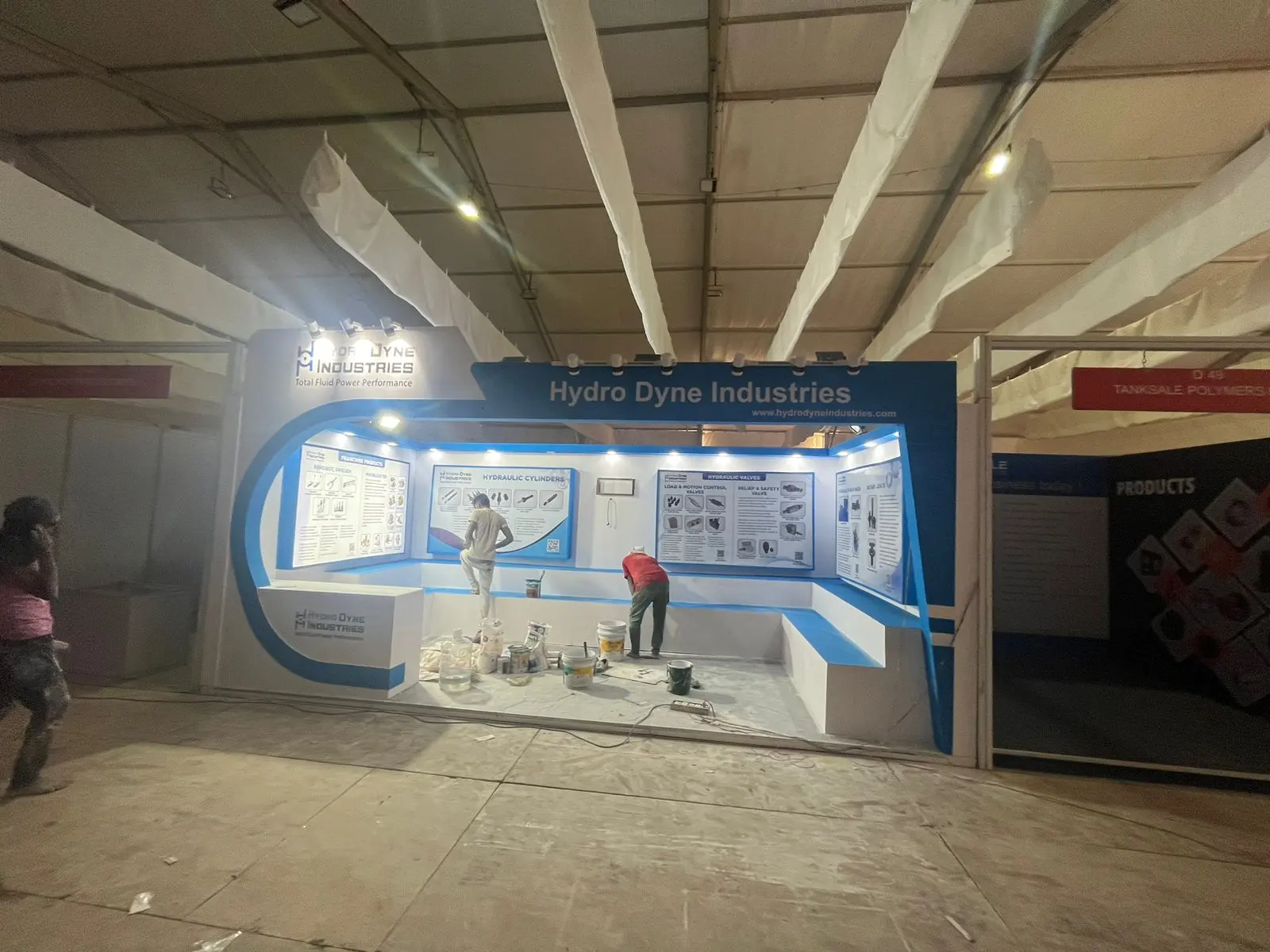
Good exhibition stall design ideas start with the stall type, then build around one clear message. Open the stall to the busiest aisle, keep the headline readable from a distance, light the product rather than the walls, give demos their own zone, plan a simple lead-capture step and work backwards from the organiser's deadlines.
A trade show visitor walks past hundreds of stalls in a day and decides in a few seconds which ones to step into. Your stall has to earn that step. This guide collects practical exhibition stall design ideas for trade shows, industrial expos and consumer exhibitions: how each stall type changes the design, how to plan the layout, lighting and graphics, where demos go, how to capture leads and how to work to the organiser’s deadlines.
Planning this in Pune? See our exhibition stall design and fabrication: one team plans and runs it with you, since 2013.
Know your stall type first
The stall type decides what you can build, how many sides are open and how much design freedom you have. Check your allotment letter before you brief anyone.
| Stall type | What you get | Open sides | Design approach |
|---|---|---|---|
| Shell scheme | Organiser-built panels, fascia name board, basic lights, a table and chairs | Usually one | Branded panel wraps, a counter, product shelves and good extra lighting |
| Raw space | Bare floor only, you build everything | One to four, depending on position | Custom structure, flooring, ceiling elements, full lighting plan |
| Corner stall | Floor space on two aisles | Two | Open both faces, place the brand wall on the closed sides |
| Peninsula stall | Floor space open on three sides | Three | Central back wall with storage behind, demos facing the main aisle |
| Island stall | A full block with aisles on all four sides | Four | Centre tower or hanging sign, zones on each side, no blind back wall |
| Double-decker | Raw space with a mezzanine, where the organiser allows it | Varies | Meetings upstairs, product and demos below, needs structural approval |
A shell scheme is quick and budget-friendly but looks like its neighbours unless you add graphics and lighting. Raw space gives you full control but needs design approvals, more build time and more planning.
Exhibition stall design ideas for layout
The layout should pull people in from the aisle, not park them at a counter on the edge. Think of the stall in three zones.
- Attract zone at the aisle: a hero product, a moving screen or a live demo that people can see without stepping in.
- Engage zone in the middle: product displays, touch screens and conversation spots where your team can talk to visitors.
- Close zone at the back: a small meeting table or a closed room for serious buyers, with storage hidden behind it.
Layout tips that work
- Do not put a long counter across the front. It becomes a wall.
- Keep the floor open enough for groups to walk in and turn around.
- Face the demo towards the busiest aisle. Check the hall plan for entry gates and food courts to see where the traffic comes from.
- Plan storage for brochures, bags and samples. Clutter on display shelves looks careless.
- Keep a charging point and water for your own team. A tired team loses leads.
Graphics that read in three seconds
Stall graphics should say who you are and what you offer before a visitor finishes walking past. Save the detail for brochures and conversations.
- One headline: a short line about the benefit, placed high enough to be seen over people’s heads.
- Logo at the top: on the fascia or a hanging sign so the stall can be found from across the hall.
- Few words at eye level: three or four key points, large type, strong contrast.
- Real product photos: better than stock images. Show the product in use.
- Brand colours used boldly: one or two strong colours carry further than a busy design.
Keep the stall graphics consistent with your invite mailers, social posts and team uniforms. Our event branding team can design all of these as one set.
Lighting the stall
Lighting is what separates a stall that looks premium from one that looks flat. Halls are often dim or lit unevenly, so plan your own.
- Light the product and the headline, not empty walls.
- Use warm white for lifestyle and food products, neutral or cool white for technical and industrial products.
- Backlit fabric panels give a clean, even glow and read well from a distance.
- LED strips under shelves and counters lift the display.
- Check the organiser’s power allotment early. Extra load usually has to be ordered in advance.
Demo zones and experiences
A live demo is the strongest reason for a visitor to stop. Plan it like a small show.
- Short and repeatable: a demo of a few minutes that runs on a timetable, announced on a small board.
- Visible from the aisle: raise the demo table or use a screen that shows a close-up.
- Hands-on where possible: let visitors touch, try or taste.
- Interactive screens: product configurators, catalogues or short videos on touch screens.
- Games and quizzes: a spin-the-wheel or a quick quiz draws a crowd at consumer shows. Link the prize to your product.
If you are launching something new at the show, our product launch ideas guide has formats that fit inside a stall.
Stall ideas by industry
The right stall design depends on what you sell and who walks the aisles. A few starting points by industry:
- Industrial and engineering: show the actual machine or a cut-section model, add a screen with a slow-motion process video and keep a quiet meeting corner for technical buyers.
- Technology and software: many visitors from IT hubs such as Hinjewadi expect to try things. Set up touch screens and short guided demos rather than posters of features.
- Real estate: a scale model under good light, a walkthrough video and a comfortable seating area for families to talk.
- Food and FMCG: sampling counters with hygiene clearly visible, bright packaging walls and a quick contest to collect contacts.
- Education and training: counselling desks, student success stories on screens and a simple enquiry form.
- Travel and lifestyle: a photo spot that fits the destination or lifestyle you sell, plus a lucky draw for visitors who sign up.
Lead capture that actually works
A busy stall without a lead-capture plan is just a crowd. Decide before the show what a lead is and what happens to it.
- Use a simple form on a tablet or a QR code linked to a short form, with a field for interest level.
- Scan visitor badges if the organiser offers it.
- Give your team a quick way to add notes after each conversation.
- Offer something useful in exchange: a catalogue by email, a demo booking or a small sample.
- Sort leads into hot, warm and cold every evening, and share hot leads with sales the same night.
To judge whether the show was worth it, compare leads, meetings and orders against your spend. Our guide on measuring corporate event ROI explains the metrics.
Timeline built around organiser deadlines
Every exhibition runs on the organiser’s deadlines, and missing one can mean paying extra or losing a service. Read the exhibitor manual as soon as you book.
- Ten to twelve weeks out: book the space, read the exhibitor manual, note every deadline, fix goals for the show.
- Eight weeks out: brief the design, share the stall size, type, open sides and height limits.
- Six weeks out: approve the 3D design, then submit drawings to the organiser if raw space needs approval.
- Five weeks out: order extra power, internet, furniture and any hanging-point approvals by the organiser’s cut-off.
- Four weeks out: finalise graphics, demo scripts, lead-capture form and giveaways.
- Two weeks out: print and produce. Book team passes and plan team uniforms.
- Build days: set up during the allotted build window. Check lights, screens and power before the hall opens.
- After the show: dismantle within the organiser’s window, then follow up every lead within the week.
Common mistakes to avoid
- Too much text on the walls and not enough space on the floor.
- No storage, so boxes end up on display.
- Screens with no sound plan, or sound so loud it annoys neighbours and the organiser.
- A team sitting behind a table looking at phones.
- No follow-up plan, so good leads go cold.
Get your exhibition stall designed and built
We design, set up and run exhibition stalls for trade shows and expos in Pune, from industrial exhibitions in Pimpri-Chinchwad to shows in Mumbai and other cities we travel to. That covers the 3D design, graphics, lighting, organiser paperwork, build and dismantle, with one point of contact throughout. Share your stall size, type and show dates on our exhibition stall design in Pune page, and we will send design options and an itemised quote.
Frequently asked questions
What is the difference between a shell scheme and a raw space stall?
A shell scheme stall comes pre-built by the organiser with panels, a fascia board, basic lights and furniture, so you only add graphics and displays. A raw space stall is bare floor where you design and build everything yourself. Raw space offers full design freedom and stronger branding, but it needs organiser approvals and more build time.
How do you make an exhibition stall attractive?
Make an exhibition stall attractive with one clear headline visible from a distance, strong brand colours, good lighting on the product, and an open front without a counter blocking the way in. Add a live demo or interactive screen facing the busiest aisle, keep walls uncluttered and train your team to greet visitors standing up.
How early should you start planning an exhibition stall?
Start planning an exhibition stall ten to twelve weeks before the show. Read the exhibitor manual as soon as you book, because organisers set deadlines for design approval, extra power, internet, furniture and hanging points. A shell scheme stall can be done in less time, but raw space designs need drawings approved well before the build days.
What is the best layout for a corner exhibition stall?
The most effective layout for a corner stall keeps both aisle faces open and places the brand wall, storage and meeting space on the two closed sides. Put the hero product or demo at the corner itself, where traffic from both aisles meets, and keep the floor clear so visitors can walk in from either side.
How do you capture leads at an exhibition?
Capture leads at an exhibition with a short tablet form or QR code, badge scanning if the organiser provides it, and a quick note field for each conversation. Offer something useful in return, such as a catalogue or demo booking, sort leads into hot, warm and cold every evening, and follow up within the week.

Vicky founded Plan With YOLO in Pune in 2013 and leads the planning on corporate events, weddings and stage production across Maharashtra.