
Corporate events have evolved from simple gatherings into strategic business investments. Companies now host conferences, product launches, annual celebrations, and networking events not just for visibility, but for measurable outcomes. This is where corporate event ROI becomes critical.
In 2026, businesses are under increasing pressure to justify marketing spend and demonstrate results. Event budgets are rising, and leadership teams expect clear performance indicators. Measuring ROI helps companies understand whether an event generated leads, strengthened relationships, or improved brand perception.
India’s growing corporate event landscape offers strong execution capabilities and creative planning support. With proper measurement systems in place, businesses can evaluate performance and refine future strategies. With experience in structured event planning and execution, Plan with Yolo helps companies design events that align with business goals and measurable outcomes.
What is Corporate Event ROI?
Corporate event ROI refers to the return a business receives from investing in an event. This return may be financial, such as revenue generated, or non-financial, such as brand awareness and client engagement.
Unlike traditional marketing campaigns, events provide both direct and indirect value. Direct value includes leads and sales. Indirect value includes relationship building, brand perception, and employee engagement.
Measuring ROI helps companies determine whether an event delivered value relative to its cost. It also helps justify future investments in corporate events.
Why Measuring Event ROI is Important
Tracking ROI ensures that events are not just visually impressive but also strategically effective. Without measurement, businesses cannot identify what worked and what needs improvement.
Understanding business event ROI helps companies:
- Optimize future budgets
- Improve planning strategies
- Align events with business goals
- Demonstrate value to stakeholders
When companies measure performance consistently, they gain insights that help them design better and more impactful events.
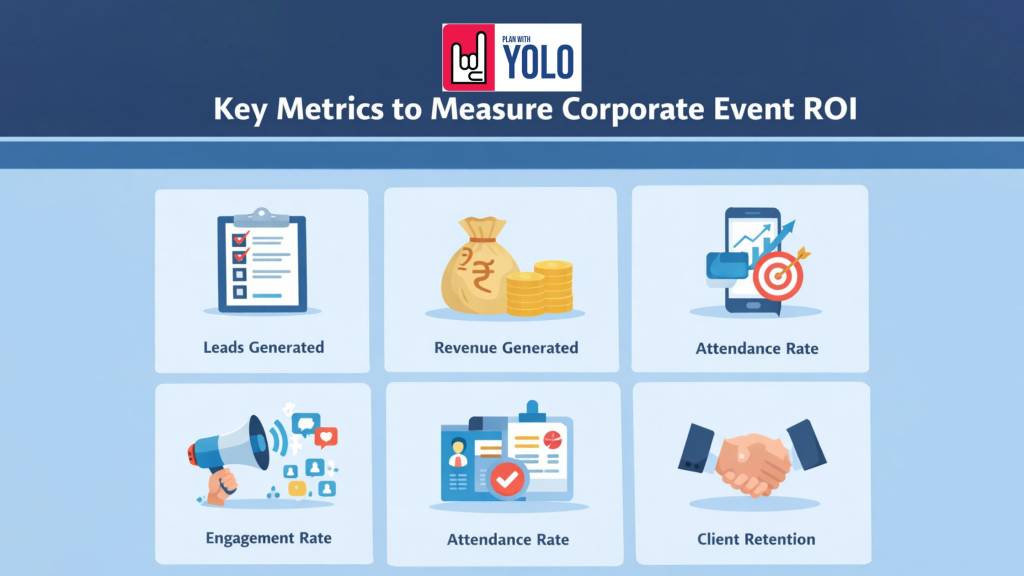
Key Metrics to Measure Corporate Event ROI
Leads Generated
One of the most important event performance metrics is the number of leads generated. This includes inquiries, sign-ups, registrations, and business contacts collected during or immediately after the event. Strong lead generation indicates real interest and creates opportunities for future revenue growth.
However, simply collecting contacts is not enough. The quality of leads and follow-up strategy determine actual business impact. With structured planning and audience targeting, teams like Plan with Yolo help businesses design events that attract relevant prospects and convert engagement into measurable lead opportunities.
Revenue Generated
Revenue is a direct measure of ROI. Businesses track sales that occur during or after the event. Comparing revenue against event costs helps determine financial success.
Engagement Rate
Engagement measures how actively attendees participate. This includes session attendance, interaction with booths, and feedback. Higher engagement often leads to stronger relationships and better outcomes.
Attendance Rate
Attendance rate compares registrations with actual attendees. A high attendance rate indicates strong interest and effective promotion.
Brand Awareness
Brand visibility is another key factor. Social media mentions, press coverage, and audience recall help measure awareness. While harder to quantify, it contributes significantly to long-term ROI.
Client Retention
Events often strengthen relationships with existing clients. Tracking repeat business and long-term partnerships helps measure retention value.
Events Without ROI Tracking vs Events With ROI Strategy
Measuring corporate event ROI makes a significant difference in long-term business impact. Companies that track performance metrics consistently make better strategic decisions than those that rely only on assumptions.
Below is a clear comparison:
| Aspect | Events Without ROI Tracking | Events With ROI Strategy |
|---|---|---|
| Goal Clarity | Objectives are unclear or generic | Clear, measurable goals defined before the event |
| Budget Justification | Difficult to prove value to stakeholders | ROI data supports future budget approvals |
| Lead Tracking | Contacts collected but not analyzed | Qualified leads tracked and nurtured |
| Revenue Impact | Revenue impact is uncertain | Direct and indirect revenue measured |
| Decision Making | Based on assumptions | Based on performance data and analytics |
| Long-Term Growth | No improvement roadmap | Continuous optimization for future events |
Companies that do not track event performance often struggle to justify budgets or identify areas of improvement. Without structured measurement, even successful-looking events may not contribute to business growth.
In contrast, businesses that implement a clear event ROI strategy monitor metrics such as leads generated, revenue impact, engagement levels, and client retention. This approach transforms events from one-time gatherings into strategic business tools.
Organizations that consistently measure and analyze corporate event success metrics are better equipped to refine planning, optimize spending, and improve future performance.
How to Calculate Event ROI
To measure event ROI, companies typically use a simple formula:
ROI = (Total Event Value – Total Event Cost) ÷ Total Event Cost
Total value includes revenue, qualified leads, partnerships, and long-term business opportunities generated from the event. Costs usually cover venue, production, marketing, logistics, staffing, and promotional expenses. Tracking these elements helps businesses understand whether the event delivered measurable returns.
While financial ROI is easier to calculate, non-financial outcomes such as brand perception, client relationships, and networking impact should also be considered. These factors often contribute to long-term growth and future revenue. Companies working with experienced planners like Plan with Yolo benefit from structured planning, clear performance tracking, and post-event analysis that helps measure both financial and strategic ROI more effectively.
Tools to Track Event Performance
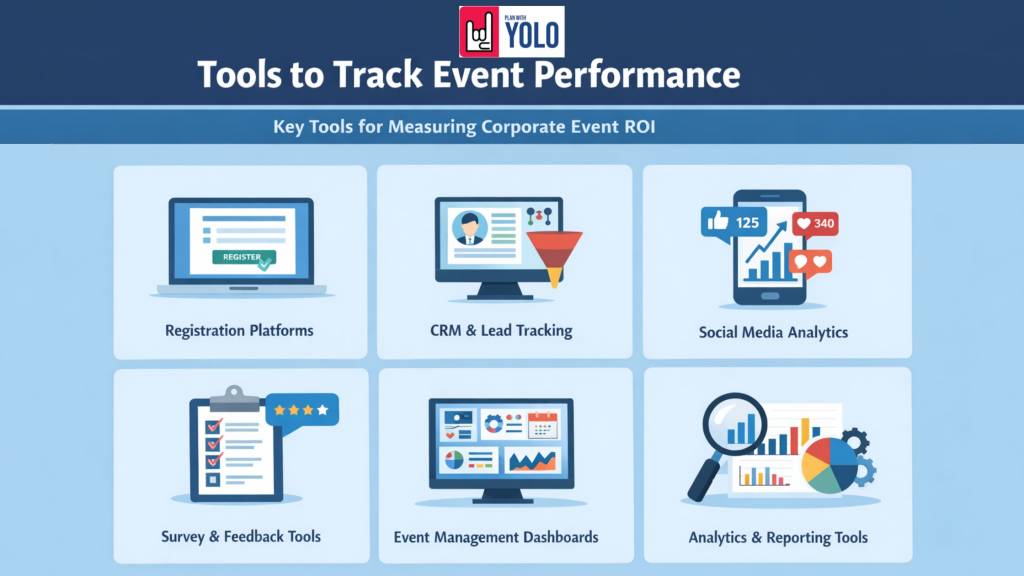
Modern events use technology to measure results. Many companies use CRM tools, analytics platforms, and feedback systems to track performance.
Common tools include:
- Registration and ticketing platforms
- Lead tracking software
- Social media analytics
- Feedback surveys
- Event management dashboards
Businesses looking for structured planning and measurable outcomes can explore professional event support from Plan with Yolo, which focuses on aligning execution with performance metrics.
Strategies to Improve Event ROI
Improving ROI starts with clear objectives. Define what success looks like before planning the event. This could include lead targets, engagement levels, or revenue goals.
Targeted marketing improves attendance quality. Inviting the right audience increases conversion potential.
Interactive experiences improve engagement. Workshops, networking sessions, and live demonstrations encourage participation.
Post-event follow-ups are equally important. Sending emails, sharing content, and nurturing leads helps convert event interactions into business outcomes.
A strong event ROI strategy combines planning, execution, and analysis to maximize returns.
Event ROI Trends in 2026
In 2026, companies are focusing more on data-driven event strategies. Hybrid events continue to grow, allowing businesses to reach wider audiences while tracking digital engagement.
AI-driven analytics tools are helping measure attendee behavior and predict outcomes. Companies are also integrating event data with CRM systems for better tracking.
Sustainability and experience quality are becoming important ROI factors. Businesses now evaluate environmental impact and attendee satisfaction alongside financial metrics.
Conclusion
Measuring corporate event ROI is essential for businesses that want to justify spending and improve outcomes. By tracking key metrics such as leads, revenue, engagement, and retention, companies can understand the true value of their events.
As corporate events become more strategic in 2026, structured measurement and planning will play an even bigger role. Businesses that track performance consistently can refine their approach and achieve stronger results.
With a focus on planning, execution, and measurable outcomes, Plan with Yolo supports organizations in creating corporate events that deliver both memorable experiences and real business value.
Frequently asked questions
What is corporate event ROI?
Corporate event ROI measures the value a business gains from an event compared to its total cost. It includes revenue, leads, brand awareness, and relationship-building outcomes.
How do you measure event ROI effectively?
To measure event ROI, track key metrics such as leads generated, revenue, engagement, and attendance. Comparing these results with total event expenses helps determine success.
What are the most important corporate event success metrics?
Leads, conversions, attendance rate, engagement level, and brand visibility are key success metrics. These indicators help businesses understand whether the event delivered real value.
Can non-financial results be part of event ROI?
Yes, non-financial outcomes like brand awareness, networking value, and client retention are important. These factors contribute to long-term business growth and should be measured alongside revenue.
How can companies improve their corporate event ROI?
Businesses can improve ROI by setting clear goals, targeting the right audience, and tracking performance after the event. Working with experienced planners like Plan with Yolo helps ensure events are structured, measurable, and aligned with business outcomes.

Vicky founded Plan With YOLO in Pune in 2013 and leads the planning on corporate events, weddings and stage production across Maharashtra.