
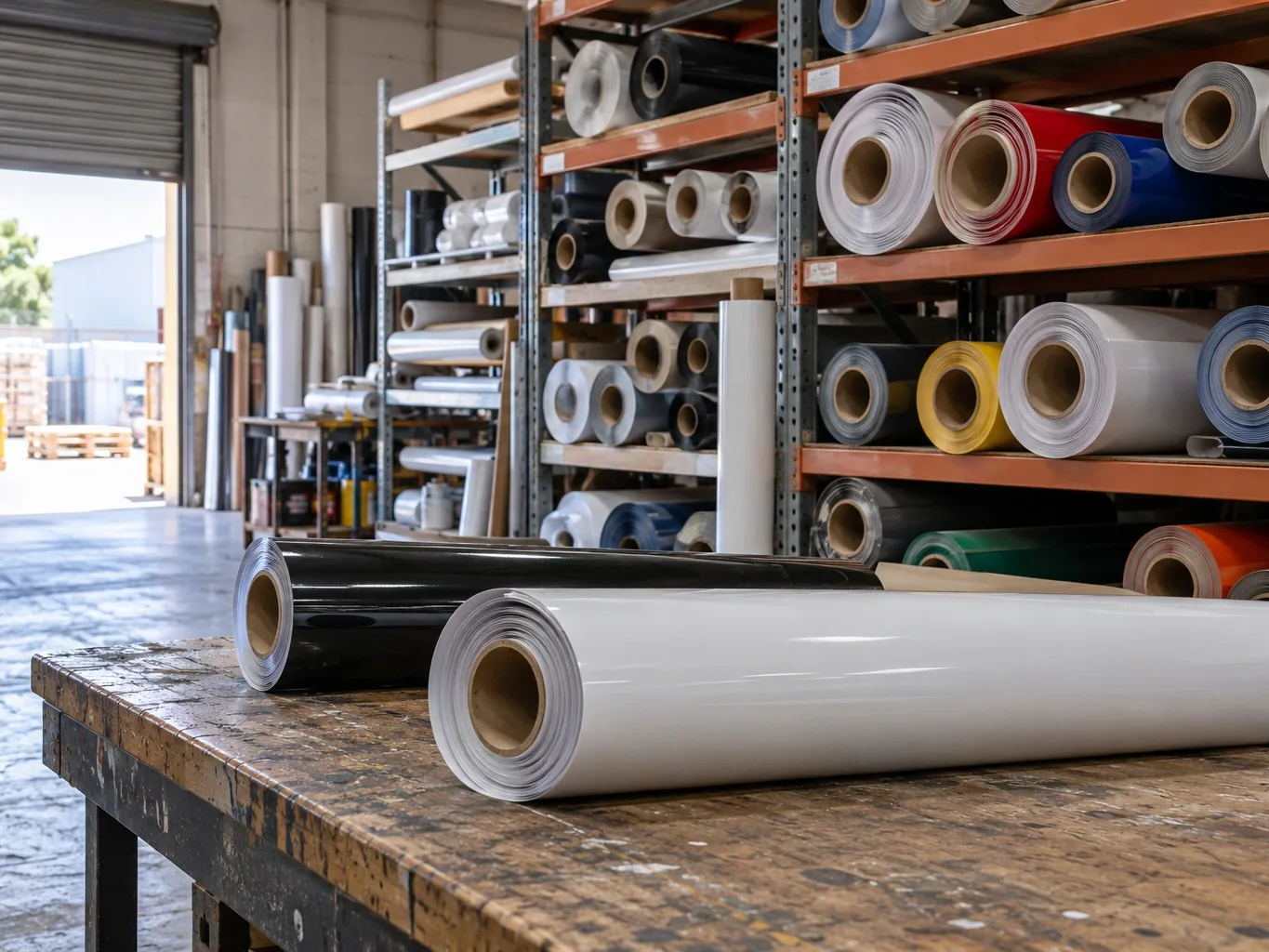
Selecting the right types of vinyl for printing depends entirely on where your graphic will be placed, how much sunlight it faces, and whether it needs to block light or let it through. Different materials handle Pune's heavy monsoon rains and summer heat differently, making correct selection vital for longevity.
Knowing the different types of vinyl for printing helps you choose a material that survives dust, harsh sun, and heavy rain without peeling at the edges. When you plan a signboard or a glass display for your retail outlet, the base film determines whether the colours stay sharp or wash out within months. We plan, set up and run complete display projects, guiding you past common material mistakes so your branding looks clean from day one.
Planning this in Pune? See our vinyl printing in Pune: one team plans and runs it with you, since 2013.
Glossy versus matte finishes for indoor and outdoor displays
Glossy vinyl reflects light directly, making colours appear deeper and more vibrant from a distance. It works well for retail display boards inside dimly lit malls or closed office receptions where glare is minimal. However, under direct sunlight, a glossy surface can create harsh reflections that make the text hard to read.
When to choose a matte surface
Matte vinyl scatters light in multiple directions, eliminating glare entirely and giving your display a sophisticated, non-reflective look. It is the preferred choice for photo backdrops, museum exhibits, or office conference rooms with heavy overhead lighting. While colours look slightly softer on matte film, the text remains readable from any viewing angle in a brightly lit room.
- Use glossy for high-colour retail posters behind glass.
- Use matte for large wall graphics exposed to direct indoor lights.
- Consider location lighting before finalising your material finish.
Transparent and frosted films for glass partitions
Transparent vinyl is completely clear, allowing the surface underneath to remain visible while displaying your printed design. It suits glass doors where you want to show branding without blocking natural light or completely hiding the interior of the room. Printers often use a white ink layer behind specific parts of a transparent print to keep logos opaque while leaving other areas see-through.
Using frosted film for privacy
Frosted glass film creates a textured, etched-glass appearance that provides privacy while letting soft daylight pass through meeting rooms and cabins. Unlike completely clear vinyl, frosted media diffuses light and hides silhouettes effectively. You can cut company logos directly out of frosted rolls or print fine text over them for a clean corporate aesthetic.
| Feature | Transparent Vinyl | Frosted Film |
|---|---|---|
| Transparency | Clear and see-through | Translucent and hazy |
| Primary Use | Window logos and glass accents | Cabin privacy and glass partitions |
| Light Blockage | Minimal | Diffuses light gently |
Reflective and fluorescent films for night visibility
Reflective vinyl contains tiny glass beads or prismatic lenses that bounce light back directly toward the source, making signs highly visible when headlights hit them at night. Traffic signs, highway billboards, and parking garage notices rely on reflective media for safety after dark. If your storefront stays open late along a dark road, reflective lettering ensures drivers spot your business easily.
High-impact fluorescent options
Fluorescent vinyl absorbs invisible ultraviolet light and converts it into visible light, creating an intense, glowing effect during daytime hours. These bright neon shades grab attention immediately for short-term promotional sales, temporary road work notices, or urgent safety warnings. They fade faster under direct sunlight than standard polymeric films, so reserve them for temporary notices.
One-way vision film for glass storefronts
One-way vision vinyl features a perforated pattern with thousands of tiny evenly spaced holes across its surface. The printed exterior side shows full-colour graphics to people passing by, while the black adhesive backing on the interior allows people inside to look out clearly through the glass. This clever balance makes it popular for retail shopfronts and office windows.
Balancing privacy and graphics
The success of a perforated window graphic depends on lighting conditions on both sides of the glass. During daylight, the outside is brighter than the inside, so passers-by see your printed advertisement while your staff enjoys an unobstructed view outside. At night, if interior lights are brighter than streetlights, the effect reverses, so keep indoor lighting low near the glass after dark if you want to maintain nighttime privacy.
Understanding cast versus calendered vinyl durability
Cast vinyl is manufactured by pouring liquid ingredients onto a casting sheet and baking them, resulting in a thin, highly flexible film with zero internal stress. Because it does not shrink or pull back, cast material is the standard choice for complex curves, vehicle wrapping, and deep rivets. It conforms smoothly to irregular shapes and lasts for many years outdoors without cracking.
Calendered vinyl for flat surfaces
Calendered vinyl is produced by passing a thick dough-like mixture through heavy rollers to flatten it into a sheet. It is thicker, more rigid, and slightly more prone to shrinkage over time, making it ideal for flat boards, smooth walls, and short-to-medium-term signage. Understanding this structural difference helps you avoid using rigid calendered rolls on curved substrates where they might lift at the edges.
Material selection mistakes to avoid in local weather
Choosing an unlaminated short-term sticker for outdoor placement is one of the quickest ways to ruin a display. Ultraviolet rays break down cheap inks rapidly, turning rich blacks into dull purples within a single summer season. Always verify whether your chosen print needs a protective clear laminate layer to shield pigments from moisture and scratching.
Surface preparation pitfalls
Even the highest-grade film will fail if the mounting surface has dust, oil, or moisture trapped underneath. Concrete walls need proper priming, while metal and glass require a thorough isopropyl alcohol wipe before installation. Taking time to clean the substrate properly ensures the adhesive bonds completely and stays flat through changing temperatures.
A step by step workflow for successful vinyl installation
Planning the application timeline
Getting a smooth finish on your branding materials requires careful preparation before the actual sticking begins. Whether you are prepping glass panels or display boards, rushing the setup usually leads to trapped air bubbles and misaligned edges. Start by cleaning the mounting surface thoroughly using isopropyl alcohol to remove dust and oil residue. Any tiny particle left behind can cause bumps that ruin the final look.
Next, measure the application area twice and mark alignment points using low tack tape. For large graphics, dry application works well with cast films, while wet application using soapy water helps position calendered sheets accurately on smooth surfaces. Peel back the liner gradually from one corner, smoothing the material down with a squeegee in overlapping strokes. Working from the center outward pushes trapped air toward the edges. If a small bubble refuses to move, a tiny pinprick helps release the air without tearing the surface.
- Clean and degrease the mounting surface completely
- Measure and map alignment guidelines before peeling
- Use a felt edge squeegee to prevent scratching
- Trim excess material carefully using a sharp utility blade
Finally, post heat the edges using a heat gun if wrapping curves or complex contours. This step activates the adhesive fully and prevents lifting over time. Leave the finished setup untouched for a few hours so the glue bonds securely to the substrate.
Questions to ask your printer before confirming your order
Clarifying project specifics
Before finalising your sticker order, clear communication with your production partner prevents costly surprises during setup. Different vinyl formulations behave differently under local climate conditions, so discussing environmental exposure upfront is essential. Ask your printer whether the chosen substrate is suited for prolonged sunlight or heavy monsoon dampness. Knowing the expected outdoor lifespan helps you choose the right grade without overspending on features you do not need.
You should also confirm the compatibility of the adhesive backing with your specific mounting surface. Some glues are permanent and leave stubborn residue, while others are removable for temporary displays. Requesting a physical sample swatch lets you check the true opacity, finish texture, and color depth before committing to a bulk run. It also helps to clarify whether the prints require a protective laminate layer to guard against scratches and fading.
- Is the adhesive permanent or easily removable later?
- Does this film require an extra protective laminate?
- What is the recommended surface cleaning method before application?
- How should finished rolls be stored if not applied immediately?
Taking a few minutes to ask these technical questions ensures your finished signage looks professional and stays firmly in place for its intended duration.
Get expert guidance on your next print project
Choosing the correct substrate and finish makes your branding look professional and ensures it lasts through local weather conditions. One team, one point of contact handles your material selection, layout planning, and precise setup so you do not have to coordinate multiple suppliers. Explore our complete vinyl printing in pune services to see how we handle retail and corporate displays. Reach out to ask for an itemised plan and schedule your next installation.
Frequently asked questions
What is the main difference between cast and calendered vinyl?
Cast vinyl is poured as a liquid and baked, making it ultra-thin and flexible enough for vehicle curves. Calendered vinyl is rolled out under pressure, making it thicker and more rigid, which suits flat outdoor boards and flat walls perfectly.
When should I choose matte vinyl over glossy vinyl?
Matte vinyl is best when your display faces harsh overhead lights or windows, as it scatters light and eliminates glare. Glossy vinyl is better for deep colour saturation in low-light indoor environments where reflection is not an issue.
How does one-way vision vinyl work on glass doors?
One-way vision vinyl uses a perforated pattern with tiny holes that display printed graphics on the outside while letting people inside look out through the black backing. It relies on exterior light being brighter than interior light to maintain privacy during the day.
Do I need lamination on outdoor printed vinyl?
Lamination adds a protective clear layer that shields the printed inks from ultraviolet fading, scratches, and rain. While short-term promotional stickers might skip lamination, outdoor signage exposed to direct sun benefits greatly from a protective laminate.
How do I prepare a wall or glass surface before applying vinyl?
Surfaces must be cleaned thoroughly to remove dust, grease, and moisture before any adhesive film is applied. Glass requires a careful wipe with rubbing alcohol, while porous walls often need proper sealing to ensure the vinyl edges stay stuck down securely.

Vicky founded Plan With YOLO in Pune in 2013 and leads the planning on corporate events, weddings and stage production across Maharashtra.