

Good sangeet night planning starts with a fixed running order, not with decor. List every performance with its song, length and performers, schedule at least three rehearsals, and book a stage, sound and lights that suit a dance floor. Put one anchor in charge of the flow and time dinner so no one performs to an empty room.
A sangeet is the night everyone remembers, and also the night that most often runs two hours late. Good sangeet night planning is less about how the stage looks and more about how the evening moves: who performs when, how long each act takes, where the music files are and when dinner opens. This guide walks you through the running order, rehearsals, stage, sound, lights, the anchor and a performance list template you can copy for your own family.
Planning this in Pune? See our marriage event management in Pune: one team plans and runs it with you, since 2013.
Start sangeet night planning with the running order
The running order is the backbone of the sangeet, so write it before you book anything else. It tells the choreographer how many acts to prepare, tells the sound person which tracks to load, and tells the caterer when guests will be ready to eat.
A simple running order for most sangeets looks like this:
- Guest arrival and welcome drinks. Allow time for people to settle, take photos and find their seats.
- Couple’s entry. A short, planned entry with its own track and a spotlight.
- Opening act. Something high-energy, often the cousins or friends, to warm the room.
- Family performances, block one. Siblings, cousins, the bride’s side, then the groom’s side, or mixed if the families prefer.
- A short break. Starters come round, the anchor runs a quick game or a photo slideshow plays.
- Family performances, block two. Parents, aunts and uncles, grandparents if they want to join.
- The couple’s performance. Save it for the end of the programme, when the room is fullest.
- Open dance floor and dinner. The DJ takes over and the buffet opens.
Keep each act short. Three to four minutes feels lively; seven minutes feels long, even when it is your favourite cousin on stage. Twelve to fifteen acts is usually plenty for one evening.
Choreography and rehearsal schedule
Rehearsals decide whether the sangeet feels polished or chaotic, so plan them the way you plan the venue. Most families start practising four to six weeks before the wedding, with more sessions closer to the date.
How to organise rehearsals
- Fix the song list early. Changing a song two weeks before means relearning the steps.
- Cut the tracks once. Ask one person to edit and name every track, then share the final files with the choreographer and the sound team.
- Group by availability. Cousins in college, working friends and elders all have different free hours. Separate groups practise separately and come together only for the full run.
- Keep steps simple for elders. Four or five repeated moves look better than a complicated routine half the group forgets.
- Hold one full dress rehearsal. Ideally at the venue, on the actual stage, with the actual sound system.
The dress rehearsal is where you find out the stage is too small for twelve dancers, the lehenga catches on the steps or the entry door is on the wrong side. Fixing these things the day before is far easier than fixing them live.
Stage, dance floor and seating
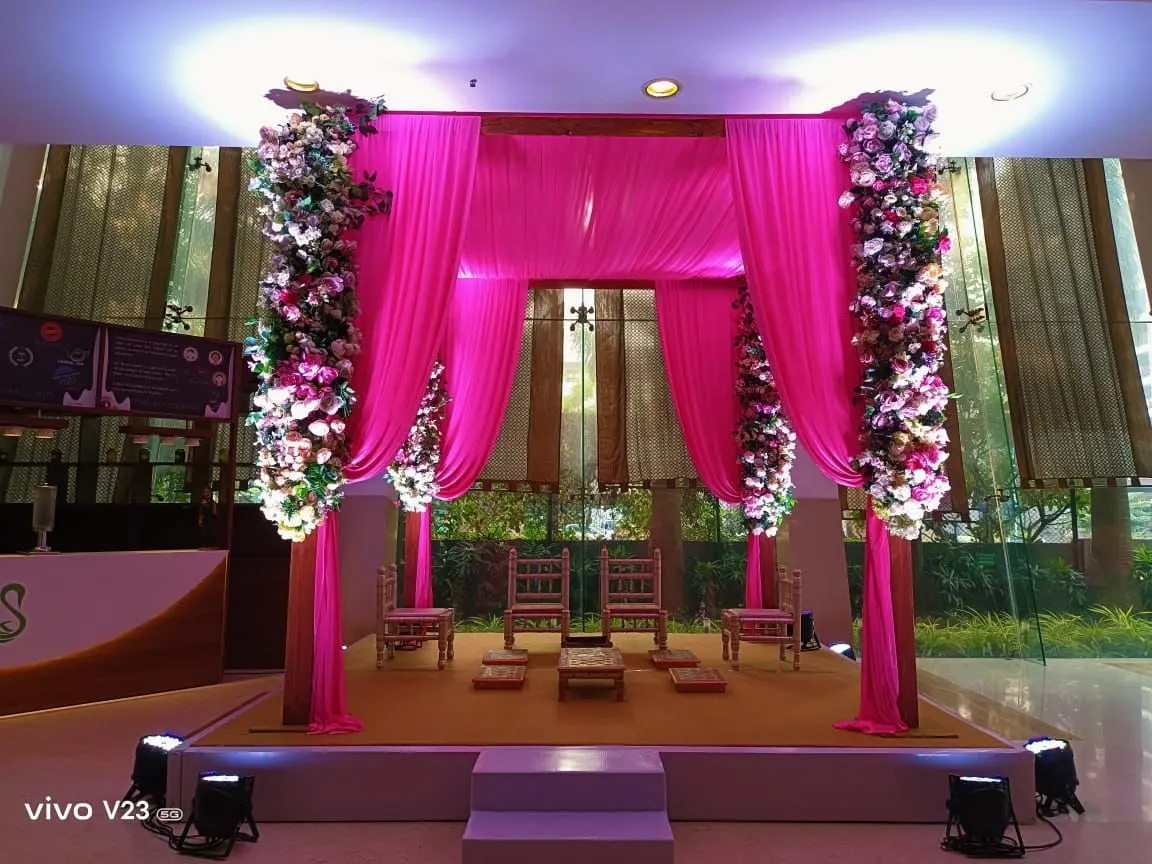
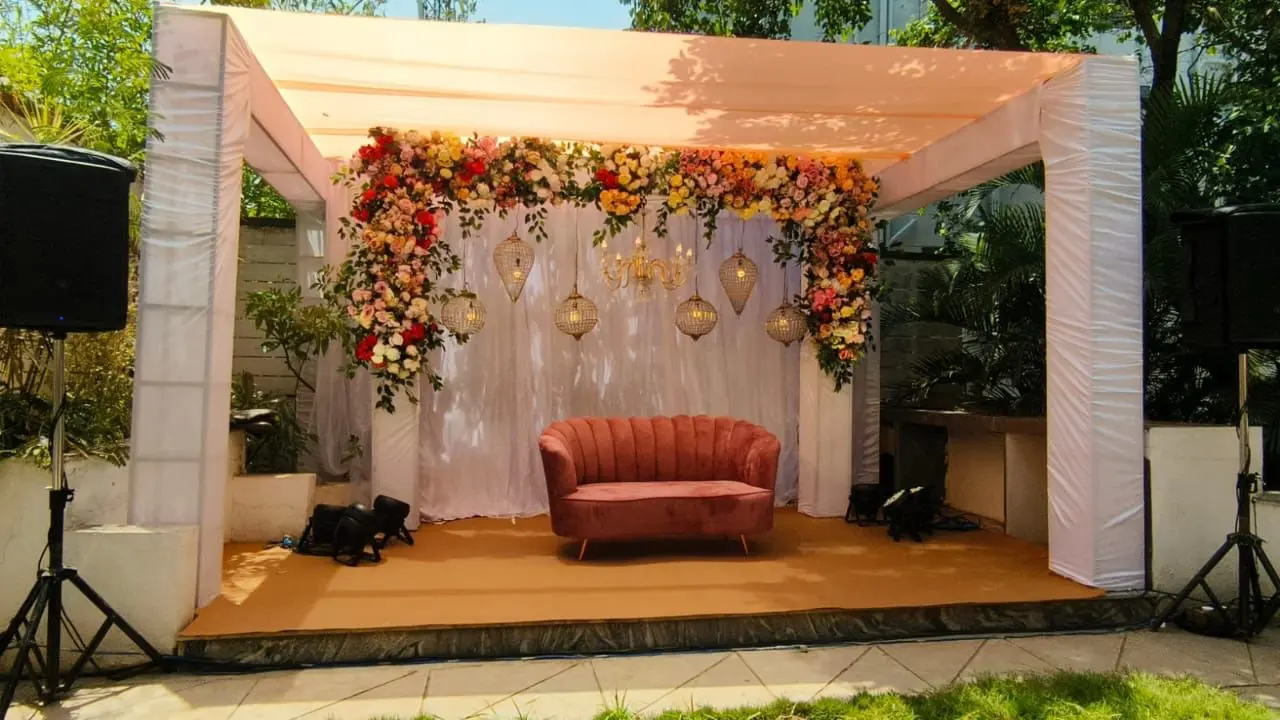
The sangeet stage needs to work for dancing first and photos second. A pretty backdrop with a narrow stage in front of it will frustrate every group that performs.
- Size the stage for your largest group. Count the biggest act and give each dancer room to move their arms without hitting a neighbour.
- Keep the height low. A low stage is safer for elders and children, and keeps performers connected to the audience.
- Add proper steps on both sides. Groups enter from one side and exit from the other, so the next act is always ready.
- Leave a clear dance floor. After the programme, guests will want to dance. Plan seating that can be pushed back or a separate floor near the DJ.
- Seat the family where they can see. Grandparents and the couple’s parents should have the best view, not the last row near the buffet.
For the backdrop, a lit stage with a strong colour palette photographs better than a crowded one. Deep blues, jewel tones and warm fairy lights all suit a sangeet. You can browse more looks on our wedding theme ideas guide.
Sound, lights and the technical checklist
Sound is the one thing a sangeet cannot do without, so book a proper system and a person to run it. A borrowed speaker and a phone plugged into a cable will fail at the worst moment.
Sound
- Speakers sized for the venue and headcount, with a mixer and a dedicated operator.
- At least two wireless microphones for the anchor and speeches, plus a spare.
- Every track loaded in running order on one laptop, with a backup on a pen drive.
- A monitor speaker facing the stage so performers can hear the beat.
Lights
- Wash lights on the stage so faces are visible in photos and videos.
- A follow spot or focused light for the couple’s entry and solo moments.
- Party lights or moving heads for the open dance floor.
- Softer lighting over the dining area so it does not feel like a stage.
If you are planning an outdoor sangeet on a lawn, say in Baner or Kharadi, check the venue’s sound rules and cut-off time before you plan the programme. Many open venues need the music down by a fixed hour, and that decides when the programme must end. Stage builds, LED walls and lighting rigs are covered on our event production page.
The anchor: the person who keeps time
A sangeet anchor keeps the evening moving, and that matters more than jokes or a loud voice. A good anchor introduces each act in a line or two, fills gaps while the next group gets ready and gently pulls the programme back on schedule.
Give your anchor these things a week before:
- The final running order with names, relationships and act lengths.
- Correct pronunciation of every name, especially elders.
- A short story or two about the couple, approved by them.
- Two or three filler games in case a group is late, such as a couple quiz or a dance-off between the two sides.
- Clear instructions on what not to joke about.
Many families ask a witty cousin to anchor. That works if the cousin is not also performing in four acts. The anchor needs to be free all evening.
Performance list template
A performance list is the single sheet that the anchor, the sound person and the choreographer all work from. Copy this template, fill it in and share it with everyone involved.
| Order | Act | Performers | Song or track name | Length | Props or notes |
|---|---|---|---|---|---|
| 1 | Couple’s entry | Bride and groom | Entry track | 2 min | Spotlight, smoke or petals at the entry |
| 2 | Opening act | Cousins and friends | Medley | 4 min | Full stage, needs both side steps |
| 3 | Bride’s side | Sisters and cousins | Track name | 3 min | Dupattas as props |
| 4 | Groom’s side | Brothers and friends | Track name | 3 min | Enter from audience side |
| 5 | Break | Anchor | Slideshow or game | 8 min | Starters served |
| 6 | Parents’ act | Both sets of parents | Track name | 3 min | Two handheld mics for a short message |
| 7 | Grandparents | Grandparents | Old classic | 2 min | Chairs on stage if needed |
| 8 | Couple’s performance | Bride and groom | Track name | 4 min | Clear the stage, dim the hall |
| 9 | Open floor | Everyone | DJ set | Open | Buffet opens |
Add a column for the contact person of each group. When a group is missing, the anchor knows exactly whom to call.
Timing the sangeet with dinner
Dinner timing makes or breaks a sangeet. If dinner opens too early, half the audience is at the buffet during the performances. If it opens too late, hungry guests leave before the couple’s act.
- Serve starters during the programme. Passed starters and mocktails keep guests happy without pulling them out of their seats.
- Open the main buffet after the last act. Tell the caterer the expected time and update them if the programme runs late.
- Feed the elders and children first. A small early plate for grandparents and kids keeps everyone comfortable.
- Keep the dance floor near the dining area. Guests move between food and dancing instead of leaving.
If your wedding has guests travelling from Mumbai, or family driving across town from Pimpri-Chinchwad on a weekday evening, allow for traffic and plan the first act a little after the invitation time. It is better to start late and run tight than start on time with an empty hall.
Common sangeet mistakes to avoid
- Too many acts, each too long.
- No single owner for the music files.
- No dress rehearsal on the actual stage.
- An anchor who is also a lead performer.
- Forgetting a green room or changing area near the stage.
- Ignoring the venue’s sound cut-off time.
Plan your sangeet with one team
A sangeet has many moving parts, and it runs best when one person holds the whole plan. Plan With YOLO has been planning weddings since 2013, and we handle the stage, sound, lights, anchor coordination and the running order for you, with one team and one point of contact. See how we work on our wedding planner in Pune page, or share your date and guest list size and we will help you build a running order that fits your family.
Frequently asked questions
How long should a sangeet programme be?
A sangeet programme usually works best at around two to two and a half hours of performances, followed by an open dance floor and dinner. Keep each act to three or four minutes and limit the list to twelve to fifteen acts. Longer programmes lose the audience, and guests start drifting towards the buffet before the couple's performance.
When should sangeet rehearsals start?
Sangeet rehearsals should start four to six weeks before the wedding for most family groups. Fix the song list first, then practise in small groups based on who is free. Increase the sessions in the last two weeks and hold one full dress rehearsal on the actual stage with the actual sound system, ideally the day before.
Who should perform first at a sangeet?
The couple's entry usually comes first, followed by a high-energy group act from cousins or friends to warm up the room. Family acts follow, often with parents and grandparents later in the programme. Save the couple's own performance for the end, when the hall is fullest and everyone is watching, just before the dance floor opens.
Do we need a professional anchor for the sangeet?
You do not strictly need a professional anchor, but you need someone whose only job that evening is to keep time and introduce acts. A relative can do it well if they are not also performing. Give them the running order, correct name pronunciations and a few filler games so gaps between acts stay short and lively.
When should dinner be served at a sangeet?
Serve the main dinner after the last performance, and pass starters and drinks during the programme. This keeps guests in their seats for the acts without leaving them hungry. Feed elders and children a little earlier, and keep the caterer updated if the programme runs late, so the food stays fresh when the buffet opens.

Vicky founded Plan With YOLO in Pune in 2013 and leads the planning on corporate events, weddings and stage production across Maharashtra.