
A royal wedding theme relies on deep heritage colours, heavy brass props, and grand spatial design to recreate the feel of a historic palace. Achieving this look requires careful coordination of structural draping, vintage furniture, warm amber lighting, and rich floral arrangements to build a cohesive, majestic atmosphere from the entrance to the main stage.
A royal wedding theme transforms standard marriage halls and open lawns into majestic courts inspired by historical palaces and old-world grandeur. Designing this look is not about buying every heavy prop available, but about balancing rich colours, structured layouts, and careful lighting so the space feels grand rather than cluttered. When you plan this style for your celebrations, every single detail from the entrance archway to the central seating must work together to tell a story of timeless heritage.
Planning this in Pune? See our wedding decoration themes: one team plans and runs it with you, since 2013.
Choosing Colours for a Royal Wedding Theme
The colour palette sets the entire tone for a heritage-inspired celebration before guests even notice the furniture or props. Traditional royal aesthetics avoid neon shades or icy pastels, choosing instead heavy, warm tones that absorb light and feel substantial.
Rich Palettes to Consider
- Deep maroon paired with antique gold
- Royal blue accented with brushed brass
- Emerald green combined with rich ivory
- Imperial saffron alongside copper tones
Using these heavy colours requires careful balancing with neutral stone floors or soft cream drapes so the venue does not feel dark or enclosed. Natural daylight helps bring out the warmth of gold and maroon during daytime ceremonies, while warm amber spotlights create dramatic shadows and depth once the sun sets.
Selecting Authentic Props and Furniture
Props and seating form the physical backbone of any heritage setup, taking guests back to an era of craftsmanship and artisan detail. Instead of sleek modern steel chairs or minimalist acrylic tables, a palace-inspired aesthetic calls for carved wooden elements, velvet upholstery, and hammered metal accents.
Key Prop Elements
- Jali-cut wooden panels and arched backdrops
- Brass urulis filled with fresh flower petals and floating candles
- Diwans and low seating arrangements with velvet bolsters
- Heavy wrought iron or brass lanterns lining the main walkways
Every prop must serve a clear purpose in guiding movement or framing a key ritual. Placing too many oversized items in a compact venue creates bottlenecks, so always measure your pathways and keep walking corridors wide enough for guests in heavy attire.
Designing the Grand Mandap and Stage
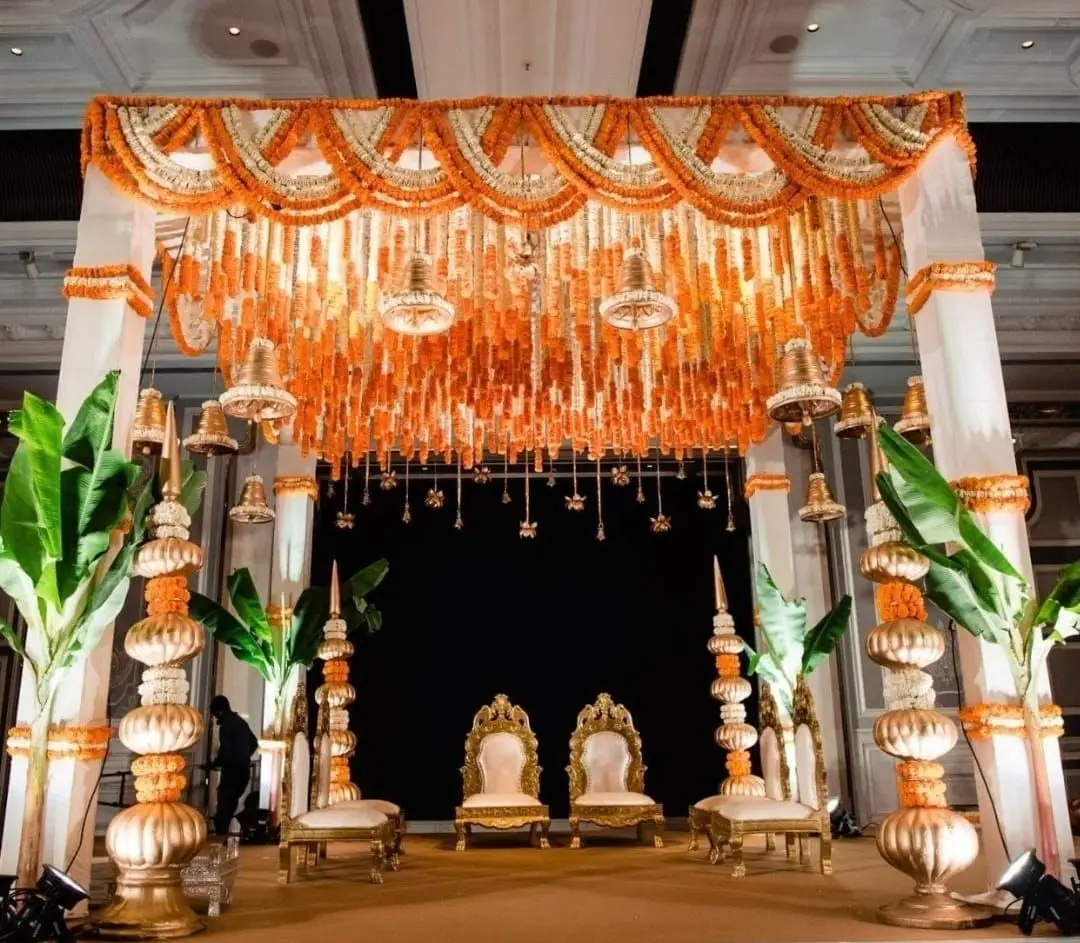
The main ritual area and the reception stage are the focal points of the entire venue, demanding the highest level of detail and structural planning. A grand mandap should feature sturdy pillars, intricate carved domes, and heavy floral garlands rather than simple fabric drapes.
Comparison of Mandap and Stage Styles
| Area | Traditional Palace Style | Modern Royal Fusion |
|---|---|---|
| Mandap Structure | Carved wooden pillars with brass bells | Clean pillars framed with dense mogra strings |
| Seating | Low wooden bajots with velvet cushions | Upholstered diwan with carved armrests |
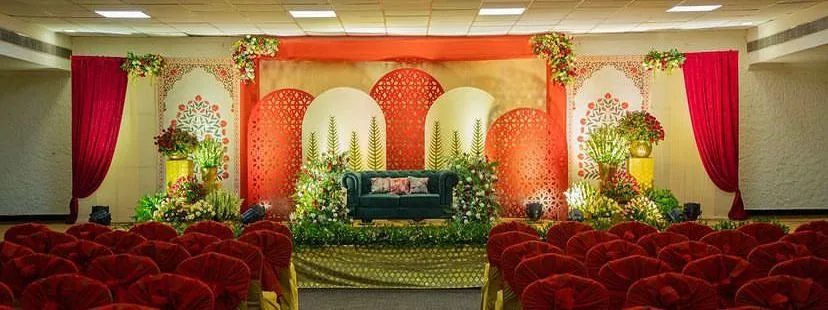
| Backdrop | Hand-painted canvas or heavy velvet drapes | Jali screens layered with warm backlighting |
Coordinating these structures with the family’s or company’s caterer nearby ensures your service stations and dining areas do not clash with the majestic aesthetic of the main ritual zone.
Lighting Techniques for Majestic Spaces
Lighting dictates how expensive your fabrics and metal props actually look to the human eye and through camera lenses. Bright white tube lights completely ruin the warm, inviting glow required for a heritage-inspired celebration, washing out the rich crimsons and golds.
Effective Lighting Layers
- Amber LED uplighting placed at the base of large structural pillars
- Pin-spot lights focused sharply on floral arrangements and ritual items
- Warm fairy lights woven densely behind sheer ceiling canopies
- Real candlelight in glass cylinders along stairways and entry points
Working closely with your technical team ensures the generator load handles these heavy lighting grids without unexpected power drops during key evening ceremonies.
Managing Scale and Venue Proportions
Scale is the hardest element to balance when designing a grand aesthetic, as a massive open lawn requires completely different proportions than an indoor banquet hall. Over-decorating a small hall makes it feel suffocating, while sparse props in a vast open ground make the setup look empty and unfinished.
When working with large outdoor lawns, build towering entrance gates and tall perimeter drapes to ground the space and create a sense of enclosure. For indoor banquet halls with lower ceilings, use vertical striped drapes and upward-pointing spotlights to trick the eye into seeing more height than actually exists. Always review the venue layout during the exact time of day your event starts to account for natural shadow angles and foot traffic flows.
Common Mistakes to Avoid in Palace Styling
Many hosts attempt to recreate a historical look by mixing too many eras and regional styles into a single venue, resulting in visual confusion. Sticking to one clear design language prevents the decor from looking like a movie set prop storage room.
Another frequent error is ignoring the comfort of elderly guests in favour of rigid traditional seating. While floor diwans and low takiyas look stunning in photographs, ensure you have comfortable, high-backed cushioned chairs available for family members who need proper back support. Balance visual grandeur with practical usability so your guests enjoy the evening as much as they admire the scenery around them.
What to Ask Venue Managers Before Booking a Heritage Palace
Critical Inquiries for Historic Properties
Securing a heritage venue for a majestic celebration requires asking specific questions that go beyond standard hotel bookings. Historic properties often come with strict preservation guidelines that directly impact your design plans, heavy draping, and lighting setups. Before signing any contract with a palace management team, you must clarify their policies regarding structural modifications and curfew timings for loud music.
- Are temporary rigging points permitted for heavy chandeliers and floral ceiling installations?
- What are the exact fire safety regulations concerning open flames during sacred rituals?
- Are there designated areas where heavy furniture and large stage props cannot be placed due to antique flooring?
- What is the strict timeline for load-in and load-out to accommodate intricate artisanal setups?
Understanding these logistical boundaries ensures your grand vision does not clash with heritage conservation rules on the day of the event.
Step-by-Step Order of Work for Palace Styling
Executing Grand Designs Methodically
Transforming a sprawling historic courtyard or lawn into a regal setting demands a precise sequence of execution. Because royal styling involves massive physical elements, scaffolding, and intricate detailing, rushing the timeline can lead to costly structural errors. A well-planned schedule ensures that every heavy element is secured safely before delicate decor is introduced.
- Begin with a thorough structural survey of the venue to map out heavy prop placements and power grid capacities.
- Install the foundational architectural elements, including wooden archways, large pillars, and the main stage framework.
- Hang overhead rigging, chandeliers, and massive ceiling drapes before floor-level furnishings are brought inside.
- Position heavy vintage seating, carved diwans, and brass accessories to establish the primary layout zones.
- Layer in delicate floral arrangements, fresh marigold strings, candles, and final table settings hours before guests arrive.
Following this methodical order guarantees a flawless finish worthy of a majestic celebration.
Bring Your Majestic Celebration to Life
Designing a royal wedding theme takes careful coordination across structures, lighting, fabrics, and layout to ensure every corner reflects timeless elegance. One team manages the entire setup, keeping your timeline smooth and your stress minimal from the first site visit to the final farewell. Explore our dedicated wedding decoration themes to see how we bring classic and contemporary styles together for your big day. Reach out to discuss your ideas, share your venue details, and ask for an itemised plan tailored specifically to your vision.
Frequently asked questions
What colours work best for a royal wedding theme?
Rich jewel tones like deep maroon, royal blue, emerald green, and imperial saffron paired with antique gold work best. These heritage shades absorb warm lighting and create an authentic, majestic atmosphere that feels timeless and grounded.
How do I choose the right venue for a palace-inspired wedding?
Look for venues with stone architecture, high ceilings, large open lawns, or traditional courtyards that naturally complement heritage styling. Venues with existing pillars, arches, and vintage architectural details reduce the need for heavy temporary artificial structures.
What kind of lighting enhances a heritage wedding setup?
Warm amber uplighting, pin-spots on floral details, and real candlelight create the ideal atmosphere for a heritage celebration. Avoid harsh white fluorescent lights, as they wash out rich velvet fabrics and brass prop finishes.
How far in advance should we finalise wedding decor?
It is best to finalise your decor concepts and book your design team several months before the wedding date. This allows adequate time to source custom props, plan structural layouts, and coordinate with venue rules.
Can a royal theme fit inside an indoor banquet hall?
Yes, a palace theme fits indoors when you use vertical drapes to add height and warm amber lighting to create depth. Keeping furniture proportions matched to the room size prevents the space from feeling cramped.

Vicky founded Plan With YOLO in Pune in 2013 and leads the planning on corporate events, weddings and stage production across Maharashtra.