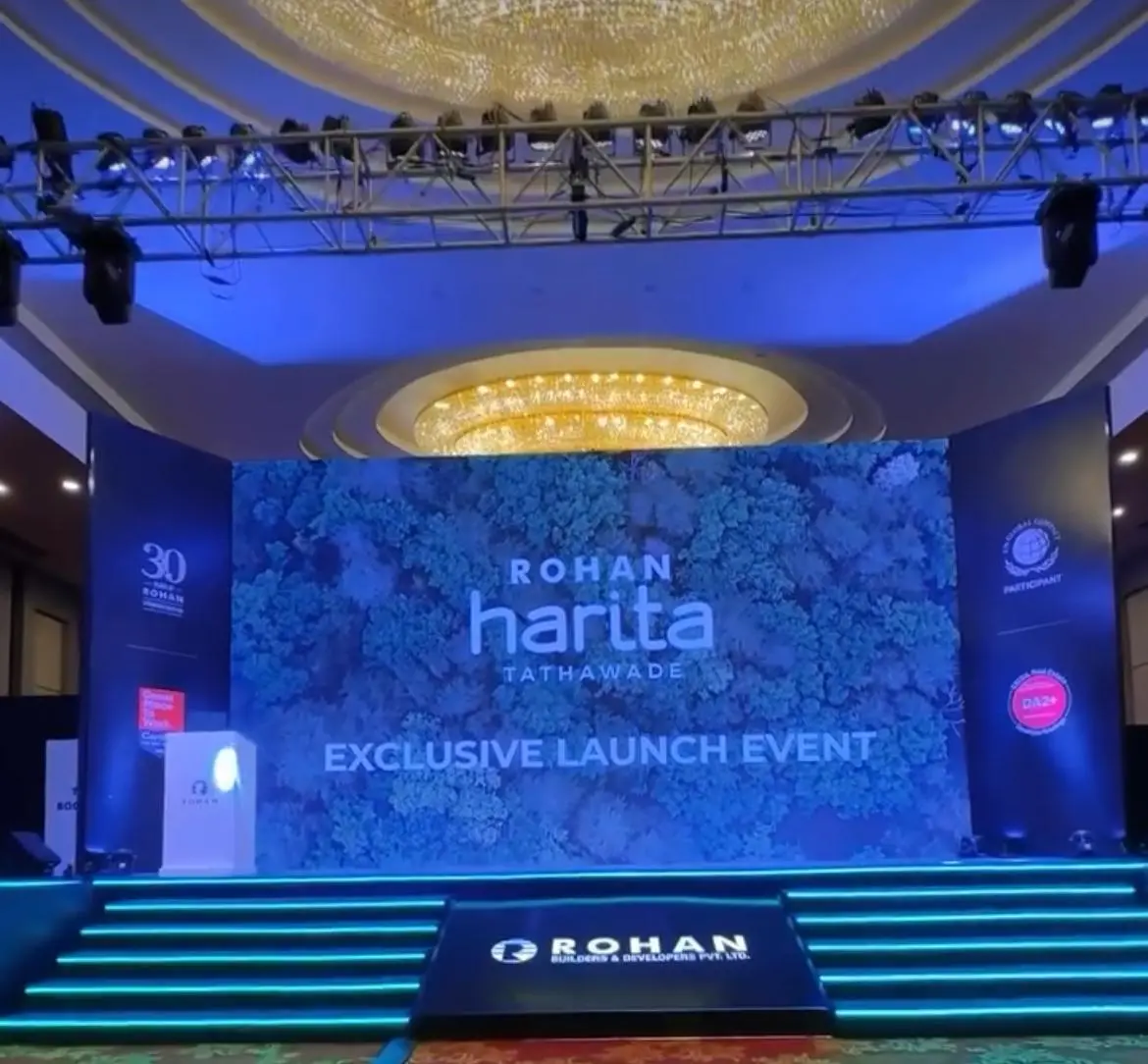

The best live event production for major product launches is not the one with the biggest screen. It is the one where sixteen decisions, from the reveal moment to the show caller, each carry a date and a named owner. Content deadlines and technical sign-offs are the two that decide everything downstream.
Ask what the best live event production for major product launches has in common, and the honest answer is dull: nothing was still being decided in the final week. Two launches can use identical equipment and the same crew, and only one of them feels inevitable on the night. The difference is a list of decisions that were dated and owned early. Here is that list, in the order the dates fall, with the person who should be holding each one.
Planning this in Pune? See our event production companies: one team plans and runs it with you, since 2013.
What actually separates a strong launch from an anxious one
A launch fails in the calendar long before it fails in the room. The set is rarely the problem. What causes trouble is a film approved two days out, a speaker added after the run of show was printed, or a product unit that reaches the venue while the crew is already focusing lights around an empty mark.
So treat the list below as a contract with yourself. Each row needs a date, a name and a yes. Rows without a name drift, and drifting rows all land in the same week.
The sixteen decisions, in order
Deadlines are shown as weeks before the launch day, and they assume a build with a custom set. A simpler stage compresses the whole column without changing the order.
| # | Decision | Lock by | Owner |
|---|---|---|---|
| 1 | The reveal moment: exactly what the room sees, and in what order | 8 weeks | Brand marketing head |
| 2 | Date and venue, confirmed in writing | 8 weeks | Brand, with production advising |
| 3 | Audience mix and headcount: press, dealers, customers, staff | 8 weeks | Brand marketing head |
| 4 | Format: seated presentation, standing showcase, or both | 7 weeks | Brand and production together |
| 5 | Budget band, split between set, screens, sound, light and crew | 7 weeks | Brand finance signatory |
| 6 | Who speaks, in what order, for how many minutes each | 6 weeks | Brand leadership |
| 7 | First draft of the run of show | 6 weeks | Production, brand approves |
| 8 | Brief for films, animation and stage graphics | 6 weeks | Brand marketing |
| 9 | Set and stage drawing signed off | 5 weeks | Production, brand approves |
| 10 | Screen sizes and the exact pixel ratio for every file | 5 weeks | Production issues, brand builds to it |
| 11 | Power supply and standby arrangement | 4 weeks | Production with the venue |
| 12 | Rigging plan and the venue’s written technical approval | 4 weeks | Venue and production |
| 13 | Product unit: arrival date, condition, and who guards it | 3 weeks | Brand supply chain |
| 14 | Press positions, photo call timing and the embargo | 3 weeks | Brand communications |
| 15 | All final content delivered: films, decks, graphics, name lists | 2 weeks | Brand marketing |
| 16 | Show caller named, and the brand decision-maker beside them | 1 week | One name from each side |
Decisions one to five: the frame
The first five decisions are irreversible in practice, because everything else is designed around them.
Number one is the one to labour over. Write the reveal as a sequence of what the audience experiences, second by second, not as an adjective. “Lights out, film ends on a sound cue, curtain drops, product lit from three sides, presenter walks in from the left” can be costed, drawn and rehearsed. “A wow moment” cannot.
Number three quietly decides the room. A press-heavy audience needs sightlines, a riser and a quiet exit route for interviews. A dealer audience needs seating, food and time to touch the product afterwards. Get the split wrong and a well-built launch still disappoints half the room.
Decisions six to nine: content and the drawings
Content is where launches lose time, because it is the only part the brand cannot delegate.
- Speakers. Fix the order and the minutes early. Adding a speaker in the last fortnight does not just add minutes, it changes microphone counts, lighting states and the whole run of show.
- Run of show. Approve the first draft even if it is imperfect. A draft everybody can argue with beats a blank page for four more weeks.
- Film brief. The film usually carries the emotional weight of the reveal, and it needs the longest lead time of anything on this list.
- Drawings. Sign them properly. Every change after this point has a price attached, because something has already been ordered or cut.
Decisions ten to thirteen: the technical sign-offs
These four have no flexibility at all, and they are the ones a brand team is most likely to assume somebody else is handling.
The pixel ratio is the small one that causes the biggest embarrassment. Get the exact dimensions in writing and give them to whoever is making your films, or you will watch a beautifully made video appear with bars down both sides.
Power and rigging are safety matters, not preferences. The venue states what its structure and supply will take, in writing, and the design fits inside that. If a venue cannot give a written answer, that is information about the venue.
The product unit deserves its own owner. Decide the day it arrives, who receives it, where it is locked overnight, and who walks it to its mark. The most valuable object in the building should never be the one item without a name against it.
Decisions fourteen to sixteen: the room and the last week
Press positions belong on the floor plan while the plan can still change. Photographers need a clear line to the product at the exact second it appears, and a stated time for the photo call so nobody is wandering during a speech.
The content deadline two weeks out is the row people negotiate with, and it is the row that punishes them. Content arriving late does not only risk a file that will not play; it removes the rehearsal, and the rehearsal is what turns a plan into a show.
Finally, name two people: the show caller who runs the cue sheet, and the one person from your side who can say yes on the day. Every request goes through that pair. Launches lose their timing when three senior people give different instructions in the last hour.
Contingencies to agree while there is still time
Agree these while the mood is calm, and write the answers next to the list above.
- The reveal fails. Who opens it by hand, and what does the presenter say while that happens?
- Power drops. What stays alive on standby: sound and one light, or the screens too?
- A speaker cannot attend. Who covers those minutes, and has that person seen the deck?
- A file will not play. Where is the second copy, and is it on a different machine?
- The programme runs long. Which segment is cut first, and who makes that call?
- Weather, for anything outdoors. What is the decision time, and who is told?
Who owns what, between you, production and the venue
Most disputes on launch day are ownership disputes, and they are avoidable on paper.
| Area | Brand | Production team | Venue |
|---|---|---|---|
| Films, decks and graphics | Creates and approves | Specifies format, plays them | Not involved |
| Product unit | Delivers, insures, guards | Places and lights it | Provides a lockable room |
| Set and screens | Approves the drawing | Designs, builds, installs | Approves load and rigging |
| Power | Approves the standby cost | Calculates the load, brings backup | States the available supply |
| Guest list and access | Owns the list | Staffs registration | Sets entry and security rules |
| Press | Invites, briefs, embargoes | Builds positions and feeds | Allows equipment and parking |
| Sound levels and curfew | Accepts the limit | Mixes within it | Sets and enforces it |
| Safety and exits | Follows the plan | Keeps routes clear | Owns the fire plan |
Lock your launch down with Plan With YOLO
We plan, set up and run launches across Pune and other cities, and we work from exactly this kind of dated list: reveal design, drawings, fabrication, screens, sound, lighting, rehearsal and the show call, with one team answerable throughout. Running since 2013, we have delivered 500+ events for 100+ brands and companies.
Send your date, venue and the reveal you have in mind through our event production company in Pune page or the contact page, and you will get this list back filled in for your launch, with a line-by-line quote against it. Where the launch is part of a wider marketing push, our product launch event management page shows how the pieces fit together.
Frequently asked questions
What makes the best live event production for major product launches?
Preparation, not equipment. The strongest launches are the ones where the reveal, the run of show, the drawings, the technical sign-offs and the content deadline each had a date and a named owner weeks in advance. That leaves a proper rehearsal intact, and a rehearsed launch always reads better than a bigger one that was rushed.
When should content for a product launch be finalised?
Two weeks before the launch day, at the latest. That gives time to test every file on the actual playback machine at the actual screen ratio, and to rehearse with the real films rather than placeholders. Content delivered in the final days does not just risk a technical fault, it removes the rehearsal you were relying on.
Who should own the product unit before a launch?
One named person in your supply chain or brand team, from dispatch to the moment it goes on stage. They should confirm the arrival date, receive it, check its condition, lock it overnight and walk it to its mark. Production lights and reveals the unit but should not also be responsible for its custody or insurance.
How many rehearsals does a major launch need?
One full technical rehearsal with everything real, plus at least two dry runs of the reveal itself. The full rehearsal needs the final films, the actual speakers walking their routes and the product on its mark. Anything less is a talk-through, which catches missing files but not the timing problems that show up in front of an audience.
What should be agreed if the reveal mechanism fails?
Agree three things in writing: who opens the mechanism by hand, what the presenter says while that happens, and who decides to switch to the manual plan. Rehearse the manual version once so the person doing it has actually held the fabric or the panel. A rehearsed recovery looks deliberate, which is all the audience will remember.

Vicky founded Plan With YOLO in Pune in 2013 and leads the planning on corporate events, weddings and stage production across Maharashtra.