
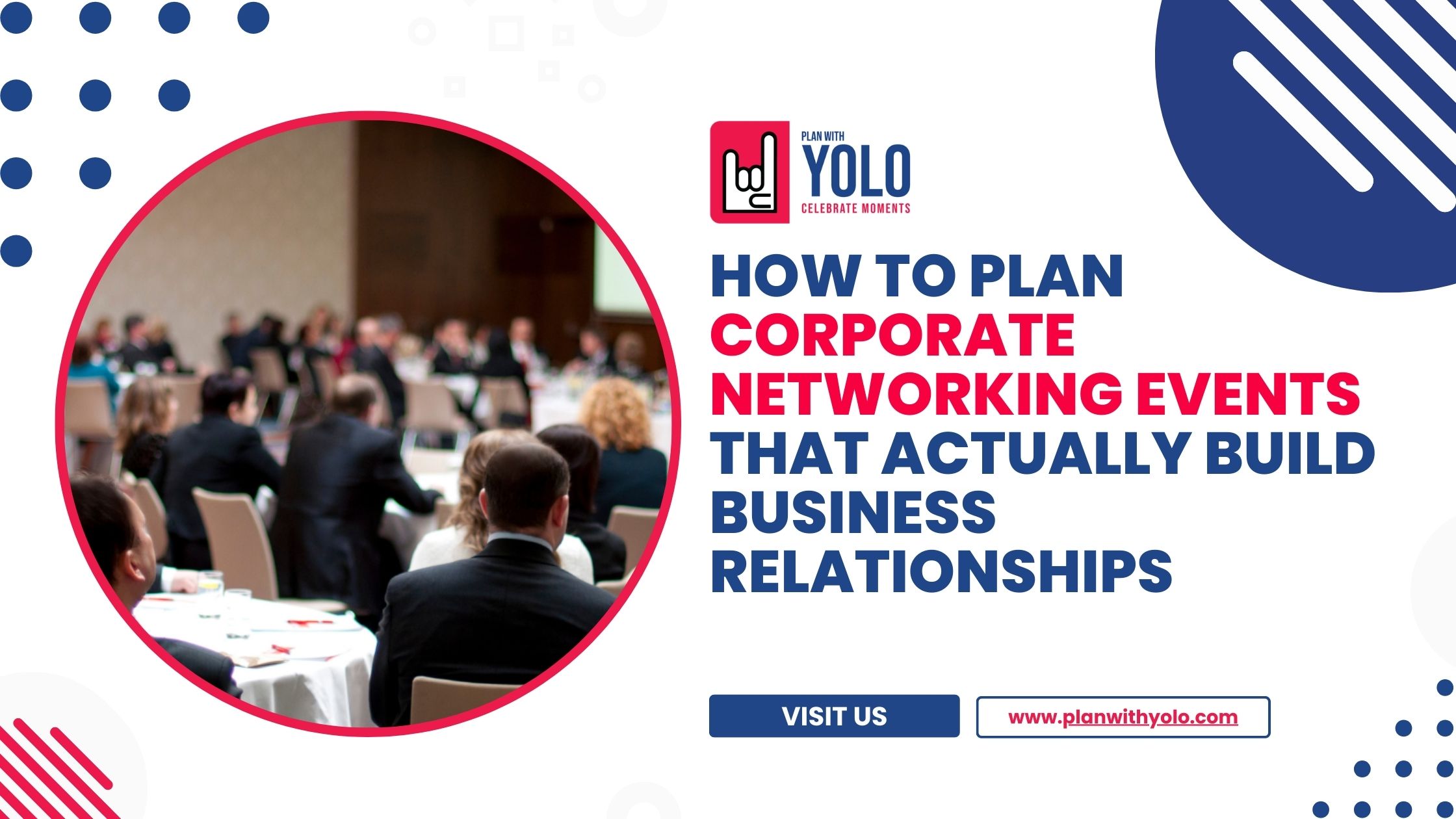
Strong business relationships are often built outside meeting rooms. In today’s professional landscape, corporate networking events have become essential for building partnerships, generating leads, and strengthening industry connections. Companies are increasingly investing in structured networking events that go beyond simple introductions and create meaningful conversations.
When planned well, networking events help professionals exchange ideas, explore collaborations, and build trust. However, many events fail because they lack structure, engagement, or clear objectives. A successful networking event requires thoughtful planning, engaging activities, and a comfortable environment where attendees can interact naturally.
India’s corporate event ecosystem offers strong advantages in creativity, cost-effective planning, and flexible execution. Businesses benefit from experienced planners who understand how to create professional yet engaging environments. With the right approach, networking events can become powerful tools for business growth and relationship building.
With expertise in corporate experiences and event coordination, Plan with Yolo supports organizations in creating well-structured networking events that encourage meaningful connections and long-term business value.
Why Corporate Networking Events Matter
Networking events play a crucial role in business development. They create opportunities for professionals to meet potential clients, partners, and collaborators in a relaxed setting.
Unlike formal meetings, networking events allow conversations to flow naturally. Attendees can exchange ideas, discuss industry trends, and explore future opportunities. This makes professional networking events valuable for both individuals and organizations.
Companies often use networking events to strengthen brand presence and industry relationships. Well-organized events reflect professionalism and create positive impressions among attendees.
Setting Clear Goals Before Planning
Before organizing a networking event, companies should define clear objectives. Some events focus on lead generation, while others aim to build partnerships or strengthen community relationships.
Identifying goals helps planners design the event format, activities, and guest list. For example, a startup networking event may focus on collaboration, while a corporate networking session may prioritize client engagement.
A clear goal also helps measure event success. Metrics such as attendance, engagement, and follow-up meetings provide insights into event effectiveness.
Choosing the Right Format and Venue
The format of a networking event influences how attendees interact. Cocktail-style gatherings encourage casual conversations, while structured networking sessions provide guided interactions.
Venue selection also matters. A comfortable and accessible location helps attendees relax and engage more easily. Lighting, seating arrangements, and layout should encourage movement and conversation.
Organizations looking for smooth planning and reliable execution can partner with Plan with Yolo for corporate event support designed to match networking objectives and guest engagement.
Business Networking Event Ideas That Work
Creative formats can improve engagement and interaction. Some effective business networking event ideas include:
- Speed networking sessions
- Panel discussions with networking breaks
- Industry roundtables
- Interactive workshops
- Networking games
These formats encourage attendees to interact with multiple participants rather than staying in one group.
Structured networking sessions help reduce awkwardness and make it easier for attendees to start conversations. This improves overall participation and event success.
Corporate Networking Strategies for Better Results
Strong corporate networking strategies ensure events deliver real value. One effective approach is to create small group interactions. Smaller groups encourage deeper conversations and stronger connections.
Providing conversation prompts or discussion topics can also help attendees engage more easily. This reduces hesitation and encourages meaningful exchanges.
Follow-up strategies are equally important. Sharing contact lists, sending thank-you emails, and scheduling post-event meetings help maintain connections built during the event.
A well-planned networking strategy ensures that relationships continue beyond the event itself.
Networking Event Activities to Encourage Interaction
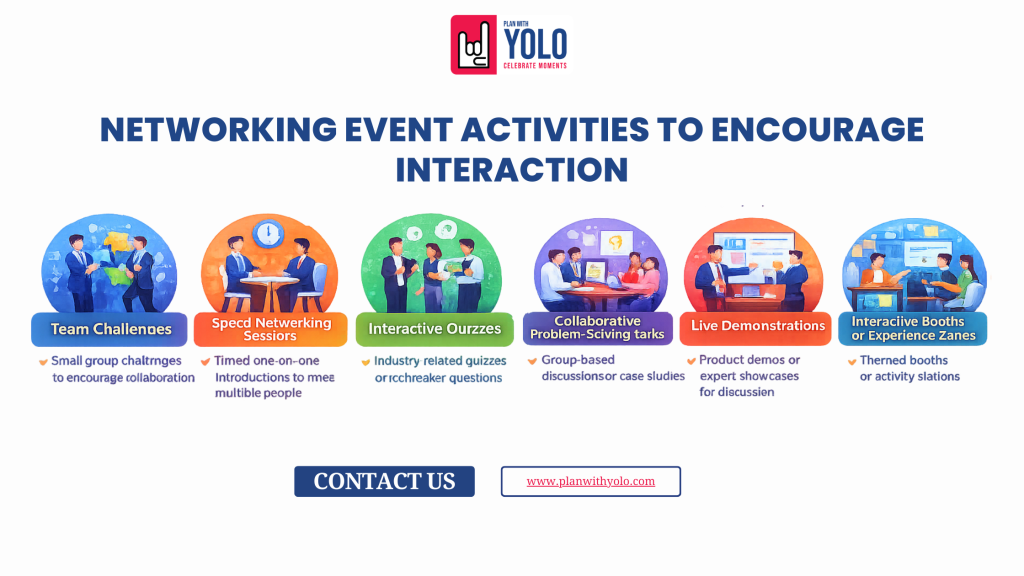
- Team Challenges
Small group challenges encourage collaboration and help attendees interact naturally while working toward a common goal. - Speed Networking Sessions
Timed one-on-one interactions allow participants to meet multiple professionals in a short period, making introductions easier and more structured. - Interactive Quizzes
Industry-related quizzes or fun icebreaker questions help spark conversations and reduce hesitation among attendees. - Collaborative Problem-Solving Tasks
Group-based discussions or case-study activities promote teamwork and meaningful exchanges of ideas. - Live Demonstrations
Product demos or expert showcases give attendees a shared topic to discuss and engage with. - Interactive Booths or Experience Zones
Themed booths or activity stations create natural conversation starters and encourage movement around the venue. - Guided Discussion Tables
Pre-assigned discussion topics at tables help participants engage in focused and valuable conversations. - Networking Bingo or Gamified Activities
Light gamification adds energy while encouraging attendees to connect with new people.
Structured networking activities should balance engagement and professionalism, ensuring participants feel comfortable while maintaining the event’s business purpose.
Networking Event Planning Guide
A structured networking event planning guide helps ensure smooth execution. Planning should begin with defining goals, target audience, and event format.
Next, create a timeline. This includes sending invitations, confirming vendors, and preparing materials. Clear communication ensures all participants understand the event schedule.
On the event day, focus on registration, introductions, and smooth transitions between sessions. After the event, follow up with attendees to maintain connections.
Working with experienced planners helps ensure that every detail is managed professionally and efficiently.
Customization and Long-Term Relationship Building
Every organization has different networking goals. Customization ensures the event format aligns with company objectives and audience preferences.
Professional planners design events that encourage genuine interaction rather than forced networking. This helps build stronger and more meaningful connections.
Long-term relationship building requires consistent engagement. Hosting regular networking events helps companies maintain industry connections and strengthen partnerships.
With a focus on structured planning and engaging formats, Plan with Yolo supports organizations in creating networking experiences that deliver real business value.
Comparison: Casual Networking vs Structured Networking Events
| Aspect | Casual Networking | Structured Corporate Networking |
|---|---|---|
| Interaction | Random and limited | Guided and meaningful |
| Engagement | Varies by attendee | Consistent participation |
| Outcomes | Unpredictable | Measurable results |
| Follow-up | Often limited | Planned and organized |
| Overall Impact | Moderate | Stronger relationships |
Structured events provide better opportunities for meaningful connections and measurable outcomes.
Use Cases for Corporate Networking Events
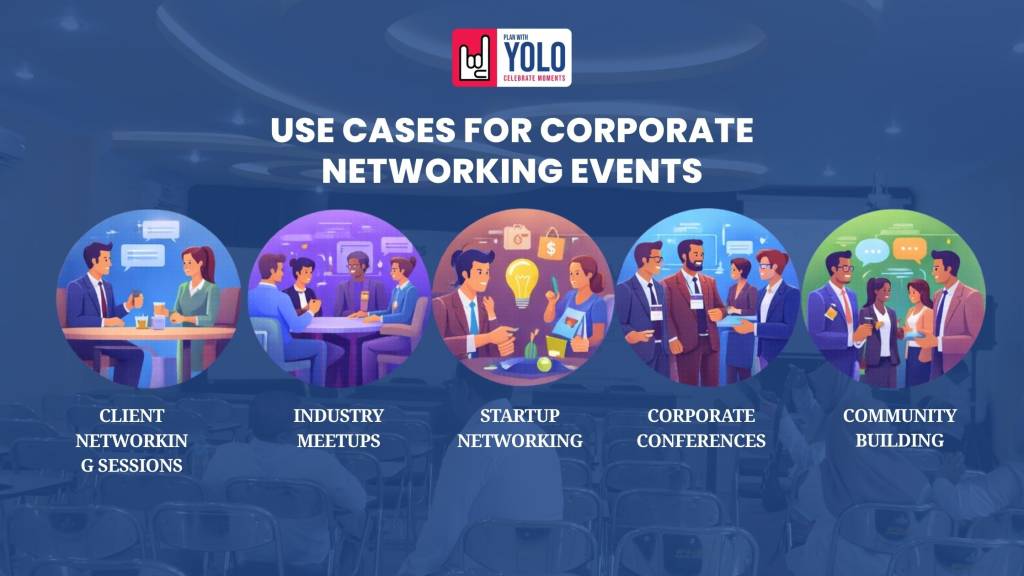
Client Networking Sessions
Client-focused networking events help businesses strengthen existing relationships and build trust with partners. These sessions provide a relaxed environment where companies can interact beyond formal meetings, discuss future collaborations, and understand client needs more deeply. Well-planned client networking events often lead to stronger partnerships and long-term business growth.
Industry Meetups
Industry networking events bring together professionals from similar sectors to exchange insights and discuss trends. These gatherings help attendees stay updated on market developments, share knowledge, and explore collaborative opportunities. They also create space for meaningful conversations that may lead to partnerships, referrals, or future business opportunities.
Startup Networking
Startups benefit greatly from networking events where they can connect with investors, mentors, and other entrepreneurs. These events create opportunities for learning, collaboration, and funding discussions. A structured networking environment helps startups present their ideas clearly and build relationships that support growth and innovation.
Corporate Conferences
Many corporate conferences include dedicated networking sessions that allow attendees to interact beyond presentations and panel discussions. These sessions encourage participants to exchange ideas, discuss business opportunities, and build professional connections. Proper planning ensures that networking time is structured and productive for everyone involved.
Community Building
Organizations often host networking events to build professional communities within their industry or region. These gatherings create a sense of belonging and encourage knowledge sharing among participants. Over time, regular networking events help create stronger professional networks and foster long-term collaboration among members.
Conclusion
Well-planned corporate networking events can create valuable opportunities for businesses to connect, collaborate, and grow. By focusing on structured planning, engaging activities, and clear objectives, companies can ensure their networking events deliver meaningful results.
As organizations continue to prioritize relationship building and collaboration, networking events will remain a key part of corporate strategy. With thoughtful planning and professional execution, these events can strengthen partnerships and create long-term business value.
With expertise in corporate event planning and coordination, Plan with Yolo helps organizations host networking events that encourage genuine connections and lasting professional relationships.