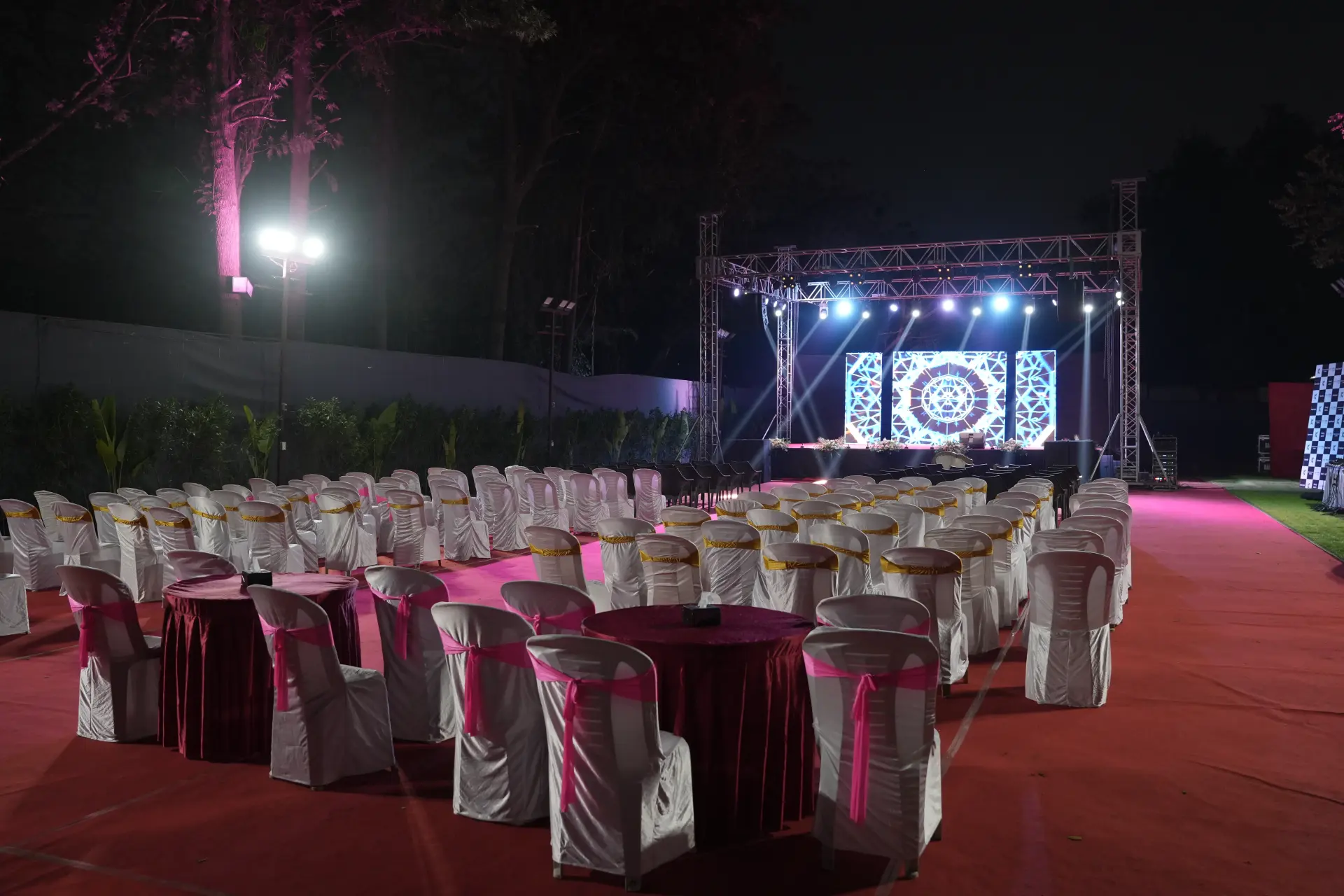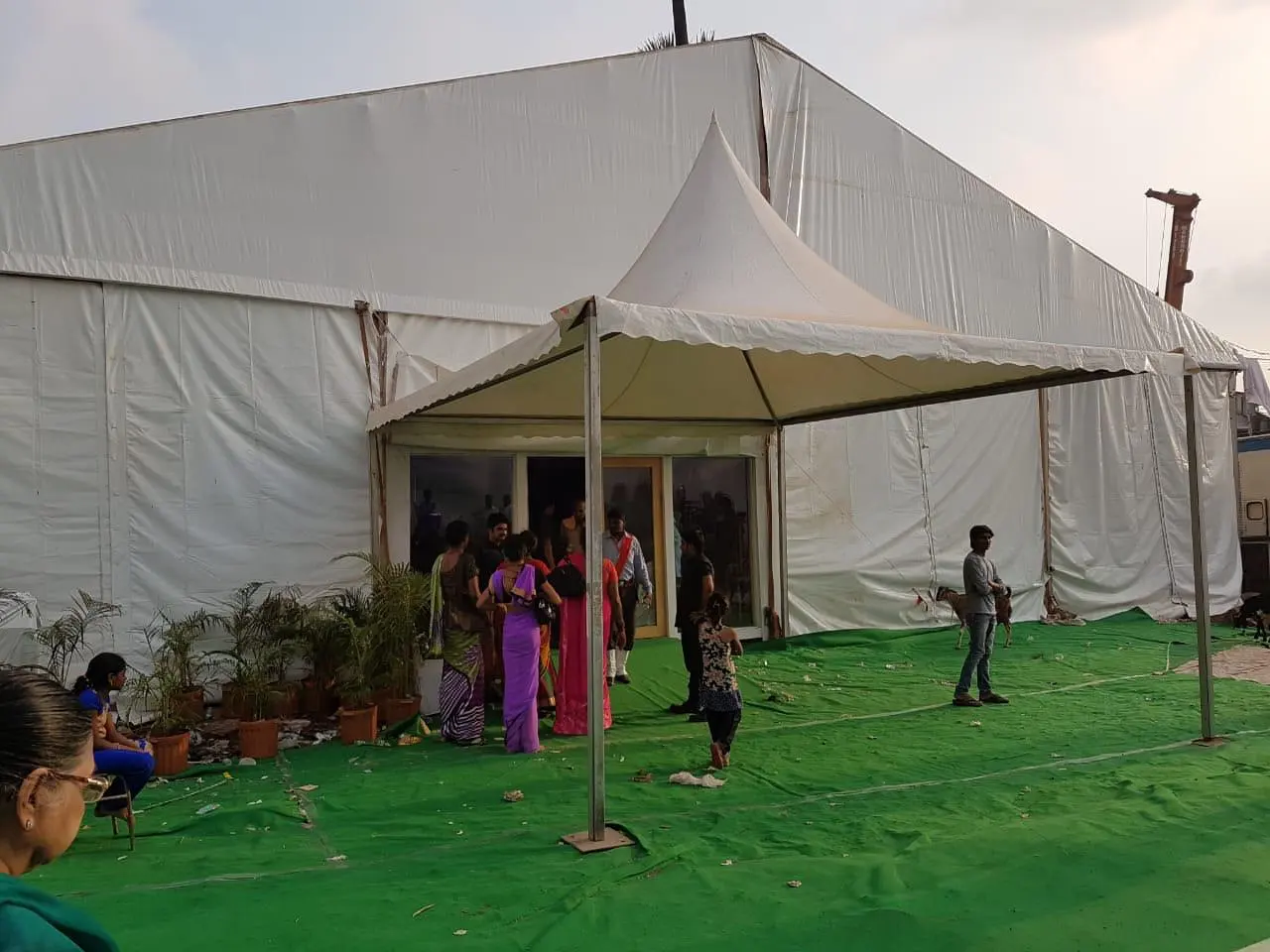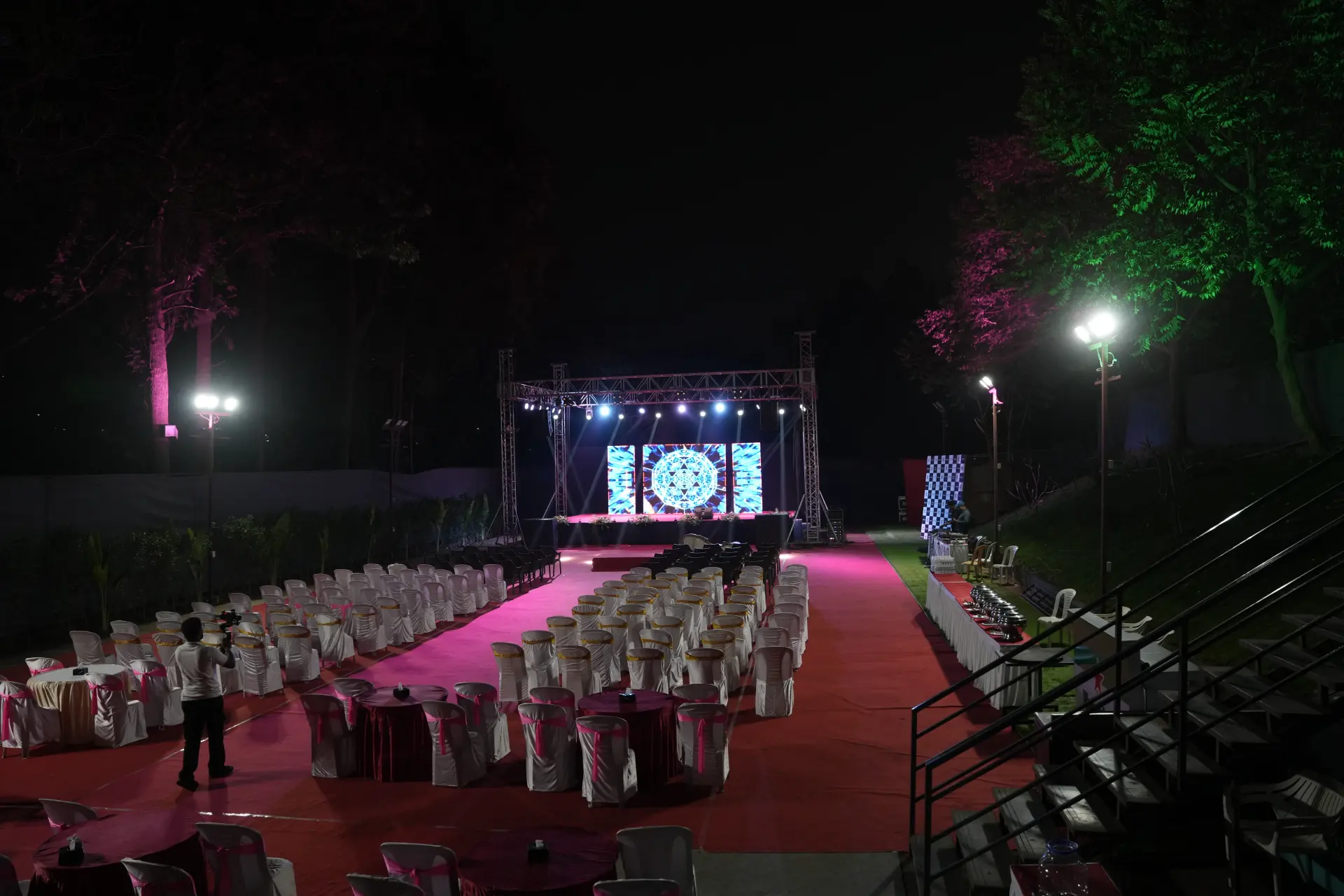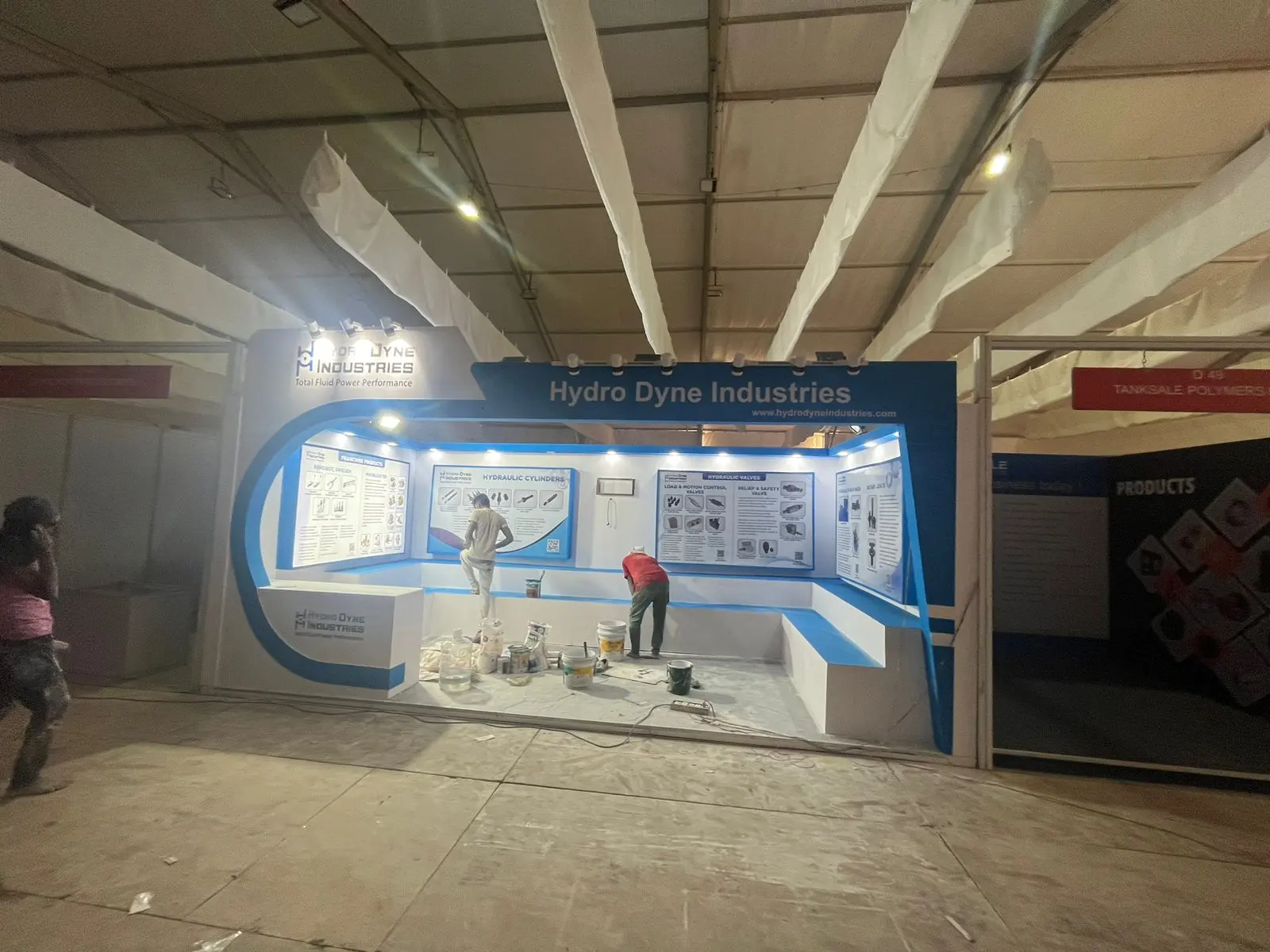
Business conference organisers work backwards from the audience they have to attract. The sequence is: fix the proposition, lock date and venue, confirm the speakers who draw people, open registration, sell sponsorship and exhibition space, market on a rhythm, deliver the delegate journey on the day, then follow up fast.
An internal company conference has a guaranteed audience. A business conference does not. Business conference organisers are solving a harder problem, because the same team that builds the room also has to persuade strangers to give up a working day and turn up to it. That changes the order the work runs in, and it changes what the organiser is measured on. Here is how the job actually sequences.
Planning this in Pune? See our business event organisers: one team plans and runs it with you, since 2013.
What business conference organisers are really solving for
Two things at once: a room that works and a room that fills.
Everything in the plan serves one of those. A speaker is booked partly for the session and partly because the name pulls registrations. A venue is chosen partly for its hall and partly because delegates can reach it without losing an hour. Sponsorship is sold partly for revenue and partly because sponsors bring their own audiences with them.
Once you see the job that way, the order below stops feeling arbitrary. Nothing gets built before the thing that fills the room is settled.
Step one: the proposition
Write the promise before the programme, because the promise is what people register against.
A proposition is one sentence a stranger can repeat: who this day is for, what they will be able to do afterwards, and why now rather than next year. Industry summits fail on this more than on anything else. A vague invitation asking people to explore emerging trends gets polite interest and empty seats.
The organiser’s contribution at this point is uncomfortable questions. Who exactly is this audience, where do they already gather, and what would make them choose your day over staying at their desk?
Step two: date and venue, from the delegate’s side
Pick the date around your audience’s calendar and the venue around their commute, not around your own office.
Quarter ends, audit season, festival weeks and school holidays quietly remove whole categories of delegate. So does a Friday afternoon. On venues, the question is not how the ballroom photographs but how long it takes to reach from where your audience actually works. In Pune, a delegate base drawn from the Hinjewadi and Wakad corridor will treat a venue on the other side of the city as a half-day of travel, however good the hall is. Parking capacity matters more than most people expect, because a conference where the car park fills at nine creates a queue that ruins the first session.
Step three: the line-up is the marketing
The speaker list does more registration work than any advertisement you will buy.
This is why line-ups get confirmed early and announced in waves. One strong name released now, two more in a fortnight, the panel a fortnight after that, so there is always something fresh to say. An organiser who waits for the complete programme before announcing anything loses the whole first stretch of promotion.
Three practical rules apply. Get written confirmation with the date and slot, not a verbal yes. Keep a standby name for each anchor slot. And never publish a name that is still described as awaiting confirmation, because an unpublishing is far more damaging than a late announcement.
Step four: what has to sit behind the registration link
Open registration only when everything a hesitant person needs is already on the page.
- The promise, the date, the venue with a map, and the start and finish times.
- Names and photographs of confirmed speakers, with their topics.
- A form short enough to finish on a phone between meetings.
- An instant confirmation with a calendar file attached.
- A clear line about what the fee, if any, includes.
Registration is also where your data obligations begin, so the privacy wording and the fields you collect should be agreed before the link goes out rather than corrected afterwards.
Step five: sponsors and exhibitors
Sell sponsorship against audience and visibility, and put the floor plan in the pack.
Sponsors are buying access to the people you promised to assemble, so the pack needs an honest description of who is expected in the room, what each tier actually receives, and where on the floor each level of stall sits. Vague packages produce arguments during the build, when a sponsor discovers their stall faces a service door.
Exhibition areas need their own thinking: power to each stall, a build window before delegates arrive, and a tea-break layout that pushes footfall past the stalls rather than around them. Stall design itself is a separate craft, and our page on exhibition stall design covers what makes one stop people.
Step six: the marketing rhythm
Promotion works as a rhythm, not as a burst, and the rhythm continues right up to the morning.
Announcements, speaker reveals, agenda releases, reminder mails, a last call, then a practical note the day before with directions and timings. Some registrations never become attendance; every experienced organiser plans for that gap instead of pretending it will not happen, by over-registering sensibly and confirming attendance in the final week.
The delegate journey, step by step
The delegate experiences a sequence of their own, and each part of it has somebody setting it up.
| Where the delegate is | What the organiser sets up | What the delegate should feel |
|---|---|---|
| Hearing about it | Announcement page, confirmed names, a plain promise | This is worth a working day |
| Registering | Short form, instant confirmation, calendar file | Handled in under two minutes |
| Waiting | Reminder sequence, agenda updates, travel notes | Still remembered, still interested |
| Arriving | Road signage, parking direction, desks sized for the rush | No queue and no confusion |
| In the hall | Sound checked from the back row, readable slides, charging points | Able to follow without straining |
| At the break | Enough counters, standing space, badges readable at arm’s length | Conversations start on their own |
| Leaving | A promised date for slides, a short feedback form | Something still to come |
| The week after | Material delivered exactly when promised | Willing to return next year |
Step seven: running the floor
On the day the organiser runs two operations in parallel, and they need separate people.
One is the stage: sessions starting on time, speakers found, handovers clean. The other is the floor: the desk, the signage, the stalls, the food counters, the delegate who cannot find the breakout room. A team that puts both jobs on one person will hold the programme together and let the floor drift, or the other way round. Ask how many people are on each side before you agree the crew.
Step eight: the week after decides the next edition
A conference earns its second edition in the seven days after the first one ends.
Slides and recordings go out when promised, not when convenient. Feedback is collected while the day is fresh. Sponsors get a written note on what happened at their stall, and the delegate list, where consent allows it, goes to the people who will follow up. Then somebody writes down what to change, because next year’s planning starts from that note rather than from memory.
Where this usually goes wrong
- Building before selling. Money committed to production before registrations open leaves nothing to spend on filling the room.
- One announcement only. A single launch mail and then silence for six weeks loses the audience that was interested at the time.
- Sponsors sold and then forgotten. Every promised logo placement needs a person checking it exists.
- Breaks treated as dead time. Networking is often the reason people came. Short breaks and too few tea counters undo the whole day.
- No plan for the no-shows. Catering, seating and badge counts all need a realistic attendance figure rather than a registration figure.
Planning a delegate conference
Filling a room and building one are two jobs, and they work better when the same team can see both.
Plan With YOLO has been at this since 2013. The tally so far: 500+ events, 30+ cities, and 100+ brands and companies. For delegate-facing conferences we take on the venue, the staging, the registration desk, the exhibition floor, the branding and the day itself, with one contact throughout. The wider scope is described under business event organisers in Pune. Tell us your proposition and your expected audience on the contact page, and we will send back a plan with every cost shown separately.
Frequently asked questions
How is a business conference different from an internal company conference?
Attendance. An internal conference has a captive audience, so the effort goes into content and production. A business conference has to attract delegates who could stay at their desks instead, so the proposition, the speaker line-up, the registration experience and the marketing rhythm matter as much as the hall. Sponsors and exhibitors usually appear only in the second kind.
When should registration open for a business conference?
Open registration once the date, the venue and at least one confirmed headline speaker exist, and never before the page can answer a hesitant reader's questions. Opening too early with a thin page wastes your best promotional moment. Opening too late compresses everything into a scramble and leaves sponsors with no audience figure to buy against.
What should a conference sponsorship pack contain?
An honest description of the expected audience, what each tier receives in specific terms, a floor plan showing where each stall level sits, deadlines for logos and artwork, and what the sponsor must provide themselves. Vague packages cause arguments during the build, usually when a sponsor discovers their stall is facing a service door.
How do organisers deal with people who register and do not attend?
They plan for the gap rather than hope against it. That means confirming attendance in the final week, sizing catering and seating on a realistic attendance figure rather than the registration count, and keeping a short waiting list where seats are limited. Reminder mails in the last few days recover a meaningful number of wavering delegates.
Who runs the exhibition area during the conference?
Somebody separate from whoever is running the stage. The floor needs its own owner for stall power, sponsor queries, signage and footfall routing, while a second person keeps sessions on time. When one person tries to hold both, the programme survives and the floor drifts, and your sponsors are the ones who notice.

Vicky founded Plan With YOLO in Pune in 2013 and leads the planning on corporate events, weddings and stage production across Maharashtra.