Event Planning QuestionsStraight answers, before you enquire

The questions people ask us on the first call, answered in full. Read them before you speak to anyone, ours or otherwise, so you know what a fair quote looks like and what to expect on the day.

  • Booking and dates
  • Quotes and payments
  • Permissions and licences
  • Rain and backups
  • On the day
  • Small events too
Event Planning Questions

Event planning questionsThe questions worth asking first

Most people plan two or three big events in a lifetime, so the same questions come up every time and nobody should feel awkward asking them. This page answers them plainly, with no sales language in between. Where the honest answer is that it depends, we say what it depends on.

The answers come from planning and running events since 2013: 500+ of them, for 100+ brands and companies, in 30+ cities. That is enough repetition to know which questions actually decide how an event turns out, and which ones only sound important. How early you book decides a great deal. The colour of the welcome gate decides very little.

Use these answers on any company you speak to, including us. Ask for the quote itemised, line by line. Ask who will be standing at your venue on the day and whether that person has read the plan. Ask what the rain arrangement is, in words, and what changing to it would cost. A company that answers those three clearly and in writing is usually the one that turns up at six in the morning to build.

  • Booking timelines by kind of event
  • What an itemised quote should show
  • Who handles permissions and music licences
  • Rain and power backup plans, in writing
  • Who is on site, and who makes the call
  • Running since 2013, 500+ events
Event planning questions

What people ask aboutQuestions by topic

  • Booking and timelinesWhen to start, how early dates go in season, and what can still be done at short notice.
  • Quotes and budgetsHow a quote is built, what each line covers, and which lines move most when numbers change.
  • Payments and paperworkThe advance, the stages of payment, what is written into the agreement, and what a final bill should show.
  • Permissions and licencesVenue approvals, police intimation, music licences and the sound cut-off rules for open venues.
  • Weather and backupsRain cover, wind on open ground, power failure, and what a backup plan should say in writing.
  • On the dayWho is on site, how changes are handled, and what happens when a supplier runs late.
  • Size and scopeSmall home functions, single functions of a wedding, and events where you only need stage and sound.
  • Cities and travelEvents outside Pune, across Maharashtra and beyond, and how travel and stay appear in a quote.

Before you commitWhat you get before you pay anything

Every enquiry gets the same six things, whether you book us or not.

  1. 01

    A call, not a pitch

    A planner calls to understand the occasion, the guests and the feeling you want, before anything is designed or priced.

  2. 02

    A written concept

    The look, the layout and the running order on paper, so you are reacting to something real instead of a description.

  3. 03

    An itemised quote

    Every element listed on its own line, so you can see what each part costs and remove what you do not want.

  4. 04

    A site visit

    We see the venue, the access time, the power supply and the guest route before the plan is finalised.

  5. 05

    One point of contact

    The same planner from the first call to the wrap-up, so you never have to explain your event twice.

  6. 06

    A run of show

    A timed sheet naming who does what and when, shared with you and with everyone working on the day.

How our event planning worksFrom first call to final bow.

  1. 01 Day 1

    The call

    Tell us the date, the guest count, the budget and the feeling you want in the room. We ask the questions most people forget.

    You getFirst ideas and a budget range

  2. 02 Week 1

    Concept & moodboard

    Theme, décor, stage layout and a minute-by-minute run of show, drawn up and revised until it feels like yours.

    You getMoodboard, layout and an itemised quote

  3. 03 Weeks 2–4

    Venue, vendors & permissions

    Venue shortlists, caterers, artists, anchors and the paperwork — police, music licences and venue approvals — handled by us.

    You getLocked vendors, one point of contact

  4. 04 Event eve

    Build & rehearsal

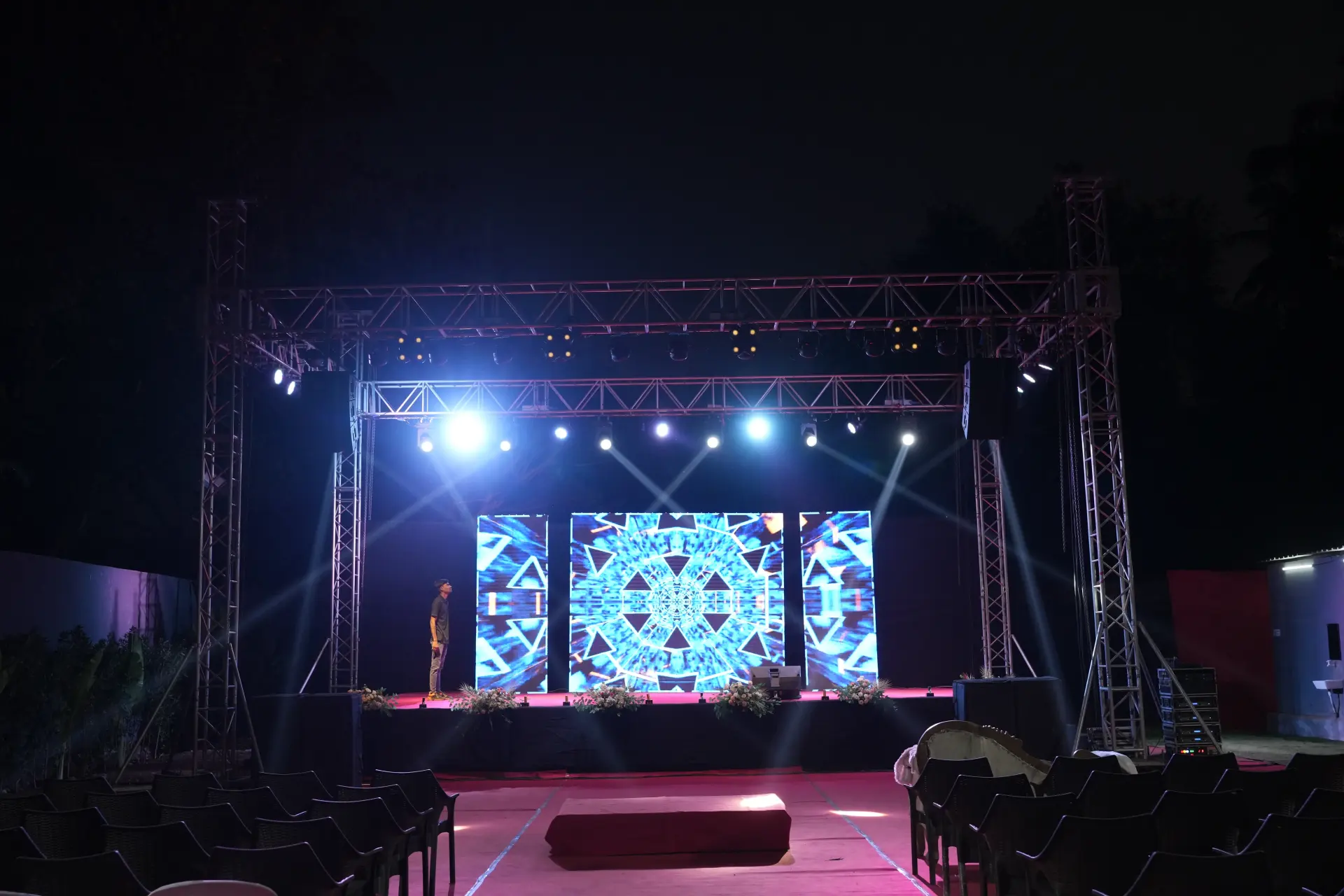
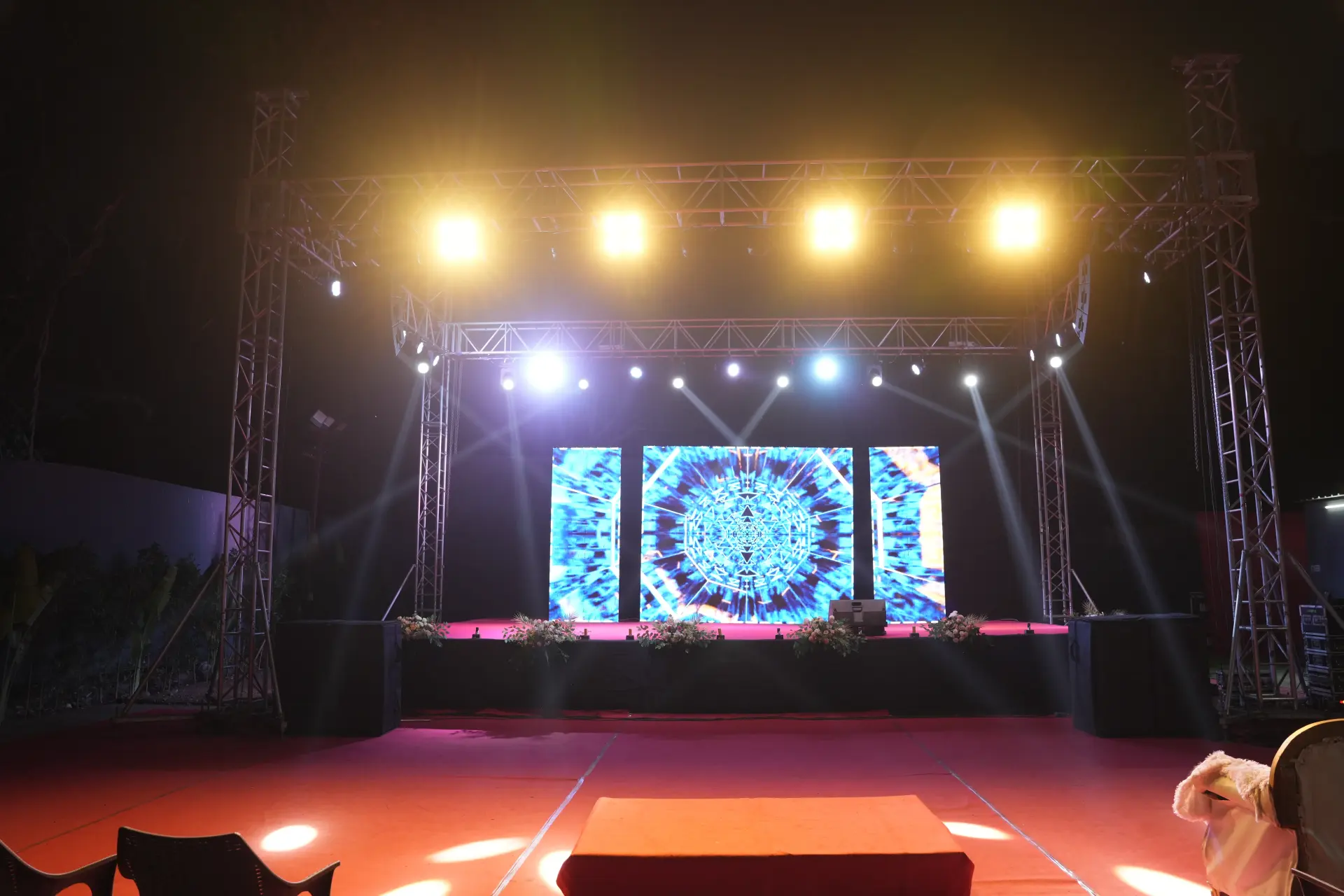
    Décor goes up, truss and LED walls are rigged, sound is checked and the anchor rehearses every cue with our show caller.

    You getA walk-through before guests arrive

  5. 05 Show day

    Showtime & wrap

    Our crew runs the floor, the stage and the guests. When it is over, we clear the venue and send you the photos.

    You getA calm host — you — and the memories

These are the questions we are asked most often on a first call. Each answer starts with the short version, then adds what it depends on, so you can read only the ones you need.

How far in advance should I book an event company?

Book three to six months ahead for a wedding or a large corporate event, and four to six weeks for a small party or an in-office function. Peak wedding dates and the year-end corporate season fill first, so a popular Saturday can go almost a year out. Short notice is still workable, and we take it regularly; what shrinks is the choice of venue and the time available to rehearse. If your date is fixed, tell us before the brief is ready, because holding a date early costs nothing and losing it costs a lot.

What does an event planner do that the venue's own team does not?

A venue team runs the venue; a planner runs your event. The banquet staff give you the hall, the tables, the food and often a house sound system, and most do that part well, but their responsibility stops at the walls of the room. A planner designs the look, builds the stage, writes the running order, coordinates every supplier to one timeline, rehearses the anchor and stands on the floor while it happens. The two are not competitors, and the clearest way to see the split is side by side.

On the dayVenue's own teamEvent company
Space and furnitureHall, chairs, tables, linen, house lightingLayout, seating plan, sightlines and guest flow
FoodMenu, kitchen and service staffCounter placement, queue direction, service timed against the programme
Look and décorWhatever standard setup the venue keepsTheme, stage, backdrop, florals, entry décor and branding
Sound and stageHouse system for speechesStage build, truss, LED wall, show sound and lighting design
ProgrammeNot their jobRunning order, cue sheet, anchor, rehearsal and show calling
SuppliersTheir own panel onlyEvery supplier worked to a single schedule
When something breaksFixes venue issuesHolds the whole event together and reworks the plan live

How are event quotes structured, and what should an itemised quote show?

An event quote should be a list of lines you can add to or delete from, never a single number. Expect separate lines for venue, food per head, décor, stage and production, lighting, branding and print, entertainment, hospitality, transport, crew on site, and a contingency. Taxes belong on the face of the quote, not buried in a total. Anything charged per day, per head or per hour should say so, because that is where a quote quietly grows when the guest count moves. Our corporate event budget and wedding planner cost pages break those lines down further.

Who arranges permissions, police intimation and music licences?

We arrange them, and you sign whatever has to be in your name. Most hotels and banquet halls hold their own licences for events inside the property, but an open ground, a society lawn, a road-facing activation or a late-running sound system usually needs more: written intimation to the local police station, a music licence for recorded or live music, and clearance from the society or ground authority. Sound cut-off timing is the rule people discover too late, so we confirm it before the running order is written rather than after.

What happens if it rains?

Every outdoor event we plan has a written wet-weather plan agreed before the date, not decided on the morning. That plan names the covered fallback, the time the decision is taken, who takes it, and what the switch costs. On the ground it means a tent or covered structure that can be brought in, cabling raised or taped, weights on every upright, covers for the sound desk and screen, and flooring for wet grass. A monsoon date in or around Pune is perfectly workable. An unplanned monsoon date is not.

How do payments usually work?

Most event work runs on an advance to confirm the date, a second payment before setup begins, and the balance at or just after the event. The advance is what lets us commit to suppliers, since each of them needs their own confirmation to hold your date. How the amounts are split varies with the size of the event and how many outside suppliers are involved, and the whole schedule is written into the agreement before you pay anything. Ask what happens to the advance if the date moves rather than cancels.

How many crew come on site on the day?

It depends on the build, not on the guest count. A small home function may need four or five people through setup and two who stay for the event itself. A wedding with a mandap, a reception stage and a lighting plan, or a corporate day with a screen and a live programme, needs a setup team from early morning and a show team in the evening: a planner on the floor, a show caller at the console, sound and light operators, décor hands for touch-ups, and marshals at the entry. You are told who is coming before the day, with one name given as your contact.

What happens when something changes on the day?

Changes are normal, so the plan is written with room for them. Guests arrive late, a speaker swaps a slot, a chief guest gets stuck in traffic, rain moves a segment indoors. The run of show carries buffers in the places that can absorb them, usually around food service and between programme blocks, so one delay does not push everything behind it. On site, one person holds the timeline and makes the call, which is why a single point of contact matters more than the size of the team. You are told what changed and what it means, then you get back to hosting.

How do I compare two event companies fairly?

Give both the identical brief and ask for the quote in the same line structure, or you are not comparing anything. Send the same date, guest count, venue and budget range to each, then look past the total: who came to see the site, who asked about access time and sound cut-off, who put the rain plan in writing, and who told you something you did not want to hear. Ask each one for photographs of their own work across more than one kind of event, and ask who will actually be at your venue on the day.

Do you take small events, or only large ones?

Yes, small events are normal work and always have been. A haldi on a terrace, a first birthday in a society hall, an office farewell, a single function of a wedding, or just stage and sound for something you are organising yourself are all quotable. Small events are seen from close range, so finish matters more than scale, and they get the same site visit and the same run sheet as a big one. The full list sits on our event services page.

Which cities do you travel to?

Pune is our base, and we have travelled to 30+ cities for clients. Most out-of-town work stays within Maharashtra, including Mumbai, Nashik, Kolhapur and Satara, along with the hill and coastal properties around Lonavala, Mahabaleshwar and Alibaug, and we travel further when a client's event calls for it. Travel, stay, moving material and the extra setup day are shown as their own lines in the quote rather than folded into a bundled figure. Send us the city and the date and we will tell you what changes.
Event planning questions — FAQsQuestions people ask us.

Can't find yours? Call or WhatsApp — a planner answers.

Do you visit the venue before quoting?

Yes, for weddings, conferences and any event with a build. A planner checks the access time, the power supply, the ceiling height for stage and truss, the entry and exit routes, and where guests will queue. That visit is what turns a rough quote into an accurate one, and it usually removes one or two assumptions that would have cost you later.

Can I keep my own caterer or decorator?

Yes. Tell us what is already booked and we quote only for the rest, then work everyone to one timeline. Plenty of families have a caterer they have used for years, and plenty of venues include food in the package. It makes no difference to how the day runs, as long as everybody is working to the same schedule.

Do you plan events at home?

Yes. Terrace haldis, society hall birthdays, house-warming poojas and anniversary dinners are ordinary work for us. A home needs a different plan from a banquet hall: floor and wall protection, a power check before anything is plugged in, lift and staircase access for material, parking that does not annoy neighbours, and a clean-up that leaves the place as it was.

Will the person who plans my event be there on the day?

Yes. The planner who takes your brief is on the floor on the day, and you are told in advance who else is on site and what each of them handles. You will not be passed from a sales person to a stranger at the venue. One named person holds the timeline and makes the calls when something moves.

Do you handle weekday and morning events?

Yes, and they are often easier to plan well. A weekday morning usually means better venue availability, calmer traffic for material vehicles and a longer setup window, because the venue is not turning around from the previous night's function. Company town halls, conferences, school programmes and pooja functions mostly run at these times anyway.

Do you share a written plan before the event?

Yes. You get a run of show: a timed sheet listing every segment, who is responsible for it, and when setup, rehearsal, doors, food service and teardown happen. It goes to you and to everyone working on the day, so nobody is working from a conversation they half remember. Changes are made on the sheet, then re-shared.

Can you help us choose a venue?

Yes. Tell us the guest count, the area, the date and what the event has to do, and we will shortlist venue types that fit and visit them with you. What we check is rarely what a brochure shows: setup access time, ceiling height, power supply, noise cut-off, parking, and whether outside suppliers are allowed in.

Can you take over an event someone else started?

Yes, and it happens more often than people expect. Send whatever exists already, including the quote, the layout, the supplier list and anything paid for, and we will tell you honestly what to keep and what to redo. The earlier the handover happens, the more of the money you have already spent stays useful.

Still have a question?

Call or WhatsApp us with it, and you will get the same straight answer you have just been reading.

Talk to a planner