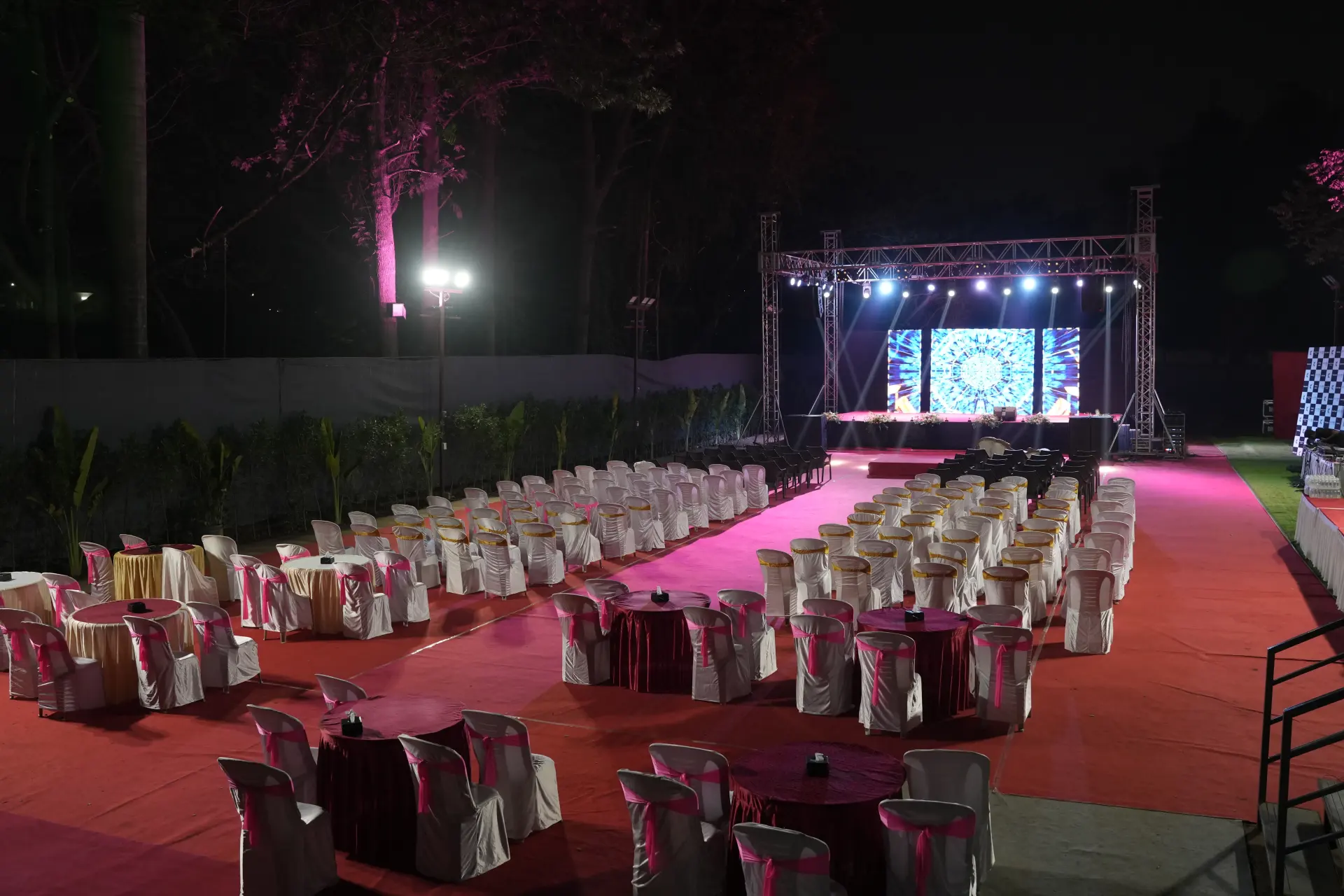
Rewards and Recognition Event ManagementGet the name right, and the rest follows

Recognition is won or lost in the spreadsheet, not on the stage. We run the nomination cycle, the verification, the trophy production calendar and the handover order behind every award.

  • Nomination cycles
  • Panel support
  • Citation checking
  • Trophy tracking
  • Cut-off calendar
  • Winner handover
Rewards and Recognition Event Management
2013planning events in Pune since

Rewards and recognition eventThe quiet work behind a trophy

An employee looks at a trophy for years. If the surname carries an extra letter, if the designation is the one they held before a promotion, or if the citation praises a project somebody else led, the award becomes a story told for the wrong reason. Almost every one of those failures begins as a data problem weeks before anyone books a hall.

We run the machinery of a recognition programme. Nomination forms built so the fields can actually be checked, reminders that close the cycle on time, a clean pack for whoever reviews entries, verification of every name and designation against your own records, citation drafting and proofing, a production calendar for trophies and certificates, and a handover sequence that puts the right object in the right hand at the right moment.

This work suits companies running recognition on a repeating cycle rather than once a year, and it travels well across locations, so a winner sitting in Kharadi and a winner working from another city are treated identically.

  • Nomination fields designed to be verifiable
  • Names checked against employee records twice
  • Citations proofed by two readers before printing
  • Production calendar with dated freeze points
  • Every award mapped to a presenter and a seat
Rewards and recognition event

What programme management coversNomination to handover

Six pieces of work that decide whether recognition lands well.

  1. 01

    Nomination forms and cycle

    Forms with fields that can be verified, clear eligibility wording, reminder schedules and a closing date that holds.

  2. 02

    Panel and moderation support

    Entry packs prepared for reviewers, scores collected consistently, conflicts flagged and decisions recorded for later reference.

  3. 03

    Name and citation checking

    Spellings, initials, designations and team lists verified against your records, then proofed by two readers before anything is printed.

  4. 04

    Trophy and certificate production

    Artwork, engraving lists, sample approval, spares for damage, and tracking until every piece is physically in the room.

  5. 05

    Cut-off calendar

    Dated freeze points for winners, engraving, print and script, so late changes are caught while they are still cheap.

  6. 06

    Handover sequencing

    Award order, presenter mapping, seating by category, trophy desk sequence and a rule for winners who cannot attend.

Recognition programmes we supportDifferent cycles, same discipline

01

Monthly and quarterly awards

Short repeating cycles where speed matters, usually announced at a floor meeting rather than a formal evening.

02

Annual recognition cycle

The full year reviewed across categories, with panel review, verified citations and the largest production run.

03

Long-service milestones

Years-of-service awards drawn from joining dates, where the list writes itself but must still be checked.

04

Spot and instant recognition

Small awards given close to the achievement, needing stock in hand and a very short approval path.

05

Peer-nominated awards

Colleagues nominating colleagues, which raises entry volume and makes moderation and conflict checks more important.

06

Target and performance awards

Recognition tied to published numbers, where the data owner signs off the result before anything is engraved.

07

Safety and quality awards

Plant and operations recognition judged on records and audits, often awarded by shift or by unit.

08

Remote and hybrid recognition

Winners sitting in another city or at home, given the same trophy, citation and moment as everyone else.

How our event planning worksFrom first call to final bow.

  1. 01 Day 1

    The call

    Tell us the date, the guest count, the budget and the feeling you want in the room. We ask the questions most people forget.

    You getFirst ideas and a budget range

  2. 02 Week 1

    Concept & moodboard

    Theme, décor, stage layout and a minute-by-minute run of show, drawn up and revised until it feels like yours.

    You getMoodboard, layout and an itemised quote

  3. 03 Weeks 2–4

    Venue, vendors & permissions

    Venue shortlists, caterers, artists, anchors and the paperwork — police, music licences and venue approvals — handled by us.

    You getLocked vendors, one point of contact

  4. 04 Event eve

    Build & rehearsal

    Décor goes up, truss and LED walls are rigged, sound is checked and the anchor rehearses every cue with our show caller.

    You getA walk-through before guests arrive

  5. 05 Show day

    Showtime & wrap

    Our crew runs the floor, the stage and the guests. When it is over, we clear the venue and send you the photos.

    You getA calm host — you — and the memories

Recognition is believed when people can see how it was decided and when the details are correct. Both are administrative achievements. A beautiful evening cannot rescue a category nobody understood, a shortlist that arrived from nowhere, or a plate with the wrong initial on it.

Treat it as a running programme, not one date

Decide the cadence first. A quarterly cycle keeps recognition close to the work and keeps the volume of entries manageable; an annual cycle carries more weight but asks people to remember something from eleven months ago. Many companies run both, with small frequent awards announced quickly and a larger cycle collected through the year. Whichever you choose, publish the calendar in advance: when nominations open, when they close, when results are announced. A programme that appears without warning gets thin, rushed entries from whoever happened to see the email.

Nomination data decides everything downstream

Design the form around what a reviewer will need to compare. Free text alone produces entries that cannot be ranked, so ask for the specific contribution, the period, the measurable result and one person who can confirm it. Keep employee identity as a code pulled from your records rather than a typed name, because a typed name is the single most common source of a wrong trophy. Ask nominators to declare a reporting relationship. Close the window when you said you would, send the reminders before that, and keep entries in one place so nothing important arrives as a message on somebody's phone. Watch the pattern of who is being nominated as entries come in: if whole departments are missing, the problem is usually that managers were never told the cycle had opened, and a reminder in the right meeting fixes it while there is still time.

Citations that survive being read aloud

A citation is read once in public and then framed on a desk, so it has to be accurate and short enough to breathe. Verify the name, initials, designation, department and location against employee records, not against the nomination form. Check that a claimed achievement belongs to the individual rather than the team, and if it belongs to the team, name the team properly. Have two people proof every line, then read each citation aloud, because errors that the eye forgives become obvious in the mouth. Mark difficult surnames phonetically for whoever will announce them.

What is still open, and what is already locked

Point in the cycleStill open to changeAlready locked
Nominations openCriteria wording, eligibility questionsCycle dates and the category list
Nominations closeSupporting evidence, if a reviewer asksThe pool of entries
Panel review doneTie decisions, leaving a category unawardedScores and the ranking
Winners approvedSpelling, designation, team member listWho has won each category
Engraving releasedNothing at all on the plateNames, categories and wording
Script signedPronunciation notes, reading orderCitation text on screen and in print
Rehearsal finishedWhich presenter gives which awardTrophy stock, artwork, seating plan
Doors openOnly recovery choicesEverything above

The last mile: one winner at a time

The handover is a sequencing exercise. Number every trophy to match the running order and lay them out in that order behind the desk, so nobody is reading engraved plates under stage light. Map each award to a presenter in advance and tell the presenter how to hold and pass it, since a trophy handed base-first turns the photograph into a wrestling match. Seat winners where they can reach the steps without crossing the room, and tell them which side to enter from. Decide beforehand what happens when a winner is absent: somebody accepts on their behalf, or the award is held and dispatched with the citation, recorded either way so nothing sits forgotten in a cupboard. Keep spares of blank plates for the correction you will eventually need, and keep one person at the trophy desk whose only job is to match the object to the name being read. The evening that carries all this, from set design and lighting to entertainment and the photo plan, is on our award ceremony event management page; this page is the programme that decides who walks up those steps. If recognition is one part of a wider calendar, see employee engagement events.


Rewards and recognition event — FAQsQuestions people ask us.

Can't find yours? Call or WhatsApp — a planner answers.

What does rewards and recognition event management involve?

It involves running the nomination cycle, supporting the review panel, verifying every name and citation, producing trophies and certificates to a dated calendar, and sequencing the handover so each winner gets a clean moment. The evening is the visible part. The work that makes it credible happens in forms, records and production schedules over the preceding weeks.

How do we stop wrong names appearing on trophies?

Pull identity from your employee records rather than from typed nomination forms, verify each entry twice, and have two people proof the engraving list before it is released. Keep a dated freeze point after which no change goes to production, and order a few blank plates as spares. Most wrong names come from a form filled in by a colleague in a hurry.

When should the engraving list be frozen?

Freeze it as soon as winners are approved, and well before rehearsal. Engraving, printing and packing each need working days, and personalised pieces cannot be reused if a name changes. Build the freeze date backwards from the event and publish it to everyone involved, so a late addition is discussed as an exception rather than assumed to be possible.

Which factors decide the cost of a recognition programme?

Cost is driven by the number of categories and winners, the trophy and certificate material, how much is personalised, how many cycles you run in a year, and whether awards must be shipped to people in other locations. Panel support and citation work scale with entry volume. Send us your category list and cycle and we will itemise it.

How do we recognise employees who work remotely?

Give them the same object and the same moment. Ship the trophy and citation so it arrives before the announcement, have a colleague or manager hand it over on camera, and keep them on screen while the citation is read. Record their acknowledgement in advance if the connection is unreliable, so the room still sees a face rather than a frozen tile.

Should winners be told in advance?

Tell them enough to be present and dressed for it, without revealing the category, if surprise matters to you. Winners who learn at the last minute often miss the event entirely, and an empty seat weakens the whole segment. At minimum, confirm attendance, seat them near the aisle and tell them which side of the stage to approach from.

How do we choose award categories that feel fair?

Write categories around behaviour people can influence and evidence somebody can check. Avoid overlapping definitions, cap the number so each award keeps meaning, and publish the criteria with the nomination form rather than afterwards. Allow a category to go unawarded in a weak year; the discipline of doing that once protects the credibility of every award that follows.

Send us the categories, we will run the cycle

Share your recognition calendar and the categories you award, and we will set up the forms, the verification plan and a dated production schedule.

Talk to a planner