
Ground layout and floor marking
A drawing that shows dancing floor, stage, stalls, walkways, seating for elders and the lanes kept permanently clear.
+91 84858 38274 · +91 84858 38219
Shop 7, Ekta Nagri, Near Dwarka Apartment, Anand Nagar, Pune 411051
Garba nights are won on the ground plan. We mark the floor, place the stage and the speakers, run the gate and the passes, and keep the exits clear, so the dancing looks effortless from the middle of the circle.


A dandiya night is an outdoor crowd event that happens to have music. The decoration matters, the stage matters, but what people remember is whether they could dance without being pushed, hear the beat from the far end, get water without losing their place and leave quickly at the end. All of that is decided on a drawing, weeks before anyone picks up a stick.
So we start with the ground. Usable floor area after the stage, the stalls and the walkways are taken out, an entry that can clear a queue faster than it builds, an exit on a different side, and speaker positions worked out for the shape of the space rather than dropped either side of the stage. Then the look: gate, backdrop, lighting, sponsor panels.
We run the whole night with one point of contact, whether it is a society ground in Balewadi, a club floor, a college campus or a ticketed event on open land near Wagholi. Send your ground, your dates and the crowd you expect, and a layout comes back before a quote does.
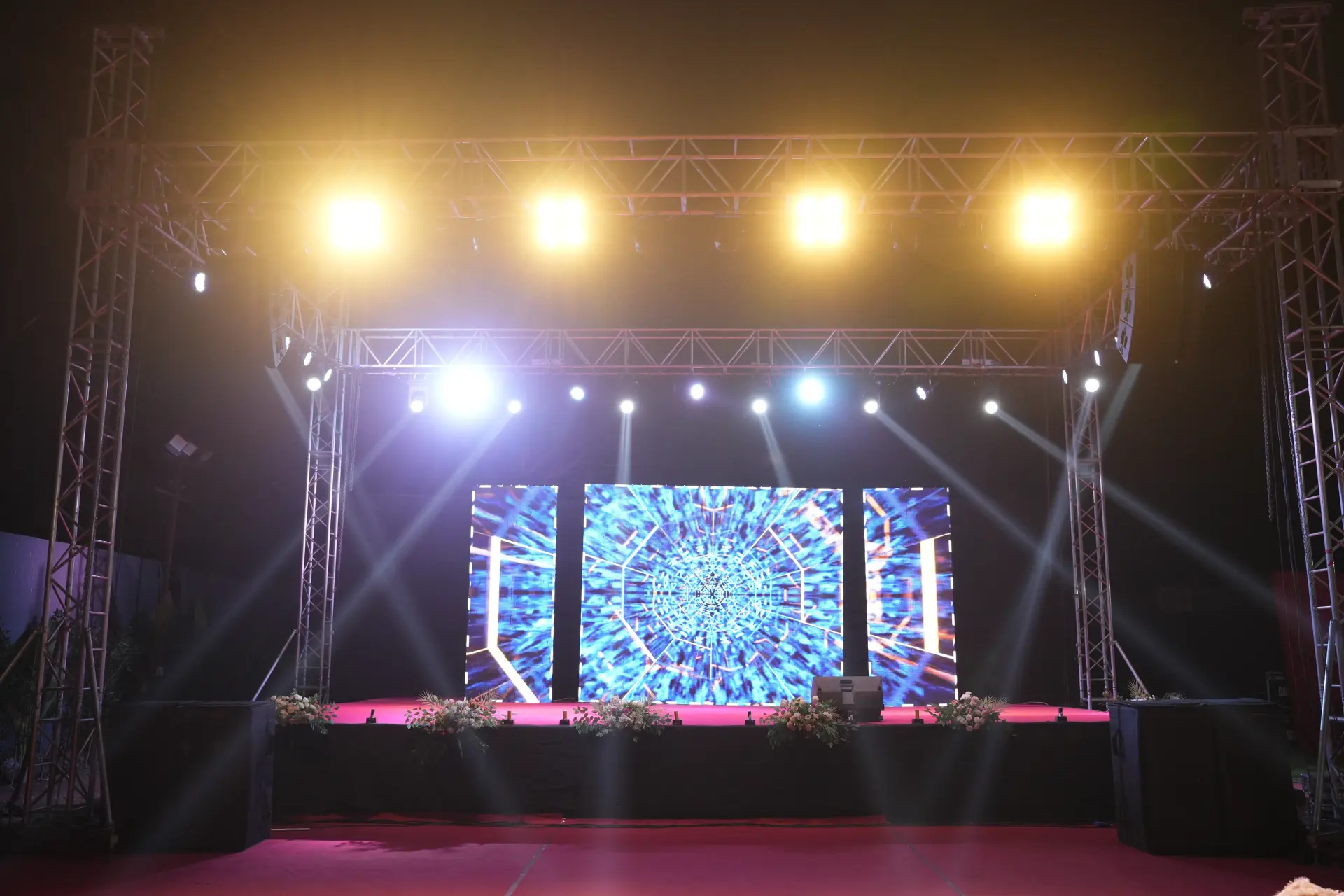
Every photo here is from an event our team planned and ran.
Six heads cover most garba nights, and the last two are the ones people cut first and regret.
A drawing that shows dancing floor, stage, stalls, walkways, seating for elders and the lanes kept permanently clear.
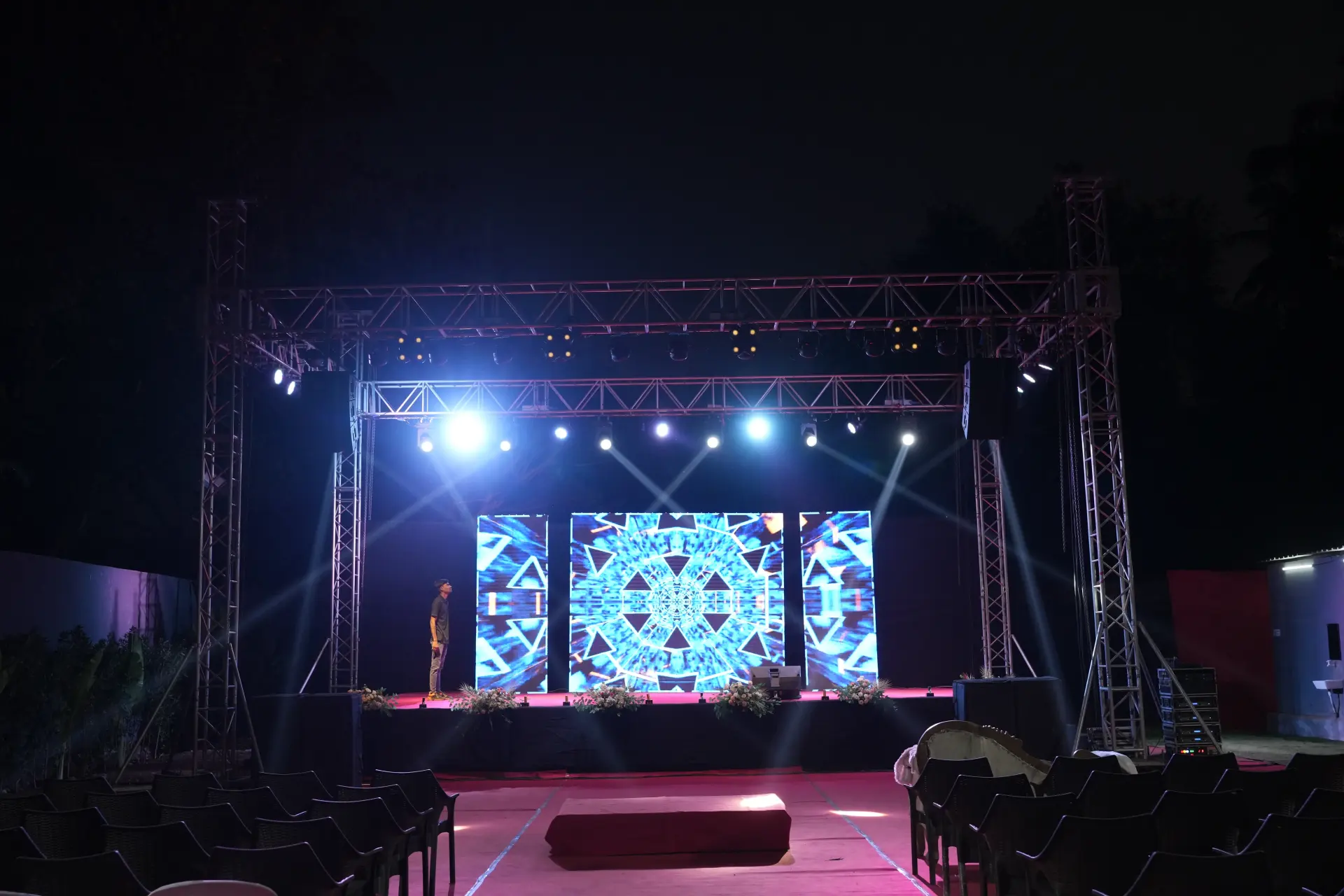
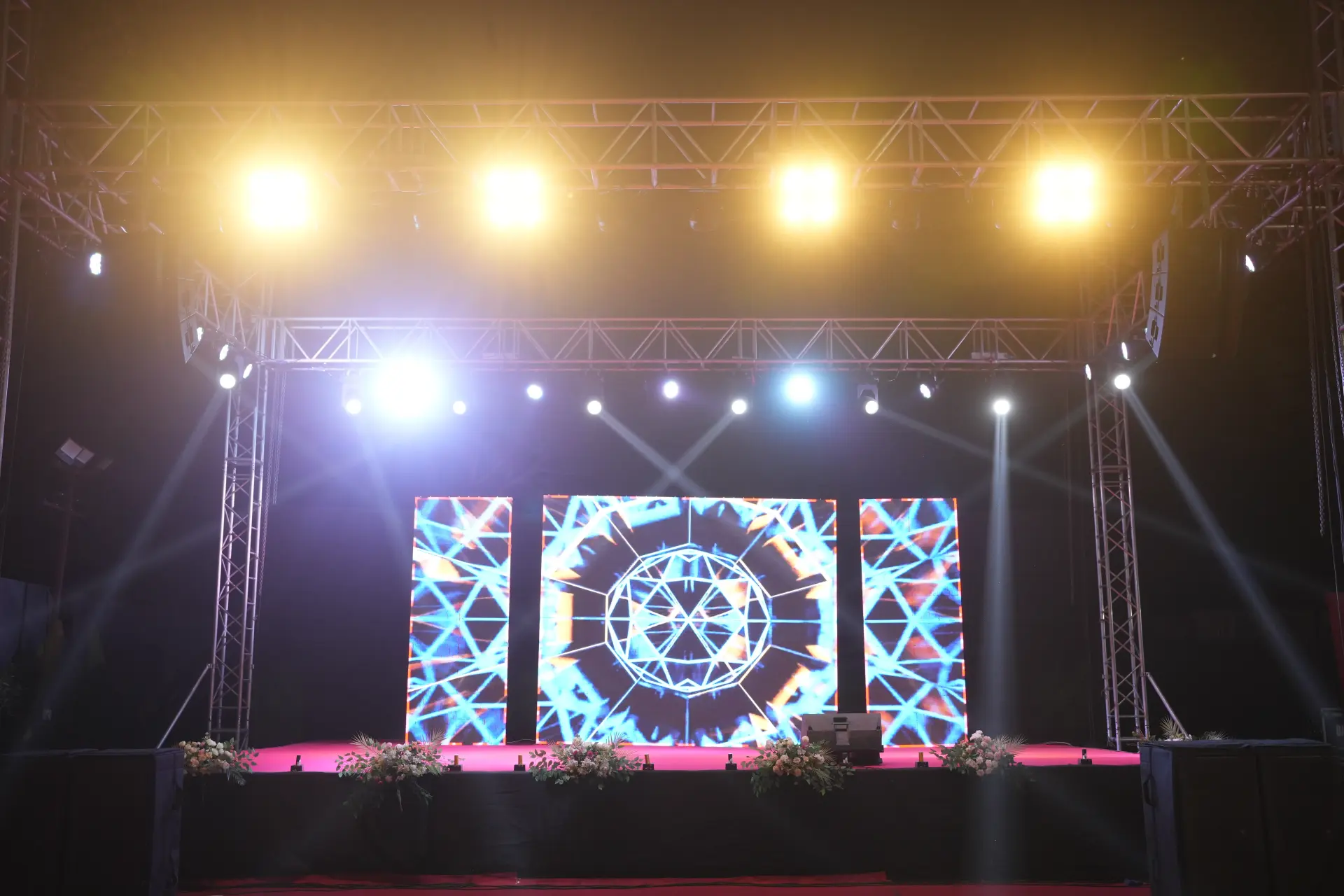
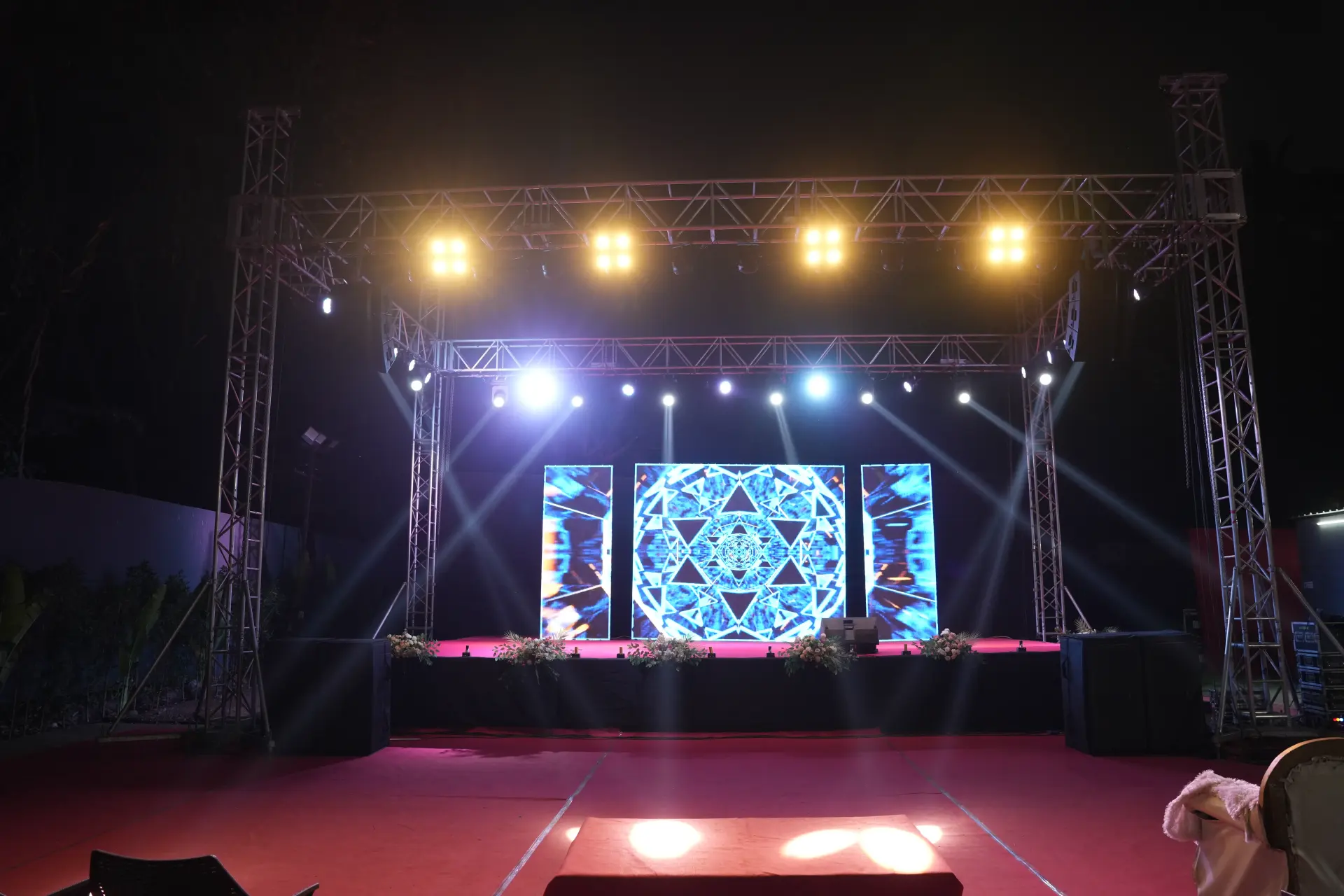
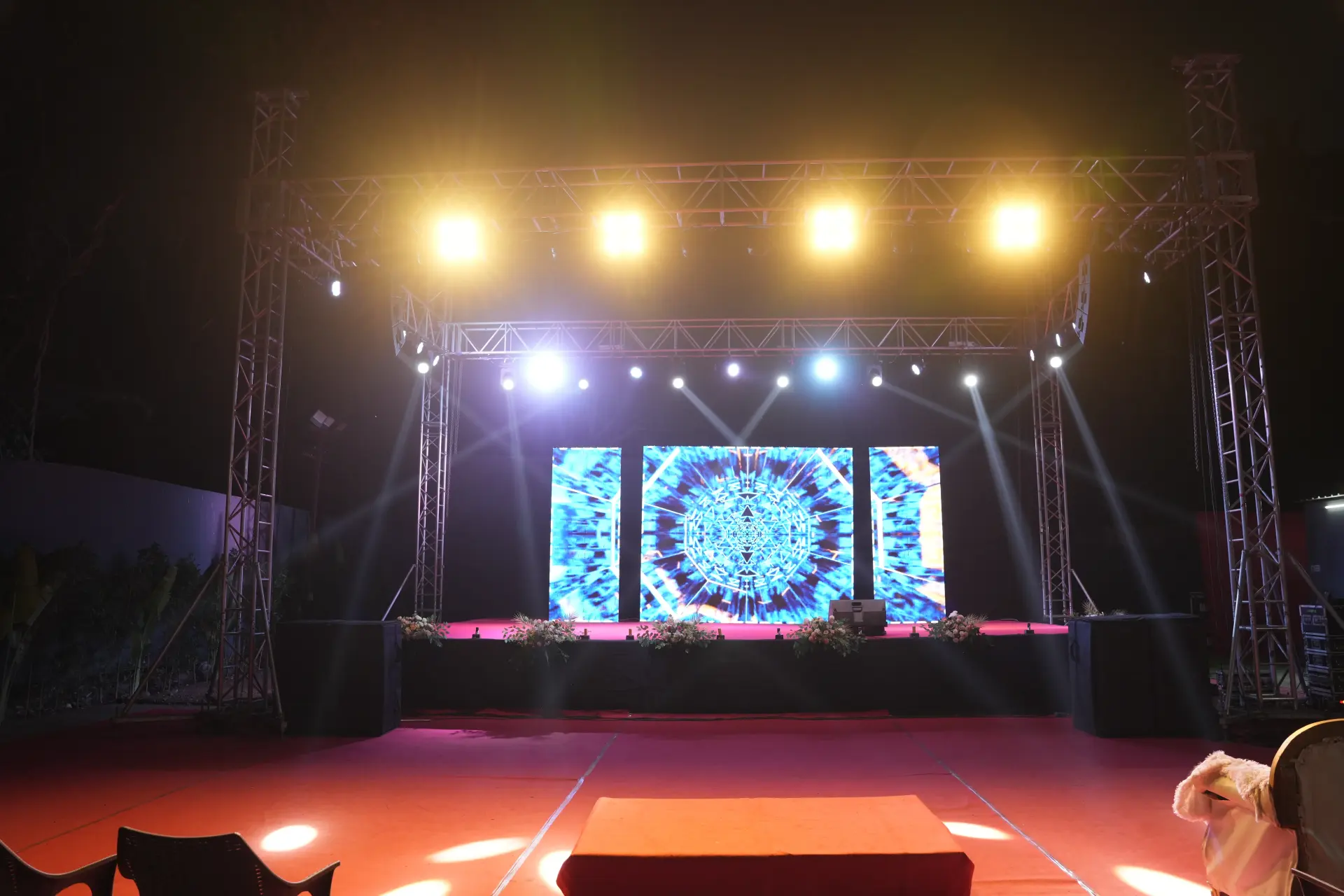
A raised stage with truss, screens and concert lighting sized to the ground and to the acts booked.
Speaker positions worked out for the shape of the space, with mics for singers, dhol players and the anchor.
Entry gate, backdrops, hanging decor and panels for sponsors, placed where cameras and phones will actually see them.
Pass design, gate counters, separate queues, frisking points and barricades that hold the line at peak entry.
Marshals posted by position, first aid point, lost-child desk, fire lane kept clear and a briefing before gates open.
Nine evenings on a society ground or podium, run to a committee budget with residents' passes and family seating.
Open-ground events with paid entry, gate counters, sponsor branding and a crowd plan built for strangers.
Member nights on a smaller floor, where sound limits and neighbours matter more than scale.
One night for a company and families, with dress-up, a short programme and an early finish for a working day.
Campus events with student volunteers, a committee to coordinate and a strict end time to work to.
Early evening sessions for children and elders, with a smaller circle, lower volume and simpler steps.
Atrium activations with a sampling or engagement element, sized to the footfall the property allows.
Judged rounds with registrations, numbering, a marked competition circle and a prize ceremony on stage.
Tell us the date, the guest count, the budget and the feeling you want in the room. We ask the questions most people forget.
You getFirst ideas and a budget range
Theme, décor, stage layout and a minute-by-minute run of show, drawn up and revised until it feels like yours.
You getMoodboard, layout and an itemised quote
Venue shortlists, caterers, artists, anchors and the paperwork — police, music licences and venue approvals — handled by us.
You getLocked vendors, one point of contact
Décor goes up, truss and LED walls are rigged, sound is checked and the anchor rehearses every cue with our show caller.
You getA walk-through before guests arrive
Our crew runs the floor, the stage and the guests. When it is over, we clear the venue and send you the photos.
You getA calm host — you — and the memories
Plan a garba night from the floor outwards. Everything else, the acts, the decoration, the food stalls, is arranged around how many people can dance at once and how quickly they can get in and out. Our written dandiya night planning guide covers the format and the timeline; this page is about the ground work that follows it.
Work out usable dancing area first, then decide how many passes to sell. Take the total ground, remove the stage and its working space behind, the stalls and their queues, the seating for elders, the walkways and the lanes that must stay clear, and what is left is the real floor. Garba needs more room per person than a concert, because people move in circles with sticks in their hands. Ground quality matters as much as size: loose gravel, an uneven slope or a patch that holds water after rain will take a chunk out of your usable area, and it is better to find that on a site visit than on the first night.
Give every part of the night a zone and a reason, and keep them from overlapping.
| Zone | What it is for | What keeps it working |
|---|---|---|
| Dancing circle | The main floor, kept clear of chairs and bags | Marked boundary and marshals who move seating back out |
| Stage and front lane | Singers, dhol, anchor, prize moments | A barricaded lane so the front row cannot press the stage |
| Entry and frisking | Queue, pass check, bag check | More counters than you think, and a separate line for families |
| Exit | Leaving at the end and during the night | A different side from entry, never crossing the incoming queue |
| Stalls and water | Food, water, dandiya sticks, merchandise | Queue space in front of each stall, away from the dancing edge |
| Emergency lane | Ambulance access, first aid, evacuation | Marked, lit, and never used for storage once the night starts |
Design entry to clear people faster than they arrive. Most of the crowd turns up inside the same short window, so a single counter will produce a queue that spills onto the road and a crowd that walks in already irritated. Use more counters than feel necessary, split lines for pass holders, spot sales and families, and keep frisking separate from the pass check so one slow bag does not stop the whole line. Print passes that are hard to copy and easy to read in the dark, decide your re-entry rule before the first night rather than at the gate, and give volunteers a written answer for the arguments they will get. Post marshals by name and position, not by a message in a group.
Decide the wet-weather version while the ground is still dry. That means knowing which part of the floor holds water, whether you are laying matting or flooring over it, where the sound and the power distribution sit relative to the lowest point, and which covered area people will move into if a shower arrives mid-song. Cabling gets run raised and taped rather than laid across a walking line, and the stage gets a cover that can go up quickly. Agree with the committee in advance who makes the call to pause, and what the anchor says when it happens, so nobody is deciding that over a microphone with a wet crowd watching.
Place sound for the shape of the ground, and agree the handovers in advance. A long ground needs speakers along its length rather than a bigger stack at one end, and a floor surrounded by buildings will throw the beat back at you, so the check has to happen on site with the ground empty. Dhol players are loud without any amplification, so they are placed away from the seating for elders and never next to a speaker stack. Where a live band and a DJ both play, fix the handover minute, give the anchor the cue and let one person hold the running order. Sound hours and loudspeaker permissions for your ground and your dates are confirmed with the local police station before you print a schedule, and we plan the last hour so the volume comes down in steps rather than being cut mid-song. Stage, truss and screens are covered on our event production page, and campus versions on college event management.
Can't find yours? Call or WhatsApp — a planner answers.
The ground plan and everything that sits on it. That means floor marking, stage, truss, screens and lighting, sound and microphones, the entry gate, passes and barricading, stalls, sponsor branding, volunteers, first aid and the clear-up afterwards. Booking the ground, the acts and the permissions is coordinated with you. You get one point of contact instead of six vendors to chase.
Fewer than the ground's total area suggests. Remove the stage and its working space, the stalls and their queues, elders' seating, walkways and the emergency lane, and what remains is the dancing floor. Garba also needs more space per person than a seated event because of the sticks and the circles. We measure on a site visit and give you a figure you can sell passes against.
Scale and the number of nights. The size of the ground, the stage and truss, how many screens, the sound needed to cover the floor, whether you book a live band or a DJ, lighting, decoration and the gate, the number of marshals and how many evenings all run, plus flooring and a rain plan. Send the ground and the nights and we will quote head by head.
It depends on the ground, the dates and whether entry is ticketed. Permissions for the event, the loudspeakers, the sound hours and any structure are checked with the local police station and the civic ward for your specific venue each year, since conditions change. We tell your committee which applications to make and by when, and we plan the schedule only after they are confirmed.
Both work; the crowd decides. A live band with singers suits traditional crowds and a big stage, and needs more microphones, a proper check and rest breaks. A DJ suits younger crowds and office nights and keeps the energy continuous. Many events run both with a fixed handover minute and one anchor linking them, which is the only version that never feels disjointed.
By designing for it before the gates open. Separate entry and exit, a marked emergency lane that stays empty, a barricaded lane in front of the stage, marshals posted by position, a first aid point and a lost-child desk, lit walkways, and water within reach of the floor. Volunteers get a briefing and a written answer for the questions they will be asked at the gate.
Yes, and the plan gets simpler. A society night runs on residents' passes and a committee budget, so the effort goes into family seating, sound that does not upset the neighbours and a finish time everyone agrees on. An office garba is usually one evening with dress-up, a short programme and an early end. Tell us which one you are planning.
LED walls · Truss · Sound · Lights
Pune · PCMC
Fests · Farewells · Cultural nightsSend the ground, we will send the floor plan
Share your venue, your dates and the crowd you expect, and we will come back with a layout, a sound plan and a head-by-head quote.