
In today’s competitive market, brands are constantly searching for ways to connect with audiences beyond digital screens. One of the most effective ways to build emotional connections and long-term recall is through a well-planned event branding strategy. Events create real-world experiences where customers interact with a brand directly, making impressions stronger and more memorable.
Businesses across industries now use events not just for visibility but for storytelling and engagement. From product launches to corporate gatherings and brand activations, events allow companies to showcase their identity in a tangible way. A strong event branding approach ensures that every element, from visuals to messaging, reflects the brand’s personality and values.
India’s growing event industry has made it easier for brands to execute creative and impactful campaigns. With access to experienced planners, creative designers, and production teams, companies can create events that feel immersive and professional. In cities like Pune, brands increasingly rely on experienced teams such as Plan with Yolo to design and execute events that align with brand goals and audience expectations.
Understanding Event Branding Strategy
An event branding strategy focuses on creating a consistent brand experience across every touchpoint of an event. This includes visual design, messaging, guest experience, and overall atmosphere. The goal is to ensure that attendees not only remember the event but also connect it strongly with the brand.
A successful strategy begins with clear objectives. Brands must decide whether the event aims to increase awareness, launch a product, build relationships, or generate leads. Once the goal is defined, planners can align creative concepts and marketing efforts accordingly.
Consistency is key. Branding should appear in invitations, stage design, signage, digital screens, and even staff uniforms. When all elements work together, the event feels cohesive and professional.
Event Branding Ideas That Create Impact
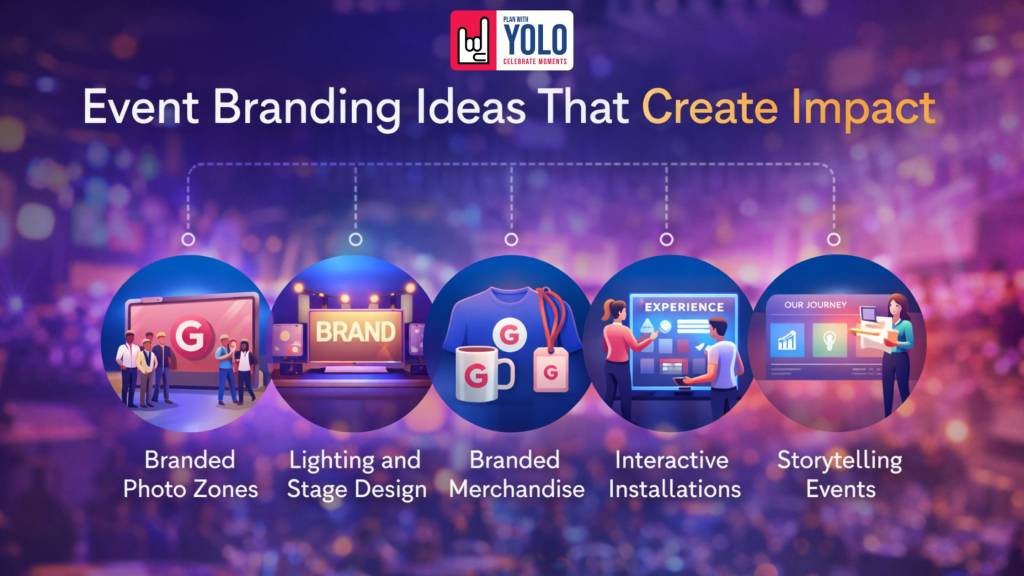
Creative event branding ideas can transform a simple gathering into a memorable experience. Interactive installations, branded photo zones, and customized merchandise help reinforce brand identity while engaging guests.
Lighting and color themes also play a major role. Using brand colors in décor, stage setups, and digital displays creates visual consistency. Audio-visual elements such as branded videos and presentations further strengthen the message.
Storytelling is another powerful tool. Events that guide guests through a narrative about the brand’s journey, values, or future vision tend to leave a lasting impression. This approach works particularly well for product launches and corporate celebrations.
Brand Promotion Through Events
Brand promotion through events allows businesses to connect with audiences in a more personal and engaging way. Unlike traditional advertising, events create opportunities for direct interaction, making brand messages more memorable.
Live demonstrations, interactive booths, and experiential setups allow customers to see and feel the product or service. This hands-on approach increases trust and encourages conversations between brands and their audiences.
Events also generate content. Photos, videos, and social media posts from attendees extend the reach of the campaign beyond the event itself. When executed well, a single event can support digital marketing efforts for weeks or even months.
Building an Effective Event Marketing Strategy
An effective event marketing strategy starts long before the event day. Promotion through social media, email campaigns, and invitations helps generate interest and attendance. Clear messaging ensures audiences understand the purpose and value of attending.
During the event, engagement is crucial. Activities, networking opportunities, and interactive experiences keep guests involved and attentive. Post-event follow-ups such as thank-you emails and content sharing help maintain the connection.
Measuring results is equally important. Tracking attendance, engagement, leads, and feedback helps evaluate success and improve future events. Data-driven insights ensure each event becomes more effective over time.
Brand Activation Events and Audience Engagement
Brand activation events are designed to create strong emotional connections between brands and audiences. These events often include interactive elements such as product trials, demonstrations, and immersive installations.
The goal is to move beyond passive observation and encourage active participation. When guests interact with the brand directly, they are more likely to remember and trust it. This approach is particularly effective for new product launches and market expansion efforts.
Activation events also encourage social sharing. When guests post about their experiences online, the brand gains additional visibility and credibility. This organic reach often exceeds traditional advertising methods.
Experiential Event Marketing and Long-Term Value
Experiential event marketing focuses on creating memorable experiences that resonate with audiences long after the event ends. Instead of simply showcasing a product, experiential marketing immerses guests in the brand’s world.
These experiences can include themed environments, interactive storytelling, and personalized activities. When guests feel emotionally connected, they are more likely to become loyal customers.
Over time, experiential marketing builds stronger brand perception and trust. Businesses that invest in meaningful event experiences often see higher engagement and customer retention.
Customization, Execution, and Brand Consistency
Every brand has unique goals and audiences. Customization ensures that events reflect the brand’s identity and message accurately. From décor and stage design to communication and guest experience, every detail should align with the brand.
Execution quality determines the overall success of the event. Timely setup, clear coordination, and professional management create a smooth experience for attendees. Reliable planners focus on both creativity and logistics to deliver consistent results.
Experienced teams like Plan with Yolo support brands by offering tailored event branding solutions that align with marketing objectives and audience expectations. Their approach focuses on consistency, creativity, and smooth execution.
Comparison: Traditional Advertising vs Event Branding
| Aspect | Traditional Advertising | Event Branding Strategy |
|---|---|---|
| Audience Interaction | Limited interaction | Direct engagement with audience |
| Brand Recall | Moderate | High due to real experiences |
| Emotional Connection | Low to medium | Strong emotional impact |
| Feedback & Insights | Delayed | Immediate feedback |
| Long-Term Impact | Short-term visibility | Long-term brand loyalty |
This comparison shows how event branding creates stronger connections and lasting impressions compared to traditional advertising methods.
Use Cases for Event Branding
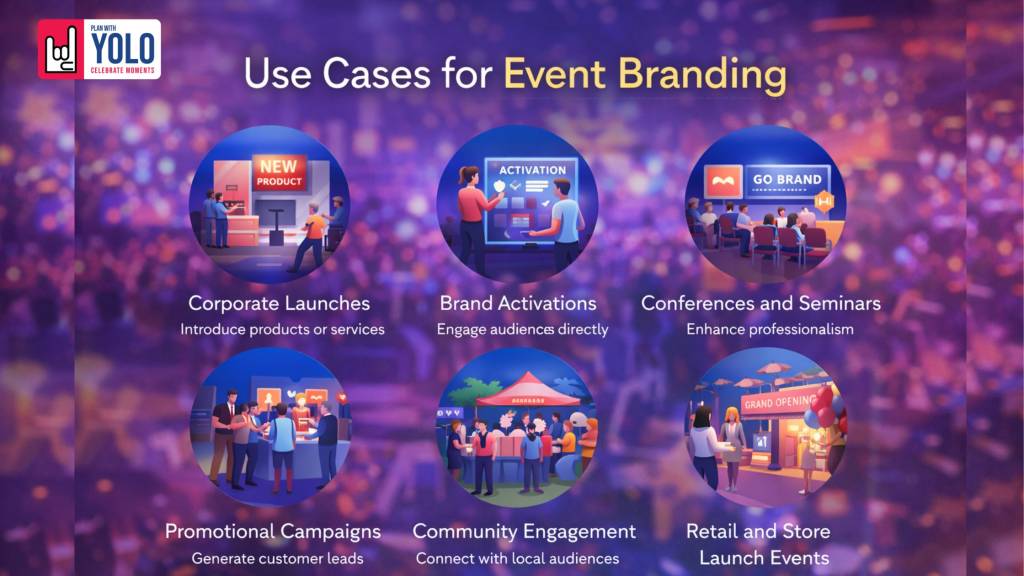
Corporate Launches
Companies use branded events to introduce new products, services, or initiatives while strengthening brand perception. A well-planned launch event allows businesses to showcase their identity through visuals, messaging, and customer interaction. It also creates media opportunities, social sharing, and stronger brand recall among attendees.
Brand Activations
Interactive campaigns help brands engage audiences directly and create memorable experiences. These events often include live demonstrations, experiential booths, and immersive setups that encourage participation. Brand activation events are particularly effective for building awareness and encouraging customer interaction in a short time.
Conferences and Seminars
Branded environments enhance professionalism and improve attendee engagement. From stage design and signage to digital presentations and networking spaces, consistent branding makes events feel organized and credible. This helps reinforce the company’s authority and creates a stronger impression on participants and partners.
Promotional Campaigns
Events provide opportunities to connect with customers and generate leads in a focused environment. Whether it is a mall activation, roadshow, or product showcase, branded events help businesses communicate their message clearly. They also allow real-time feedback from customers, which can guide future marketing strategies.
Community Engagement
Brands build trust by hosting events that connect them with local audiences and customers. Community-based events such as social initiatives, awareness drives, and cultural celebrations allow businesses to present a relatable and approachable image. This strengthens long-term relationships and improves brand perception.
Retail and Store Launch Events
Retail brands use event branding to create excitement around store openings and special promotions. Branded décor, interactive experiences, and live activities attract footfall and generate immediate visibility. These events help businesses create a strong first impression and encourage repeat visits.
Employee Engagement Events
Internal branding is just as important as external marketing. Companies use branded events for employee recognition, team-building, and annual celebrations. Consistent branding at these events helps employees feel connected to the company’s identity and values, improving morale and workplace culture.
Experiential Marketing Campaigns
Experiential events immerse audiences in the brand’s world through themed environments and storytelling. These events allow guests to experience the brand in a meaningful way, increasing emotional connection and recall. They also generate shareable content that extends the brand’s reach beyond the event.
Trade Shows and Exhibitions
Businesses participating in exhibitions use event branding to stand out among competitors. A well-branded booth with consistent visuals and messaging attracts visitors and improves engagement. Strong event branding helps businesses generate leads and build industry credibility.
Long-Term Brand Building
Consistent event branding across multiple events helps reinforce brand identity over time. When audiences repeatedly see cohesive branding at launches, activations, and corporate events, it builds familiarity and trust. This long-term approach strengthens brand positioning in the market.
Conclusion
A strong event branding strategy allows businesses to move beyond traditional advertising and create meaningful connections with their audience. Events provide a platform for storytelling, engagement, and memorable brand experiences that build long-term loyalty.
As competition grows, brands must focus on immersive experiences that reflect their identity and values. Well-executed events improve visibility, strengthen relationships, and support overall marketing goals.
With the right planning, creativity, and execution, events become powerful tools for brand growth. Partnering with experienced teams such as Plan with Yolo helps ensure that every event delivers a consistent message, strong engagement, and lasting impact.