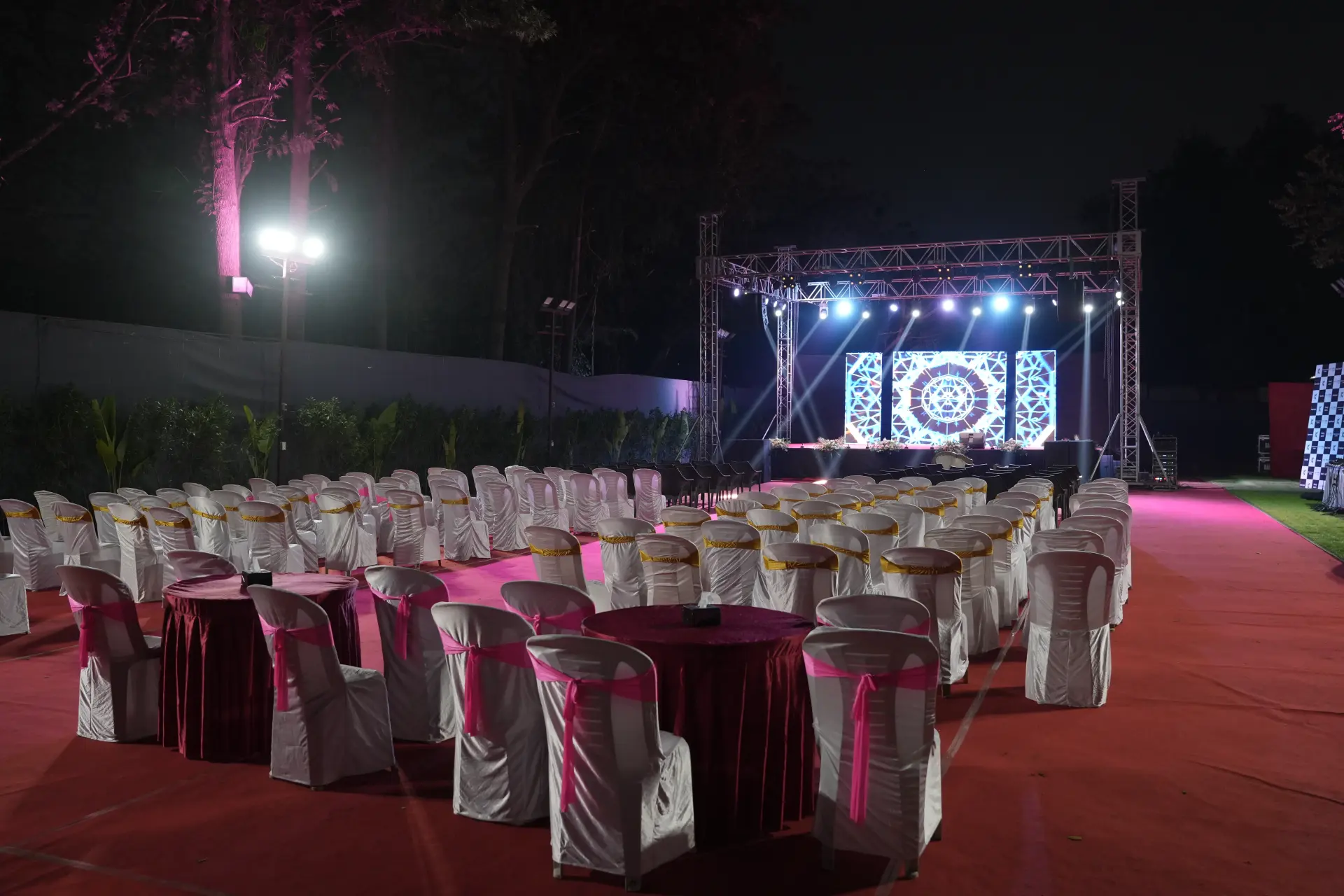
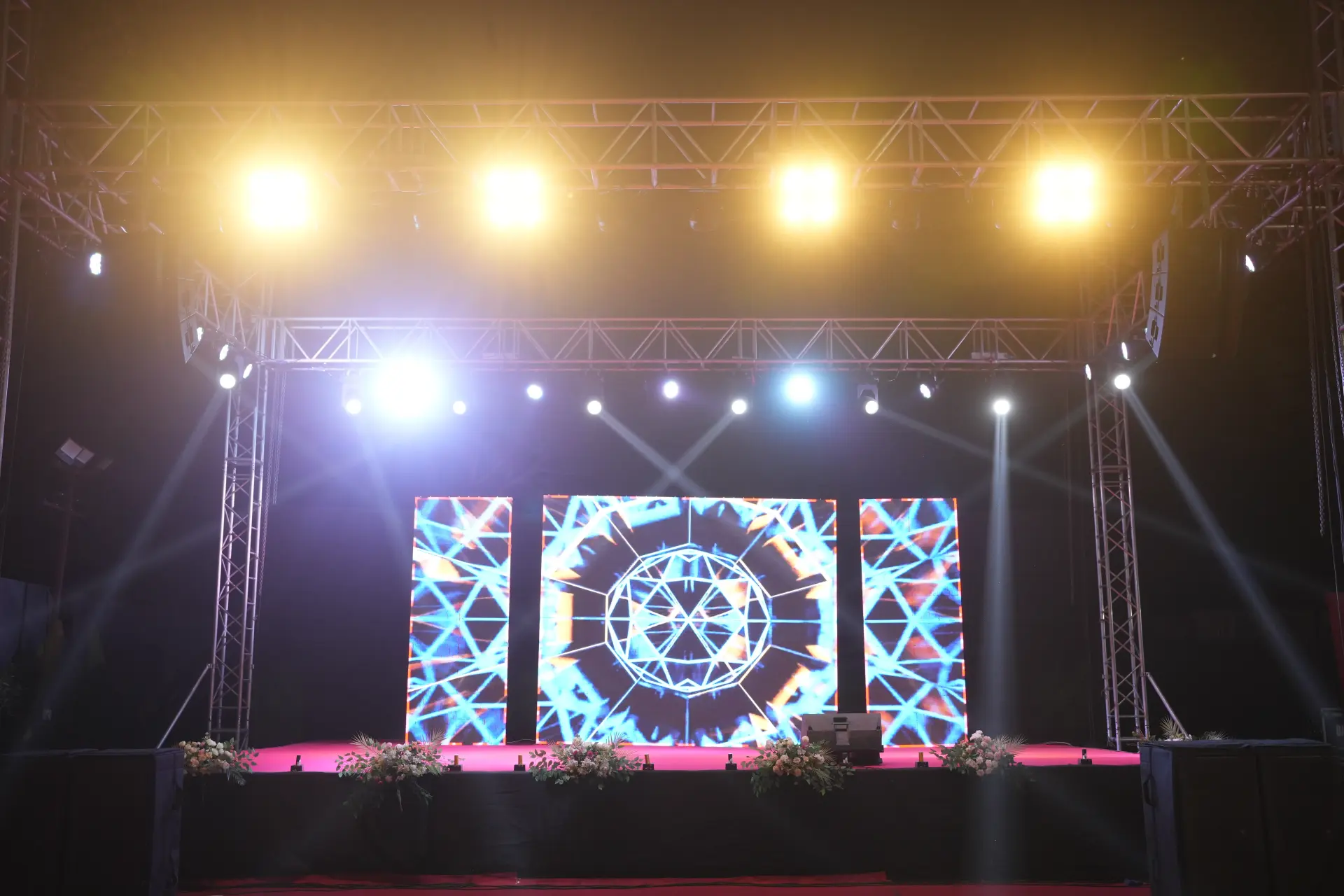
Auditorium Event Management in PuneA room built for a show, run like one

An auditorium hands you seating, sightlines, sound and light, and then hands you its rules. We work with the house team, run the rehearsal properly and call the show cue by cue.

  • Stage and set
  • Sound and mics
  • Lighting design
  • Cue sheet and calling
  • Rehearsal management
  • Backstage and wings

Auditorium event managementHalf the production is already in the building

An auditorium is the one venue that arrives half built. Raked seating, a proper stage, sightlines that were designed rather than guessed, a sound system, lighting bars, wings, green rooms and a house team who know the room. For an annual day, a college fest, a cultural evening, a convocation or a company town hall, that is a strong head start.

The trade is control. The seating cannot be moved, the stage is the size it is, the lighting bars sit where they were installed, and much of what you do must go through the house engineer. Slots are sold in blocks, so your rehearsal, your setup and your show may all sit inside the same few hours.

So we plan an auditorium show around the building's limits. We visit, sit in the back row, check what the house system really does, then decide what comes from the venue and what we bring. You get a cue sheet, a rehearsal plan and a show that finishes when it said it would. Auditoriums in Shivajinagar, Deccan and out towards Hinjewadi all work this way. See also our event production page.

  • Running since 2013, 500+ events planned, 100+ brands and companies
  • Technical recce from the back row, not the wings
  • House system tested before anything is hired
  • Cue sheet written, rehearsed and called
  • Backstage managed so entries never wait
Auditorium event management

What auditorium management coversFront of house to the last cue

Take the whole show or only the parts you need; everything is planned around the venue's own systems.

Technical recce

A visit to test house sound and light, measure the stage and wings, and check power, access and green rooms.

Stage and set

Backdrop, risers, props and a set built to the stage depth, with entries and exits kept clear.

Sound and microphones

Mic plan for speakers, anchors and performers, with playback, monitors and a tested backup channel.

Lighting design

Focus on the existing bars, extra fixtures where the house rig falls short, and a look for every segment.

Cue sheet and calling

A written running order with every light, sound and screen cue, called live from one position.

Backstage and audience

Green room allocation, entry queues in the wings, ushers, registration and a plan for getting people out.

Shows an auditorium suitsProgrammes with a running order

  • School annual daysMany short acts, big casts and parents in the audience, so backstage flow matters more than the set.
  • College fests and culturalsCompetitive rounds, judges, fast changeovers and a technical desk that never stops working.
  • Company town hallsPresentations, panels and awards, with screen content and mics that have to work first time.
  • Award ceremoniesLong lists, stage entries from both wings and a cue sheet that keeps the evening moving.
  • Dance and music showsMonitors, playback, light changes per act and a stage kept clear between performances.
  • ConvocationsProcessions, seating protocol, name calling and photography planned into the running order.
  • Plays and productionsSet changes, blackout discipline, wing space and a full technical rehearsal before the audience.
  • Seminars and lecturesClear speech sound, readable slides, house light kept up for notes and a short changeover.

How our event planning worksFrom first call to final bow.

  1. 01 Day 1

    The call

    Tell us the date, the guest count, the budget and the feeling you want in the room. We ask the questions most people forget.

    You getFirst ideas and a budget range

  2. 02 Week 1

    Concept & moodboard

    Theme, décor, stage layout and a minute-by-minute run of show, drawn up and revised until it feels like yours.

    You getMoodboard, layout and an itemised quote

  3. 03 Weeks 2–4

    Venue, vendors & permissions

    Venue shortlists, caterers, artists, anchors and the paperwork — police, music licences and venue approvals — handled by us.

    You getLocked vendors, one point of contact

  4. 04 Event eve

    Build & rehearsal

    Décor goes up, truss and LED walls are rigged, sound is checked and the anchor rehearses every cue with our show caller.

    You getA walk-through before guests arrive

  5. 05 Show day

    Showtime & wrap

    Our crew runs the floor, the stage and the guests. When it is over, we clear the venue and send you the photos.

    You getA calm host — you — and the memories

An auditorium gives you the two things that are hardest to build anywhere else: every seat can see the stage, and every seat can hear it. It also gives you a rig, wings, green rooms and a house team. What it keeps for itself is control. The seats do not move, the stage is a fixed size, the lighting bars are where they are, and the building has a technical staff whose approval you need for almost everything.

Sit in the back row before you plan anything

The recce for an auditorium is not done from the stage. Sit in the last row and the far corners, because that is where your worst seats are, and judge three things: how much of the stage floor you can see, how clear an unamplified voice is, and how much light actually reaches the front of a performer's face. Then walk the wings and measure them, because wing depth quietly decides how many people can wait for an entry and whether a set piece can be moved off in a blackout.

Check the practical things in the same visit. Where the truck unloads, whether there is a ramp or a lift to stage level, how many green rooms exist and how far they are from the wings, whether the stage has power at the sides, and what the house is willing to let you rig from its bars.

House system, or your own?

Test the house system rather than trusting the equipment list. Play a track and speak into a mic from the stage while someone listens from the back. Most auditorium sound is tuned for speech, which is fine for a seminar and thin for a dance show.

ElementWhat the house usually providesWhen to bring your own
SoundA speech-tuned system, a few wired mics, a basic mixerMusic-led shows, live instruments, many cordless mics, large casts
LightingFixed bars, general wash, a few spots, a house boardColour changes per act, effects, a designed look, follow spots
ScreenA projector and a screen, often centre stageBright rooms, video content, or when the screen blocks the acting area
OperatorsA house engineer who must operate the house deskNever instead of them, always alongside, with your cues briefed early
BackdropPlain curtains, sometimes a cycloramaBranded sets, themed backdrops, anything that needs its own frame
PowerStage points sized for the house rigExtra fixtures, LED walls or heavy hired equipment, which need a checked supply

Wings, entries and the cue sheet

Backstage is where an auditorium show is won or lost. Decide which wing each entry uses, and keep a crossover route so performers can reach the other side without walking in front of the audience. Mark the floor with tape so people stand where they can be seen by the stage manager and not by the front row. Then write the cue sheet: every segment, who is on, which mic, which light state, which track, which screen slide, and what the anchor says while the next set is placed. One person calls it from one position, and everybody works from the same printed copy.

Rehearsal slots decide the show

Ask how many hours you get in the hall before the audience arrives, and whether that time includes your setup. This is usually the tightest constraint in the whole project. A technical rehearsal for lights, sound and cues is different from a dress rehearsal for performers, and both matter. If the slot is short, rehearse in order of risk: openings, anything with a set change, anything with live sound. Rehearse the interval and the finish too, because those are the moments that overrun.

Give the house operators the cue sheet before the rehearsal, not during it. They run that room every week and will tell you in five minutes which cue is impossible on their board, which is far cheaper to hear at rehearsal than during the show.

Audience, timing and getting out

Plan the front of house with the same care. Registration or ticket checking outside the hall, ushers who know the seating blocks, doors held between acts so latecomers do not walk through a performance, and a clear rule about food, which most auditoriums keep firmly in the foyer. Finish on time, because the next booking is real and the building clears quickly. For school programmes, see annual day event management, and for fests, our college event management page.


Auditorium event management — FAQsQuestions people ask us.

Can't find yours? Call or WhatsApp — a planner answers.

What does auditorium event management include?

It covers everything between the venue booking and the final bow: a technical recce, stage and set, sound and microphones, lighting design, screen content handling, a written cue sheet, rehearsal management, backstage control and front of house. In an auditorium a large part of the job is coordinating with the house technical team rather than building from scratch.

Should we use the auditorium's sound system or hire our own?

Test it first, then decide. Most auditorium systems are tuned for speech, which suits a seminar or a town hall but sounds thin for dance and music. If your show is music-led, needs many cordless mics or has a large cast, hire alongside the house system. Either way the house engineer stays involved.

How much rehearsal time do we need in the hall?

More than most people book, and it is usually the tightest constraint. Ask whether your slot includes setup, then separate the technical rehearsal for lights, sound and cues from the dress rehearsal for performers. If time is short, rehearse in order of risk: the opening, anything with a set change, and anything with live sound.

Can we bring our own lighting into an auditorium?

Usually yes, with the venue's permission and within its power limits. Extra fixtures are added where the fixed bars fall short, typically for colour changes, effects or a follow spot. Rigging is done with the house team, on their bars and to their rules, and the load has to be checked against the stage supply.

What is a cue sheet, and who runs it?

A cue sheet is the printed running order with every light, sound, screen and stage action listed in sequence. One person calls it live from a single position, so the sound desk, the light board and backstage all act on the same word. Everyone involved works from the same copy, including the house operators.

What decides the cost of an auditorium show?

The venue slot and how much of the house system you can use are the main drivers. A speech-led programme that runs on house sound and light costs differently from a music show needing hired audio, extra fixtures and a set. Rehearsal hours, crew size, screen content and backstage staffing make up the rest.

Can we put up decor and branding in an auditorium?

Within limits. Most venues allow a freestanding backdrop or set on stage and branding in the foyer, but will not permit anything fixed to walls, seats or curtains, and will not let you block exits or aisles. Anything rigged goes on the house bars, with their approval, and comes down immediately after the show.

Send the running order, we will send the cue sheet

Share the auditorium, your date and the programme, and we will reply with a technical plan and an itemised quote.

Talk to a planner