Team building means any planned activity that puts colleagues on a shared task, so they have to communicate, decide and solve problems together rather than work in isolation. The activity is only the method. The point is what people learn about each other, which is why every session needs a debrief afterwards.
Team building meaning, in plain terms: it is any planned activity that puts colleagues on a shared task, so they have to talk, decide and solve something together rather than work as a list of names on an org chart. The activity itself is not the point. What people learn about each other while doing it is.
Planning this in Pune? See our team building activities Pune: one team plans and runs it with you, since 2013.
Everything sold under the label – games, offsites, treasure hunts, cooking contests, obstacle courses – is a delivery method. Some methods suit some groups badly, and a mismatch is the usual reason a session falls flat.
We have been setting these up around Pune since 2013, in society clubhouses, banquet halls and office cafeterias after lunch. Below is what the term covers, with examples, and the parts that decide whether a session works.
What is team building, and what it is not
Team building is the deliberate practice of improving how a group works together, through a shared task that has a goal, a time limit and a conversation afterwards. The general definition of the term treats it as a management practice rather than entertainment, and that distinction decides what you should be booking.
Here is a test that works. Strip the fun out and keep only the task. Would anyone have learnt something about working with the person next to them? If yes, it is team building. If no, it is a party, which is a fine thing to organise – just call it one, because the brief and the budget are different.
Team building, team bonding, and a day out
These three get sold as one product. Team building has a stated outcome: the sales team and the delivery team stop escalating every small thing to one manager. Team bonding has no outcome beyond people liking each other more, which is easier to achieve and still worth having. A day out is logistics with food. All three are legitimate. The trouble starts when a day out gets reported upstairs as team building.
Team building examples that hold up
Examples are easier to judge than definitions. These are the formats that work with Indian office teams, and the reason each one works.
Problem-solving against a clock
A group gets a build, a puzzle or a case with a hard deadline and too little material. A bridge made from limited supplies, a sequence of clues in a locked room, a mock crisis the team has to answer in forty minutes. Pressure makes people stop being polite and start being useful, and that is where you see who actually leads.
Making something physical
Cooking in teams, pottery, a mural painted across several panels that only makes sense once the panels are joined. Quiet colleagues do well here, which is the point. A format that only the loudest person can win teaches the group nothing it did not already know.
Mixed-table formats
Anything that forces teams across departments to sit together. The seating is the whole trick. Let people choose and finance sits with finance. Draw lots at the door and the afternoon does more work than the activity design did. Short indoor games for corporate events are the easiest version of this to run inside your own office.
Outdoor and adventure days
Treks, obstacle courses, rafting, an overnight towards Lonavala or Mahabaleshwar. Good for bonding, slower for problem-solving, and they carry a fitness problem to plan around. Someone has a bad knee, somebody else will not get into a river, and a format where two people sit out watching has excluded exactly the people you brought along to include.
Community work
Half a day at a school, a park clean-up, repair work at a shelter. Teams remember these far longer than a quiz, and the paperwork is heavier: permissions, consent, a named contact at the other end.
What is a team building game?
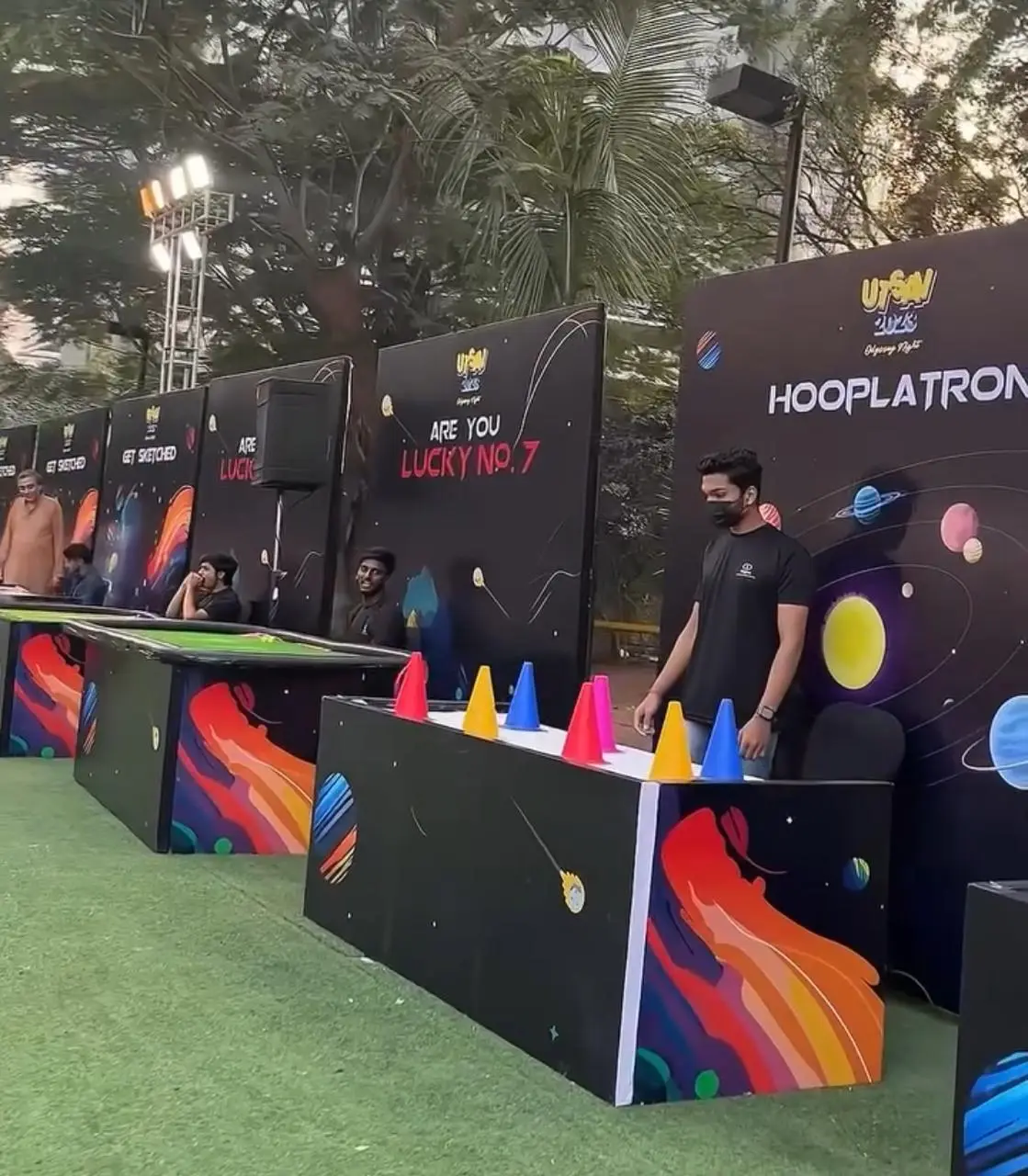
A team building game is one activity inside a session, usually fifteen to ninety minutes long, with rules, an outcome, and a short debrief. The game is the unit. The event is the container. Nobody books a game on its own; you book a session, and the facilitator picks the games to fit the group standing in front of them.
Good games share three features. They can be explained in under a minute, because a game needing a five-minute briefing has already lost half the room. They cannot be won by one strong individual. And they leave something to talk about afterwards.
Avoid anything with physical contact, anything that makes a person look foolish in front of their reporting manager, and anything that asks people to sit on the floor in office clothes. That last one ends more sessions early than any other mistake.
What is a team building event?
A team building event is the whole organised occasion: a venue, a time slot, a facilitator, a set of activities, food, and usually a reason – a new quarter, two teams merged, a department that has stopped speaking to another. It can be two hours in your own cafeteria or two days at a resort, and the length should follow the reason rather than the budget cycle.
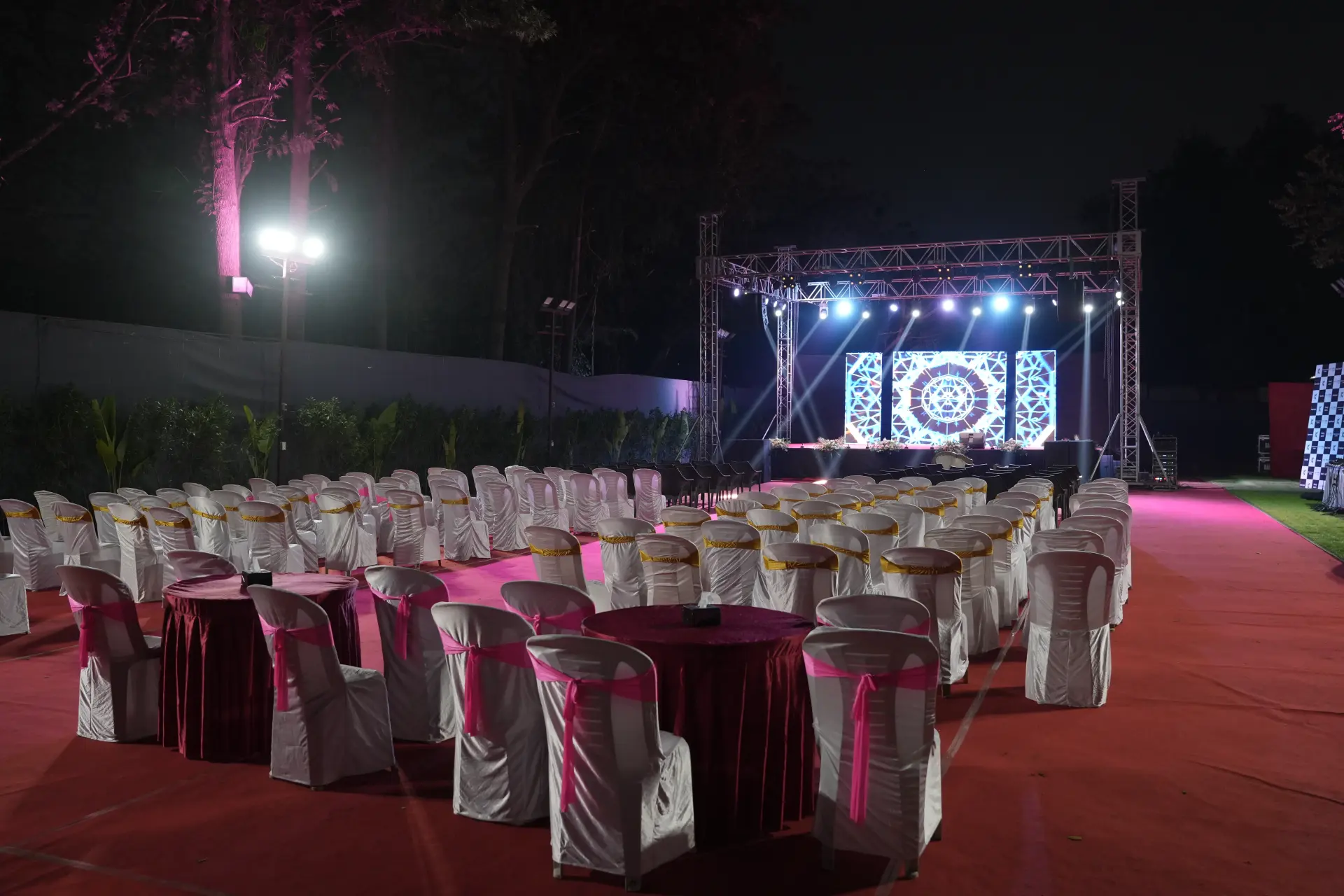
In Pune the shape is usually one of three. Half a day in the office, which costs least and is hardest to protect from laptops. A full day at a society clubhouse or one of the banquet halls on the Baner road, which is the common choice for a team of thirty to a hundred. Or an overnight offsite out towards Lonavala, Kamshet or Panchgani, which is the only version where the evening does as much work as the programme. A corporate offsite planner in Pune earns the fee on that third one, where travel, rooming and timings all have to hold together.
What a sensible running order looks like
Arrival and tea. One easy opener that mixes the teams up. A longer problem-solving block before lunch, while people are sharp. Food. Something physical immediately after, because the hour after lunch is where energy goes to die. A closing circle where each group says one thing it will do differently. Then the party, if there is one, kept after the content and never before.
What are team building skills?
Team building skills are two things under one phrase: the abilities a session is meant to build in a team, and the abilities the person running it needs. Job adverts use both meanings, often in the same paragraph.
For a team, the skills in question are communication under pressure, listening without interrupting, giving and taking instructions, dividing work by who is genuinely good at what, disagreeing without escalating, and trusting a colleague to finish something unsupervised.
For whoever runs the session, it is reading a room, changing an activity when it is clearly not working, keeping the quiet people in, and running a debrief that gets honest answers instead of the answers people think their manager wants. This is the part companies underbuy. Strong facilitation with simple games beats weak facilitation with expensive equipment.
Which format suits which group
Match the format to the group you actually have, not the group in the brochure. The sizes below are what each format holds without losing people.
| Format | Group size | Time needed | Where it fits in Pune | Best for |
|---|---|---|---|---|
| Indoor games and puzzles | 10-40 | 2-3 hours | Office cafeteria, clubhouse | New joiners, mixed ages |
| Problem-solving workshop | 12-60 | Half day | Banquet or training room | Two teams that clash |
| Cook-off or craft build | 15-80 | 3-4 hours | Clubhouse lawn, karyalaya | Quiet or technical teams |
| Sports and outdoor day | 30-200 | Full day | School ground, open lawn | Large teams, families |
| Overnight offsite | 20-120 | 2 days | Resort towards Lonavala | Leadership, annual planning |
| Community half day | 10-50 | Half day | School or park, with permission | Teams tired of games |
What goes wrong, specifically in Pune
The venue decides more than the programme
Society clubhouses are the usual choice for a smaller team, and they carry committee rules nobody mentions until the day: a slot that includes your setting up and clearing out, no drilling into walls, music off by a fixed hour, residents informed in advance. Get the rules in writing from the secretary a fortnight ahead, not from the watchman on the morning.
Lifts and staircases in older buildings
Plenty of offices around Deccan, Camp and the older lanes of Kothrud sit in buildings whose lift will not take a folded backdrop frame or a table-tennis top. Measure the lift before you agree to any prop that arrives in one piece. Panels have gone up five floors by hand because nobody asked that question.
Monsoon
From June to the end of September, every outdoor plan needs an indoor version already held – a room with chairs, not a tent. Decide the cut-off hour for moving inside before the day and write it into the schedule. Arguing about it while a hundred people wait under a portico is how a half day shrinks to two hours.
Permissions, and which side of the boundary you are on
An activity on a public ground, amplified music outdoors, or anything spilling onto a road needs permission, and the process differs on either side of the municipal line. Offices in Hinjewadi, Wakad or Ravet deal with the Pimpri-Chinchwad municipal corporation rather than the city one, and the two do not run on the same calendar. Ask a fortnight ahead.
How to brief whoever organises it
Give three things and you will get a usable plan back. First, the outcome in one sentence – not fun, but what should be different on Monday. Second, the real constraints: headcount, ages, fitness, the venue slot, who cannot sit on the floor, who will not eat what. Third, the debrief question you want answered at the end, because a session built backwards from that question looks nothing like one built forwards from a games list.
If you are putting one together, our page on team building activities in Pune sets out the formats we plan and run and the group size each one holds, employee engagement events covers the longer-term version of the same problem, and if you tell us the date, the headcount and the venue you will get a scope broken down line by line rather than a brochure.
Frequently asked questions
What is the meaning of team building?
Team building means putting colleagues on a shared task with a goal, a time limit and a conversation afterwards, so they practise communicating, deciding and solving problems together. The activity is only the method. A quiz, a cook-off or a trek all count if the group learns something about working together. If it learns nothing, what you have organised is a party.
What are some examples of team building activities?
Four formats do most of the work. Problem-solving against a clock, such as a build with too little material or a mock crisis to answer in forty minutes. Making something physical, like cooking in teams or a mural painted across joined panels. Mixed-table formats that force departments to sit together. And outdoor days, which bond a group well but solve less.
What is the difference between a team building game and a team building event?
A game is one activity inside a session, usually fifteen to ninety minutes long, with rules, an outcome and a short debrief. An event is the whole occasion: a venue, a time slot, a facilitator, the activities, food, and a reason for holding it. You book the event, and the facilitator chooses the games to suit the group in the room.
What are team building skills?
The phrase covers two sets. For a team: communicating under pressure, listening without interrupting, giving and taking instructions, dividing work by who is genuinely good at what, disagreeing without escalating, and trusting a colleague to finish unsupervised. For whoever runs the session: reading a room, changing an activity that is not working, keeping the quiet people involved, and running a debrief that gets honest answers.
How long should a team building session be?
Let the reason set the length. Two hours in the office cafeteria is enough for one problem-solving block and a debrief. Half a day suits two teams that need to sort something out between them. A full day fits a group of thirty to a hundred at a society clubhouse or banquet hall. Only an overnight offsite gives you an evening, which is where most of the bonding happens.
Do team building activities actually work?
They work when the session has a stated outcome and a debrief, and when somebody follows it up a fortnight later. They fail when the outcome is left as fun, when the games reward the loudest person in the room, or when half the group is answering email. Facilitation matters more than equipment, and the seating plan matters more than the activity list.

Vicky founded Plan With YOLO in Pune in 2013 and leads the planning on corporate events, weddings and stage production across Maharashtra.