Corporate meeting organisers run short internal meetings end to end: they size the room to the purpose, set up sound, screen and the hybrid link, build a running order with a timekeeper, rehearse in the half hour before, and make sure the meeting finishes when it said it would.
Corporate meeting organisers are hired for something much less glamorous than a conference and, in its own way, harder. An internal meeting is short, the audience is your own staff, nobody is impressed by lighting, and the whole thing is judged on two questions: could everyone hear it, and did it end when it was meant to. Get either wrong in front of four hundred colleagues and you will hear about it for a month. Here is the sequence the work actually follows.
Planning this in Pune? See our town hall event management in Pune: one team plans and runs it with you, since 2013.
What makes a meeting different from an event
A meeting exists to transfer something specific between people in under half a day, so every decision is about clarity rather than atmosphere.
There is no build week and no guest experience to design. There is a room to be made usable, a link to remote colleagues that has to hold, a running order that has to survive three senior people going over time, and a very short window to set everything up. The people attending have work waiting for them, which is why an overrun costs more goodwill than a plain stage ever will.
It matters not to confuse this with conference work. A conference has a programme, an audience and sessions to design. A meeting has an agenda and a clock.
Step one: the shape of the hour
Decide what the meeting is for before anybody books a room, because the purpose sets the layout.
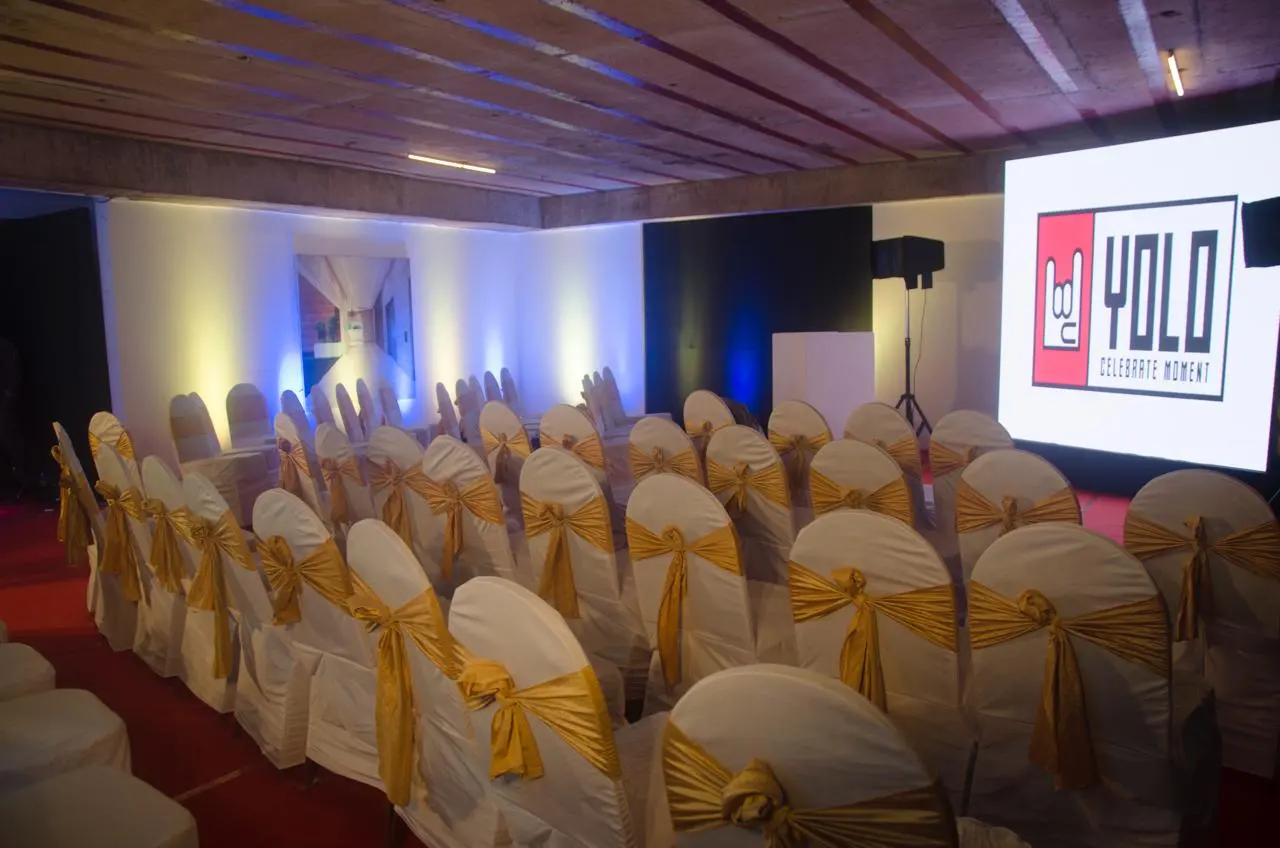
- To inform. One direction, short Q and A at the end, rows facing forward, screen big enough for the last chair.
- To decide. Fewer people, a table they can all see across, no stage at all, and pre-reading sent early enough to be read.
- To align. Small clusters with room to talk, roaming microphones, and a facilitator who is not the most senior person present.
- To recognise. Names on screen, a short walk-up, photographs taken properly, and a hard limit on how many people speak.
Meetings drift when two of these are attempted at once. An hour that tries to inform four hundred people and also reach a decision does neither, and it always runs long.
Step two: sizing the room honestly
A room works when the person in the last chair can read the screen and hear a question asked from the front.
That is the only test that matters, and it rules out most oversized halls. Office cafeterias and atriums look convenient and behave badly: hard surfaces bounce sound, and a long thin space puts half the audience out of range. A hall with a low ceiling limits screen height, which in turn limits how far back people can sit.
Standing town halls have their own arithmetic. People will stand for about half an hour attentively and less after that, so a standing format forces a discipline on the agenda that most organisers welcome.
Step three: the hybrid half
Remote colleagues are half the meeting now, and they are the half that gets forgotten.
Sound comes first
People forgive a poor picture and leave a meeting they cannot hear. That means a wired feed from the room’s mixer into the call, not a laptop microphone at the front. Every question from the floor must go through a microphone, because an unmiked question is silence for everybody dialling in.
The camera follows the speaker
A single wide shot of a stage from the back of a hall shows remote staff nothing. One camera framed on the speaker, plus the presentation shared directly rather than filmed off a screen, is the minimum that respects people’s time.
Somebody owns the remote room
A named person watches the chat, reads out remote questions, and tells the host when the feed has dropped. Without that role, remote attendance quietly becomes background listening.
Test from outside the building
Join the rehearsal from a different network, on a laptop, as an ordinary participant. The office network is not what your remote colleagues are using.
Step four: the running order
Write the agenda in minutes rather than topics, and give one person permission to enforce it.
A running order lists each segment, who speaks, how long they have, what is on screen and what happens next. Two habits keep it honest. Every speaker is told their time in advance and again on a cue card at the two-minute mark. And Q and A is placed where an overrun is survivable, which usually means before the closing item, not after it.
Step five: the half hour before
Almost every visible failure in a corporate meeting was created in the thirty minutes before it started.
- The laptop that needs a login nobody has.
- A deck emailed at the last minute that replaces the one already loaded.
- A clicker with a flat battery and no spare.
- The room’s screen resolution cropping the bottom of every slide.
- A microphone that was never switched on because nobody tested it with the hall empty.
An organiser’s real value in a short meeting is that this half hour is somebody’s full-time job, not something a colleague squeezes in between calls.
What different meetings need
The format changes what the room has to provide, so brief it by type rather than by headcount alone.
| Meeting type | What the room needs | What usually goes wrong |
|---|---|---|
| All-hands or town hall | Large screen, roaming mics, a solid remote feed, forward-facing rows | Questions asked without a microphone |
| Quarterly business review | Readable numbers on screen, a table layout, a printed pack | Slides built for a laptop, unreadable from the back |
| Leadership morning | A closed room, no stage, a facilitator, no recording | Seniority deciding who speaks most |
| Sales kick-off morning | Energy, a clear screen, space to stand and move between segments | An agenda with no breaks in three hours |
| Board meeting or AGM | Formal seating, minuting, controlled entry, documents to hand | Procedure discovered on the day rather than prepared |
| Training or workshop | Clusters, writing surfaces, power at every seat | Fixed theatre seating that prevents group work |
| Announcement meeting | Everyone in one place at one time, remote included | Some teams hearing it second-hand from others |
Step six: after the clock stops
Close the loop the same day, while people still remember what was said.
That means the recording and slides where they were promised, the questions that could not be answered live written up and answered in writing, and the actions sent out with names against them. A meeting that produces no visible follow-up teaches people that the next one is optional.
One more habit pays for itself. Keep a short note of what the room got wrong, because internal meetings repeat. The cafeteria that echoes, the projector that crops slides, the corner where the network drops: these are the same problems next quarter, and half a page of notes stops the same half hour being lost again.
Short notice, multiple offices
Most internal meetings are called with far less notice than an event, and often across two or three office locations.
That is normal work rather than an emergency, but it changes the choices. A company with teams in Hinjewadi and Kharadi is choosing between a venue that is fair to nobody and a hybrid format that is good for everybody. Morning slots protect the rest of the working day. And if two offices join the same session, both rooms need equal sound and screen quality, or the smaller room stops participating within ten minutes.
Getting internal meetings run properly
The work is unglamorous, repeatable and very noticeable when it is missing.
Plan With YOLO has handled internal company meetings since 2013, in 30+ cities, from small leadership sessions to all-hands for large floors: the room, the sound, the screen, the hybrid link, the running order and somebody owning the half hour before. Our town hall event management page covers the all-hands format in detail, and if your meeting is part of a wider staff programme, see employee engagement events. Share the date, the headcount and how many people dial in, using the contact page. A plan with every element priced on its own line follows within a working day.
Frequently asked questions
What is the difference between a corporate meeting and a corporate event?
Length, audience and purpose. A meeting is short, internal and built to transfer information or reach a decision, so it is judged on clarity and finishing on time. An event has guests, a programme and an experience to design. Briefing a meeting as though it were an event is how simple sessions end up over-produced and over-running.
How do you run a hybrid town hall properly?
Start with sound. Feed the room's mixer directly into the call rather than relying on a laptop microphone, and make every floor question go through a mic. Frame one camera on the speaker, share the presentation digitally instead of filming a screen, and give one named person the job of watching remote chat and flagging dropped feeds.
How long should an internal all-hands be?
Shorter than you think, and fixed in advance. Attention in a standing town hall fades after about half an hour, and even seated sessions lose the room past an hour without a break. Decide the finish time first, write the agenda in minutes rather than topics, and give one person the authority to keep speakers to their slot.
Can one venue work for teams in different parts of Pune?
Often not, and forcing it wastes several hours of everyone's day. A company with teams in Hinjewadi and Kharadi usually does better with a strong hybrid setup than with a central venue that inconveniences both. If two offices do join one session, give both rooms the same quality of sound and screen, or the smaller one disengages.
What should happen after an internal meeting?
Send the recording and slides where you said you would, answer in writing the questions there was no time for, and circulate actions with names against them, all on the same day. Follow-up is what makes the next meeting worth attending. When nothing arrives afterwards, people quietly treat future sessions as optional.

Vicky founded Plan With YOLO in Pune in 2013 and leads the planning on corporate events, weddings and stage production across Maharashtra.