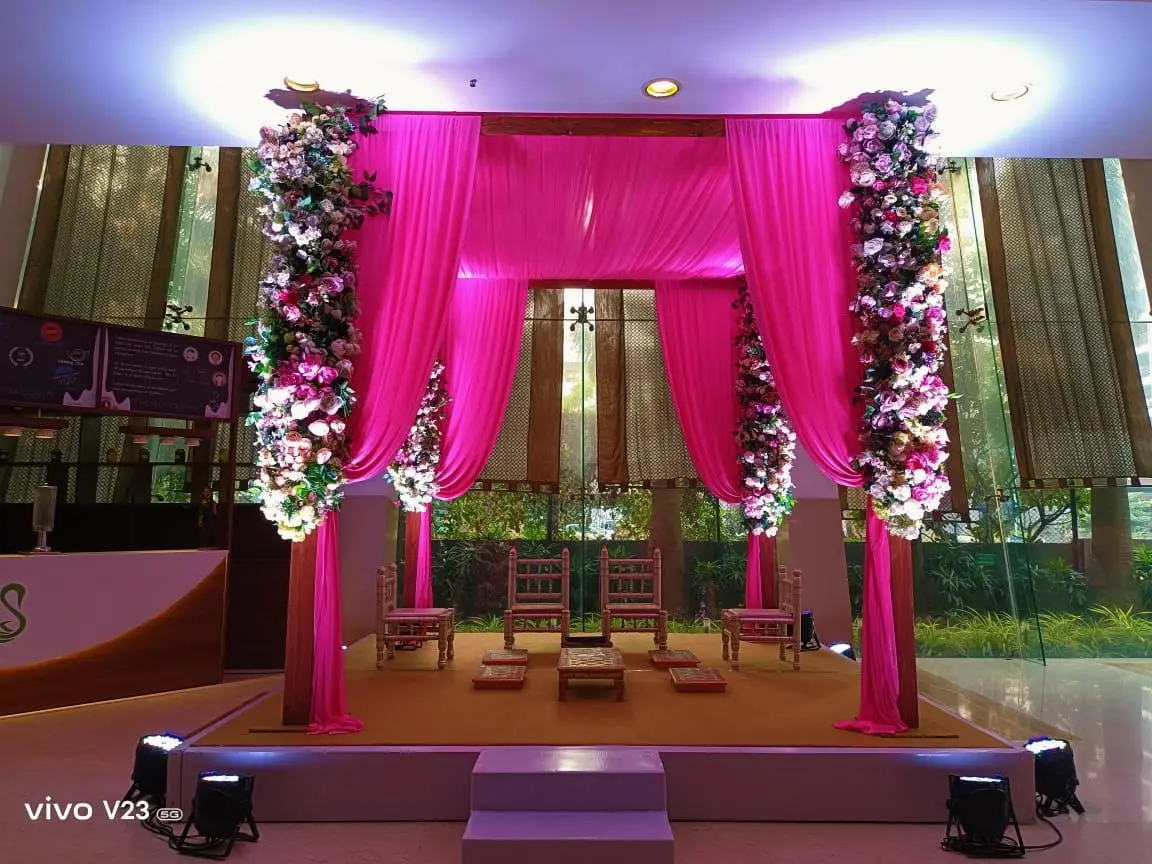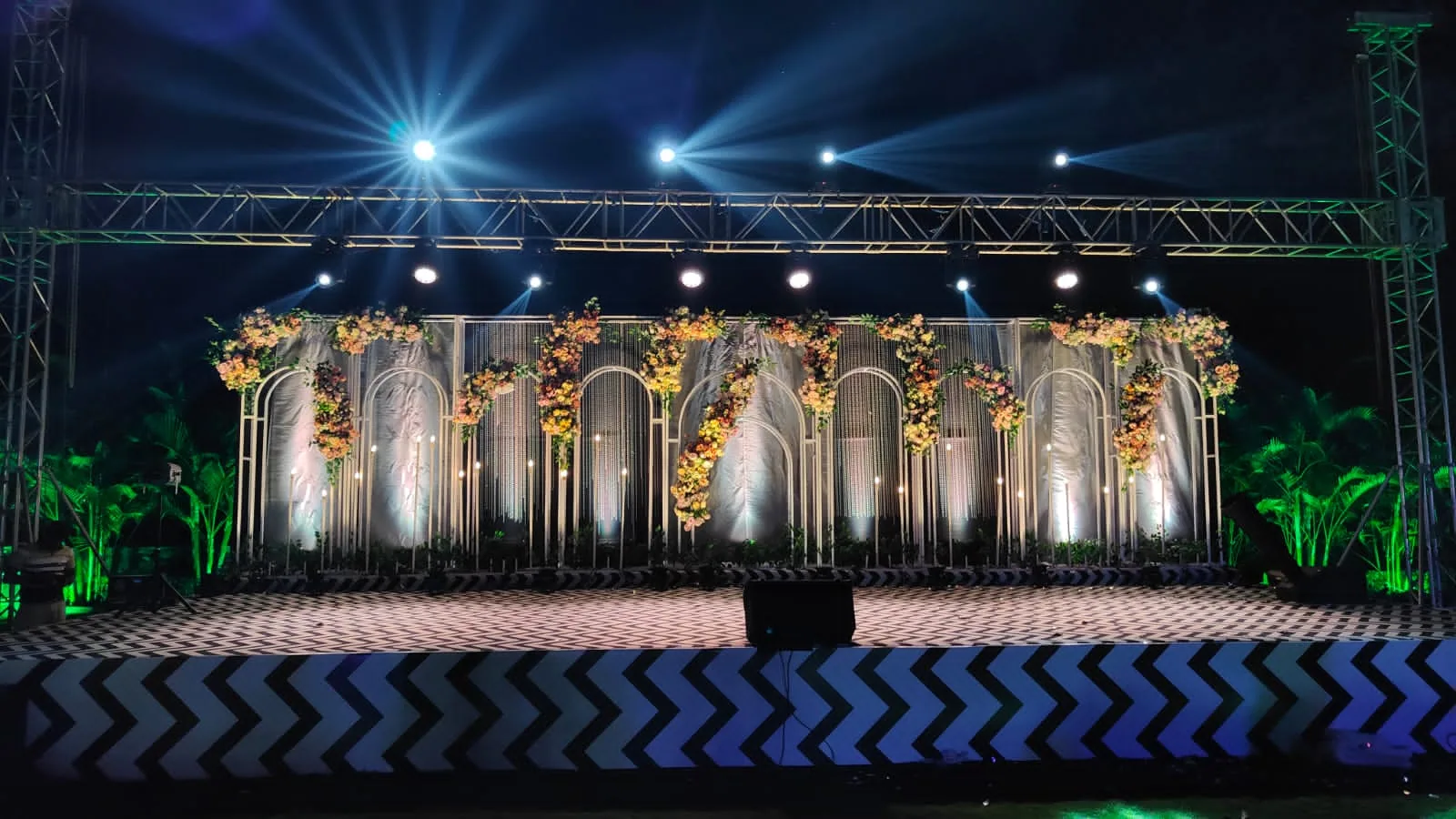

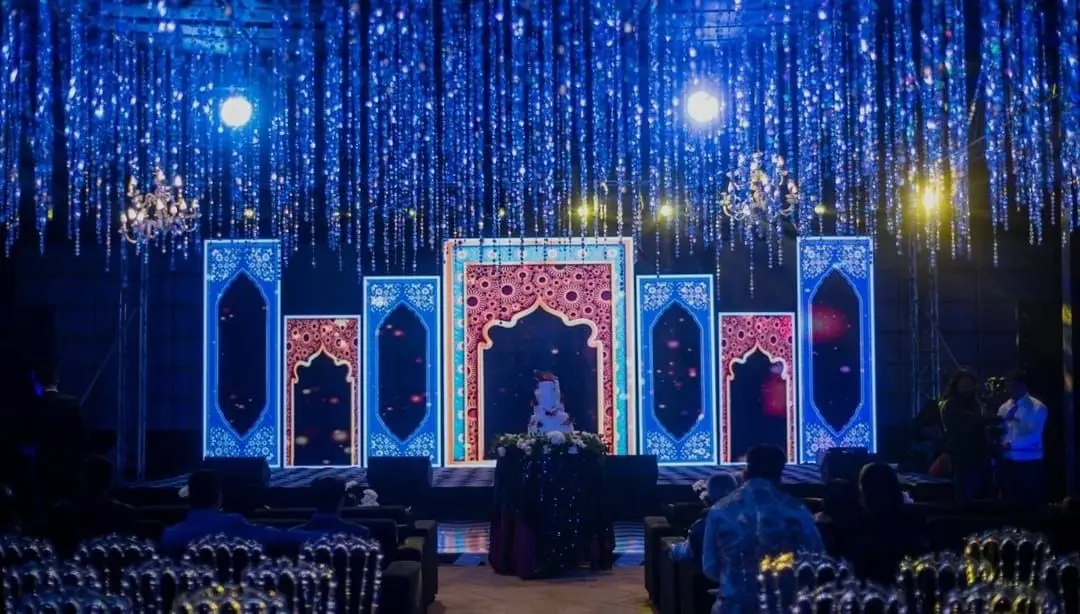
Wedding design is the scheme settled before anything is built: the palette, the materials, the scale of each function, and how guests move through the day. Decoration is the build that follows it. Design settles what the wedding should look and feel like; decoration settles the flowers, frames and lights that deliver it.
Ask what is wedding design and you will usually be shown a mood board. The plain answer is shorter. Wedding design is the scheme settled before anything gets built: the colours, the materials, the scale of each function, and the order in which a guest meets the day.
Planning this in Pune? See our wedding planners in Pune: one team plans and runs it with you, since 2013.
Decoration is what comes after. Flowers, fabric, frames, lights, signage, a crew and a tempo at the gate. Decoration delivers a design. Where no design exists, it delivers whatever the supplier had in stock that week, which is how three functions end up looking like the same evening held twice.
What follows is what the design stage settles, how it runs, and where Pune narrows it. We have been drawing and building weddings in this city since 2013, so the order below is the one we work to.
Wedding design meaning, without the mood board
Wedding design means writing one set of decisions about colour, material, scale, light and movement, then holding every function to them. The term borrows from the design brief that architects and product teams work to, and it behaves the same way: an instruction everybody downstream builds against, so the florist, the printer, the lighting crew and the stage fabricator are all solving the same problem.
A mood board is not that instruction. It records taste. Hand the same board to three suppliers and three different weddings come back, because nothing on it states how tall, how wide, how lit, or what a guest is meant to do in the hour between the ceremony and dinner.
What the brief actually contains
- A palette. Two or three colours and one metal, named rather than described. Dusty rose means a different flower to every supplier you say it to.
- A material list. Which flowers, which fabric, which wood or metal, and where printed surfaces may appear.
- Scale. Heights and widths for the focal structure of each function, set against the ceiling you have and the number of people in the room.
- A light plan. Colour temperature, which direction light comes from, and what it should do to faces.
- A guest route. Where people arrive, wait, eat, and stand to be photographed.
- What stays plain. The most useful line in any brief, and the one families argue with.
How wedding design differs from decoration
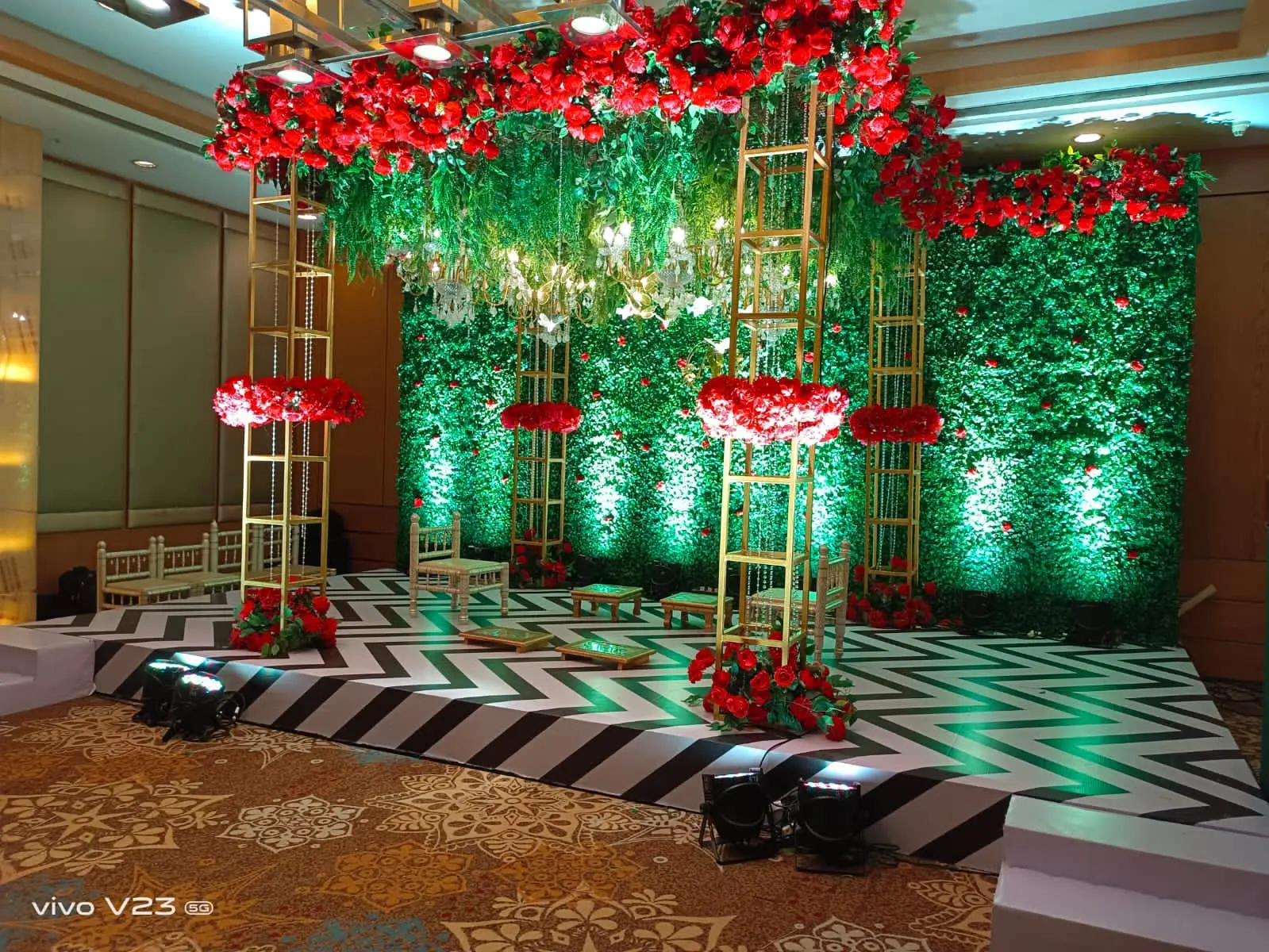
Wedding design differs from decoration the way a drawing differs from a building. Design decides; decoration delivers. You pay the first for thinking, measuring and drawing, and the second for material, labour, kit and transport.
The difference shows the moment something moves. Change the hall a fortnight before the wedding and a design tells you what still holds and what has to be redrawn. A folder of approved photographs tells you nothing.
Design answers why, decoration answers how much
A designer is asked why the sangeet stage is dark when the haldi is not. A decorator is asked how many running feet of that stage, on what frame, with how many fixtures and how many pairs of hands to put it up. Both questions have to be answered. Asking the second one first is why three quotes arrive describing three unrelated weddings.
How the two jobs are usually bought here
Most families in Pune buy both from one planner or decorator, which is sensible for a single function. Across several days, or two venues, keep them separate on paper even when one company does both: a design agreed first, then a build quoted against it line by line. Money can then move between functions without the wedding being redrawn.
The wedding design process, step by step
The wedding design process runs backwards from the date, in the order below. The stage families skip is the venue walk, and it saves the most, because every later decision is made against what the tape measure found.
Dates shape the design as much as taste does. A wedding in the thick of the season is drawn around crew and kit availability, and anything in the monsoon months is drawn around cover.
| Stage | When | What gets decided | What you sign off |
|---|---|---|---|
| Brief | 6 to 9 months out | Guest count, functions, who the day is for, what must not change | A written brief, one page |
| Venue walk | Inside 2 weeks of booking | Ceiling height, access, power, where a tempo stops, build hours | Measurements and the venue’s written rules |
| Scheme | 4 to 6 months out | Palette, materials, light direction, what stays plain | Palette and material list |
| Drawings | 3 to 4 months out | Focal structure per function, heights, widths, seating layout | Elevations and a floor plan |
| Costing | 10 to 12 weeks out | Flower volume, fabric, frames, lighting kit, crew, transport | An itemised build scope |
| Freeze | 3 to 4 weeks out | Final numbers, printed names, timings, who signs on site | No further design changes |
| Build | The week of | Build order, who is on site from which hour, rain cover | A schedule written by the hour |
Two rules make that table work. Nothing is drawn before the venue walk, and nothing is bought before the drawings. Reverse either one and you pay for it twice.
What the design settles, in the order it matters
Palette and material, before any structure
Colour comes first, because it decides the flower, and the flower decides the season and whether the thing survives an afternoon in the open. Choose against a real bloom and a real swatch held in daylight. Phone screens flatter pink and lie about yellow, and a palette approved at midnight is why a family can stand before a finished mandap feeling something is wrong without being able to name it.
Scale against the ceiling, not against the photograph
Every saved photograph was taken under a particular height. Copy it into a hall with a false ceiling and the overhead work hangs in people’s faces; copy it onto a lawn and the same structure looks like a toy. Scale comes from three measurements: ceiling height, the sightline from the back row, and how far guests sit from the focal point.
Movement, which nobody draws and everybody feels
A wedding is a sequence of waits. Guests wait at the gate, wait to greet, wait for food, wait for the couple. Design decides where those waits happen and what people look at during them: shade for a daytime queue, a corner worth photographing where people idle, and a path to the food that does not cross the path to the stage. A karyalaya in Kothrud with one gate needs this thought through far more than a lawn with three.
Light, and the hour the function starts
Daylight functions are designed with fabric, flowers and shade; evening functions are designed with light, and the structures only hold it up. Settle one colour temperature for the whole event and keep to it. Then ask where the power actually comes from, because an older society hall will offer you one point and a hope.
What a Pune venue does to a design
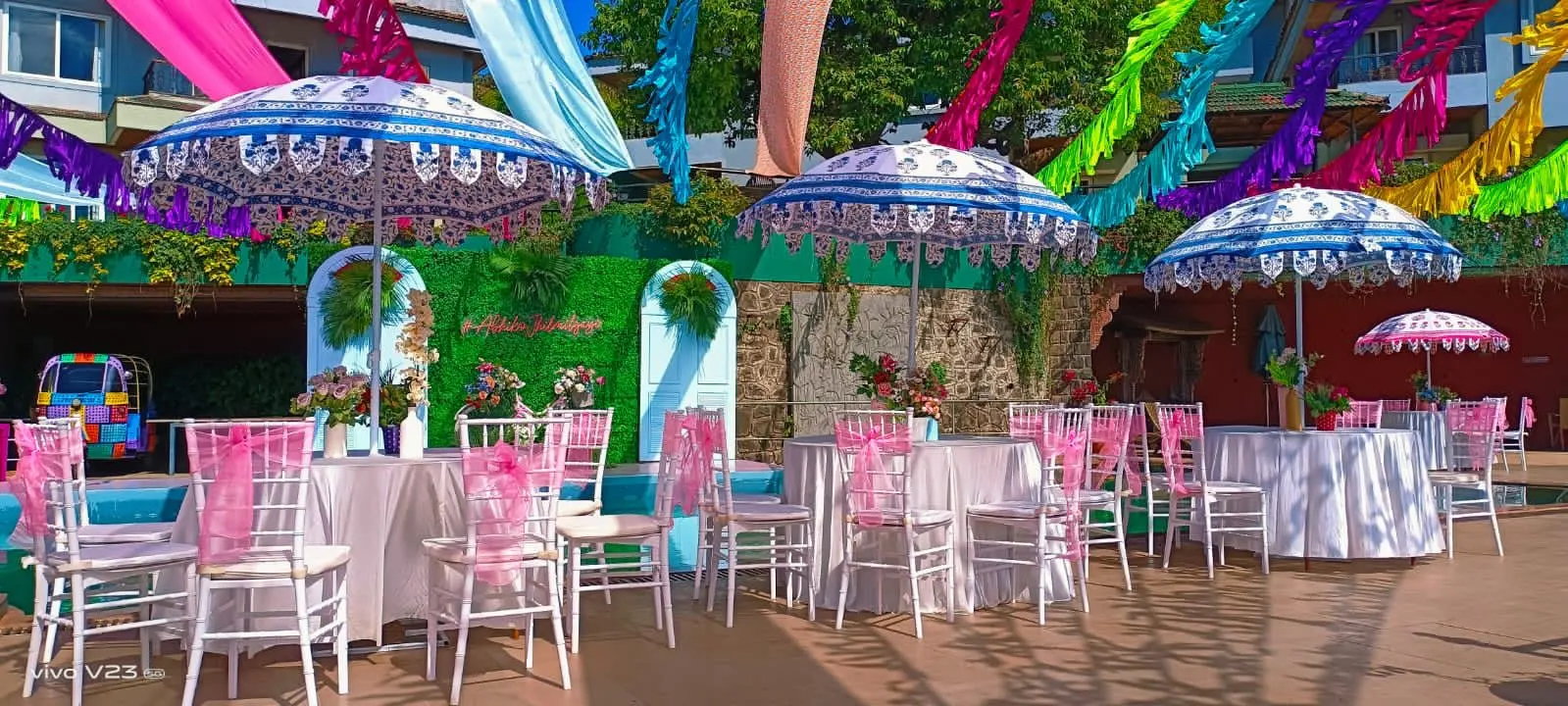
A design is only as free as the venue allows, and the limits here are consistent enough to plan around. Ask for them in writing before the drawings start.
Karyalayas and banquet halls
Many karyalayas keep a house decorator with exclusivity, which turns your design into a specification you hand over rather than a build you run. Ask on the day you book. Banquet halls along the Baner and Viman Nagar stretches usually refuse anything fixed overhead and charge for an outside decorator, so a design depending on suspension is out early. Measure the service lift before you draw anything tall.
Society clubhouses and lawns
A clubhouse or podium in Wakad, Balewadi or Hadapsar comes with a committee, a slot and a sound cut-off. The slot usually covers your build and your clearing up, leaving a working window a complicated design cannot fit. In older buildings around Deccan and Camp the lift decides the design: a frame that will not stand upright inside it must be drawn in sections, and that is a design decision, not a site problem.
Open ground, and the weather you get
On a lawn or an open plot, cover belongs in the design, not in a panic order the night before. So does flooring on soft ground, and every power run. If a gate or pandal reaches a footpath or a road you need civic permission, from the Pune Municipal Corporation or from PCMC depending on which side of the boundary you sit, and that paperwork moves slower than any supplier.
Where a wedding design comes apart
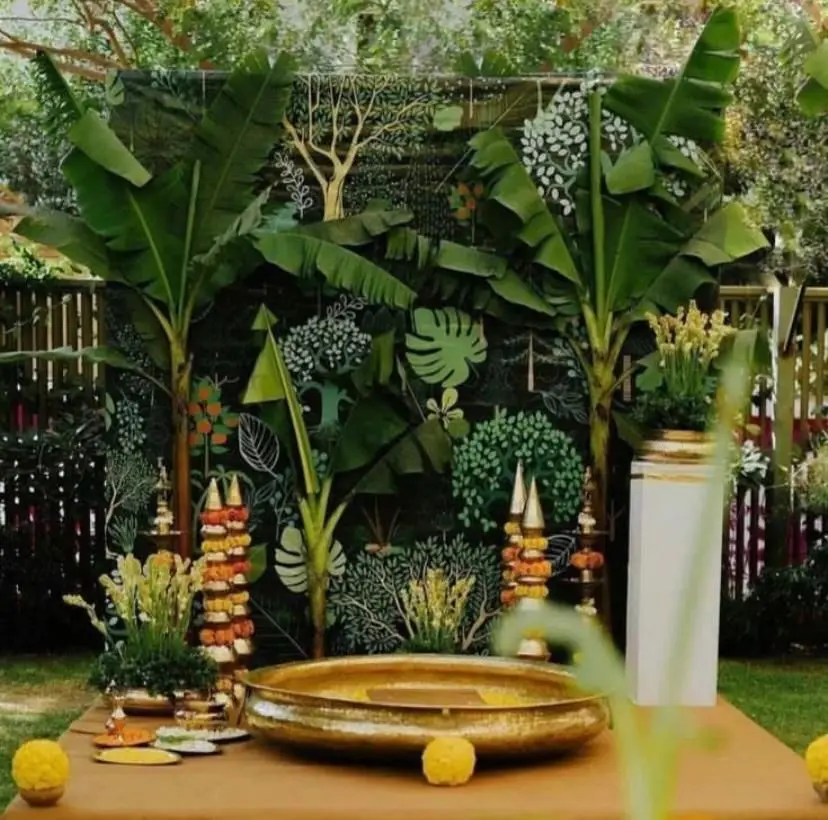
Nearly every design we are called in to repair failed for one of these reasons, and each one happens in the first month rather than the last week.
- No brief, only pictures. Taste was agreed and nothing measurable was.
- Signed off before the venue walk. The drawing was approved, then the hall was measured.
- Palette chosen on a screen. Approved at midnight, seen in daylight on the day.
- Scale copied from a photograph. Right design, wrong ceiling.
- Nothing left plain. Money spread evenly, so no single part looks finished.
- Numbers that moved after the layout. Seating is redrawn on site, and the sightline the stage was designed for disappears behind the extra rows.
- A muhurat that slipped. A design holding to one exact hour of light gets no second chance; one built for a window of two hours does.
How to judge a design before you pay for it
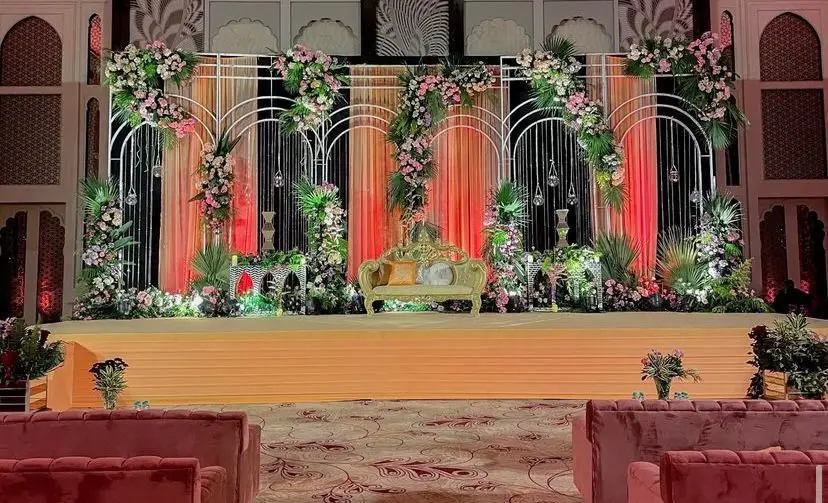
Ask for one page per function: palette, materials, the three measurements, the light direction, the guest route, and the line saying what is left plain. Reference photographs with a figure at the bottom are a decoration quote, and the design is still owed to you.
Our wedding planning in Pune page sets out how the design and the build are handled together, wedding decoration themes shows what a settled palette looks like across functions, and wedding decorators in Pune covers the build side. Send the date, the venue and the functions to our contact page for a brief and an itemised scope.
Frequently asked questions
What is wedding design?
Wedding design is the scheme settled before any building starts: the palette, the materials, the scale of each function, the light and the route guests take through the day. It is written down and measured, then every supplier works to it. Decoration is the flowers, fabric, frames and lighting that deliver that scheme on site.
What is the difference between wedding design and wedding decoration?
Design decides and decoration delivers. Design settles colour, material, scale, light and movement, and writes them down so the florist, printer, lighting crew and stage builder all work to the same instruction. Decoration is the material, labour, kit and transport that put it up. You can buy both from one company, but keep them separate on paper.
What does the wedding design process involve?
Seven stages, run backwards from the date: a one-page brief, a venue walk with a tape measure, the scheme of palette and materials, drawings with heights and widths, costing of the build, a freeze on changes, and the hour-by-hour build schedule. Nothing is drawn before the venue walk and nothing is bought before the drawings.
When should wedding design start?
As soon as the venue is booked, which for most Pune families is several months before the date. The brief and the venue walk come first, the scheme and drawings a few months out, costing about ten weeks out, and a freeze on changes three to four weeks before. Design time is rarely the constraint; crew and kit availability in season is.
Do I need a wedding designer if I already have a decorator?
Not necessarily. Most decorators in Pune design as part of the job, and for one or two functions that works. What you do need is the design written down: palette, materials, three measurements, light direction and guest route. Without it you cannot compare two quotes, and nobody can tell you what still holds when the venue or the guest count changes.
How does a Pune venue change a wedding design?
It usually decides it. A karyalaya with a house decorator turns your design into a handover specification. A banquet hall that refuses anything fixed overhead rules out suspended work. A society clubhouse gives a slot that includes your build and clearing up. In older buildings the lift sets the largest piece you can carry upstairs in one go.

Vicky founded Plan With YOLO in Pune in 2013 and leads the planning on corporate events, weddings and stage production across Maharashtra.