Navratri celebration is a nine-night Hindu festival honouring the goddess Durga, ending on the tenth day, Dussehra. It marks Durga's victory over the demon Mahishasura after nine nights of battle. Each night is given to one of her nine forms, and families mark it with fasting, a lamp kept lit, garba and visiting.
What is Navratri celebration? It is a nine-night Hindu festival held in honour of the goddess Durga, closed by a tenth day called Dussehra. It falls in the lunar month of Ashwin, which puts it in late September or October, and in Pune it owns the stretch of the social calendar between Ganpati and Diwali.
Planning this in Pune? See our dandiya event organisers in Pune: one team plans and runs it with you, since 2013.
Nava is nine, ratri is night, and what happens across those nights depends on which family you are standing in. A Maharashtrian household installs a ghat on the first morning and keeps a lamp burning. A Gujarati family dances garba until the sound has to stop. A Bengali family treats the last four days as Durga Puja.
If a society committee or an office has handed you “something for Navratri”, skip down to the event ideas. Otherwise, start here.
Why do we celebrate Navratri?
We celebrate Navratri to mark Durga’s victory over Mahishasura, a demon no man or god could kill. The gods pooled their strength into a goddess instead. She fought him for nine nights and killed him on the tenth, which is why that day is called Vijayadashami, the day of victory.
Two stories, one day
Across much of north India that same tenth day is read differently: it is the day Rama killed Ravana, which is why effigies burn in some neighbourhoods and not others. Both land on the same date, both get called Dussehra, and in a mixed Pune society you will see both on one ground. The longer history of the festival is worth a read if you are writing the invitation copy yourself.
And why nine?
The nine are the Navadurga, nine named forms of the goddess, one to a night. Nights rather than days, because the rituals are evening rituals. The lamp, the aarti, the dancing and the visiting all happen after work and after school. There is also a second Navratri in spring, around Gudi Padwa, but when somebody in Pune says Navratri they almost always mean the autumn one.
What is Navratri and why is it celebrated differently in every building?
Navratri is celebrated differently because the festival travelled. Every region kept the goddess and changed the method, and a single Pune tower now holds four or five of those methods at once.
In Maharashtrian homes
Ghatasthapana on the first morning: a pot of soil with nine kinds of grain sown into it, and an oil lamp that is not allowed to go out for the nine nights. A fresh garland goes up each day, so by the last night the hanging is thick. Girls play bhondla, or bhulabai, around a drawing of an elephant, singing songs that end with a shared snack. Haldi-kunku invitations go out on one of the days, usually for an afternoon.
Garba and dandiya
Garba is a circular dance around a lamp set at the centre of the floor. Dandiya raas is the stick version, danced in pairs. Gujarati, Marwari and Sindhi families in Pune brought both. What the city now calls a dandiya night is the public form: a ground or a lawn, a pass at the gate, a band or a DJ, and a floor that only fills after the aarti.
Durga Puja and golu
Bengali families count from the sixth day. The pandal opens, the idol is installed, and Saptami through Dashami each carry their own rituals before the immersion. In Tamil, Telugu and Kannada homes the golu goes up instead: wooden steps of dolls, with neighbours invited in to see them. On the ninth day, tools, instruments and books are placed before the goddess for Ayudha Puja and Saraswati Puja, which is why some workshops in the city stay shut that morning.
The nine nights at a glance
This is the shape most Pune families follow, with the ritual on the left and what it means for an organiser on the right.
| Night | Form of the goddess | What it usually means for a planner |
|---|---|---|
| 1 | Shailaputri | Ghatasthapana at home. Grains sown, lamp lit, nothing public yet. |
| 2 | Brahmacharini | Fasting households settle into the routine. A quiet evening on most grounds. |
| 3 | Chandraghanta | The first garba evenings start, if the night falls near a weekend. |
| 4 | Kushmanda | Weekday turnout dips. A good night for the children’s and seniors’ slot. |
| 5 | Skandamata | Lalita Panchami in many Maharashtrian homes. Afternoon haldi-kunku invitations. |
| 6 | Katyayani | Shashthi. Durga Puja pandals open, so expect evening traffic around them. |
| 7 | Kalaratri | Saptami. The heaviest dandiya nights, and the hardest to hire sound for. |
| 8 | Mahagauri | Ashtami. Havan and kanya pujan in many homes; mornings get crowded. |
| 9 | Siddhidatri | Navami. Ayudha Puja and Saraswati Puja; tools, books and instruments offered. |
| Tenth day | Dussehra | Vijayadashami. Apta leaves exchanged, new things bought, effigies in some areas. |
Navratri event ideas that work in Pune
Navratri event ideas sort into three sizes here, and the size decides everything after it: a society ground garba for a few hundred people, an office evening for one night, or a home function for thirty or forty guests. Most of the trouble comes from running one of those by the rules of another.
On a society ground or in the clubhouse
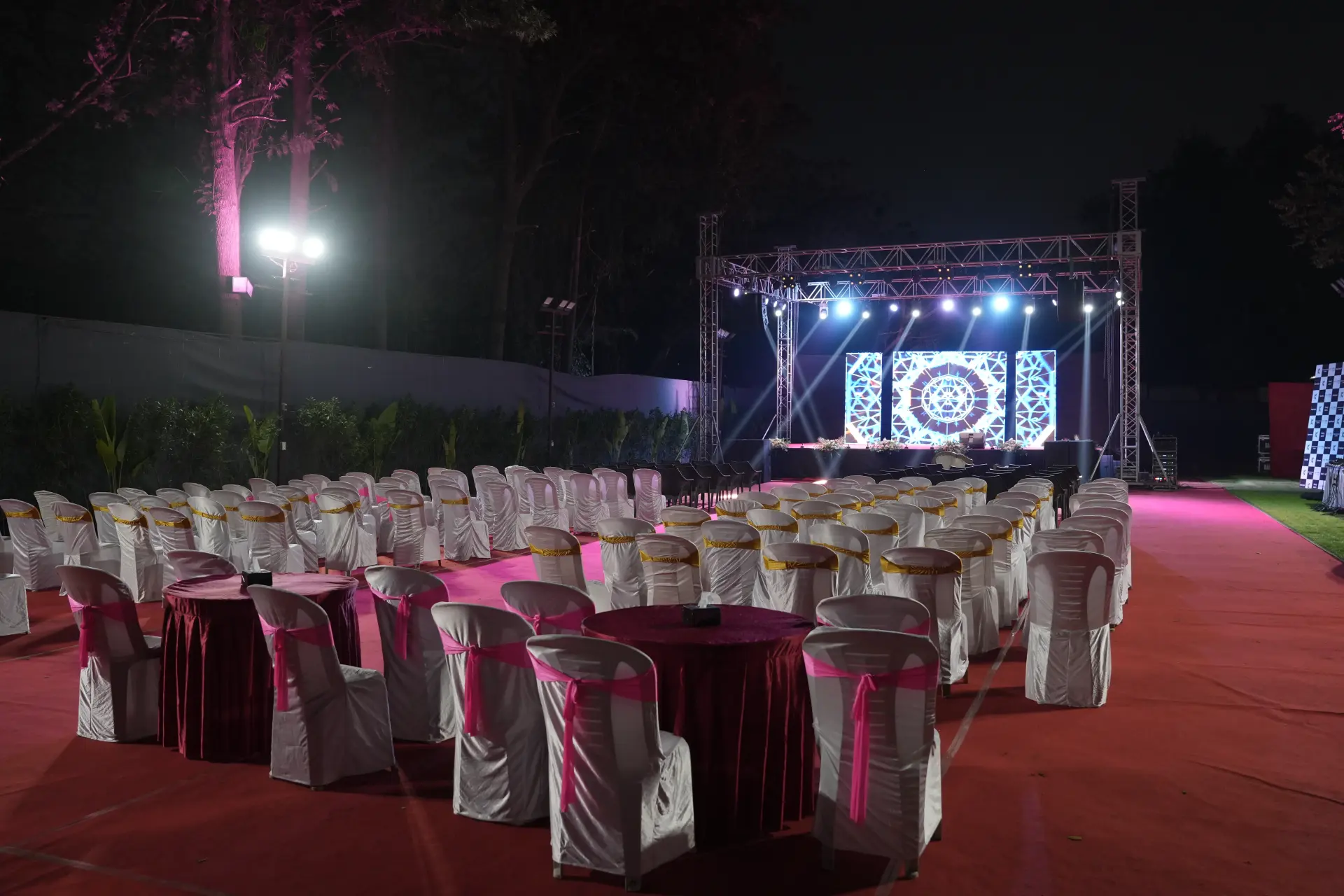
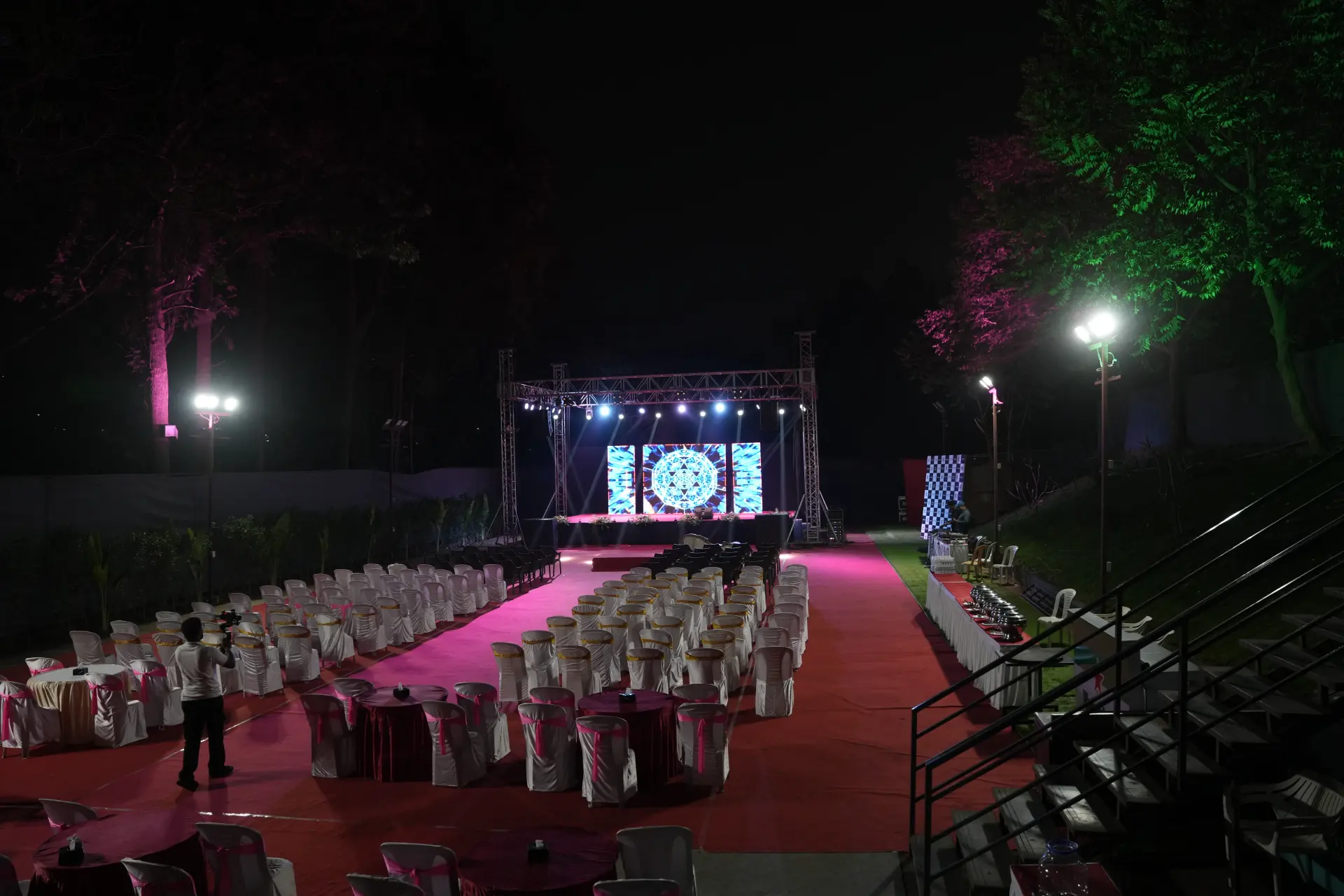
Keep the centre of the floor empty. Garba is danced in circles around a lamp, so a stage in the middle kills the dance and a stage at one end does not. Point the sound inward across the ground, never outward at the next tower, and tell the committee that before the layout is agreed rather than after the first complaint.
- A backdrop at the stage end with the goddess, marigold strings and torans, lit well enough for phone cameras to cope.
- Passes issued per flat, a different colour for guests, and one gate in with a separate way out.
- An early slot for small children and older residents, before the floor gets crowded.
- Rangoli and best-dressed judging, announced in the notice a week ahead so people can prepare.
- Food stalls run by outside stallholders, each holding a valid FSSAI registration for that stall. The committee is the party that gets asked for it.
For an office evening
An hour of dancing is plenty after a working day, and an anchor who teaches the steps in two rounds matters more than the playlist, because most of your floor has never done it. Announce the dress code a week ahead, not on the morning. Build one photo corner people will queue at instead of scattering props. Measure the goods lift before anybody promises a stage: on an older floor, frames have to be built in sections to get up at all.
At home, or in the society hall
Haldi-kunku and bhondla need seating more than they need decor. One clean backdrop and proper floor seating does more for the photographs than props spread round the room. The ghat and the lamp stay put for all nine nights, so give them a corner nobody walks through, away from a fan and well away from a curtain.
What goes wrong in Pune, specifically
The rain has not finished
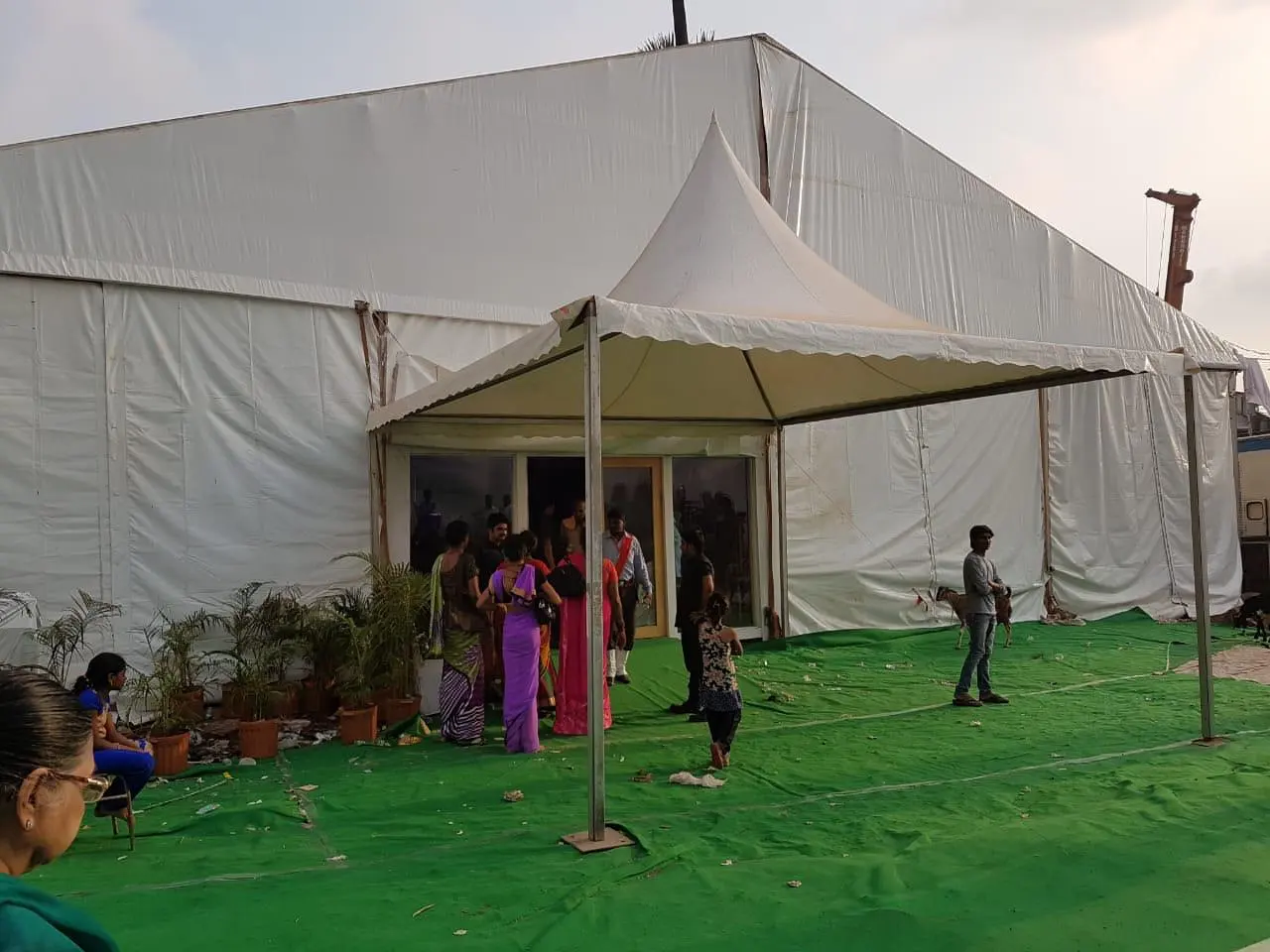
An early Navratri catches the tail of the monsoon, and a murum ground drains slowly. Garba is danced barefoot by most of the floor, so a wet surface is not a cosmetic problem. Take the rain decision at booking, not on the day: either a tent over the dancing area, or the hall held in reserve with the committee’s agreement in writing.
Sound, power and the night cut-off
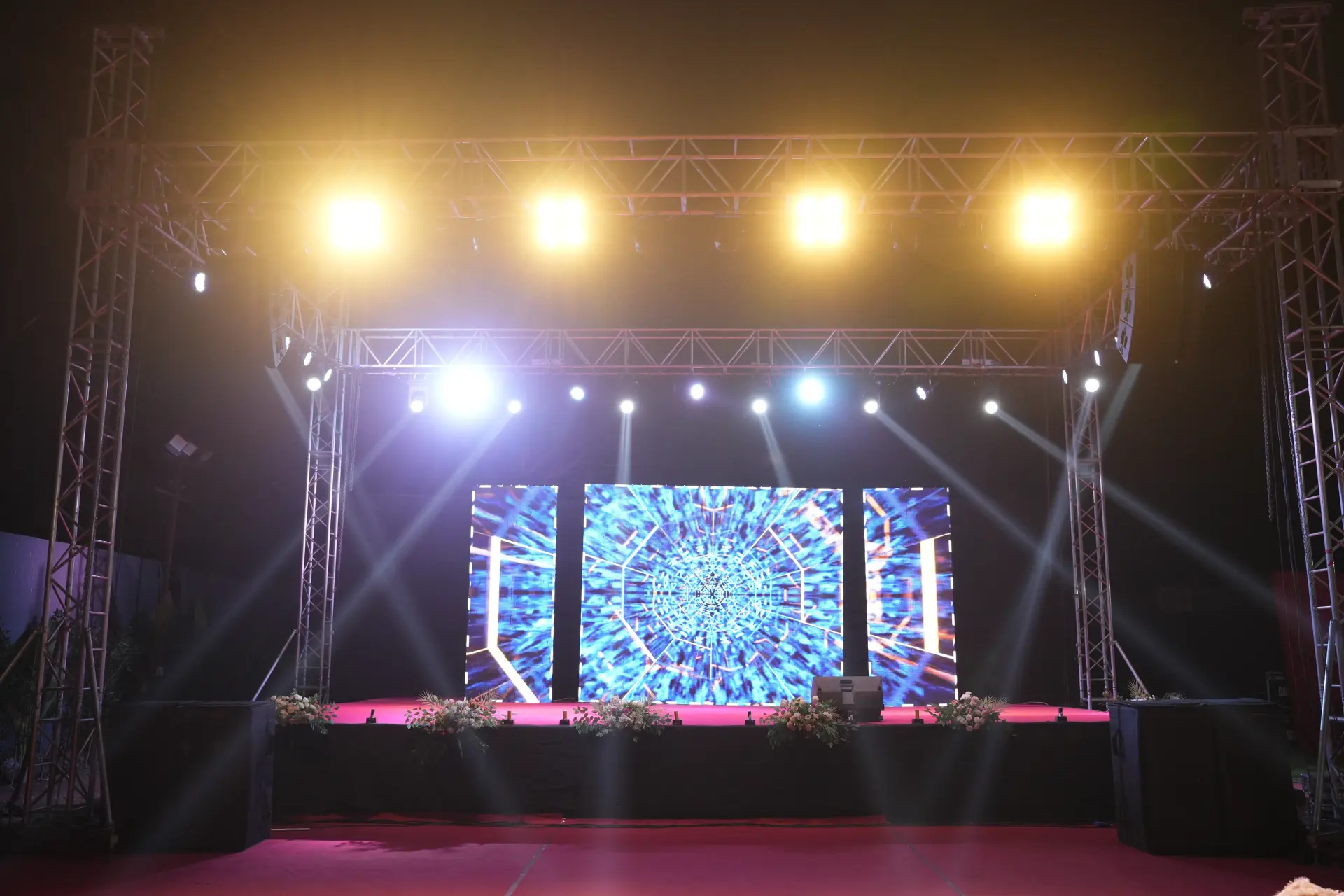
Loudspeakers have a night cut-off, and festival relaxations are notified year by year, so ask your ward office and the local police station which nights apply before anyone signs with a DJ. A clubhouse socket will not carry a sound system, stage lights and food stalls together. That means a generator, placed where its noise and exhaust sit behind the crowd rather than beside the seating.
Committee rules and the slot you were actually given
Get the permission into the minutes, with the slot written as build, event and strike rather than just the hours of the party. Clubhouse walls usually cannot take nails. Older buildings on the inner lanes have lifts that will not swallow a full frame, so panels are carried up the stairs. Societies in Pimpri-Chinchwad apply to PCMC rather than to the Pune corporation, and the two do not run to the same timetable.
Parking and the fire lane
A ground garba swallows the internal road. Decide where guests park before the notice goes out, keep the fire lane open, and keep an ambulance route clear to the gate. One car left across that lane will matter more on the night than anything you spent on the backdrop.
Working backwards from the first night
- Six to eight weeks out: agree the format, name the one person who signs off spending, and get the ground or hall slot into the committee minutes.
- A month out: permissions, stage, sound, lights, anchor and artist. These run out first, because every society in your pin code wants the same two evenings.
- A fortnight out: printing. Backdrop, passes, notices, stall signage. Confirm each stallholder’s registration while there is still time to replace one.
- The week of: mark the floor, test the electrical load with everything switched on at once, and take the rain decision.
- The day: build in the morning, sound check before sunset, and fix the aarti time in writing so the DJ knows when the music stops.
Where to go next
Navratri is nine nights of several different traditions sharing one floor, which is why these events are won on order and access rather than on decor. If a committee or an office has handed you the job, our Navratri and dandiya event organisers in Pune page sets out what we take on. The dandiya night planning guide goes deeper into the ground, the sound and the crowd flow, and decorating a society clubhouse explains what committees usually allow. We have been setting these up across Pune since 2013, so send us the date and your likely headcount and you will get an itemised scope back rather than a brochure.
Frequently asked questions
Why do we celebrate Navratri?
Navratri is celebrated to mark the goddess Durga's victory over Mahishasura, a demon no man or god could kill. The gods combined their strength into her, she fought him for nine nights, and she killed him on the tenth. That tenth day is Vijayadashami, or Dussehra. In north India the same day also marks Rama's victory over Ravana.
What is Navratri and why is it celebrated for nine nights?
Navratri means nine nights, from nava and ratri. The nine are the Navadurga, nine named forms of the goddess, with one form worshipped each night. Nights rather than days because the rituals are evening ones: the lamp, the aarti, the dancing and the visiting all happen after work. A second, quieter Navratri falls in spring, around Gudi Padwa.
What happens on each day of Navratri?
The first morning is Ghatasthapana: a pot of soil, nine grains sown in it, and a lamp that stays lit for the nine nights. The middle nights carry the garba and dandiya evenings. The sixth day opens Durga Puja pandals, the eighth brings havan and kanya pujan, and the ninth is Ayudha Puja and Saraswati Puja, when tools and books are offered.
What is the difference between garba and dandiya?
Garba is a circular dance around a lamp placed at the centre of the floor, done with hands and claps. Dandiya raas uses a pair of sticks and is danced in pairs, often in two rotating circles. Most public evenings in Pune mix both, which is why the centre of the dance floor has to be left clear of any stage.
What are good Navratri event ideas for a Pune society?
Keep the dance circle open and put the stage at one end. Add a lit backdrop with marigold and torans, passes issued per flat, an early slot for children and older residents, and rangoli or best-dressed judging announced a week ahead. If food stalls come in, each stallholder needs a valid FSSAI registration for that stall.
Do we need permission for a Navratri event in a Pune society?
Yes. Get the committee's permission into the minutes, with the slot written as build, event and strike rather than only the party hours. For amplified music, check with your ward office and the local police station which nights the festival relaxations cover, since loudspeakers carry a night cut-off. Societies in Pimpri-Chinchwad apply to PCMC instead.

Vicky founded Plan With YOLO in Pune in 2013 and leads the planning on corporate events, weddings and stage production across Maharashtra.