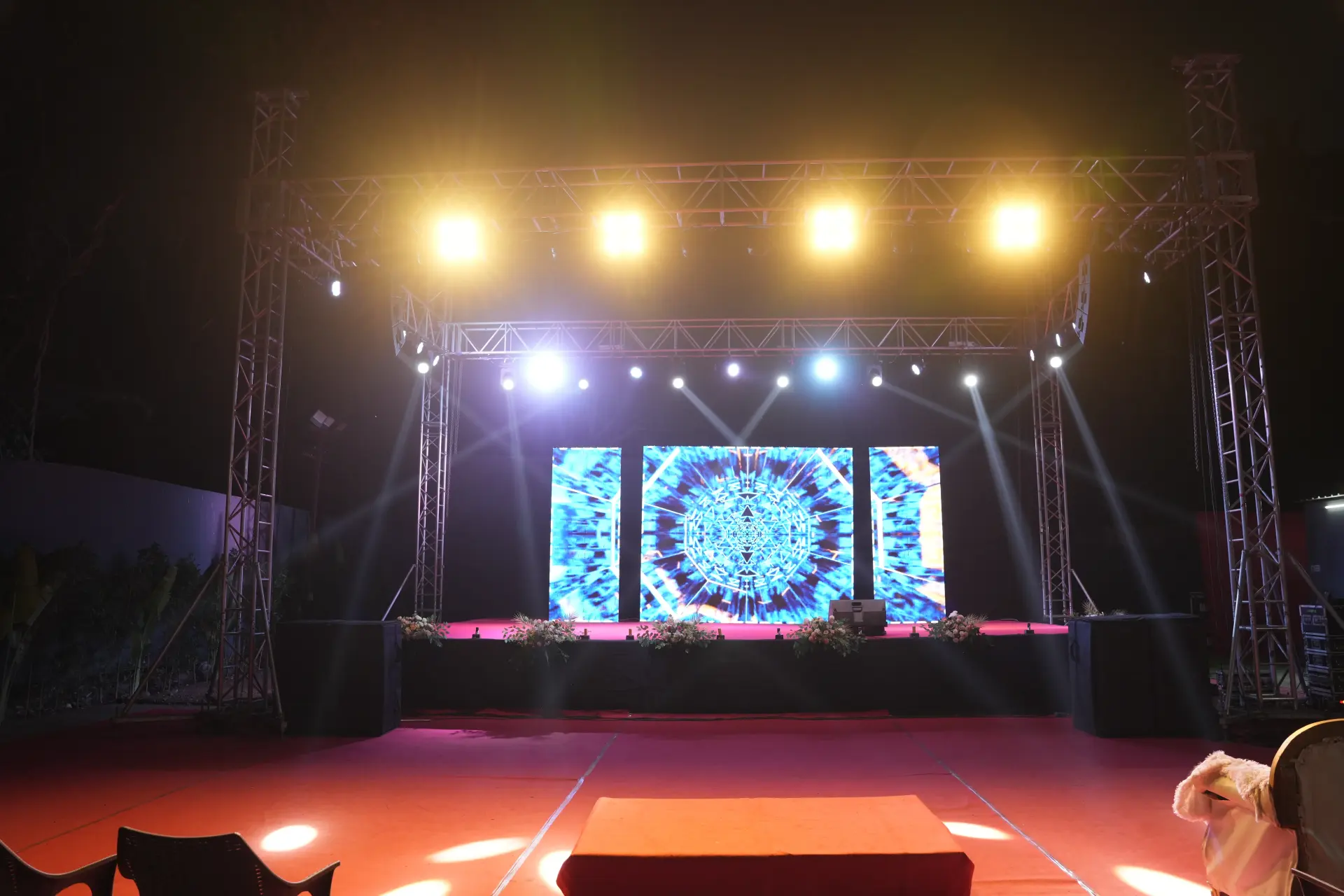
CME programme
A half or full day carrying accredited credit hours.
Shop 7, Ekta Nagri, Near Dwarka Apartment, Anand Nagar, Pune 411051

A CME programme is not a corporate conference with doctors in it. There is accreditation paperwork, there are rules about what a pharma sponsor may and may not do, and the delegates are only there if the credit hours are secured.
We organise conferences of every kind, and this page exists because the medical ones are genuinely a separate job. Three things are different and all three are the organiser's problem, not the committee's.
Credit hours. Most delegates attend because the programme carries accredited hours. That means an application to the state medical council with the agenda, the faculty and the hours, submitted on their timeline rather than yours, and attendance records kept in a form the council will accept.
Sponsors. Pharmaceutical and device companies fund most of these, and what they may do is constrained by the industry code. The stall layout, where branding may appear, what may be given away and how it is acknowledged from the podium all have to stay inside that.
The talks. Clinical presentations are dense, image-heavy and often shown to a room where the back row is forty metres away. Screen size and resolution are a clinical requirement here, not a design choice.
A half or full day carrying accredited credit hours.
Multi-day, multi-hall, with a poster session and an AGM.
One subject, invited faculty, a tighter audience.
Feed from an operating theatre, which changes the AV job entirely.
Small, closed, and governed strictly by the sponsor’s own compliance.
Larger delegate numbers, lower ticket, more hall and less hospitality.
Buzzer rounds, scoring and a stage format rather than a lecture one.
Closer to a corporate event, with a clinical audience.
The clinical content is the committee’s. Everything else here is ours.
The council application with agenda, faculty and hours, submitted to their calendar and followed up.
Delegate registration, badges, and attendance capture that will survive an audit.
Boards or screens, numbering, the judging round and an abstract book that is ready before day one.
Invitations, travel, rooms, transfers, the speaker-ready room and the honorarium paperwork.
Screen and projection sized for clinical slides, with a confidence monitor and a timer the chair can see.
Stall layout, what may be branded and what may not, and acknowledgement that stays within the code.
Every photo here is from an event our team planned and ran.
In order of how early they have to be dealt with.
The council works to its own calendar. An application sent six weeks out can mean a programme that opens without credit hours, and delegates who registered for the hours ask for refunds. This is the first thing we start and the thing we chase hardest.
Pharma and device funding comes with limits on branding, hospitality and giveaways. A sponsor whose stall breaches the code creates a problem for the sponsor and for the organising committee. We lay the stalls and the acknowledgements out to stay inside it, and we would rather lose a stall than put the committee in that position.
Histology, radiology and operative video shown on a screen sized for a bar chart is a wasted talk. Screen size comes from the depth of the hall and the content, and for a surgical feed the resolution and the latency both matter.
Numbering, board allocation, when authors must stand by their poster, the judging round and the abstract book. Done late it becomes a corridor of unlabelled boards, which is a shame for the residents whose work it is.
Clinical speakers overrun more than any other kind, and a session that slips takes the tea break with it. A visible countdown the chair controls, agreed with faculty beforehand, is the whole solution.
See conference organisers in Pune for the general service and production for the AV side.
The listings for Pune are ordered by ad spend and review count. Both are worth something, and neither answers whether the team has worked your kind of venue.
A team that has worked Pune knows the access, the power and the society timings. Ask for that, ask for the breakdown, and ask who runs the day. Our contact page has both numbers and WhatsApp, and you will get an itemised scope back rather than one figure.
Can't find yours? Call or WhatsApp — a planner answers.
Three things: accredited credit hours have to be applied for and the attendance records kept to a standard the council accepts; pharmaceutical and device sponsors are bound by an industry code that limits branding, hospitality and giveaways; and clinical slides need screens sized for histology and radiology rather than bullet points. The rest is conference work.
We prepare and track the application — agenda, faculty, hours — and set up attendance capture in a form that survives an audit. The council grants it, not us, and it works to its own calendar, which is why we start this first rather than six weeks out.
By planning the stall layout, the branding placements, the giveaways and the podium acknowledgements to stay inside the industry code from the start. It is easier to design a compliant floor than to dismantle a non-compliant one on the morning, and a breach is a problem for the committee as much as the sponsor.
Yes — boards or e-poster screens, numbering and allocation, the author-attendance slots, the judging round and an abstract book ready before day one. It is usually the part that gets planned last and it matters most to the residents presenting.
Yes, and it is a different AV job: the link from theatre, resolution and latency, a moderator who can talk to the surgeon, and a backup recording in case the line drops. It needs a rehearsal with the hospital, not just a cable test.
It follows the delegate numbers, the number of halls and days, faculty travel, the poster session and the AV. A single-session CME for eighty and a three-day association conference with four halls are different jobs. Send the delegate count, days and whether credit hours are needed.
That phrase has no official meaning, so the useful question is what to compare. Plan With YOLO has planned events since 2013 out of Pune and handles cme programme, association annual conference and specialty update or symposium in Pune. The same crew covers In Pune. Ask for the breakdown — décor, stage, sound, crew, transport — and compare like for like.
The shortlist worth having is teams who have set up in Pune before; venue quirks are the part nobody writes in a quotation. Our office is in Anand Nagar off Sinhagad Road and the crew travels to Pune with its own kit. Send the date, the venue and a rough guest count and you get a scope back the same day.
It moves with guest count, venue, the scale of décor and stage, and whether the date is in season. A wedding date in season and a weekday corporate meeting in Pune are not comparable, so a quoted range before anyone has seen the brief is not worth much. You will get an itemised scope for your own event, and every line on it can move.
Pune · PCMC
LED walls · Truss · Sound · Lights
Pune · PCMCConference to organise? Send the agenda.
Delegate numbers, how many days and halls, and whether credit hours are needed. Accreditation is the one thing that cannot be rushed, so earlier is better.