Compare advertising agencies in Pune on three things: how they charge, who will actually work on your account week to week, and what they commit to deliver in writing. Ask every shortlisted agency to separate their fee from your media spend, and to name both the people and the monthly outputs.
Choosing an agency is unlike choosing most suppliers, because what you are buying has not been made yet. There is no sample to inspect. You are reading three documents about work that does not exist, presented by people who are very good at presenting. This guide is about comparing advertising agencies in Pune in a way that survives the pitch: the ways they charge, the difference between a fee and a spend, the questions that reveal how your account will really be staffed, and how to read two proposals that share almost nothing.
Planning this in Pune? See our advertising agency in Pune: one team plans and runs it with you, since 2013.
What you are actually choosing between
Underneath the credentials deck, you are choosing between three things: a way of working, a set of people, and a definition of what counts as done.
Agencies differ enormously on all three and describe themselves almost identically. One may be strongest at making things look right, another at buying media efficiently, a third at writing something people remember, a fourth at getting a campaign through a complicated approval chain without it dying. None of those is the same skill, and the words full service cover all of them equally badly.
So begin by naming the problem in business terms rather than in advertising terms. You are not buying a campaign. You are buying a steadier flow of the right enquiries, or a reputation that arrives in the room before your salespeople do, or a launch that lands in one week rather than dribbling out over two months. Write that down, because it is the only thing you can hold three very different proposals against.
Four ways agencies charge
The commercial model shapes the work more than any creative philosophy, so understand which one you are being offered.
| How the engagement is built | It suits you when | What to watch |
|---|---|---|
| Monthly retainer | You need a steady flow of work, several channels running at once, and somebody who learns your business over time | Ask what the retainer buys in countable outputs, and what happens in a month when you need less or far more |
| Project fee | There is one clear job with an end: a launch, a rebrand, a campaign for one season | Define where the project stops. Rounds of change, extra sizes and later adaptations are where project work quietly expands |
| Fee plus media handled separately | You are spending meaningfully on media and want to see exactly what is going to platforms versus to the agency | Ask whether the fee moves when the spend moves, because that decides whose interest the plan serves |
| Performance-linked | The outcome is genuinely countable, such as qualified enquiries or bookings, and the tracking already works | Agree the definition of a result and who owns the data before anything starts, not after the first invoice |
A proposal that refuses to say which of these it is will be hard to manage later. Ask directly, and ask what a change request costs, because that number will appear more often than anything in the main table.
Keep the fee and the spend in separate columns
Never compare two agency proposals on the total, because the totals usually contain different things.
One document may bundle the working money going to platforms, printers and publishers together with the agency’s own charge. Another may show only the charge. A third may include production of the films and artwork, which is again a separate kind of cost. Rebuild all three with three columns: what the agency earns, what goes to media, and what it costs to make the assets. Only then do the numbers mean anything, and only then can you see which proposal is actually recommending more spend rather than more work.
Where cost is concerned, the honest answer is that it is driven by how many assets you need, how many versions and languages each needs, how long the agency is engaged, whether media is bought and how much, and how much production is involved in filming, photography or fabrication. Ask for that broken out line by line and you can trim deliberately instead of discovering later what was quietly dropped.
Questions that reveal how the work will be done
About the people
- Which of the people in this room will be on my account in month three, and for roughly how much of their week?
- Who writes, who designs and who runs the media, and do I ever speak to them or only to the account manager?
- How many other clients does that same group of people carry?
- Who covers when the lead is on leave, and how would I know?
About the work itself
- Show me something you made that did not win an award, and tell me what you would change.
- What did the client provide in that example, and what did you create from nothing?
- How many rounds of revision are included, and what counts as a round?
- Who owns the artwork files, the campaign assets and the accounts once we stop working together?
About measurement
- What will you report every month, and can I see a sample report from another client with the names removed?
- What would make you tell me a campaign is not working, and how quickly?
- Which of the numbers in your proposal are promises and which are hopes?
The last question is the most useful one in the list. An agency that distinguishes clearly between what it controls and what it merely influences is an agency that will give you honest reporting later.
What a workable scope document contains
Before anything is signed, one page should say exactly what arrives and when.
- The countable outputs per month or per project: films, statics, pages, articles, campaigns, reports.
- Turnaround times, both for the first version and for changes.
- Named roles against the account, with their involvement described honestly.
- Revision rounds, and the charge once they are exhausted.
- Who supplies photography, footage, product samples, translations and approvals.
- Ownership of files, logins and data, written down rather than assumed.
- Notice period, and what happens to work in progress when either side leaves.
If a scope document does not exist, the pitch was the product and you will be negotiating in month two.
Where being in the same city helps
Most agency work can be done from anywhere, which makes it worth knowing exactly where proximity earns its keep.
It matters for anything physical: a shoot, a stall, a store launch, a roadshow, print that must be checked on press, or a brand activation where somebody has to stand in a mall on a Saturday. It matters for Marathi and Hindi copy that has to sound written rather than translated. It matters when your approvals happen in a room and the agency should be in it. Around Baner and the wider western corridor, plenty of companies run a remote creative arrangement perfectly well and then discover that the on-ground half of their calendar has no owner. Decide which parts of your year need somebody in the city before you weigh location at all. Our pages on branding and on-ground brand activations set out what that physical side involves.
Making the choice
Pick the agency that argued with your brief intelligently, priced in separate columns and wrote down what it will deliver. Polish is easy to buy; judgement is not.
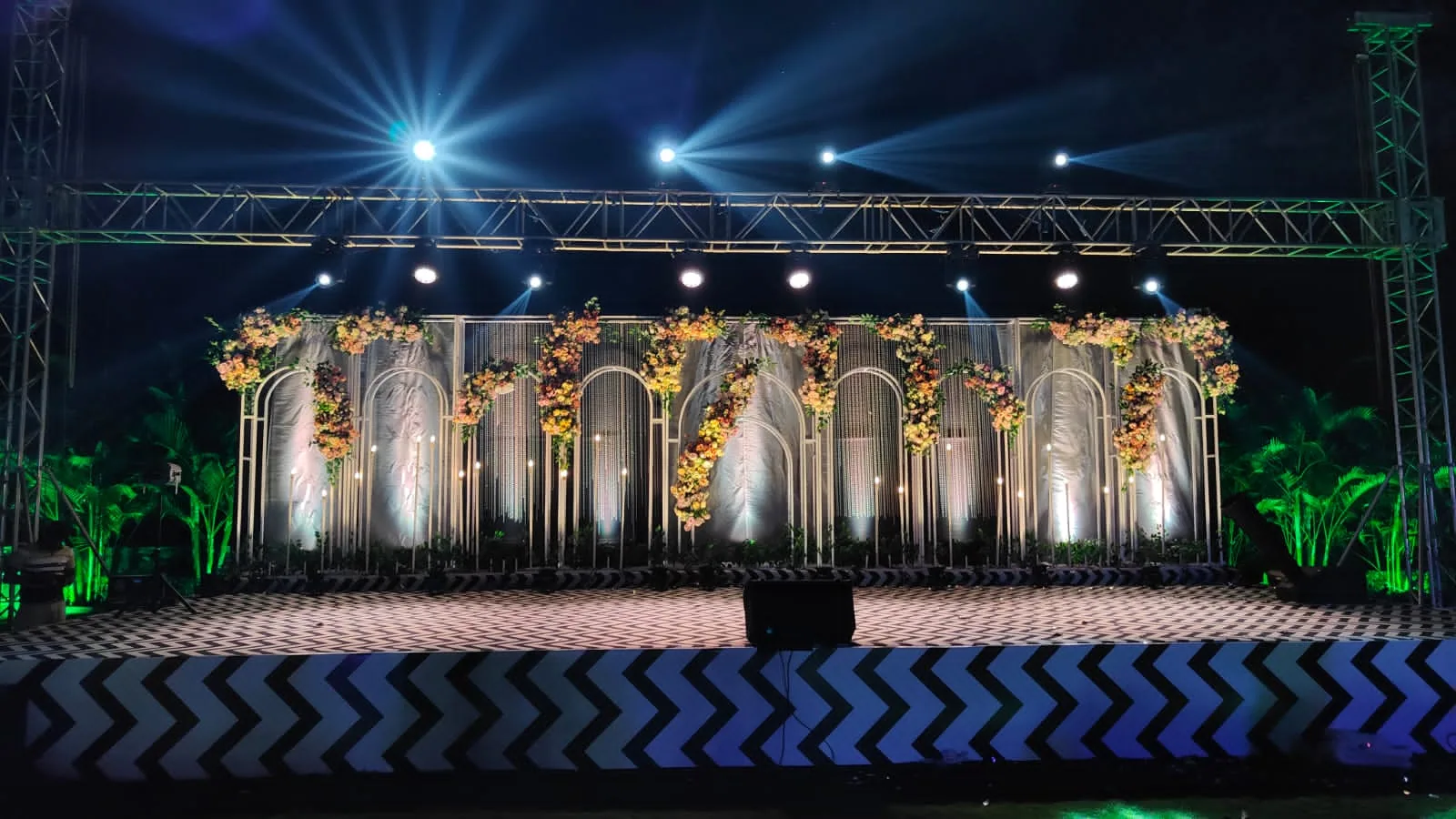
Events and advertising sit together at Plan With YOLO because so much of a brand shows up in a room rather than on a screen: the launch, the stall, the stage, the film shot on the day. Our advertising agency in Pune page explains how campaign, design and on-ground work are handled together, and our digital marketing page covers the always-on side. Tell us the business result you wrote down at the start, using our contact form, and you will get back a written scope, the deliverables you can count, and the money shown as three separate figures.
Frequently asked questions
Which advertising agency is the best fit for my company?
Judge the agency on its scope document rather than its showreel. Ask who will be on your account in month three, what countable outputs arrive each month, how many revision rounds are included, and who owns the files and logins afterwards. The agency that questions your brief intelligently usually works better than the one that agrees with all of it.
Should an agency fee include media spend?
No, keep them apart. Media money goes to platforms, publishers and printers; the fee is what the agency earns for planning and making the work. Production sits in a third column. When all three are bundled into one total, two proposals cannot be compared, and you cannot tell whether one is recommending more spending or more work.
Retainer or project: which is better?
It depends on how steady the work is. A retainer suits several channels running continuously and rewards an agency for learning your business over time. A project fee suits one job with a clear finish, such as a launch or a rebrand. Whichever you pick, write down the countable outputs, the turnaround times and the cost of a change request.
How many agencies should I invite to pitch?
Three is usually enough, and asking for free creative work from all of them is a poor start. A written brief, a conversation and a scope-and-costs response will tell you more than speculative campaign ideas. If you do want creative thinking in the pitch, pay a small fee for it and give every agency the same information.
Does the agency need to be based in Pune?
Only for the parts of the work that happen physically. Shoots, print checks, exhibition stalls, store launches, on-ground activations and Marathi copy all benefit from somebody in the city. Planning, design and media buying can be run remotely. Map your year first, then decide how much of it needs a team that can be in the room.

Vicky founded Plan With YOLO in Pune in 2013 and leads the planning on corporate events, weddings and stage production across Maharashtra.