The ideas that work in a society are the ones a committee can actually deliver: a lit gate, a lobby toran, lamps along the common passage, a rangoli slot for residents and one lighting run on the facade. Anything needing height, heavy power or daily upkeep usually stalls.
Every society group has the same thread in the third week of October. Somebody posts a photograph of a building covered in lights, somebody else asks what the budget is, and a fortnight later the gate has one string of lights on it and nobody is quite sure what happened.
Planning this in Pune? See our diwali decoration in Pune: one team plans and runs it with you, since 2013.
The gap is rarely imagination. It is that nobody sorted the ideas by how much work each one puts on a committee of volunteers who have day jobs.
So here they are in that order.
What each idea actually asks of you
| Idea | Committee effort | Needs approval? |
|---|---|---|
| Gate lighting and toran | Low | No |
| Lobby and lift-area lamps | Low | No |
| Resident rangoli slot | Low | No |
| Common passage lamp run | Medium | No |
| Clubhouse decor for the evening | Medium | Booking only |
| Balcony lighting, uniform across wings | High | Resident buy-in |
| Facade lighting run | High | Yes, plus power check |
| Themed photo corner | Medium | Space allocation |
The low-effort ideas that still look like something
Light the gate properly
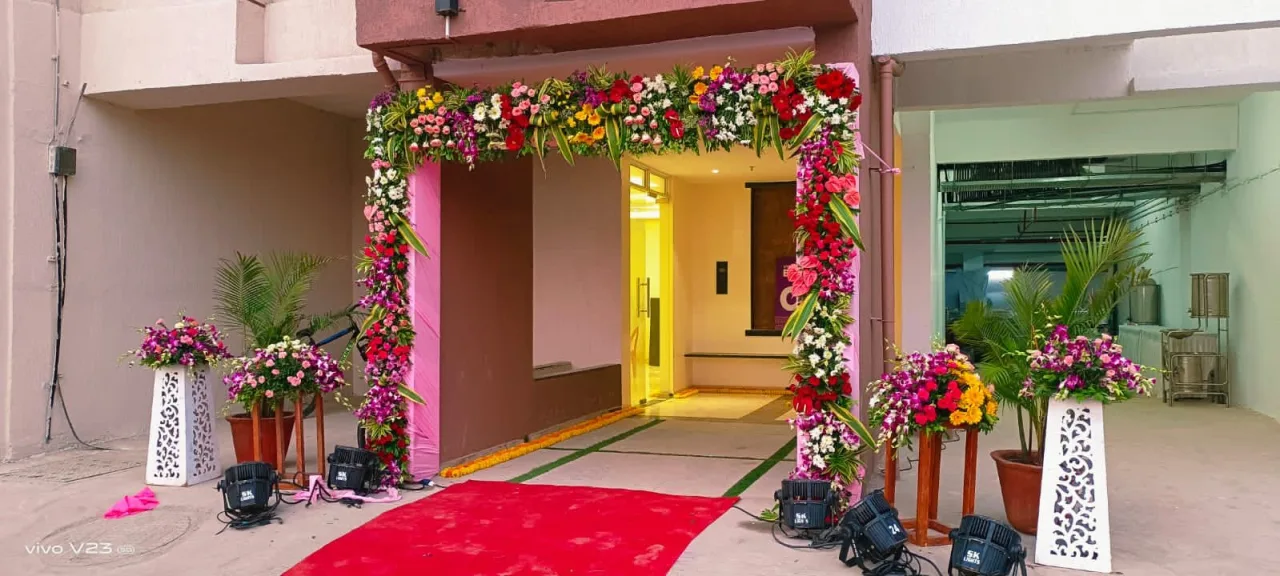
Every resident, every guest and every delivery passes the gate. It is the single highest-return surface in the whole society and it is usually given one sad string of lights. A toran across the top, warm light on the name board and lamps along the base reads as a decorated society from the road, and it takes one evening.
Lamps in the lobby and lift area
The second surface everybody passes, and indoors, so nothing weathers. Lamps on a console, a small rangoli on the floor beside the lift, and warm light instead of the usual white tube. Residents notice this one more than the facade, because they stand in it twice a day.
Give the rangoli back to the residents
A marked slot outside each wing, or a line of squares in the parking area, and let families fill them. It costs chalk and a notice, it brings people down from their flats, and the photographs that come out of it are better than anything a decorator makes, because the children are in them.
The medium ones, worth the extra step
A lamp run along the common passage
The walk from the gate to the lobby, lit at ankle height with lamps or at eye height with strings. It turns a functional path into part of the festival and it is the thing that makes residents walk slowly instead of hurrying in.
Decorate the clubhouse for the evening
If the society is holding a function, the clubhouse needs its own treatment: a backdrop people will photograph, seating that works for elders, and lighting that is warm rather than the usual hall fluorescents. Our society clubhouse decoration page covers that room specifically, and the Diwali party side covers the evening itself.
One themed photo corner
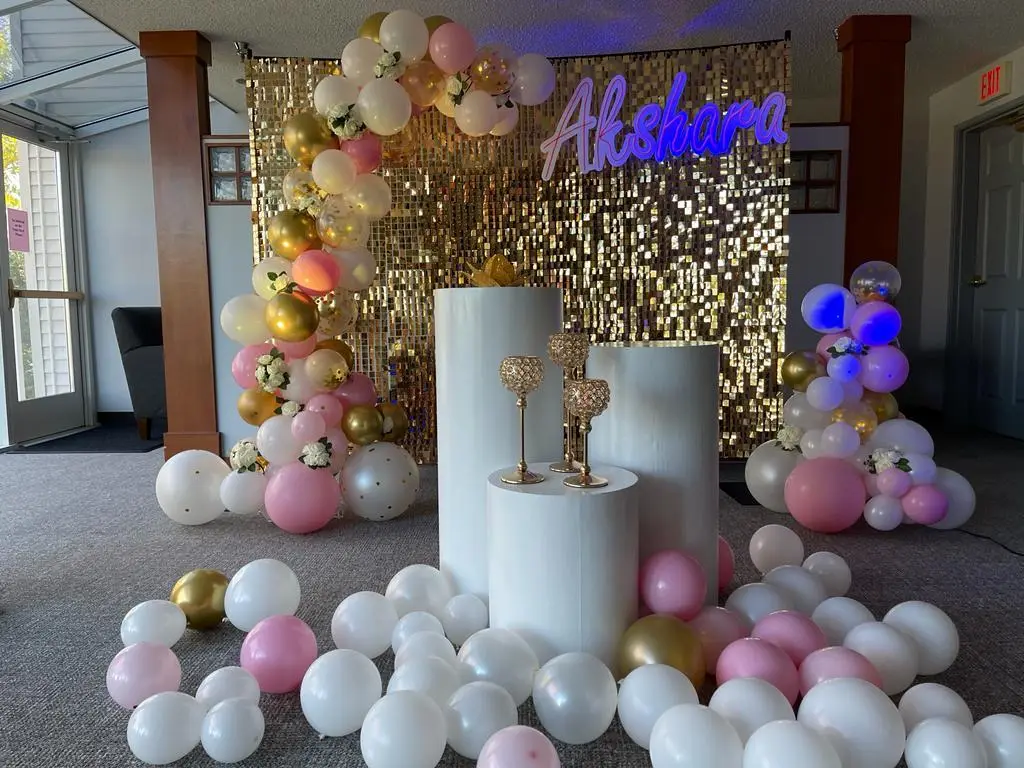
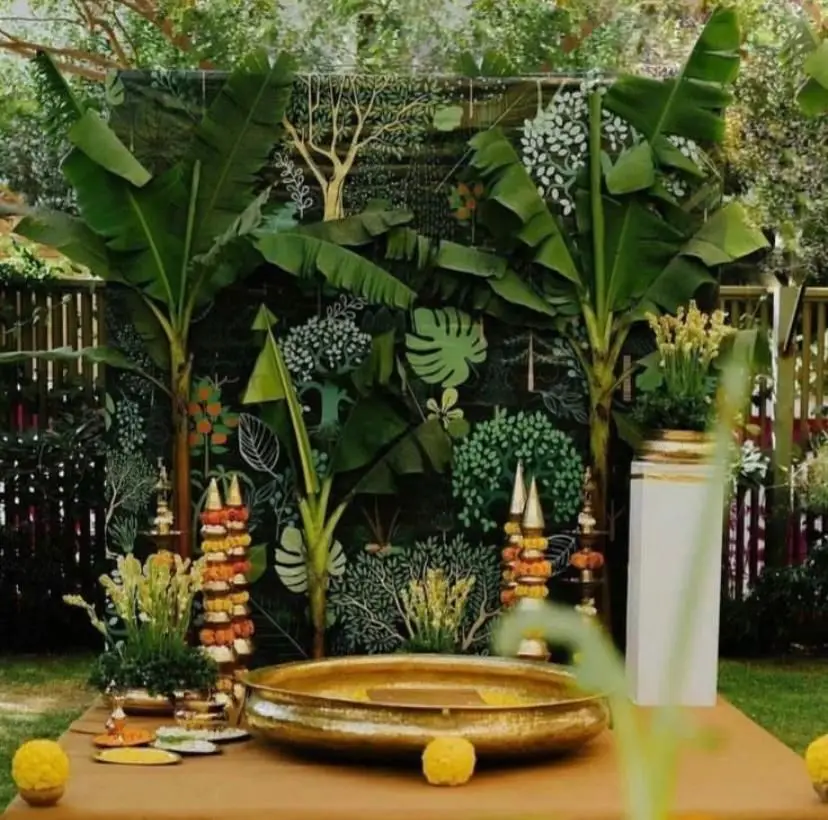
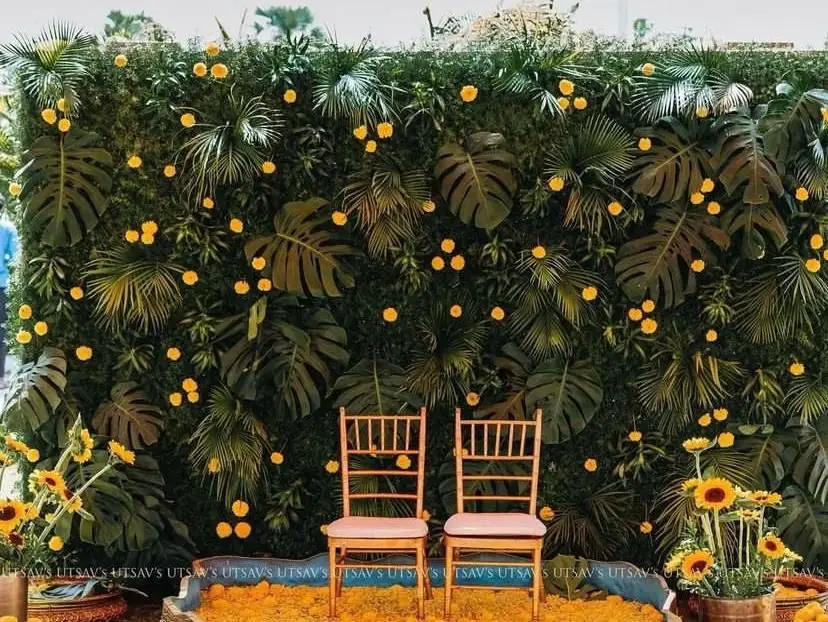
A single corner — a backdrop, lamps, a bench — placed where people already gather. Families will queue at it on the evening and the pictures go into the society group all week. One corner done well beats decoration spread thinly across four areas.
The high-effort ones, and when they are worth it
Facade lighting
The photograph everybody has in mind, and the one that needs the most before it can happen. It is a height job, it needs its own power provision, and somebody has to approve both. In a tall building it also needs a plan for what happens when one section fails in the second week.
Uniform balcony lighting
It looks superb and it depends on residents actually doing it. A society that announces a pattern and supplies the lights gets most balconies; one that only sends a message in the group gets a scattered few, which reads worse than none.
The three things that decide whether any of it happens
Power, before design
Common-area circuits were not laid for a festival. Before anyone promises a lighting run, somebody has to look at what the society can actually draw and where the points are. A plan that trips the common meter on the first evening is worse than a smaller plan that holds.
Approvals, early
Who signs off, what the maintenance budget allows, and whether anything is being fixed to the building. In a large society that conversation takes longer than the decoration, and it is the usual reason an idea posted in October is still an idea in November.
Who takes it down
The part nobody volunteers for. Lights left up look tired within a fortnight and somebody ends up on a ladder on a working morning. Agree the take-down date when the work is booked, and put it in writing with whoever is doing the installation.
Three mistakes that cost societies the most
Spreading the budget across every corner
A society with eight areas and a modest budget usually tries to do all eight. The result is a thin string of lights everywhere and nothing that looks finished. Two areas done properly — the gate and the lobby — read far better than eight done at a quarter strength, and residents walk past both every single day.
Buying lights on the last weekend
Stock in the week before Diwali is whatever is left, at the week’s prices, and the quality is unpredictable. A string bought in that rush often fails in its second week, which means a resident on a ladder in the middle of the festival. Buying or booking during Navratri gets better stock at a calmer price.
Deciding by group poll
A society group with two hundred members will not converge on a decoration plan. What works is a small group with a budget and a mandate, who decide and then announce. Committees that try to agree the design in the group are the ones still discussing it the week before.
What to do about the wings nobody sees
Most societies have a front that gets everything and a rear wing that gets nothing, and the residents there notice. It is not a budget problem so much as a planning one: the gate and the main lobby absorb attention and the second entrance is remembered late.
The fix is cheap. A toran and a lamp run at every entrance the society has, even where the gate work is only at the main one. Equal treatment at the doors people actually use removes most of the complaints a committee hears afterwards, and costs very little against the main spend.
Timing the week itself
Diwali decoration is not one date. Most societies want it lit from Dhanteras, which is several days before the main evening, and that is the date the installation has to work back from — not Diwali itself. Working to the wrong date is how a society ends up with a crew installing on the afternoon of the function.
The other date that matters is the society’s own function. If the clubhouse evening is on a different day from Diwali, the decor has to hold for both, which changes what is worth using. Fresh flower that looks superb on Dhanteras will not survive to a function five days later, so anything that has to last is built rather than picked.
A simple schedule that works
Approvals and budget settled by the start of Navratri. Lighting and material booked in the week after. Installation two days before Dhanteras, so there is a day in hand if something does not work. Rangoli slots announced to residents a week ahead so families can plan. Take-down on a named date after the society’s own function, not after Diwali.
None of that is complicated. It fails only when it is decided in the group in the last fortnight, which is what happens in most societies most years.
A sensible order to work in
- Fix the budget and the approver first, before any idea is discussed.
- Check the power points in the common areas.
- Do the gate and the lobby — highest return, lowest effort.
- Add the passage run if the budget allows.
- Announce the resident rangoli slots, with the date.
- Only then decide about the facade.
- Put the take-down date in the same decision.
If the society wants the whole thing handled rather than coordinated between four residents, our Diwali decoration page sets out what that looks like, and contact gets you a scope for your actual gate and lobby rather than a package.
Frequently asked questions
What is the cheapest Diwali decoration that still looks good in a society?
The gate and the lobby. Every resident, guest and delivery passes both, they are low and indoors or sheltered so nothing weathers, and they can be done in one evening. A toran, warm light on the name board and lamps at the base read as a decorated society from the road for a fraction of what a facade run costs.
Do we need committee approval for Diwali lighting?
For the gate, lobby and passage, usually not beyond the normal spend approval. For anything fixed to the building or running across the facade, yes, and it needs a look at the power provision as well. That approval conversation takes longer than the decoration in most large societies, so start it first.
How do we get residents involved instead of just paying a decorator?
Mark rangoli slots outside each wing or in the parking area and announce a date. Families come down, children take part, and the photographs that come out of it are better than anything bought in. It costs chalk and a notice, and it is the part residents remember long after the lights are down.
Our common area lights keep tripping. What went wrong?
The lighting plan was drawn before anyone checked what the common circuits could draw. Society common areas were wired for passage lights and a lift, not for a festival run. The fix is to look at the available load and the actual socket positions first, then design a run that fits it rather than one that hopes.
When should a society book Diwali decoration in Pune?
Through Navratri, two to three weeks ahead. Crews and lighting stock are committed in the fortnight before Diwali, and a committee that decides in the final week gets whatever is still free at that week's rates. Booking early also leaves time for the approval conversation, which is usually the slower half.
Who should take the decoration down?
Whoever put it up, on a date agreed when the work was booked. This is the step committees forget, and the result is lighting that stays up looking tired until a resident volunteers to climb a ladder on a working morning. Putting the take-down date into the same decision removes the problem entirely.

Vicky founded Plan With YOLO in Pune in 2013 and leads the planning on corporate events, weddings and stage production across Maharashtra.