A good award ceremony needs categories people respect, a tight run of show, a proper entry moment, a rehearsed trophy handover, lighting that makes the stage feel important, and short entertainment between award blocks. Keep speeches brief and give every winner a photograph with leadership.
An award ceremony works when the people in the audience believe the awards are worth winning and the evening moves. Both of those are planning decisions, not luck. This guide covers the categories that people actually care about, a run of show you can adapt, entry moments, how to choreograph the trophy handover, stage and lighting looks, entertainment blocks, anchor script beats and themes for an award night, whether you are planning it for a company or a school.
Planning this in Pune? See our award ceremony event management: one team plans and runs it with you, since 2013.
Award categories people actually care about
The strongest award categories reward things the audience can see happening around them, not just the numbers at the top of a sheet.
Three tests help. Can people name a likely winner before you announce it? Would someone be proud to put it on a wall? Is there a story behind it that takes thirty seconds to tell? If a category fails all three, it is filler.
| Corporate award night | School or college award night |
|---|---|
| Performer of the year, by function | Academic excellence, by subject and by grade |
| Rising star or newcomer of the year | Most improved student |
| Team of the year for a delivered project | Best class or house of the year |
| Customer champion | Sports and athletics honours |
| Innovation or process improvement | Arts, music, dance and drama |
| Long service and loyalty | Perfect attendance and discipline |
| Unsung hero, nominated by peers | Leadership: head boy, head girl, prefects |
| Manager who builds people | Community service and social initiative |
| Regional or branch of the year | Teacher appreciation and long service |
Keep the list tight. Twelve to eighteen awards suit most evenings. A peer-nominated category is worth adding because it changes the mood in the room, and a long service award gives you the warmest moment of the night.
Run of show for an award ceremony
Plan the evening in blocks of no more than twenty minutes, and never run more than five awards back to back without something in between.
| Time | Segment | Notes |
|---|---|---|
| 18:00 | Guest arrival, photo wall, welcome drinks | Music playing, photographer at the entry |
| 18:45 | Seating call and opening AV | Short film, then lights down |
| 19:00 | Opening act and anchor welcome | Dance or drums, then the anchor takes over |
| 19:10 | Leadership address | Under eight minutes, with visuals |
| 19:20 | Award block one: five awards | Function or junior categories first |
| 19:45 | Entertainment break | A single act, six to eight minutes |
| 19:55 | Award block two: five awards | Team and project categories |
| 20:20 | Long service or special recognition | The emotional peak, with a short film |
| 20:35 | Award block three: top honours | Performer of the year last |
| 20:55 | Group photo and closing thank-you | Rehearse how winners return to stage |
| 21:05 | Music, dinner and open floor | No more speeches after this point |
Two rules protect the timing. Announce the trophy count for each block to the backstage team in advance, and brief presenters that they read the citation, not a speech. Overrunning award nights almost always overrun in the handover, not the programme.
Entry moments worth planning
The first ninety seconds set the audience’s expectations for the whole evening, so give the entry a plan of its own.
- The walk in: a lit pathway, a branded arch or a red carpet with a photo wall, and someone briefed to guide guests rather than letting them wander.
- A welcome that greets: dhol, drums, a shehnai or a small band at the door. For school award nights, students greeting parents works better than any hired act.
- Name on screen: for a smaller, senior audience, guest names appearing on the LED as they walk in is a simple touch people notice.
- The opening reveal: hold the hall doors until the room is ready, then open to a lit stage and music. A hall discovered slowly loses its effect.
- Opening AV: a ninety-second film of the year gone by, ending on the theme line, is the cleanest way into the anchor’s first words.
Trophy handover choreography
Choreograph the handover once and rehearse it, because this is where award nights lose both time and dignity.
- Cue: anchor reads the citation while the category graphic holds on screen.
- Reveal: the winner’s name and photograph appear together, with a sound sting and a spotlight to the aisle.
- Walk-up: a short, energetic track, with a marked route and a stage manager pointing the way.
- Position: presenter stands on the left of the stage from the audience’s view, winner steps to the right, trophy passed with the right hand.
- Hold: both face the camera and hold for three seconds. Say this out loud in the brief or nobody does it.
- Exit: winner exits on the opposite side, so the next winner is already walking up.
Keep trophies in category order on a draped table backstage, with a person whose only job is handing the right one over. Decide in advance whether winners speak. If they do, one line each, and tell them beforehand.
Stage and lighting looks
Lighting is what makes an ordinary hall feel like an award night, and it costs less attention than most people give it.
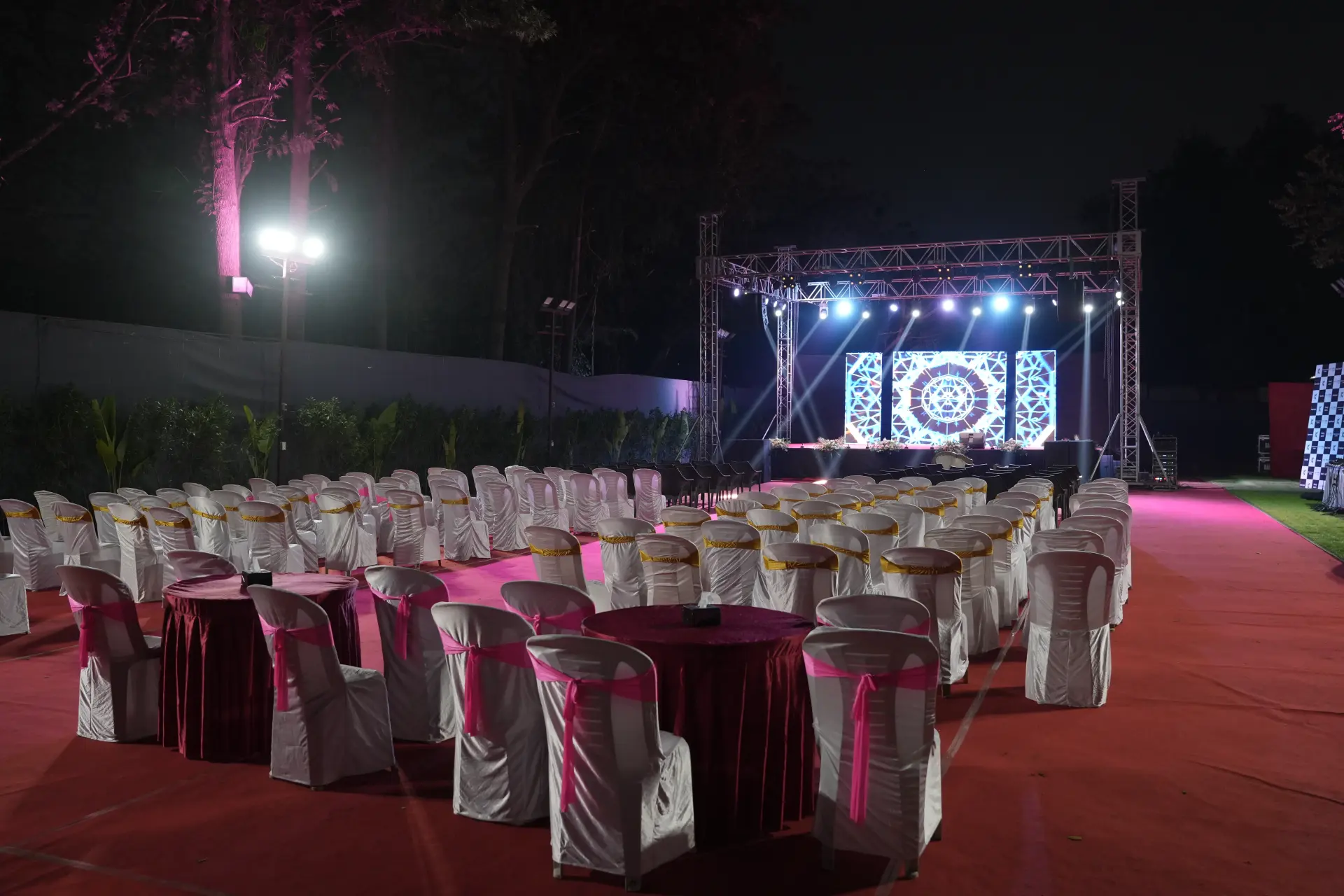
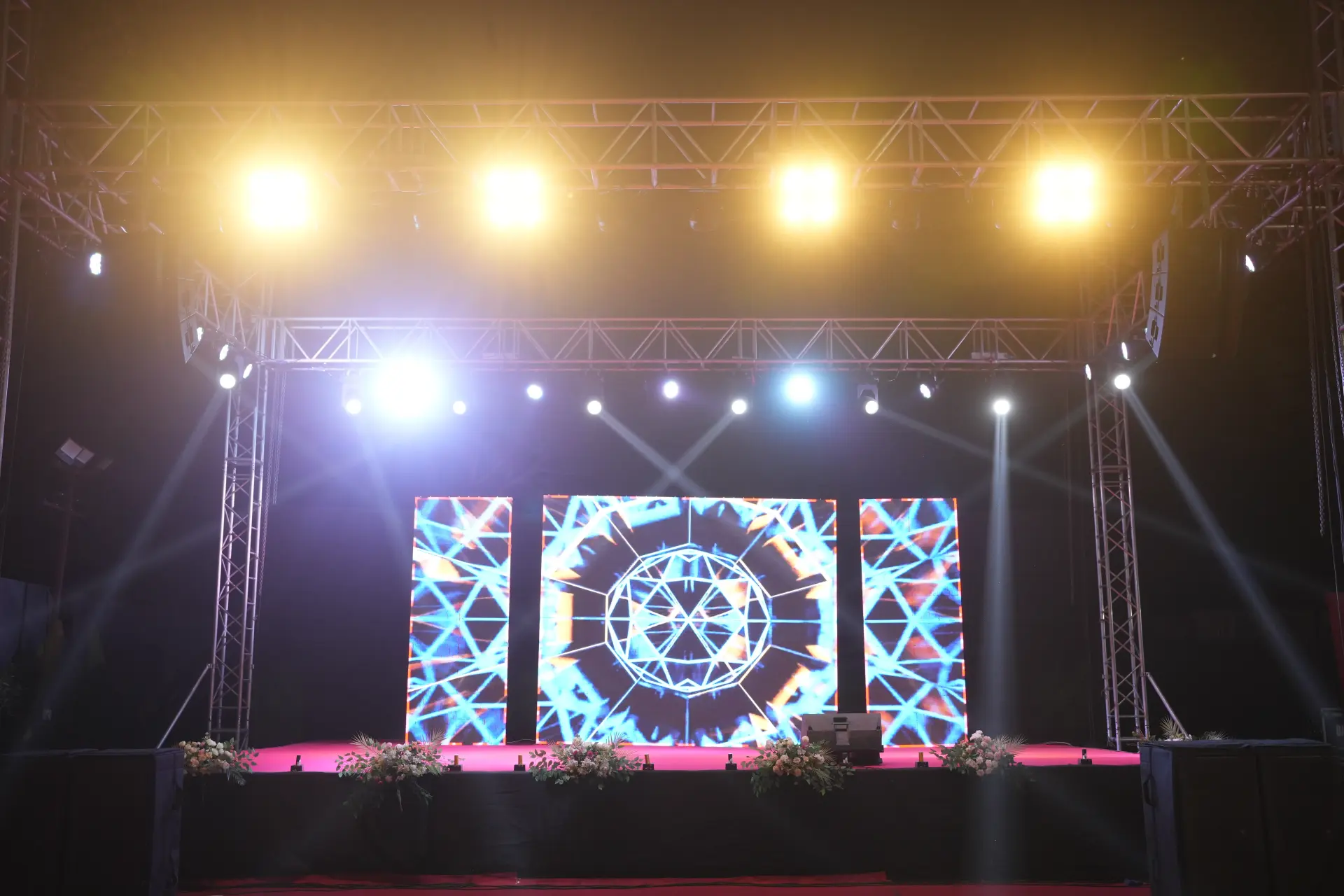
- Centre LED with dark surround: the safest look. Category graphics and winner photographs carry the design, so the physical set can stay simple.
- Truss and wash: an overhead truss with moving heads, warm wash for speeches, colour sweep for reveals, and a hard spot on the handover spot.
- Layered set: cut-out letters or panels in front of a lit backdrop, which photographs with depth rather than flat.
- Reveal lighting: dip the room before each top award and bring a single beam up on the podium. It resets attention better than the anchor asking for quiet.
- Camera first: light the faces on stage, not only the backdrop. Check this in rehearsal on an actual phone camera.
For a school award night, keep the audience lights up a little. Parents want to see their children and the room should feel warm rather than theatrical. Our event production team usually builds the lighting plan around where the photographs will be taken from.
Entertainment blocks
Use entertainment to break the award blocks, not to compete with them.
- A six to eight minute act between blocks, never longer.
- Live band or acoustic set during dinner rather than during awards.
- For corporate nights, an employee performance beats a hired act for warmth, and a hired act beats it for polish. Pick one per evening, not both in every slot.
- For school nights, group performances by class keep the parents in the room until the end.
- Stand-up or an interactive segment works in the middle, once people have relaxed.
- Close with music people will stay for, and keep the floor open after the last award.
Anchor script beats
Give the anchor a script with fixed beats and freedom in between, rather than a full word-for-word read.
- Opening: one line about why tonight matters, then the host’s welcome. No long jokes.
- Setting the rules: how the evening will run, where winners walk, when dinner is.
- Category intro: two sentences on what the award recognises, before the name.
- Citations: supplied in writing, approved, and printed large.
- Name pronunciation: checked before the show. Getting a winner’s name wrong undoes the whole moment.
- Bridges: one line linking each block to the next act.
- Close: thank the team behind the scenes, invite everyone to dinner, and end.
Award night themes
A theme gives the invitation, stage, dress code and photo wall one language. Black tie and gold, classic cinema, vintage glamour, monochrome, neon night, a royal Indian look with arches and drapes, or a simple brand-colour theme built around the year’s theme line all work. For schools, a house-colour theme or a decade theme lets students take part in the look. Put the dress code on the invitation, or nobody follows it.
Plan your award night with us
Plan With YOLO has planned corporate events for 100+ brands and companies since 2013, in Pune and across 30+ cities. We handle the categories and citations, stage, lighting, trophies, anchor, entertainment and the run of show, with one point of contact. See our award night event management, or if this is a school evening, our annual day event management. Tell us your date and guest count for a plan and an itemised quote.
Frequently asked questions
What award categories should a company include?
Include categories that reward visible work: performer of the year by function, rising star, team of the year for a delivered project, customer champion, innovation, long service, an unsung hero chosen by peers, and a manager who builds people. Keep the total between twelve and eighteen awards. A peer-nominated category changes the mood of the room more than any other addition.
How long should an award ceremony be?
Plan roughly two hours from the opening act to the last award, with dinner after. Break the awards into blocks of no more than five, separated by a short entertainment act or a film. Keep the leadership address under eight minutes and presenters to the citation only. Award nights overrun in the handover, not in the programme, so rehearse the walk-up.
How do you make an award ceremony engaging?
Give every winner a real stage moment: a citation read aloud, their name and photograph on screen, walk-up music, a rehearsed handover and a three-second photograph with leadership. Break award blocks with short entertainment, save the top honour for last, and add a long service or peer-nominated award for the emotional high point of the evening.
What are good themes for an award night?
Black tie and gold, classic cinema, vintage glamour, monochrome, neon night and a royal Indian look with arches and drapes all suit award evenings, as does a simple theme built on your brand colours and the year's theme line. For school award nights, house colours or a decade theme let students join in. Always put the dress code on the invitation.
What should the anchor say during an award ceremony?
Give the anchor fixed beats rather than a full script: a short opening on why the evening matters, how the night will run, two sentences introducing what each category recognises, the approved citation, and a one-line bridge into each act. Check every winner's name pronunciation before the show, and close by thanking the backstage team and inviting guests to dinner.

Vicky founded Plan With YOLO in Pune in 2013 and leads the planning on corporate events, weddings and stage production across Maharashtra.