
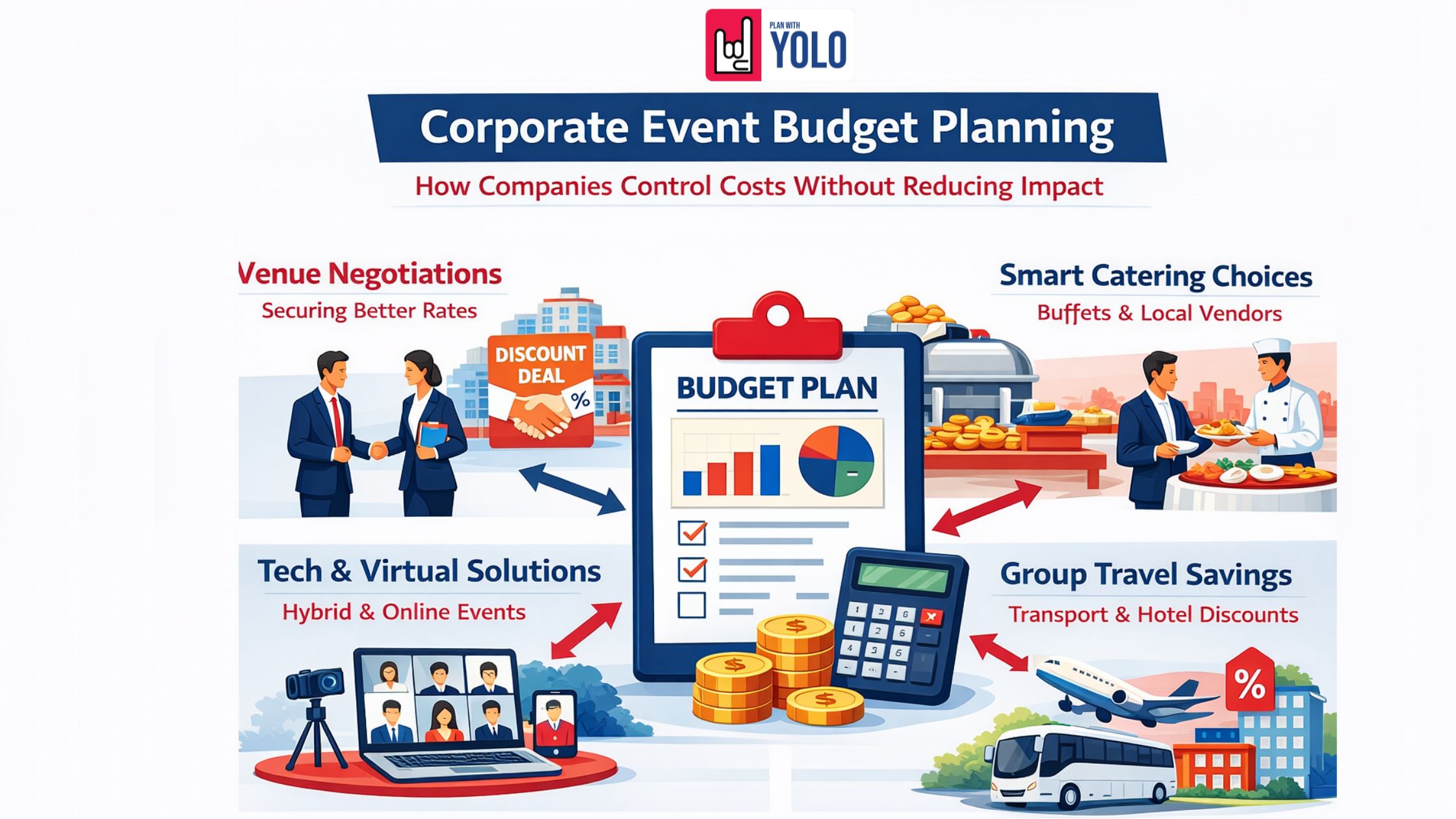
Corporate events play a major role in business growth, brand visibility, and team engagement. From conferences and product launches to annual functions and client meets, companies invest significant resources into creating meaningful experiences. However, without proper corporate event budget planning, even well-intended events can exceed financial limits. In 2026, organizations are focusing on creating impactful events while maintaining strict cost control.
A structured budget helps businesses allocate resources wisely and avoid unnecessary expenses. When teams understand where money is being spent and why, they can make smarter decisions that improve overall event performance. Effective budgeting is not about cutting corners. It is about maximizing value while staying within financial boundaries. With the right planning approach and professional coordination from teams like Plan with Yolo, companies can deliver memorable events without overspending while maintaining quality and strategic impact.
Why Budget Planning Is Critical in Corporate Events
Budget planning is the foundation of any successful corporate event. It sets financial expectations and helps teams prioritize spending. Without a clear budget, companies may invest too much in décor or production while neglecting key areas such as marketing or guest experience. This imbalance often leads to reduced impact and wasted resources.
A strong business event budget strategy ensures that each expense supports the event’s objectives. When companies define financial limits early, they can negotiate better vendor rates and make more strategic decisions. Budget planning also helps stakeholders understand how funds are being used, which improves transparency and approval processes.
Another benefit of early planning is risk reduction. Unexpected expenses are common in event management, but a well-prepared budget includes contingency funds to handle last-minute changes. Companies that prioritize budgeting from the start are more likely to achieve both financial control and event success. With structured planning and practical execution support, Plan with Yolo helps businesses align event budgets with strategic goals while maintaining quality and impact.
Key Components of a Corporate Event Budget
Creating a detailed event cost breakdown helps companies track expenses accurately. A typical corporate event budget includes several key components that must be considered during planning.
Venue costs often take up a large portion of the budget. This includes rental fees, setup charges, and additional services such as furniture or security. Production costs are another major category. Stage design, lighting, sound systems, and audio-visual equipment all contribute to the overall experience.
Catering and hospitality expenses also require careful planning. Food, beverages, and service staff must be aligned with guest expectations and event duration. Marketing and promotional activities should be included as well. Invitations, digital promotions, and branding materials help attract the right audience.
Staffing and logistics costs cover coordination teams, transportation, and on-site management. Technology expenses may include live streaming, registration systems, or presentation tools. Finally, a contingency fund should always be part of the budget to handle unexpected changes.
Using a corporate event budget template helps organize these components and ensures nothing is overlooked. A clear structure allows teams to monitor spending and make adjustments when necessary.
Common Budgeting Mistakes
Many companies face budget challenges due to avoidable mistakes. One common issue is underestimating production and technical costs. Lighting, sound, and staging often require more investment than initially expected. Without accurate estimates, expenses can rise quickly.
Another mistake is ignoring contingency funds. Unexpected changes such as weather adjustments, vendor delays, or additional equipment needs can increase costs. Without a backup fund, teams may struggle to manage these situations.
Overinvesting in visual elements while neglecting marketing is another frequent error. An event may look impressive, but without proper promotion, attendance and engagement may be low. Regular expense tracking is also essential. Failing to monitor spending throughout the planning process can lead to budget overruns.
Avoiding these mistakes requires careful planning and consistent monitoring. Working with experienced teams like Plan with Yolo helps businesses identify potential cost risks early, maintain structured budget tracking, and ensure event spending stays aligned with overall objectives.
How to Reduce Costs Without Sacrificing Quality
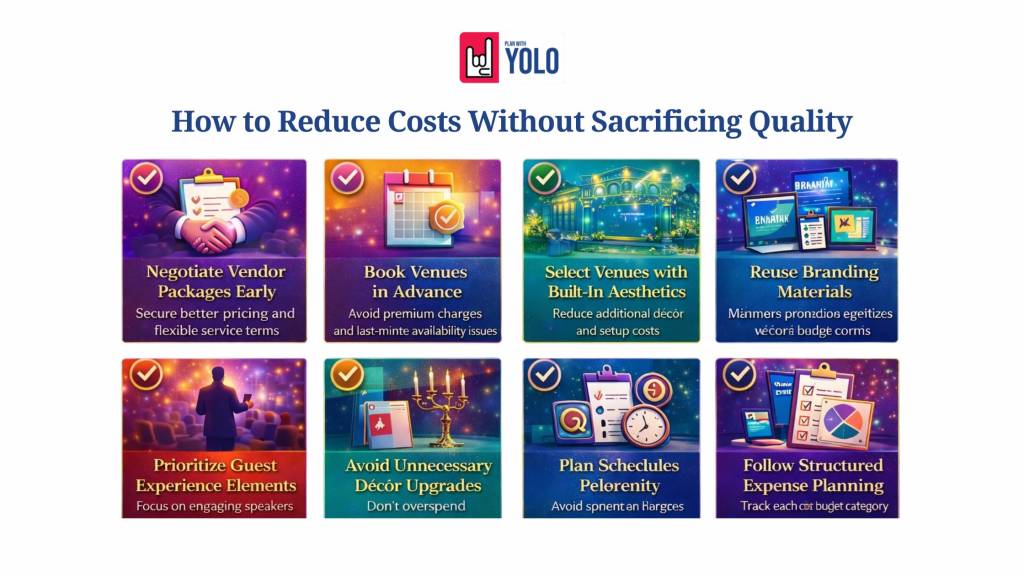
Follow a structured corporate event expense planning process to track every cost category and maintain budget control.
Negotiate vendor packages early to secure better pricing and flexible service terms before peak booking periods.
Book venues in advance to avoid premium charges and last-minute availability issues.
Select venues with built-in aesthetics so you can reduce additional décor and setup costs.
Reuse branding materials and digital assets across multiple events to minimize repeated production expenses.
Prioritize guest experience elements such as engaging speakers and interactive sessions instead of overspending on visual extras.
Avoid unnecessary décor upgrades that do not significantly enhance event impact.
Plan schedules efficiently to prevent overtime charges and extra staffing costs.
Budget Tracking and Post-Event Financial Review
Budget planning does not end once the event begins. Tracking expenses during the planning and execution stages is essential. Teams should update budget sheets regularly and compare actual costs with initial estimates. This helps identify overspending early and allows adjustments before it becomes a major issue.
After the event, a financial review provides valuable insights. Comparing planned expenses with actual spending helps teams understand where costs were accurate and where improvements are needed. This analysis also helps refine future budgets and planning strategies.
Post-event reviews should include both financial and performance metrics. Understanding how budget allocation influenced event outcomes helps companies make better decisions for future events. Consistent evaluation leads to improved cost management and more effective planning over time.
Final Takeaways
Effective corporate event budget planning is essential for delivering impactful events without exceeding financial limits. By defining clear budgets, tracking expenses, and reviewing performance, companies can create memorable experiences while maintaining financial discipline.
In 2026, businesses are expected to deliver high-quality events with measurable results. Structured budgeting helps organizations achieve this balance. When teams plan carefully and allocate resources wisely, they can host successful events that support long-term business goals.
With thoughtful planning, realistic budgeting, and continuous evaluation, companies can control costs while still creating events that engage audiences and strengthen brand presence. With its structured planning approach and execution expertise, Plan with Yolo supports businesses in managing event budgets efficiently while delivering well-coordinated and impactful corporate events.
Frequently asked questions
1. Why is corporate event budget planning important?
It helps companies control expenses, allocate resources effectively, and ensure every cost supports the event’s goals. Proper budgeting prevents overspending and improves event ROI.
2. What should be included in a corporate event budget?
A complete budget should cover venue, production, catering, marketing, staffing, logistics, and contingency funds. A detailed breakdown helps track spending accurately.
3. How can companies reduce event costs without lowering quality?
Early vendor booking, smart venue selection, and prioritizing guest experience help reduce costs while maintaining event impact and professionalism.
4. How do you track event expenses effectively?
Use a structured budget template, update expenses regularly, and compare planned vs actual costs. Post-event reviews help improve future budget planning.
5. Who can help with corporate event budget planning?
Working with experienced planners ensures better cost control and structured planning. Teams like Plan with Yolo help businesses manage budgets efficiently while delivering high-quality corporate events.

Vicky founded Plan With YOLO in Pune in 2013 and leads the planning on corporate events, weddings and stage production across Maharashtra.