
Advertising in 2026 is more data-driven, competitive, and expensive than ever before. Businesses are investing heavily in digital platforms, performance marketing, and brand campaigns. Yet many companies still struggle with advertising mistakes that silently drain budgets without delivering meaningful results. With strategic planning and execution, Plan with Yolo provides some of the best advertising services to help brands optimize campaigns and achieve measurable growth.
The problem is not always the platform or budget size. It is often strategy, targeting, or execution. When campaigns fail, businesses blame algorithms or rising costs. But in reality, the issue often lies in common advertising mistakes that can be fixed with better planning and analysis.
Understanding why ads fail and how to improve ad performance is essential for brands that want consistent returns. Let’s break down the seven biggest mistakes companies are making in 2026 and how to correct them.
1. Targeting Everyone Instead of the Right Audience
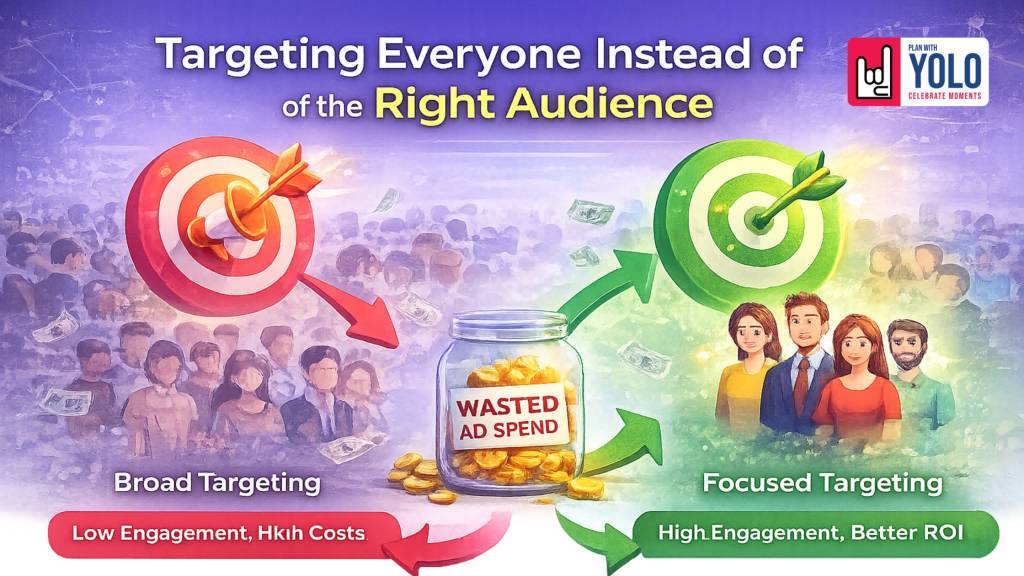
One of the most common advertising mistakes is trying to reach too many people. Broad targeting may seem attractive because it increases visibility, but it often reduces conversions.
When ads are shown to people who are not genuinely interested, engagement drops and costs increase. This is one of the biggest advertising strategy errors businesses make.
How to Fix It
Define clear audience segments based on behavior, demographics, and interests. Use data from previous campaigns to refine targeting. Focus on quality over quantity.
2. Ignoring a Clear Advertising Strategy
Many businesses run ads without a defined goal. They launch campaigns without identifying whether the objective is awareness, lead generation, or sales.
Without a structured plan, ads become random promotions rather than strategic investments. This is a key reason why ads fail even with high budgets.
How to Fix It
Create a clear advertising roadmap. Define objectives, choose the right platform, allocate budgets wisely, and measure specific KPIs such as click-through rate, cost per lead, or return on ad spend.
3. Weak Creative and Messaging
Even with perfect targeting, ads will underperform if the creative does not capture attention. Poor visuals, unclear headlines, and weak calls-to-action are frequent common advertising mistakes.
Users scroll quickly. If your message does not stand out within seconds, it gets ignored.
How to Fix It
Invest in strong visuals and compelling copy. Focus on customer pain points and benefits. Test multiple variations to see what resonates most.
Businesses seeking structured advertising execution can work with experienced teams like Plan with Yolo, who focus on aligning creative messaging with campaign objectives.
4. Not Tracking or Analyzing Data Properly
Running ads without tracking results is like driving without a map. Many businesses spend money but fail to analyze metrics properly.
This leads to repeated advertising strategy errors because decisions are based on assumptions rather than performance data.
How to Fix It
Track metrics such as engagement rate, conversion rate, cost per acquisition, and ROI. Use A/B testing to compare ad variations. Regular analysis helps identify underperforming ads quickly.
5. Poor Landing Page Experience
Sometimes ads perform well, but conversions remain low. This often happens because the landing page does not match the ad’s promise.
This mismatch is one of the most overlooked advertising mistakes. It creates confusion and reduces trust.
How to Fix It
Ensure consistency between ad messaging and landing page content. Improve page speed, simplify forms, and create clear calls to action. A seamless experience increases conversion rates.
6. Focusing Only on Short-Term Sales
While immediate results are important, ignoring long-term brand building can weaken overall marketing performance.
Many poor ad campaign examples show heavy discount-focused ads with no brand story. This may increase short-term sales but reduces long-term loyalty.
How to Fix It
Balance performance marketing with brand awareness campaigns. Build trust and recognition alongside conversion-focused ads.
7. Not Optimizing or Scaling Smartly
Some businesses launch campaigns and let them run without optimization. Others increase budgets without confirming performance stability.
Both approaches result in wasted spend and inconsistent results.
How to Fix It
Monitor campaigns regularly. Pause underperforming ads. Scale budgets gradually for ads that show strong performance metrics. Continuous optimization is key to how to improve ad performance.
Why Advertising Mistakes Are Costly in 2026
Advertising costs have increased across platforms. Competition is stronger. Algorithms reward relevance and engagement.
This means even small advertising mistakes can significantly impact ROI. Poor targeting, weak creatives, and lack of analysis compound losses over time.
Companies that adapt quickly and refine their strategy consistently perform better.
Poor Campaign vs Optimized Campaign
| Aspect | Poor Campaign | Optimized Campaign |
|---|---|---|
| Targeting | Broad, unclear | Focused, data-driven |
| Messaging | Generic | Benefit-focused |
| Budget Use | Wasted on low engagement | Allocated to high-performing ads |
| Tracking | Minimal monitoring | Regular analysis & testing |
| Results | Low ROI | Improved conversions |
This comparison shows how structured planning reduces common advertising mistakes and improves outcomes.
Where Advertising Mistakes Commonly Happen
Small Businesses
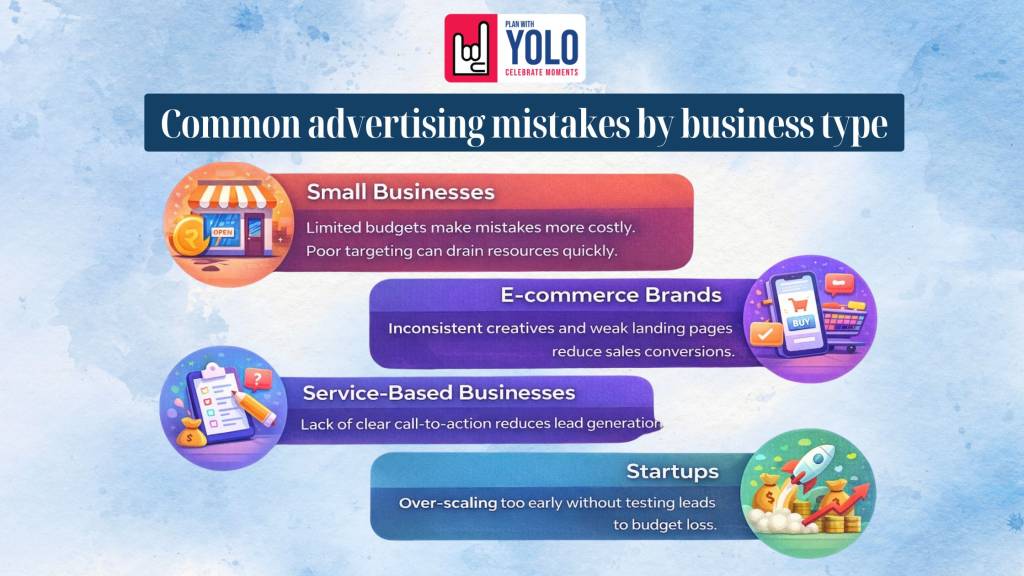
Small businesses often operate with limited marketing budgets, which makes every advertising decision critical. When targeting is too broad or messaging is unclear, even a small mistake can quickly drain resources. Many small brands run ads without testing creatives or defining clear goals, which leads to low engagement and wasted spend. Because budgets are tight, there is little room for trial and error. Structured planning and precise targeting are essential to avoid these costly advertising mistakes. Experienced teams like Plan with Yolo help small businesses create focused campaigns that maximize every rupee spent.
E-commerce Brands
E-commerce businesses rely heavily on paid ads to drive traffic and sales. However, inconsistent creatives, poor product visuals, or weak copy often reduce ad effectiveness. Another major issue is sending users to slow or poorly designed landing pages that do not match the ad message. This disconnect lowers trust and reduces conversions. Continuous A/B testing, creative optimization, and strong landing page alignment are essential to improve ad performance. With proper strategy and execution support, brands can avoid these common advertising mistakes and improve ROI.
Service-Based Businesses
Service providers such as consultants, agencies, or local businesses frequently struggle with unclear calls to action. Ads may generate interest, but without a direct next step like booking a consultation or filling out a form, leads are lost. Many campaigns also fail to communicate clear value propositions, making it difficult for potential clients to understand the benefit. A structured advertising approach, supported by professionals like Plan with Yolo, ensures messaging clarity, strong calls to action, and better lead generation.
Startups
Startups often scale campaigns aggressively once they see initial success. While growth is important, increasing budgets too quickly without proper testing can lead to rapid budget loss. Many startups also focus heavily on awareness without building a proper conversion funnel. Without structured tracking and optimization, early advertising gains fade quickly. A balanced approach that includes testing, gradual scaling, and data-driven adjustments helps startups avoid expensive advertising strategy errors and build sustainable growth.
Conclusion
In 2026, advertising is more competitive and data-driven than ever. Avoiding key advertising mistakes is essential to protect your marketing budget and improve ROI.
From weak targeting to poor optimization, these errors silently reduce campaign effectiveness. Businesses that identify and correct these issues gain a clear advantage.
By focusing on strategy, creativity, and data analysis, companies can avoid common advertising mistakes and achieve consistent results. With structured support and thoughtful execution from experienced teams like Plan with Yolo, brands can turn advertising spend into measurable growth rather than wasted investment.
Frequently asked questions
1. What are the most common advertising mistakes businesses make?
Common advertising mistakes include poor targeting, weak creatives, unclear messaging, and lack of performance tracking. These issues often lead to low engagement and wasted budget.
2. Why do ads fail even with a high budget?
Ads can fail when strategy and audience targeting are not clearly defined. Without proper testing and optimization, even large budgets may not deliver strong results.
3. How can I improve ad performance quickly?
Start by refining your audience targeting, improving ad creatives, and aligning landing pages with ad messaging. Regular performance analysis and testing help improve results over time.
4. What are advertising strategy errors to avoid?
Running ads without clear goals, scaling too quickly, and ignoring analytics are major strategy errors. Structured planning and monitoring help avoid these costly mistakes.
5. How can businesses avoid wasting their advertising budget?
Businesses can avoid budget loss by planning campaigns carefully, testing before scaling, and continuously optimizing performance. Working with experienced teams like Plan with Yolo helps ensure campaigns are structured, targeted, and results-driven.

Vicky founded Plan With YOLO in Pune in 2013 and leads the planning on corporate events, weddings and stage production across Maharashtra.